

What is Pay Per Click Advertising? Top 2025 Success
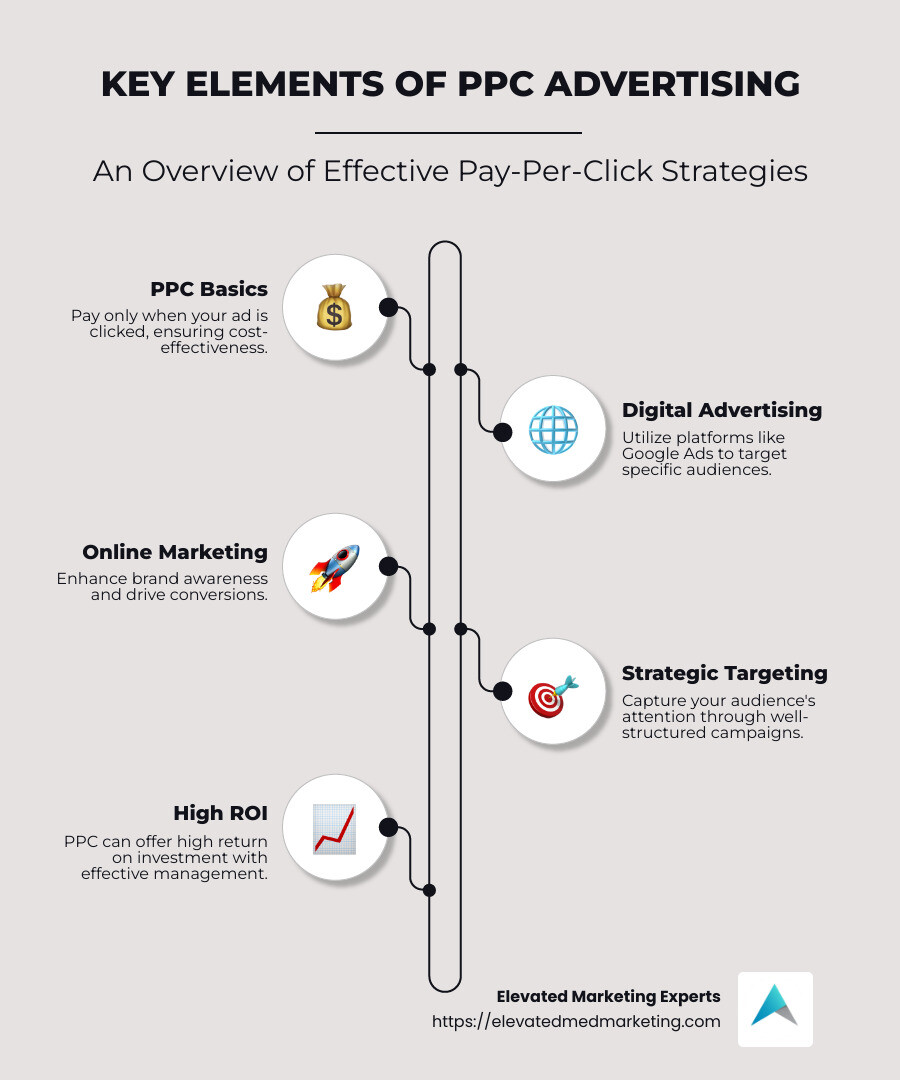
What is pay per click advertising? Pay-Per-Click (PPC) is a digital marketing model where advertisers pay a fee each time their ad is clicked. This method helps drive traffic to websites in a cost-effective way, as you’re essentially buying visits rather than earning them organically. Key elements include:
- PPC Basics: Understand the payment structure; you pay only when an ad is clicked.
- Digital Advertising: Use platforms like Google Ads, Facebook, and Microsoft Advertising to target specific audiences.
- Online Marketing: Improve your brand awareness and drive conversions through well-structured online campaigns.
PPC is a crucial component of digital advertising, offering businesses precise control over their marketing efforts. It’s not just about setting up ads; it’s about strategically capturing your target audience’s attention.
In the vast field of online marketing, PPC stands out by delivering quick results. It helps in reinforcing a brand’s online presence and drawing in the right traffic, making it a preferred choice for many businesses aiming to expand their digital footprint.
“In 2022, PPC brought in an average of $2 for every $1 spent, demonstrating its potential for generating a high return on investment (ROI).”
As Joe Amaral, I’ve steerd digital marketing from initially knowing little to starting successful companies. My journey and the desire to learn have equipped me with the expertise in what is pay per click advertising. Whether you aim to boost brand visibility or drive sales, PPC can be your key to open uping potential growth in the digital world.
What is pay per click advertising terms made easy:
– google ads cost
– how much does ppc advertising cost
Understanding Pay-Per-Click Advertising
What is Pay-Per-Click Advertising?
Pay-Per-Click (PPC) advertising is a model where advertisers pay a fee each time someone clicks on their ad. It’s a way to buy visits to your site, rather than attempting to earn them organically. This model is widely used in digital marketing to drive targeted traffic to websites.
At its core, PPC revolves around ad clicks. Each click represents a potential customer landing on your page, ready to explore what you offer. Advertisers aim to make these clicks as valuable as possible by targeting the right audience.
The advertiser fees in PPC are determined by the competitiveness of the keywords and the quality of the ad. This means that the cost can vary, but it’s generally calculated using a model known as Cost Per Click (CPC). The CPC is the price you pay for each click on your ad.
How Does PPC Work?
PPC operates through an intricate system of ad auctions. Whenever there’s an opportunity for an ad to be displayed, an auction takes place. This auction determines which ads will appear and in what order. It’s not just about who bids the most; factors like ad quality and relevance also play a crucial role.
To participate, advertisers engage in keyword bidding. They choose keywords relevant to their products or services and set a maximum bid for how much they’re willing to pay for a click on those keywords. The goal is to win ad placements through a combination of competitive bidding and high-quality ads.
Once the auction is complete, the winning ads are displayed in prime ad placements across various platforms, such as Google Ads or Microsoft Advertising. These platforms ensure that ads are shown to users who are most likely to be interested, maximizing the potential for clicks and conversions.
PPC is all about targeted traffic. By focusing on specific keywords and demographics, businesses can attract visitors who are more likely to be interested in their offerings. This targeted approach helps in achieving better ROI compared to traditional advertising methods.
PPC is a dynamic and strategic way to capture attention in the crowded online space. It allows businesses to reach their desired audience effectively while maintaining control over their advertising budget.
Types of PPC Ads
In Pay-Per-Click (PPC) advertising, there are various types of ads that businesses can use to reach their target audience. Let’s explore the main categories: Search Engine Advertising, Display Advertising, and Remarketing.
Search Engine Advertising
Search ads are the most common form of PPC advertising. They appear at the top of search engine results pages (SERPs) when someone searches for specific keywords. These ads are primarily text-based and are designed to be highly relevant to the user’s search query.
Google Ads is the powerhouse of search engine advertising, given Google’s dominant market share. Advertisers use Google Ads to display their ads to users searching for related products or services. This platform allows for targeted campaigns based on keywords, demographics, and even user behavior.
Microsoft Advertising serves ads on Bing and other Microsoft-owned platforms. While its market share is smaller, it presents a valuable opportunity due to generally lower competition and costs per click (CPC).
Both platforms use an auction system to determine which ads appear and in what order, considering factors like bid amount and ad quality.
Display Advertising
Display ads are visual and can appear across millions of websites and apps. Unlike search ads, display ads are not triggered by user searches but are shown to users as they browse online.
Banner ads are a popular form of display ads. They are typically rectangular and can be found on websites, apps, and social media platforms. Their visual appeal helps capture attention and promote brand awareness.
Image ads are another form of display advertising. They use static or interactive images to engage users. These ads can be highly effective for storytelling and showcasing products visually.
Google Display Network allows businesses to reach users with display ads across millions of websites. This network uses sophisticated targeting options to show ads to the right audience at the right time.
Remarketing
Remarketing (or retargeting) is a powerful strategy that targets users who have previously interacted with your website or app. These ads serve as reminders, encouraging users to return and complete a desired action, such as making a purchase.
Remarketing can be executed through various ad formats, including search ads, display ads, and even video ads on platforms like YouTube. By using cookies or tracking pixels, advertisers can follow users across the web and present them with custom ads based on their previous behavior.
Remarketing is particularly effective in driving conversions, as it focuses on users already familiar with your brand. This strategy helps reinforce your message and keeps your brand top-of-mind.
In conclusion, PPC advertising offers a versatile toolkit for reaching potential customers. Whether through search engine advertising, display ads, or remarketing, businesses can strategically engage users and drive valuable traffic to their sites.
Key Components of a Successful PPC Campaign
Creating a successful Pay-Per-Click (PPC) campaign requires a keen understanding of several key components. Let’s explore the importance of keywords, ad quality, and relevance to ensure your PPC efforts yield the best results.
Importance of Keywords
Keywords are the backbone of any PPC campaign. They dictate when and where your ads appear, making them crucial for targeting the right audience. Effective keyword research involves identifying terms that potential customers might use when searching for products or services like yours.
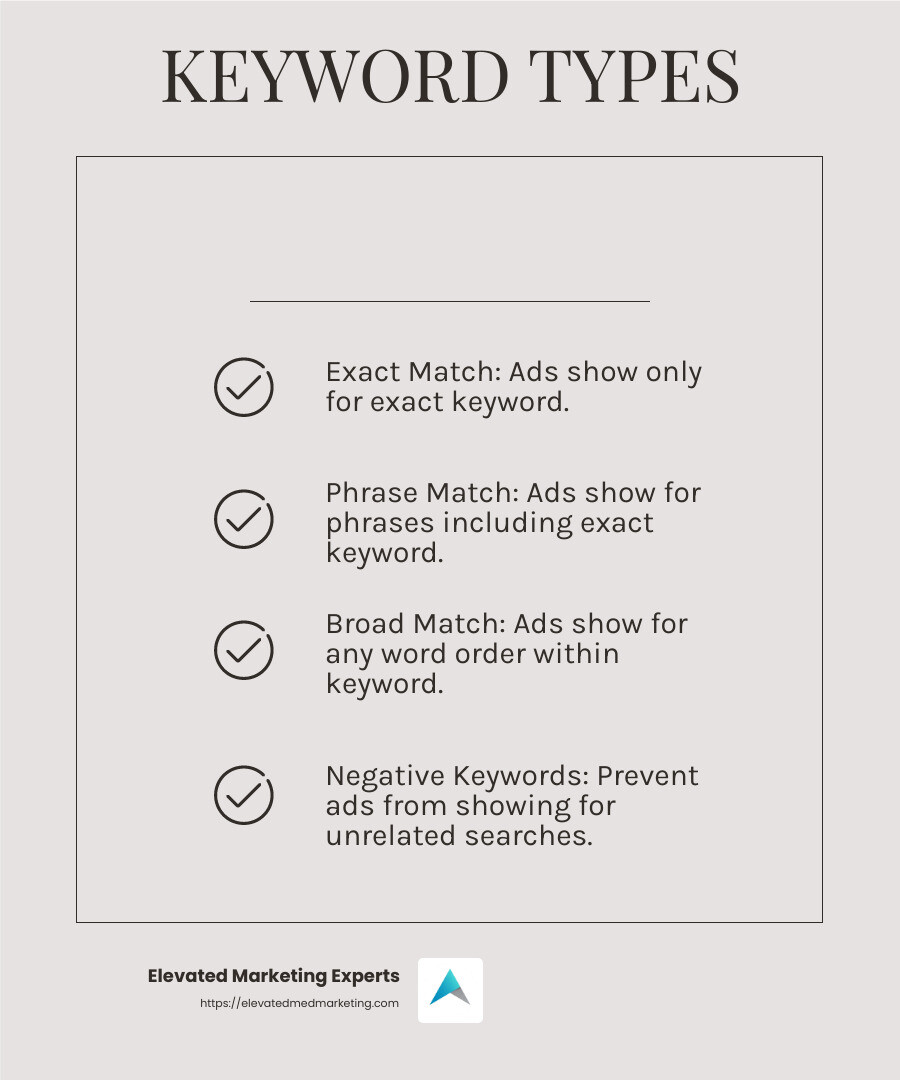
Keyword Match Types: These are essential for controlling how closely a search query must match your keyword for your ad to be shown. The main types are:
Exact Match: Your ad appears only when the search query matches the keyword exactly.
- Phrase Match: Your ad shows when the search query includes the exact phrase of your keyword.
Broad Match: This allows your ad to appear for searches that include any words in your keyword in any order.
Negative Keywords: These prevent your ad from showing for certain search queries that are irrelevant to your business. For example, if you sell luxury watches, you might use “cheap” as a negative keyword to avoid clicks from users looking for budget options.
Ad Quality and Relevance
Ad Quality is a significant factor in your campaign’s success. It affects both your ad’s position and the cost you pay per click. Google uses a metric called Quality Score to measure the relevance and quality of your ads and landing pages.
Quality Score: This is a score from 1 to 10 that Google assigns to each keyword in your account. It’s based on the expected clickthrough rate (CTR), ad relevance, and landing page experience. A higher Quality Score can lead to lower costs and better ad positions.
Ad Rank: This determines the position of your ad on the search results page. It’s calculated by multiplying your bid amount by your Quality Score. Thus, even with a lower bid, a high-quality ad can achieve a top position.
Landing Page Quality
The landing page is where users arrive after clicking your ad. It should be relevant to the ad content and provide a seamless user experience. A well-designed landing page can significantly boost your conversion rates.
Relevance: Ensure that the landing page content matches the ad’s promise. If your ad is about a specific product, the landing page should feature that product prominently.
User Experience: The page should load quickly and be mobile-friendly. A slow or poorly designed page can lead to high bounce rates, negatively impacting your Quality Score.
By focusing on these components—keyword selection, ad quality, and landing page relevance—you can create a PPC campaign that not only attracts clicks but also converts them into valuable actions for your business. This strategic approach ensures that your ads reach the right audience at the right time, maximizing your return on investment.
Benefits of PPC for Businesses
When it comes to digital marketing, Pay-Per-Click (PPC) advertising is a powerhouse. It offers numerous advantages that can boost your business’s growth, from boosting brand awareness to driving sales and generating leads.
Why PPC is Worth It
1. Immediate Brand Awareness
PPC ads can place your brand in front of potential customers quickly. Unlike SEO, which takes time to climb the search rankings, PPC gives you immediate visibility. This is crucial for new businesses looking to make a mark or for established brands launching new products.
2. Sales Increase
PPC is not just about clicks; it’s about conversions. Studies show that 50% of consumers visiting retailer sites from PPC ads are more likely to make a purchase than those who arrive via organic links. This makes PPC an effective tool for increasing sales.
3. Lead Generation
PPC campaigns can be finely tuned to target specific demographics, interests, and locations, ensuring your ads reach the right audience. This targeted approach means you’re not just driving traffic; you’re attracting potential leads who are more likely to convert.
4. High Return on Investment (ROI)
For every $1 spent on PPC, businesses earn an average of $2. This high ROI is due to PPC’s ability to target high-intent users—people who are actively searching for your products or services.
PPC for Small Businesses
1. Cost Management and Budget Control
PPC allows you to set your own budget, giving you full control over how much you spend. You can start small and scale up as you see results. This flexibility is perfect for small businesses with limited marketing budgets.
2. Targeted Audience
With PPC, you can target ads based on user behavior, demographics, and interests. Platforms like Google Ads and Facebook offer robust targeting options, ensuring your ads reach the audience most likely to engage with your brand.
3. Efficient Budget Use
Since you only pay when someone clicks on your ad, PPC ensures that your marketing budget is used efficiently. You’re not wasting money displaying ads to uninterested users. Instead, you’re investing in potential customers who have shown interest in your offerings.
In summary, PPC advertising provides businesses—especially small ones—with a cost-effective, targeted, and measurable way to increase brand visibility, drive sales, and generate leads. By leveraging the power of PPC, businesses can achieve significant marketing wins and maximize their return on investment.
Frequently Asked Questions about Pay-Per-Click Advertising
Navigating Pay-Per-Click (PPC) advertising can seem daunting at first. Let’s break it down with some common questions to help you understand this powerful tool better.
How does pay-per-click advertising work?
At its core, PPC is an online advertising model where advertisers pay a fee each time their ad is clicked. It’s like buying visits to your site rather than earning them organically.
Here’s a simple breakdown of how it works:
Ad Auctions: When a user searches for a keyword you’ve bid on, an auction determines which ads appear. It’s not just about who bids the most; relevance and ad quality matter too.
Keyword Bidding: Advertisers bid on keywords they want their ads to show for. For example, a camping gear store might bid on “buy tents online.”
Ad Placement: The search engine uses a complex algorithm to decide which ads to display and in what order. Factors include your bid amount, ad relevance, and Quality Score.
Ad Clicks: You pay only when someone clicks on your ad, making PPC a cost-effective way to attract potential customers.
Is pay-per-click advertising worth it?
Absolutely, if done correctly. Here’s why:
Immediate Results: Unlike SEO, which takes time, PPC provides instant visibility. Your ads can appear on the first page of search results immediately after launching your campaign.
Measurable ROI: PPC allows you to track every aspect of your campaign, from clicks and impressions to conversions. This transparency helps you measure your return on investment accurately.
Targeted Reach: PPC platforms offer robust targeting options, ensuring your ads reach the right audience. You can target by location, age, interests, and even behavior.
Cost Control: With PPC, you set your budget and bids, giving you control over your spending. You can start with a small budget and scale up as you see results.
What is PPC for beginners?
For those new to digital advertising, PPC might seem complex, but it’s quite manageable with the right guidance:
Start Small: Begin with a small budget and a few targeted keywords. This allows you to test the waters without significant risk.
Learn the Basics: Understand the key components of PPC—keywords, ad copy, landing pages, and targeting. Familiarize yourself with platforms like Google Ads or Facebook Ads.
Monitor and Adjust: Regularly check your campaign’s performance. Use insights to tweak your bids, keywords, and ad copy for better results.
Leverage Resources: Use online resources and tools to learn. Platforms like Search Engine Land provide helpful articles and guides for beginners.
PPC is a powerful tool for businesses of all sizes. By understanding its mechanics and benefits, you can harness its potential to drive targeted traffic, increase sales, and achieve your marketing goals.
Conclusion
At Elevated Marketing Experts, we understand that navigating the digital marketing landscape can be challenging, especially in the competitive world of aesthetic and wellness practices. That’s why we’re dedicated to providing comprehensive digital marketing solutions custom to your unique needs.
Our expertise in Pay-Per-Click (PPC) advertising is part of what sets us apart. We leverage our deep industry knowledge to create targeted PPC campaigns that drive traffic and conversions. Whether you’re a small medical spa or a large plastic surgery practice, our strategies are designed to maximize your return on investment.
Why Choose Elevated Marketing Experts?
Industry Expertise: With years of experience in the aesthetic and wellness sectors, we know what works and what doesn’t. Our team is skilled in crafting PPC campaigns that resonate with your target audience, ensuring your ads are seen by those most likely to convert.
Comprehensive Solutions: Beyond PPC, we offer a full suite of digital marketing services, including SEO, website design, and content creation. This holistic approach ensures all aspects of your online presence work together seamlessly.
Proven Results: Our case studies speak volumes about our success. We’ve helped numerous clients increase their online visibility and grow their businesses through effective PPC strategies.
Custom Strategies: We understand that every business is unique. That’s why we tailor our PPC campaigns to fit your specific goals and budget. From keyword research to ad creation, we handle it all.
If you’re ready to take your digital marketing to the next level, we’re here to help. Find how our pay-per-click advertising solutions can transform your business and drive sustainable growth.
In the world of digital marketing, staying ahead is crucial. Let us be your partner in navigating this changing landscape, providing you with the tools and expertise needed to succeed.


