

Wellness Fair Themes: Top 10 Exciting Ideas 2025
The Power of Engaging Wellness Fair Themes
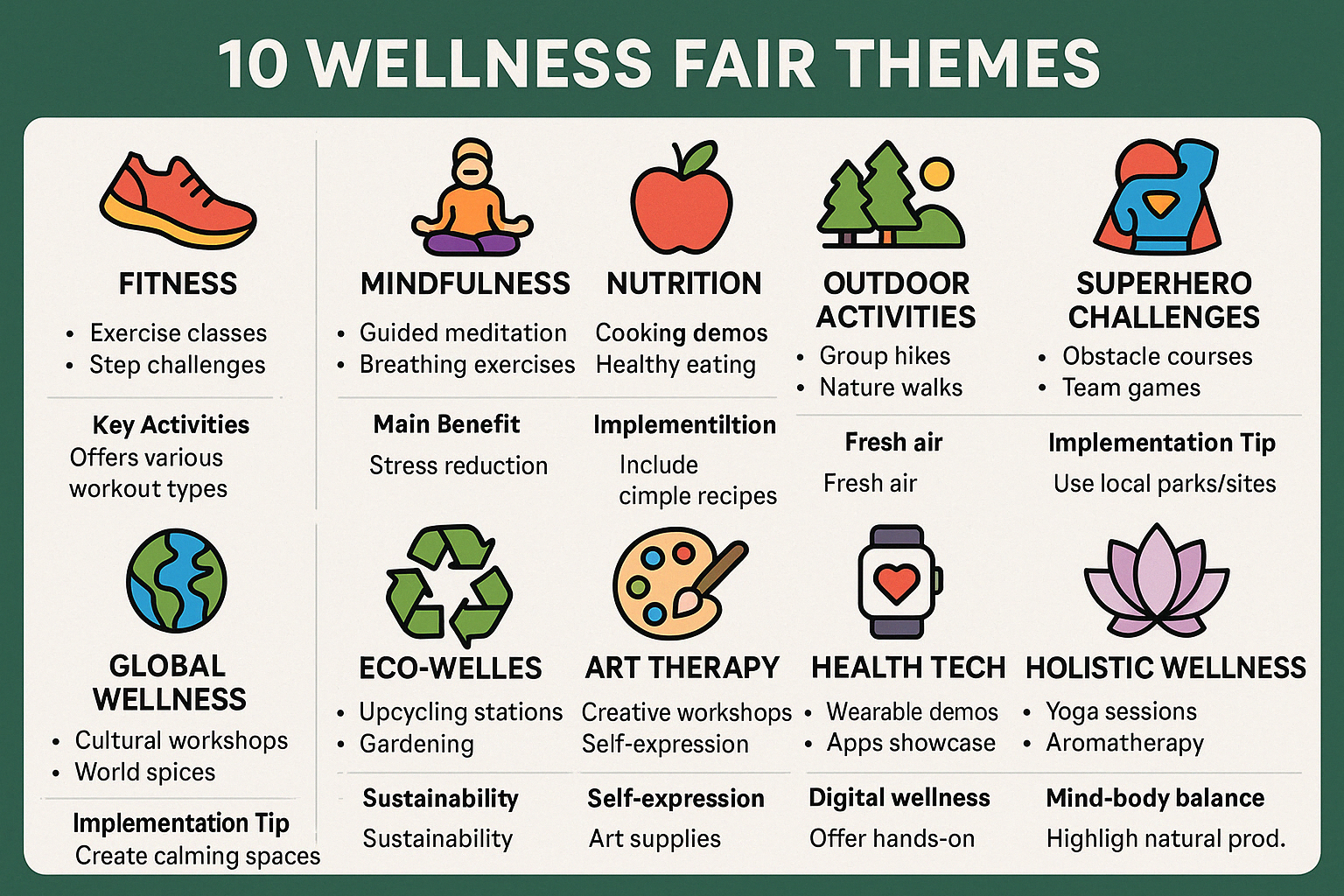
Wellness fair themes are essential for creating memorable, impactful workplace health events that drive employee participation and engagement. Looking for inspiration for your next corporate wellness event? Here are 10 popular wellness fair themes to consider:
- Fitness Fiesta – Dance classes, sports demonstrations, and interactive physical activities
- Mindful Retreat – Meditation, yoga, and stress management techniques
- Nutritional Wonderland – Healthy cooking demos and nutritional education
- Outdoor Trip – Nature-based activities that promote physical wellness
- Wellness World Tour – International health practices and diverse wellness traditions
- Superhero Fitness Challenge – Fun, competitive activities that encourage movement
- Eco-Wellness Expedition – Sustainable living and environmental wellness
- Creative Health Studio – Art therapy and creative expression for mental wellness
- HealthTech Innovators – Showcase of wellness technology and health apps
- Holistic Well-being Hub – Integrated approach to multiple wellness dimensions
Creating a themed wellness fair transforms a standard health event into an engaging experience that employees actually want to attend. According to research, wellness fairs can significantly reduce healthcare costs by educating employees about healthier lifestyle choices and providing early health screenings.
A well-designed wellness fair takes approximately six weeks to plan and typically runs for 3-4 hours. This investment of time and resources pays dividends through improved employee health, increased productivity, and reduced absenteeism.
“Including an interactive component helps your display stand out above the rest. Demonstrations and hands-on activities create interest, add a fun factor that attracts guests and improve the learning experience,” notes one healthcare professional in the field.
I’m Joe Amaral, and I’ve helped numerous medical practices and wellness organizations create engaging wellness fair themes that boost participation and deliver measurable health outcomes. My experience in digital marketing has shown that creative theming is crucial for maximizing the impact of wellness initiatives.
Understanding the Importance of Wellness Fair Themes
Have you ever walked into a company event that just felt… flat? The difference between an unmemorable gathering and an energizing experience often comes down to one simple element: a thoughtful theme. When it comes to workplace wellness initiatives, wellness fair themes aren’t just decorative extras – they’re the secret ingredient that transforms standard health information sessions into engaging, memorable experiences.
What Is a Wellness Fair?
Let’s start with the basics. A wellness fair is much more than just a health screening day at the office. While traditional health fairs typically focus narrowly on physical metrics like blood pressure readings and cholesterol checks, wellness fairs accept a more complete vision of well-being.
Think of a wellness fair as your company’s “wellness wonderland” – a special event where employees can explore multiple dimensions of health in one convenient location. These fairs create a supportive space where team members can find resources, participate in activities, and connect with specialists across various wellness pillars.
The World Health Organization defines wellness as “a state of complete physical, mental, and social well-being, and not merely the absence of disease or infirmity.” This holistic definition perfectly captures why modern wellness fairs have evolved to address so many aspects of our lives – from physical fitness and nutrition to mental health, financial planning, and even environmental sustainability.
As one wellness coordinator shared with me recently, “A health fair primarily focuses on physical health and traditional healthcare topics, while a wellness fair covers broader wellness pillars including mental, environmental, social, and financial well-being.” This broader approach resonates more deeply with today’s workforce.
Why Themes Matter
“A captivating theme is key to a successful wellness fair.”
This quote from a leading wellness event planner captures an essential truth – wellness fair themes provide the framework that makes these events sing. But why exactly do themes matter so much?
First, themes dramatically boost employee engagement. When your team sees a creative concept that speaks to their interests, they’re naturally drawn to participate. A “Fitness Fiesta” or “Mindful Retreat” creates immediate visual and emotional connections that a generic “Wellness Day” simply can’t match.
Themes also help create custom experiences that feel special and intentional. They give your planning team direction and inspiration, helping everything from decorations to activities feel connected and purposeful.
Perhaps most importantly, thoughtfully chosen wellness fair themes allow you to align your event with your company culture. A tech-forward organization might accept a “HealthTech Innovators” theme, while a company with environmental values might opt for an “Eco-Wellness Expedition.”
I’ve seen how themes transform participation rates. The wellness industry mantra “PROMOTE, MOTIVATE, PROMOTE” reminds us that consistent, themed messaging builds awareness and drives attendance. Most well-promoted wellness fairs can expect 25-50% of on-site employees to participate – but the right theme can push those numbers even higher.
Themes also solve practical planning challenges by providing a clear framework for selecting vendors, activities, and resources. When everything connects to a central concept, the whole experience feels more cohesive and thoughtful to participants.
For companies that host wellness events regularly, rotating through different wellness fair themes helps prevent “wellness fatigue” and keeps each event feeling fresh and exciting. Your fifth wellness fair of the year becomes something to look forward to when it has a unique, engaging theme that differentiates it from previous events.
When we work with clients at Liftd Marketing Experts, we often remind them that wellness fairs aren’t just about sharing information – they’re about creating memorable experiences that inspire real change. The right theme doesn’t just decorate your event – it transforms it into something your team will actually want to attend.
Theme 1: Fitness Fiesta

Who says getting fit can’t be fun? The Fitness Fiesta theme turns your workplace wellness fair into a vibrant celebration that gets everyone moving and grooving! This energetic approach removes the intimidation factor from fitness and replaces it with genuine enjoyment.
When you walk into a Fitness Fiesta wellness fair, you’re immediately greeted by upbeat Latin music, colorful decorations, and an atmosphere buzzing with energy. It feels more like you’ve stepped into a party than a corporate health event—and that’s exactly the point!
Dance classes are the heart of any good Fitness Fiesta. Imagine your accounting team laughing together as they learn basic salsa steps, or your typically reserved IT department letting loose during a 15-minute Zumba session. These short, accessible classes show employees that movement can be joyful rather than just another checkbox on their health to-do list.
“The change we saw was incredible,” shares Maria, a wellness coordinator who implemented this theme. “People who normally hide in their offices during wellness events were out on our makeshift dance floor, smiling and connecting with colleagues. The energy was contagious!”
Beyond dancing, a well-rounded Fitness Fiesta includes sports demonstrations from local athletes or trainers. These pros can show proper form for exercises, answer questions, and inspire employees to try new activities. Many companies find that offering interactive stations where employees can test different fitness equipment or participate in friendly competitions creates memorable moments and sparks ongoing interest in physical activity.
Don’t forget to fuel all this movement with healthy refreshments that complement your theme! Fruit-infused water stations, smoothie bars, and nutritious snacks provide energy while reinforcing the connection between nutrition and physical performance.
The beauty of the Fitness Fiesta theme lies in its accessibility. By wrapping fitness in a package of music, community, and celebration, you reach employees who might otherwise avoid anything labeled as “exercise.” The festive atmosphere breaks down barriers and helps people associate physical activity with positive feelings rather than obligation.
For companies looking to promote this theme effectively, consider creating teaser videos showing simple dance moves or highlighting the social benefits of group fitness. Your pre-event marketing should emphasize fun over intensity, welcoming participants of all fitness levels.
The Fitness Fiesta theme aligns perfectly with comprehensive wellness fair themes that emphasize holistic well-being. While participants enjoy the immediate benefits of movement and social connection, they’re also building habits that contribute to long-term health.
Want to learn more about effectively marketing wellness initiatives? Check out our guide to Wellness Practice Content Marketing for strategies that keep your audience engaged before, during, and after your event.
Theme 2: Mindful Retreat
In today’s work environment, mental wellness has become just as crucial as physical health. A Mindful Retreat theme transforms your wellness fair into a peaceful sanctuary where employees can escape the daily grind and find practical techniques for managing stress and improving their mental well-being.
Think about creating a tranquil oasis right within your workplace—a space where the usual office buzz fades into gentle background music and the scent of lavender or eucalyptus fills the air. This stark contrast between the typical work atmosphere and the serene environment of your Mindful Retreat makes a powerful statement about your organization’s genuine commitment to mental health.
When designing your Mindful Retreat wellness fair, consider including these calming elements:
Meditation Stations create quiet spaces where employees can experience guided meditation sessions. Offer different time options—5, 10, or 15 minutes—to accommodate busy schedules. Having headphones with recorded meditations available allows participants to enjoy a self-guided experience at their own pace.
Yoga Demonstrations bring the ancient practice of mindful movement to your workplace. Partner with local yoga instructors to offer mini-sessions suitable for all experience levels. Focus on simple poses and breathing techniques that employees can easily practice at their desk or in a small space at home.
Stress Management Workshops provide valuable tools employees can use long after the fair ends. Short, engaging sessions on breathing techniques, progressive muscle relaxation, or cognitive reframing strategies give your team practical ways to handle workplace stress.
Relaxation Zones offer a simple but powerful opportunity—permission to rest. Designate areas with comfortable seating, soft lighting, and calming scents where employees can simply sit, breathe, and recharge without feeling guilty about “doing nothing.”
Mindful Eating Demonstrations show the connection between food, attention, and well-being. A simple exercise in noticing flavors, textures, and the experience of eating can demonstrate how mindfulness extends beyond meditation to everyday activities.
One HR director who implemented this theme shared: “The Mindful Retreat approach allowed us to address mental health in a non-threatening way. Employees who might never seek out mental health resources on their own felt comfortable trying meditation or stress management techniques in this setting.”
The beauty of a Mindful Retreat theme is that its impact extends far beyond the wellness fair itself. By introducing employees to simple mindfulness practices, you’re providing tools they can incorporate into their daily routines. Consider offering take-home items like simple meditation guides, stress balls, or aromatherapy samples to reinforce these practices and remind participants of their experience.
The physical environment plays a crucial role in supporting your wellness fair theme. Even a standard conference room can be transformed with dimmed lighting, nature sounds, and comfortable seating. If weather permits, consider holding some activities outdoors to improve the retreat atmosphere—fresh air and natural surroundings naturally promote mindfulness.
In our constantly connected world, creating space for mental wellness isn’t just nice—it’s necessary. A Mindful Retreat theme acknowledges this reality while providing practical solutions your employees will appreciate.
Theme 3: Nutritional Wonderland
Imagine walking into a world where healthy eating isn’t about restriction, but findy and delight. That’s the magic of a Nutritional Wonderland wellness fair theme! This approach transforms nutrition education from a dry lecture into a sensory trip that employees will actually enjoy and remember.
The beauty of this theme lies in its ability to spark genuine curiosity about healthy foods. Rather than focusing on what employees “shouldn’t” eat, a Nutritional Wonderland celebrates the incredible variety and flavor of nutritious options available to us.
When I helped organize a similar event last year, we transformed our company cafeteria into a vibrant marketplace of healthy eating stations. The colorful displays and inviting aromas immediately changed how people approached the subject of nutrition.
Cooking demonstrations are the heart of this theme. Partner with local chefs or nutritionists who can show how simple it is to prepare healthy, delicious meals in just minutes. Focus on practical weeknight recipes that busy employees can actually use, not complicated gourmet dishes that look impressive but feel unattainable.
One nutrition expert I work with loves to demonstrate “15-minute power bowls” that combine whole grains, lean proteins, and colorful vegetables. Employees are always amazed at how quickly a nutritious meal can come together.
Tasting opportunities create memorable experiences that can change eating habits. Set up stations with samples of foods many employees may never have tried before – perhaps dragon fruit, farro, tempeh, or kefir. The key is providing context about why these foods matter for health, not just offering random samples.
“We created a ‘Taste the Rainbow’ station with vegetables in every color,” shared one nutrition professional. “Employees tried purple cauliflower and golden beets for the first time. Several told me later they now look for these items when grocery shopping because they realized how much they enjoyed them.”
Visual education works wonderfully within this theme. Consider creating interactive displays that make abstract nutrition concepts tangible. Show sugar content in popular drinks by displaying actual sugar cubes next to the beverages. Demonstrate healthy portion sizes using everyday objects (a deck of cards for protein, a tennis ball for fruit).
Make nutrition education fun with myth-busting activities that challenge common misconceptions. A simple true/false quiz with surprising answers can spark conversations and correct misinformation that might be holding people back from healthier choices.
Don’t forget to provide practical resources employees can use immediately. Grocery shopping guides, meal planning templates, and recipe cards are all valuable takeaways that extend the impact of your event beyond a single day.
The Nutritional Wonderland theme pairs perfectly with Wellness Practice Consulting services, as it offers an excellent opportunity to gather insights about your employees’ current eating habits and challenges. Consider including anonymous surveys or interactive polling stations to collect data that can inform your ongoing wellness initiatives.
When designing your Nutritional Wonderland, visuals matter tremendously. Use bright colors, creative food arrangements, and interactive elements to create an atmosphere of abundance rather than restriction. Your goal is to help employees see healthy eating as an exciting journey of findy, not a punishment or chore.
Theme 4: Outdoor Trip
There’s something almost magical about stepping outside, feeling the sunshine on your face, and breathing in fresh air. That’s exactly why an Outdoor Trip wellness fair theme is so powerful – it breaks employees free from fluorescent lighting and computer screens, reconnecting them with nature’s inherent healing powers.
Picture this: your team members wandering through a nearby park, laughing together during a friendly scavenger hunt, or simply sitting quietly under a tree with their thoughts. These moments aren’t just pleasant breaks from work – they’re scientifically proven to reduce stress hormones, boost mood, and spark creativity.
The beauty of this theme is its flexibility. You can host it in your company’s backyard, a local park, or even a nearby nature preserve. Whether you have 15 employees or 1,500, the outdoor experience can be custom to fit your specific workplace needs.
Nature walks become mini-trips when led by knowledgeable guides who can point out local plants and wildlife. I’ve seen even the most nature-averse employees become fascinated when they learn about the ecosystem right outside their office door. These walks can be designed with different routes for various fitness levels, ensuring everyone feels included.
Outdoor fitness stations transform traditional workouts into fresh-air experiences. Simple setups for stretching, bodyweight exercises, or yoga take on new dimensions when practiced under open skies. One wellness coordinator told me, “People who would never set foot in our office gym were doing squats and lunges in the park – and enjoying it!”
Team challenges flourish in outdoor settings. The change of environment seems to dissolve workplace hierarchies, bringing together employees who might never interact during normal business hours. Simple activities like building a small shelter with limited materials or completing a photo scavenger hunt create shared experiences that strengthen workplace bonds.
“Our Outdoor Trip wellness fair had the highest participation rate of any wellness event we’ve hosted,” one corporate wellness director shared with me. “Even employees who typically avoid health initiatives were drawn to the novelty of outdoor activities. We saw people from different departments interacting who rarely crossed paths in the office.”
Of course, Mother Nature doesn’t always cooperate with our plans. Always have a backup strategy for rain or extreme temperatures – whether that’s tents, a shortened schedule, or an indoor option with nature-themed activities. Consider seasonal factors too; a summer event might highlight hydration and sun protection, while fall could focus on the mental health benefits of witnessing seasonal changes.
An often-overlooked aspect of this theme is its connection to environmental wellness. While employees are already engaging with nature, it’s the perfect opportunity to highlight how personal health connects to planetary health. Simple displays about sustainable practices or partnerships with local conservation groups can add depth to your event while promoting environmental consciousness.
For companies with remote teams, don’t let geography limit participation. Encourage distributed employees to spend time outdoors in their own locations and share experiences through photos or virtual meetups. One company created a shared digital map where remote employees could pin photos of their local outdoor wellness activities, creating a beautiful visual representation of their team’s global connection to nature.
By taking your wellness fair theme outdoors, you’re not just planning another health event – you’re creating an experience that employees will remember, talk about, and hopefully, continue to benefit from long after the fair ends.
Theme 5: Wellness World Tour

Pack your imaginary passport and start on a global trip at your next workplace wellness event! A Wellness World Tour theme celebrates the rich mix of health traditions from around the globe while creating an inclusive, educational experience for employees of all backgrounds.
This theme transforms your standard wellness fair into an international expedition where each station represents wellness wisdom from different cultures. It’s a beautiful way to acknowledge that health practices exist in many traditions while giving employees fresh perspectives on maintaining balance in their lives.
Cultural wellness stations form the heart of this theme. Imagine walking through your company’s common area and finding a Traditional Chinese Medicine corner where employees learn about acupressure points for stress relief. A few steps away, they might find an Ayurveda station highlighting India’s ancient wellness system with simple dosha assessments. Further along, Nordic friluftsliv (outdoor living) principles might be showcased alongside Mediterranean dietary patterns that promote heart health.
“Our Wellness World Tour created natural opportunities for employees from different backgrounds to share their knowledge,” shared one diversity and wellness coordinator. “An employee whose grandmother practiced traditional Chinese medicine volunteered to explain herbal remedies, while another demonstrated breathing techniques from their yoga practice in India. It became a beautiful exchange of cultural wisdom.”
Global movement practices add an interactive element that gets people moving. Short, beginner-friendly sessions of tai chi, yoga, qigong, or traditional dance forms can be scheduled throughout the day. These 10-15 minute introductions give employees a taste of movement disciplines they might want to explore further.
The culinary aspect shouldn’t be overlooked! International cuisine demonstrations featuring healthy cooking techniques from various traditions are always crowd-pleasers. A chef preparing a simple Mediterranean vegetable dish might explain the anti-inflammatory benefits of olive oil, while someone demonstrating how to make Japanese miso soup could highlight its probiotic properties.
When implementing this theme, authenticity and respect are absolutely essential. Partner with cultural consultants or employees from diverse backgrounds to ensure accurate representation. The goal is meaningful cultural appreciation, not superficial stereotypes.
To improve the journey feel, consider creating “passport” booklets employees can get stamped at each station they visit. This not only tracks participation but reinforces the global journey concept while providing a tangible memento of the experience.
For organizations with diverse workforces, a Wellness World Tour acknowledges and celebrates varied backgrounds while emphasizing our universal desire for health and well-being. It’s particularly effective for companies with international connections or teams spread across different regions.
Don’t forget to provide multilingual resources if your workforce speaks multiple languages. Simple handouts in various languages ensure information is accessible to everyone and further reinforces the international theme.
A Wellness World Tour doesn’t just educate about health practices—it creates space for cultural exchange and understanding, making it one of the most meaningful wellness fair themes you can choose for your organization.
Theme 6: Superhero Fitness Challenge
Who doesn’t secretly want to be a superhero? The Superhero Fitness Challenge theme taps into this universal fantasy while making fitness fun and accessible for everyone in your workplace. This approach transforms ordinary wellness activities into exciting missions that bring out employees’ inner superheroes.
Picture your accounting team donning capes while tackling an obstacle course, or your typically reserved IT specialists competing in a “super strength” challenge. The playful atmosphere breaks down departmental barriers and encourages people who might normally avoid fitness activities to jump right in.
Superhero Training Stations form the backbone of this theme. Design activity zones that test different “superpowers” – strength challenges with modified push-ups or light weights, agility tests with simple obstacle courses, endurance trials on stationary bikes, and flexibility exercises presented as “superhero stretching techniques.” The key is making each station accessible to all fitness levels while maintaining the superhero narrative.
Team-based activities work beautifully with this theme. Create “Justice League” style missions where small groups must collaborate to complete challenges, reinforcing the idea that even superheroes are stronger together. This approach naturally builds camaraderie across departments and hierarchical levels.
“We were amazed at how the superhero theme broke down barriers,” shared one event organizer. “Executives were doing plank challenges alongside maintenance staff, all wearing superhero capes and cheering each other on. The playful competition created a sense of camaraderie that extended beyond the event.”
Don’t forget the power of simple costume elements! Inexpensive capes, masks, or wristbands with your company logo transform the atmosphere instantly. These items don’t just improve the theme – they help employees step outside their comfort zones and accept the playful spirit of the event.
Nutrition plays a crucial role in any wellness fair theme, and the superhero concept provides a perfect framework. Label healthy snacks as “power foods” with simple signs explaining how they fuel different “superpowers” – berries for brain power, lean proteins for strength, and complex carbs for endurance. This approach makes nutritional education more engaging and memorable.
Build excitement before your event with a teaser campaign. Send mysterious “mission” announcements or profiles of health-focused “superheroes” through your internal communication channels. After the fair, keep the momentum going by recognizing participants with certificates or small tokens that reinforce their “superhero” status.
The Superhero Fitness Challenge theme photographs beautifully too (with appropriate permissions, of course). These images make excellent content for your internal newsletters and social media, showcasing your organization’s commitment to employee wellness while highlighting the inclusive, fun atmosphere you’ve created.
By framing fitness as heroic rather than obligatory, you’ll help employees find strengths they didn’t know they had – and isn’t that what becoming a superhero is all about?
Theme 7: Eco-Wellness Expedition
Let’s face it – our health doesn’t exist in a vacuum. The environment around us plays a huge role in how we feel, both physically and mentally. That’s why an Eco-Wellness Expedition theme creates such a powerful wellness fair experience. This approach connects the dots between personal wellbeing and the health of our planet in ways that feel meaningful and actionable.
Imagine changing your wellness fair into an exploration of sustainable practices that benefit both your employees and the world they live in. When we hosted an Eco-Wellness fair last year, I was amazed at how engaged people became when they realized how closely their personal health journeys aligned with environmental stewardship.
At the heart of this theme is the “sustainable nutrition station” – a crowd favorite that showcases colorful plant-based foods and locally sourced produce. Employees can sample delicious options while learning about the double benefit: these choices nourish their bodies while reducing environmental impact. One participant told me, “I never realized my lunch choices could make such a difference for the planet!”
The eco-friendly fitness demonstrations prove you don’t need fancy equipment or a gym membership to stay active. Simple outdoor activities like hiking and bodyweight exercises connect people with nature while improving cardiovascular health. We even introduced “plogging” – picking up litter while jogging – which combines community service with exercise in a surprisingly satisfying way.
Wellness fair themes like this one open the door to important conversations about toxin-free living. Many employees are surprised to learn about the chemicals lurking in everyday products and how these can affect both environmental and personal health. The DIY natural cleaning product demonstration consistently draws crowds as people find how simple ingredients like vinegar and baking soda can replace chemical-heavy commercial products.
Green commuting options deserve special attention in this theme. Walking meetings, bike-to-work initiatives, and public transit incentives offer triple benefits: reduced emissions, increased physical activity, and often, reduced stress. One HR director shared that their green commuting challenge resulted in a noticeable mood boost among participating employees.
Don’t overlook the healing power of nature therapy within this theme. Short sessions on forest bathing or gardening therapy provide practical skills employees can use to manage stress and improve mental health. These practices require minimal resources but offer significant wellbeing returns.
When planning your Eco-Wellness Expedition, consistency matters. Your event should embody the principles it promotes by minimizing waste and environmental impact. Consider using:
- Digital materials instead of printed handouts
- Reusable or compostable serving items
- Clearly marked recycling and composting stations
- Energy-efficient equipment and lighting
This theme creates natural alignment with any sustainability initiatives your organization already has in place. By connecting individual wellness choices to broader company environmental goals, you reinforce a culture of holistic wellbeing.
The feedback we’ve received from wellness fair themes like the Eco-Wellness Expedition shows that employees value the educational component. They appreciate learning practical ways to make healthier choices for themselves that also benefit the larger world. As one sustainability coordinator shared, “Our Eco-Wellness Expedition created meaningful conversations about how our daily choices affect both personal and planetary health.”
For organizations interested in wellness practice consulting, this theme provides valuable opportunities to gather insights about employee environmental concerns and how they connect these to their personal health journeys. This data can inform future programming that addresses these interconnected issues in ways that resonate with your specific workforce.
Theme 8: Creative Health Studio

There’s something magical about watching someone get lost in a creative activity. Their shoulders relax, their breathing deepens, and for a moment, the stress of the workday melts away. This is exactly what the Creative Health Studio theme aims to capture at your next wellness fair.
This innovative approach transforms your wellness event into an immersive creative space where employees can experience how artistic expression contributes to overall well-being. It’s not about creating masterpieces—it’s about the process itself and how it can reduce stress, process emotions, and bring clarity to a busy mind.
Art therapy stations form the heart of this theme. Set up areas where employees can engage in guided creative activities like mandala coloring, collage-making, or working with clay. These simple activities can have profound effects on stress reduction. As one participant at a recent corporate wellness fair told me, “I hadn’t picked up a crayon since elementary school, but fifteen minutes of coloring completely reset my mental state after a challenging morning of meetings.”
Music therapy adds another dimension to the Creative Health Studio. Consider bringing in a music therapist to demonstrate how different sounds and rhythms affect our nervous systems. Interactive drum circles or simple instrument play can create community while reducing anxiety. You might even set up listening stations where employees can experience how different types of music impact their mood and heart rate.
Movement becomes a form of expression in this theme as well. Short dance sessions or guided movement exercises help employees connect with their bodies while releasing tension. These don’t need to be complex—even simple stretching combined with self-expression can be powerful.
Narrative medicine activities offer a quieter but equally impactful experience. Create a cozy corner with journals and prompts that encourage storytelling or reflection. Many employees find that putting their experiences into words helps them process challenges and find meaning in their work lives.
“The Creative Health Studio was a revelation for many of our team members,” shared one wellness coordinator after implementing this theme. “People who had dismissed art as ‘not for them’ finded that simple creative activities could significantly shift their mental state. Our engineering team was particularly surprised by how effective these approaches were.”
When setting up your Creative Health Studio, remember to emphasize that artistic skill is absolutely not required to receive the health benefits. Create a judgment-free zone where exploration is encouraged and the focus stays on the process rather than the end product. Consider posting gentle reminders around the space: “There are no mistakes in this studio” or “The only goal is to enjoy the process.”
For organizations looking into wellness fair themes that address mental health without stigma, the Creative Health Studio offers a perfect solution. Creative activities provide a non-threatening entry point to emotional processing that might otherwise be difficult to approach directly.
Consider partnering with local artists, art therapists, or music therapists to provide expert guidance. Their professional insights can improve the experience and lend credibility to the health benefits being highlighted. Many are happy to participate in corporate wellness events as a way to introduce their services to potential clients.
The visual appeal of this theme also creates excellent content opportunities for your internal communications. With appropriate permissions, photographs of the creative process and resulting artwork can provide authentic, engaging material that showcases your commitment to innovative wellness approaches.
As you plan your Creative Health Studio, simplicity often works best. Rather than overwhelming participants with too many options, select a few high-quality activities that allow for meaningful engagement. The goal is for employees to find creative practices they might continue long after the wellness fair ends—tools they can use whenever they need a mental reset in their daily lives.
Theme 9: HealthTech Innovators
Imagine a wellness fair where participants can literally hold the future of health in their hands. That’s the exciting promise of a HealthTech Innovators themed wellness fair – a space where cutting-edge technology meets everyday wellness in ways that feel both magical and practical.
This forward-looking theme transforms your wellness fair into an interactive tech playground where employees can touch, try, and experience the latest innovations in personal health management. It’s particularly appealing to tech-enthusiasts, but even the most tech-hesitant employees often find themselves drawn in by the accessible, solution-focused approach.
“Our HealthTech Innovators fair created a buzz unlike any previous wellness event,” shares one benefits manager I worked with. “Employees were genuinely excited to try the VR meditation experience and learn about apps that could help them reach their health goals. We saw a 60% increase in enrollment in our digital wellness platform following the event.”
Wearable technology takes center stage at this type of fair. From fitness trackers that count steps to advanced smartwatches that monitor heart rhythms, these devices make invisible health metrics visible and actionable. Consider setting up demonstration stations where employees can try on different devices and see their own health data displayed in real time – it’s a powerful “aha” moment when someone sees their heart rate change as they shift from stressed to relaxed breathing.
Health apps deserve their own spotlight too. The app marketplace is overwhelming, with thousands of wellness applications making big promises. Your fair can cut through the noise by curating evidence-based apps for specific needs – meditation, nutrition tracking, sleep improvement, or fitness training – and offering guided tours of how to use them effectively.
The most memorable HealthTech fairs often include virtual reality wellness experiences. There’s something transformative about watching a colleague put on a VR headset, then witnessing their visible relaxation as they’re transported to a virtual beach for a guided meditation or seeing their delight as they work up a sweat with an immersive fitness game.
With the recent explosion of telehealth, including a virtual healthcare demonstration can be incredibly valuable. Many employees have benefits that include telehealth services but haven’t tried them due to uncertainty about how they work. A simple demo showing how to log in, what a virtual waiting room looks like, and how a consultation unfolds can remove those barriers to access.
While showcasing all this exciting technology, don’t forget to address data privacy concerns. A small educational station explaining how to protect personal health data while using these tools shows that your organization cares about both innovation and security.
The key to success with a HealthTech Innovators theme is balancing the “wow factor” with practical application. Help employees understand not just what these technologies can do, but how they might fit into real life. The goal isn’t to overwhelm with gadgetry but to connect people with tools that could genuinely improve their wellbeing.
According to the latest research on wellness trends, health technology continues to evolve rapidly, with increasing focus on personalization and integration across platforms. A wellness fair theme centered around health technology can help employees steer this changing landscape and identify the tools that best support their individual wellness journeys.
For organizations concerned about digital equity, consider how to make the showcased technologies accessible to all employees, regardless of technical proficiency or personal resources. Include information about low-cost or free alternatives to premium health technologies, and have tech-savvy volunteers on hand to help those who might feel intimidated by new tools.
When planning your HealthTech Innovators fair, the technology should serve the wellness goals, not the other way around. The most impressive gadget is worthless if it doesn’t actually help someone feel better, move more, or stress less. Focus on outcomes, not just features, and you’ll create an event that’s both cutting-edge and genuinely beneficial.
Theme 10: Holistic Well-being Hub
Imagine walking into a wellness fair where everything connects—where your physical health isn’t separated from your mental wellbeing, and your social connections are recognized as vital to your overall health. That’s exactly what the Holistic Well-being Hub theme delivers.
This approach transforms your wellness fair into a vibrant marketplace where employees can explore the beautiful interconnectedness of all wellness dimensions. Rather than treating health as a collection of separate boxes to check, the Holistic Well-being Hub shows how everything works together in harmony.
I’ve seen how this comprehensive approach resonates with employees who are tired of fragmented wellness advice. One HR director told me, “The Holistic Well-being Hub completely changed our employees’ perspective on health. They started seeing connections—how poor sleep affects their work performance, how financial stress manifests physically, and how meaningful relationships support emotional resilience. These insights led to more sustainable lifestyle changes.”
The magic of this theme lies in its integration. When employees arrive, they might begin with a Wellness Wheel Assessment that helps them identify which aspects of their wellbeing need attention. This creates a personalized roadmap through the fair, guiding them to resources that address their specific needs.
As they move through the hub, they’ll find Integrated Stations that deliberately cross traditional wellness boundaries. A “Mindful Movement” area might combine yoga with meditation techniques, showing how physical activity and mental clarity reinforce each other. A “Nutritional Mood Support” station could demonstrate how certain foods affect brain chemistry and emotional wellbeing.
For employees with specific questions, Expert Consultations provide access to professionals from various wellness disciplines. These brief one-on-one sessions offer personalized guidance that acknowledges the unique circumstances of each employee’s wellness journey.
Throughout the day, Workshops on Balance offer practical strategies for creating sustainable wellness routines. These mini-sessions focus on topics like work-life integration, managing energy (not just time), and building habits that support multiple dimensions of wellbeing simultaneously.
Many employees feel overwhelmed by the wellness benefits available to them but aren’t sure how to access them effectively. A Resource Navigation Support area helps connect the dots between their personal needs and the programs your organization already offers.
When planning a Holistic Well-being Hub, visual representation is crucial. Consider creating a central display showing how different wellness dimensions influence each other, with pathways branching out to different areas of the fair. This visual map helps employees understand both the concept and the physical layout of your event.
This theme works particularly well for organizations with mature wellness programs that have moved beyond the basics. It helps employees develop a more sophisticated understanding of wellbeing that can lead to lasting behavior change.
For companies working with Wellness Practice Marketing Solutions, this comprehensive approach provides an excellent framework for showcasing your full range of wellness benefits. The holistic nature allows you to include often-overlooked dimensions like financial wellness, spiritual wellbeing, or intellectual growth.
The wellness fair themes you choose reflect your organization’s values and approach to employee wellbeing. A Holistic Well-being Hub demonstrates your commitment to supporting employees as whole people, not just as workers with isolated health concerns. This message resonates deeply and can strengthen the relationship between employees and your organization.
Planning and Promoting Your Wellness Fair

The difference between a ho-hum wellness fair and one that transforms your workplace culture often comes down to thoughtful planning and enthusiastic promotion. Think of your wellness fair as a carefully choreographed dance—each element needs to move in harmony to create something truly special.
Selecting the Right Wellness Fair Themes for Your Workplace
Finding the perfect wellness fair theme is a bit like matchmaking—it needs to connect with your specific workplace culture and employee needs. Start by looking at what your people actually care about. Those health assessment results gathering dust? Dust them off! They contain valuable clues about what health challenges your team is facing.
“It’s vital to identify the goals and objectives of the health fair,” one wellness consultant told me recently. “Without clear purpose, even the most creative theme won’t deliver meaningful results.”
Your company culture should guide your theme selection too. A tech startup might accept a HealthTech Innovators theme with open arms, while a company with outdoor enthusiasts might find the Eco-Wellness Expedition more engaging. The key is authenticity—choose wellness fair themes that feel natural for your organization, not forced.
Timing matters too. A stress management focus makes perfect sense during your busy season, while a Fitness Fiesta might energize everyone during a post-holiday slump. And be realistic about what you can pull off with your resources—a small budget doesn’t mean a small impact if you plan smartly.
Engaging Communication Channels
Ever heard the wellness fair mantra “PROMOTE, MOTIVATE, PROMOTE”? There’s wisdom in that repetition. Effective promotion isn’t just about announcing your event—it’s about building excitement that makes attendance feel irresistible.
Start with teaser announcements that spark curiosity. “Something big is coming…” creates more intrigue than “Wellness Fair on Friday.” Then gradually reveal more details as the event approaches, maintaining that sense of findy.
Mix up your communication channels to catch everyone’s attention. The executive who skims past emails might notice the colorful poster in the elevator. The remote worker who misses the office signage will appreciate the digital announcement. And don’t underestimate the power of a personal invitation—research shows that word of mouth remains the most effective promotional tool we have.
Your messaging should answer the basics (what, when, where) but also emphasize the “why”—how will this event make employees’ lives better? And as your event approaches, increase those reminders. Even the most enthusiastic employees can forget in the whirlwind of daily work.
Incentives and Interactive Activities
Let’s be honest—sometimes even the most health-conscious employees need a little extra motivation to participate. Strategic incentives can transform “maybe I’ll stop by” into “I wouldn’t miss it!”
Meaningful prizes make a difference. Research suggests that incentives valued between $50-$100 hit the sweet spot for motivating participation without breaking your budget. Consider a grand prize drawing for those who visit all stations, creating a natural flow through your entire event.
But don’t just focus on the big prizes. Small, immediate rewards at individual booths keep the energy high throughout the experience. A stress ball from the mental wellness station or a healthy snack sample from the nutrition booth creates multiple moments of delight.
The most successful wellness fairs transform attendees from spectators into participants. Instead of just handing out pamphlets about proper ergonomics, let employees test adjustable desks. Rather than merely discussing healthy cooking, offer taste tests of nutritious recipes. These hands-on demonstrations create memorable experiences that inspire real behavior change.
Consider creating “Wellness Passports” that employees get stamped at each booth they visit. This simple tracking tool not only encourages full participation but provides valuable data about which stations generated the most interest.
And don’t forget the power of friendly competition! A team step challenge or a department-vs-department healthy recipe contest can energize your whole organization around wellness goals.
For organizations seeking more personalized guidance, Wellness Practice Consulting can help develop customized incentive strategies that align perfectly with your wellness objectives and organizational culture.
With thoughtful planning and enthusiastic promotion, your wellness fair won’t just be a one-day event—it can be the catalyst that sparks lasting health improvements throughout your organization.
Tailoring the Wellness Fair to Your Employees’ Needs
Creating a wellness fair that truly resonates with your team isn’t about following a cookie-cutter approach—it’s about understanding what makes your employees tick. When we customize wellness experiences to match specific needs, the impact can be transformative.
Understanding Your Employees’ Wellness Profile
I’ve seen how gathering meaningful data before planning can make all the difference. Start by looking at what your employees are actually experiencing health-wise. If your company offers biometric screenings, these results can reveal common health concerns across your workforce (while keeping individual information confidential, of course).
Health risk assessments provide another goldmine of insights. One client finded that while they’d been focusing their wellness efforts on fitness, their employees were actually struggling most with sleep quality and stress management. This revelation completely shifted their approach.
“Survey your population in the pre-event planning stage to find out what they’re interested in, and when they’re available,” as one wellness coordinator wisely advised me. This simple step can dramatically boost both relevance and participation.
Don’t overlook the clues hiding in your benefits utilization data. Are employees underusing certain health benefits? This might signal areas where they need more information or encouragement. Similarly, patterns in sick days or leave requests can point to specific health challenges affecting your team.
A quick pulse survey can work wonders too. Sometimes just asking employees directly about their wellness interests yields the most valuable insights of all.
Customizing Wellness Fair Themes for Maximum Impact
Once you understand what your employees need, you can tailor your wellness fair themes to address those specific priorities.
If data shows widespread interest in reducing workplace stress, a Mindful Retreat theme could be perfect. One healthcare organization I worked with finded exactly this need, so they adapted their wellness fair to emphasize stress management and sleep quality. The result? A 40% increase in utilization of their mental health resources following the event.
Demographics matter too. A workforce with many young parents might benefit from family wellness activities, while a team of primarily desk workers might need more focus on ergonomics and movement breaks. The key is making the wellness fair feel personally relevant to each participant.
Work-specific challenges deserve special attention. Different industries create different health risks—from eye strain for technology workers to back injuries for those in warehousing. Your wellness fair should acknowledge these realities and offer practical solutions.
Cultural sensitivity can’t be overlooked either. Make sure activities and information respect the diverse backgrounds of your workforce. What works well in one cultural context might feel uncomfortable or irrelevant in another.
Accessibility should be a top priority. Everyone deserves to participate, so consider accommodations for employees with disabilities or health conditions. This might mean providing materials in alternative formats, ensuring physical accessibility of the venue, or offering modified versions of activities.
Balancing Structure and Choice
While customization is crucial, so is providing employees with options. We’re all different, after all!
Consider creating suggested “pathways” through the fair based on different wellness goals. Someone focused on stress reduction might follow one route, while a colleague interested in nutrition would take another. But always allow flexibility for people to chart their own course.
Information sticks better when it’s delivered in multiple formats. Some people learn by doing, others by seeing, and still others by hearing. Offering a mix of hands-on activities, visual displays, and discussions ensures everyone can engage in ways that work for them.
Time flexibility makes a huge difference in participation rates. If possible, extend your fair across multiple time slots to accommodate various work schedules. A morning-only event might miss second-shift workers entirely.
For organizations with remote employees, consider supplementing in-person activities with virtual options. This inclusive approach ensures no one misses out on the wellness benefits.
For companies interested in wellness practice branding, a thoughtfully customized fair creates authentic experiences that reinforce your commitment to employee well-being. When employees feel you truly understand their needs, they’re more likely to engage with your wellness initiatives long-term.
Evaluating the Success of Your Wellness Fair
When the excitement of your wellness fair winds down, the real work of understanding its impact begins. Measuring success goes far beyond counting heads—it’s about capturing meaningful engagement and lasting outcomes that benefit both your employees and your organization.
Establishing Metrics for Success
Before the first employee even walks through the door, you should have a clear picture of what success looks like for your event.
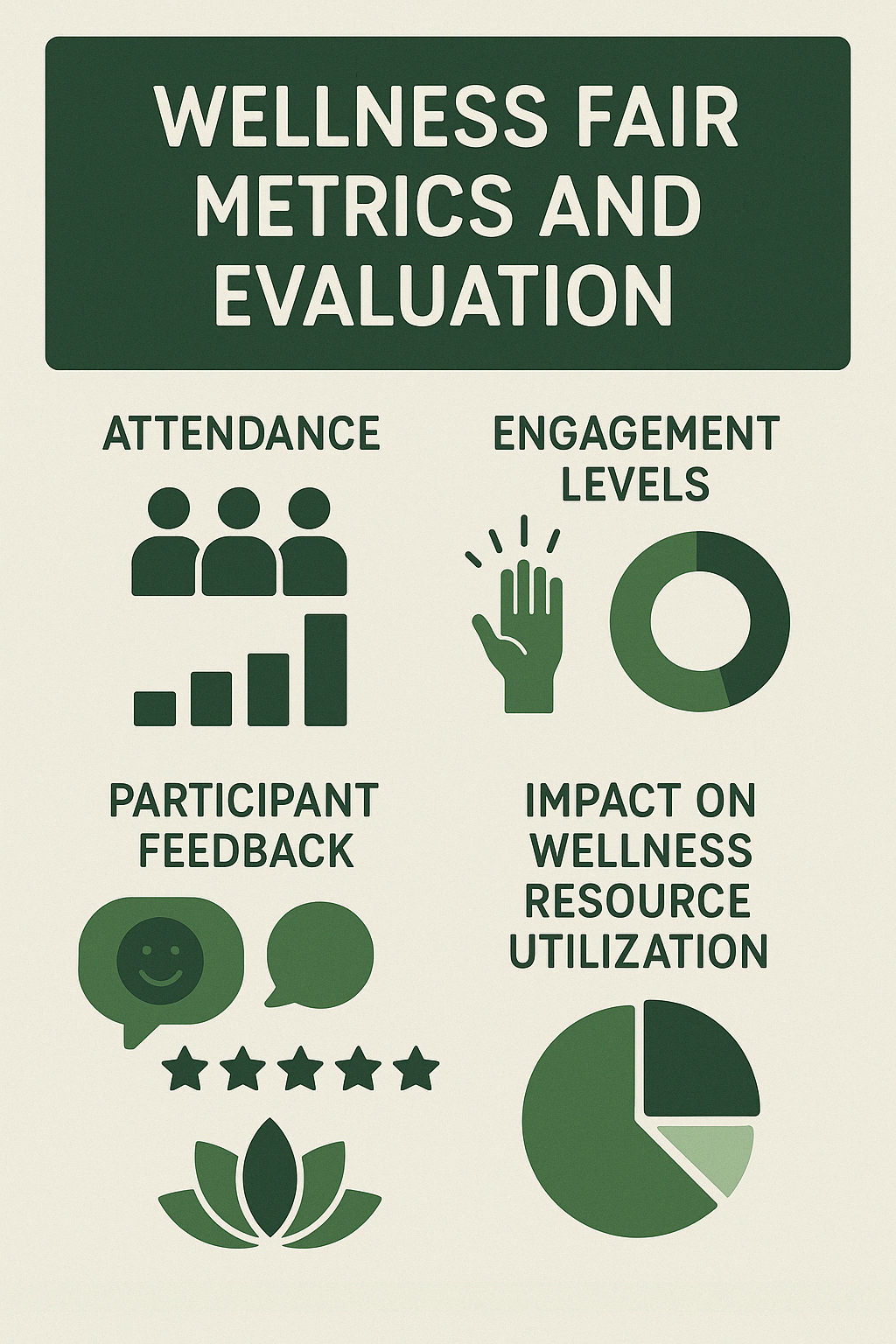
Think of participation rates as your baseline metric—how many people showed up and engaged with specific activities? This gives you the big picture view. But don’t stop there. The number of employees who participated in health screenings tells a deeper story about health awareness in your organization.
Knowledge acquisition is another crucial measure. Did your team actually learn something useful? Pre- and post-event surveys can reveal whether your wellness fair theme translated into practical information employees can use.
“We were honestly surprised by the data,” shares a wellness director I worked with recently. “Our financial wellness sessions had the highest engagement by far, which completely shifted our programming focus for the following year. We would have missed this insight without proper evaluation.”
Pay close attention to resource utilization in the weeks following your fair. Are more employees taking advantage of your wellness benefits? This often indicates successful education about available resources.
Perhaps most valuable are the behavior change intentions employees express. When someone leaves your fair committed to drinking more water or scheduling that long-overdue physical, that’s a win worth measuring.
Collection Methods
Gathering meaningful feedback requires a thoughtful approach. Digital check-ins using QR codes offer an efficient way to track attendance and booth visits without creating bottlenecks.
Exit surveys capture immediate impressions while experiences are fresh. Keep these brief—just 2-3 questions that employees can answer in under a minute as they leave.
For deeper insights, send follow-up questionnaires 1-2 weeks after your event. This timing hits the sweet spot—recent enough that the fair remains fresh in memory, but with enough distance for employees to reflect on what they’ve implemented.
Don’t overlook the value of simple observation. Assigning team members to watch traffic patterns and engagement levels throughout the event can reveal which wellness fair themes naturally draw people in and which stations might need redesigning next time.
Your vendors can be valuable partners in evaluation too. Request data about engagement levels and any feedback they collected during their interactions with your employees.
Using Evaluation Data Effectively
The true magic happens when you transform evaluation data into action. Start by identifying which elements of your wellness fair themes generated the most positive engagement. Was it the cooking demonstrations? The stress management workshops? The wearable technology displays?
Be equally honest about what didn’t work well. Perhaps the layout created bottlenecks, or certain activities didn’t resonate with your employee population. These insights are gold for future planning.
Always circle back to your original objectives. If your goal was increasing awareness of mental health resources and 75% of attendees reported learning about new support options, that’s a clear win regardless of other metrics.
Sharing results creates accountability and builds momentum. A simple one-page summary for leadership highlighting key wins and lessons learned can secure continued support for your wellness initiatives.
The most valuable use of your evaluation data is informing future wellness programming. Let the interests and needs expressed by employees guide your ongoing wellness strategy, creating a responsive approach that evolves with your workforce.
For organizations committed to long-term wellness, try connecting fair participation to health outcomes over time. While maintaining appropriate privacy, you might track whether increased engagement with wellness initiatives correlates with reduced healthcare costs or improved workforce health metrics.
When done thoughtfully, evaluation transforms your wellness fair from a standalone event into a strategic cornerstone of your comprehensive employee wellness program—ensuring each fair builds upon the success of the last while addressing evolving employee needs.
At Liftd Marketing Experts, we help wellness practices leverage these insights to create compelling content that showcases their commitment to evidence-based approaches. Your evaluation data contains powerful stories waiting to be shared through your wellness content marketing efforts.
Frequently Asked Questions about Wellness Fair Themes
How Do Wellness Fairs Differ from Health Fairs?
While many people use these terms interchangeably, there’s actually a meaningful difference between wellness fairs and health fairs that’s worth understanding.
Health fairs typically zero in on physical health screenings and medical information – think blood pressure checks, cholesterol tests, and conversations about disease prevention. They’re primarily focused on identifying health risks and preventing illness.
Wellness fair themes, on the other hand, cast a much wider net. They accept the full spectrum of well-being, including mental, emotional, social, financial, and environmental dimensions. Rather than just focusing on “not being sick,” wellness fairs celebrate thriving in all aspects of life.
You’ll notice this difference in the activities too. While a health fair might feature a row of screening stations, a wellness fair transforms the experience with interactive elements like meditation sessions, cooking demonstrations, financial planning resources, and creative activities.
As one wellness professional I spoke with put it: “A health fair primarily focuses on physical health and traditional healthcare topics, while a wellness fair covers broader wellness pillars including mental, environmental, social, and financial well-being.”
How Can I Choose the Right Theme for My Workplace?
Finding the perfect wellness fair theme for your specific workplace is more art than science, but there are several practical considerations that can guide your decision.
Start by looking at what your employees actually need. Review any health assessment data you have, check which benefits are being underused, and look for patterns in sick days or leave requests. This data tells a story about where your team might need support.
Don’t be afraid to simply ask! Anonymous surveys can reveal what wellness topics your employees are most interested in exploring. I’ve seen companies completely change their wellness direction after finding unexpected interests through simple employee feedback.
Your company culture should also heavily influence your theme choice. A high-energy sales organization might accept a Superhero Fitness Challenge, while a creative agency might connect more deeply with a Creative Health Studio theme.
Timing matters too. Consider what’s happening in your organization and the broader world. Planning a wellness fair during a particularly stressful quarter? A Mindful Retreat theme might be exactly what your team needs.
Look back at previous wellness events to understand what resonated and what fell flat. And finally, be realistic about your resources – some themes require more space, budget, or specialized vendors than others.
The most successful themes aren’t random – they thoughtfully align with existing organizational priorities, creating a natural connection between your wellness fair and your company’s broader goals.
What Are Effective Methods to Promote a Wellness Fair?
Even the most amazing wellness fair will fall flat without effective promotion. The difference between a packed event and an empty room often comes down to how you spread the word.
The golden rule of wellness fair promotion is “PROMOTE, MOTIVATE, PROMOTE” – a mantra worth remembering throughout your planning process. Start building buzz at least four weeks before your event, with promotion reaching its peak during the final week.
A multi-channel approach works best for reaching everyone in your organization. Some employees check email religiously, others respond to physical posters, and some need to hear about it directly from their manager. By using various communication channels, you’ll catch everyone at least once.
Build curiosity by releasing information progressively. Start with mysterious teasers that hint at your theme, then gradually reveal more exciting details as the event approaches. This creates a sense of anticipation that’s hard to ignore.
Visual consistency makes a huge difference. Develop a cohesive look based on your chosen theme and use it across all promotional materials. When employees see the same colors, fonts, and imagery repeatedly, it reinforces awareness of your upcoming event.
Leadership endorsement can dramatically boost participation. When the CEO or department heads express excitement about attending, others naturally follow suit. I’ve seen participation rates jump by 30% when leadership actively promotes wellness events.
Don’t underestimate the power of personal outreach. Encourage managers and wellness champions to extend personal invitations to their teams. A quick “Are you planning to check out the wellness fair?” during a team meeting can be more effective than any email.
And of course, highlight the goodies! Previewing prizes, giveaways, or special activities in your promotional materials gives people concrete reasons to attend beyond the abstract concept of “wellness.”
At Liftd Marketing Experts, we’ve found that customized promotional strategies that reflect both your chosen theme and organizational culture significantly increase participation rates and engagement. The right promotion approach can transform your wellness fair from a nice-to-have event into a can’t-miss experience.
Conclusion

When it comes to creating memorable workplace wellness events, the magic truly happens at the intersection of creativity and strategy. Wellness fair themes aren’t just decorative afterthoughts—they’re powerful tools that transform standard health events into experiences your employees actually look forward to attending.
Throughout this guide, we’ve explored ten dynamic themes that can breathe life into your next wellness initiative. From the energy of a Fitness Fiesta to the tranquility of a Mindful Retreat, each theme offers a unique pathway to engage employees in their health journey. The right theme acts as both an invitation and a framework, drawing people in while organizing the experience in a meaningful way.
What makes wellness fairs so valuable is their dual benefit. For employees, they provide accessible health information, practical resources, and skill-building opportunities in a format that feels more like an event than a lecture. For organizations, the return comes through healthier team members, reduced absenteeism, and a workplace culture that visibly values wellbeing.
Successful wellness fairs don’t happen by accident. They require thoughtful planning, strategic promotion, and careful evaluation. Start by understanding your employees’ specific needs and interests. Build excitement through multi-channel promotion. Create experiences that engage rather than simply inform. And afterward, measure what worked so you can continuously improve.
At Liftd Marketing Experts, we’ve seen how well-executed wellness initiatives can transform organizations. Beyond the immediate health benefits, they build community, strengthen company culture, and demonstrate a tangible commitment to employee wellbeing that resonates far beyond the event itself.
As you begin planning your next wellness fair, think of your theme as the heartbeat of the event—setting the rhythm and energy for everything that follows. Whether you’re organizing your first wellness initiative or looking to refresh an established program, the insights shared here can help you create an experience that delivers meaningful results for both your employees and your organization.
Your team’s health isn’t just nice to have—your organization’s success. By investing in thoughtfully designed wellness experiences, you’re making a powerful statement about what matters most: the people who make your company thrive.


