

Plastic Surgery Website Design: Top 10 Powerful Tips 2025
Why Plastic Surgery Website Design Matters for Your Practice
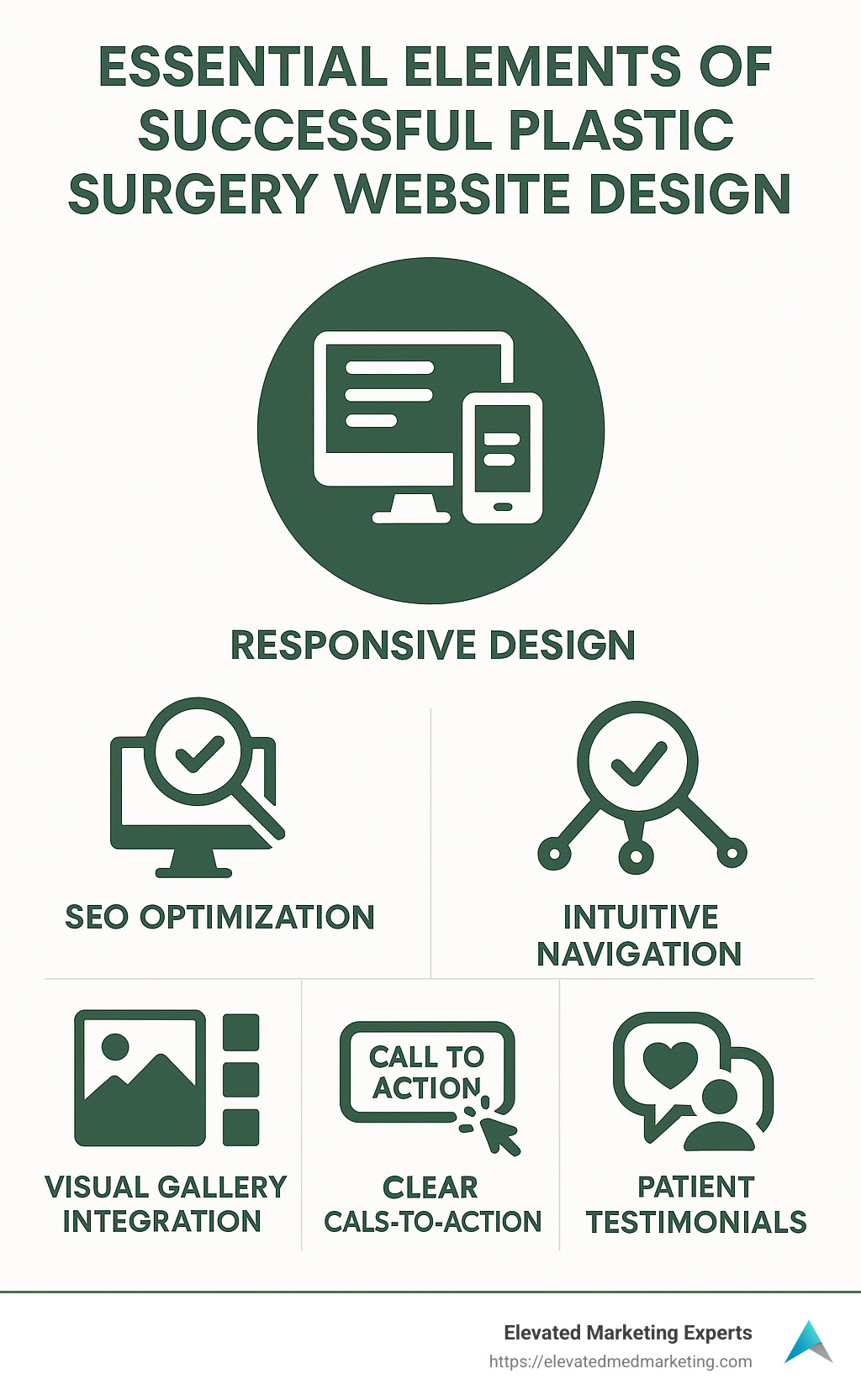
Plastic Surgery Website Design is crucial to attracting and converting new patients online. If you’re short on time, here’s exactly what makes a successful plastic surgery website:
- Clean, modern design that reflects your practice’s high standards.
- Mobile optimization since Google won’t index non-mobile-friendly sites after July 5, 2025.
- High-quality images and videos to showcase results and build trust.
- Before-and-after galleries to demonstrate expertise and significantly increase engagement (up to 400%).
- Clear navigation so visitors quickly find information and don’t abandon your site.
- Patient testimonials and reviews integrated directly into your website to boost credibility.
- SEO and local optimization to ensure visibility in search results and generate patient leads.
Designing for your plastic surgery practice is about making an exceptional first impression. As Joe Amaral with over a decade of experience in digital marketing—including extensive work in Plastic Surgery Website Design—I’ve guided numerous medical practices in crafting effective websites that drive real patient growth.
Understanding the Importance of Plastic Surgery Website Design
In today’s digital-first world, your website is often the very first interaction prospective patients have with your plastic surgery practice. Think of your website as your virtual front door, waiting to welcome patients in—or sending them running elsewhere!
Did you know that roughly 75% of potential patients begin their search for plastic surgery services online? In larger metropolitan areas, this number jumps to an impressive 90%. Your website serves as a critical first impression, and in a field as personal as plastic surgery, that initial impression can strongly influence whether visitors become loyal patients.
But effective Plastic Surgery Website Design goes beyond having a visually appealing site. As one industry expert perfectly summarizes:
“Designing a website for your plastic surgery practice is not just about appearance. It’s also about form, function, and usability.”
Let’s dive deeper into exactly why your site’s design is so important:
Professional Branding
Your website represents your practice’s brand in the digital space. Just as patients expect your office to reflect professionalism and sophistication, your website should do the same. When visitors see a clean, modern, thoughtfully designed site, they instinctively assume your practice maintains high standards across the board.
Simply put, if your website looks professional, potential patients are much more likely to believe you are, too.
Patient Trust Building
Trust is everything in plastic surgery. After all, patients are placing their appearance—and their confidence—in your hands. A well-designed, professional website helps build patient trust by clearly showcasing your qualifications, experience, and results.
Including elements such as before-and-after galleries, patient testimonials, and credentials creates a sense of transparency and reassurance. When patients see your excellent work and read positive experiences from others just like them, they’re far more confident about taking the next step.
User Engagement
Ever clicked away from a website because you couldn’t easily find what you needed? You’re not alone! According to Forrester Research, businesses lose about 50% of potential sales when visitors can’t quickly locate essential information on their websites.
A user-friendly, intuitive navigation structure and clear calls-to-action ensure visitors easily find exactly what they’re looking for—and keep them engaged longer. The longer they stay, the more likely they’ll book a consultation or reach out for information.
Competitive Advantage
Let’s face it: plastic surgery is a highly competitive field. Your website could be the deciding factor that sets you apart from other surgeons in your area.
Custom design elements, such as unique visuals that highlight your specific skills, personalized branding, and compelling storytelling, help you stand out from competitors who may rely on generic templates or outdated designs.
Take it from a plastic surgeon who recently revamped their website: “After one month [of website redesign], we’ve seen a doubling of our online Google leads.” (Yes, you read that right—double!) Clearly, professional website design isn’t just nice to have; it’s a genuine, measurable investment in your practice’s growth.
In short, a high-quality Plastic Surgery Website Design isn’t just an optional upgrade—it’s essential for growing your practice, enhancing your credibility, and standing out online. Ready to transform your digital presence? Liftd Marketing Experts are here to help you create a website that truly represents the quality and care you provide every day.
Essential Features of a Successful Plastic Surgery Website
Creating a successful Plastic Surgery Website Design isn’t just about aesthetics—it’s about effectively communicating your expertise, engaging your audience, and converting visitors into loyal patients. At Liftd Marketing Experts, we’ve seen how certain key features can make or break your website’s ability to attract and retain new patients. Let’s explore the essentials that every plastic surgery site must have to thrive:

High-Quality Visuals in Plastic Surgery Website Design
In plastic surgery, visuals speak louder than words. When people consider making improvements or changes to their appearance, they naturally want reassurance that they’re in good hands. High-quality images and videos are powerful ways to build that trust and emotional connection with potential patients.
Professional visuals showcase your expertise, clearly demonstrate procedure outcomes, and help visitors picture themselves achieving their desired results. In fact, studies indicate websites using high-quality, professional imagery can boost visitor engagement by up to 400%.
To leverage the full power of visuals, always opt for authentic, high-resolution images that are professionally edited—ditch those obviously staged stock photos (we’ve all seen enough “smiling doctor with clipboard,” haven’t we?). Videos featuring your practice, staff introductions, and informative patient testimonials work wonders to humanize your practice and boost engagement. Remember to optimize your images and video file sizes, too. No one likes a slow-loading website—especially not Google.
As plastic surgeon Dr. Mary Gingrass enthusiastically shared after revamping her website visuals, “You all rock. So pleased to see such immediate results. That’s so satisfying for our surgeon personalities!”
User-Friendly Navigation in Plastic Surgery Website Design
Clear, intuitive navigation is just as important as beautiful visuals. After all, if visitors can’t find what they’re looking for, they’ll bounce off your site faster than you can say “rhinoplasty.”
Research shows that 38% of visitors abandon websites due to unattractive layouts or difficult navigation. To keep potential patients engaged, your website should have navigation that’s clearly visible, logically structured, and uses easy-to-understand labels. Always group related information together and, if your site is content-rich, include a convenient search bar to help visitors quickly access specific information.
These days, mobile optimization isn’t optional—it’s a must-do. Over 50% of web traffic now comes from mobile devices, and Google will stop indexing non-mobile-friendly sites starting July 5, 2025. A truly user-friendly plastic surgery website adapts seamlessly to any screen size and works flawlessly across all devices—smartphones, tablets, and desktops alike.

Before-and-After Galleries
Perhaps no other feature has as much impact in Plastic Surgery Website Design as the before-and-after photo gallery. Visitors looking into cosmetic procedures want to see real results you’ve achieved for actual patients. These galleries act as powerful visual testimonials highlighting your expertise and abilities.
But not all galleries are created equal. To truly showcase your work in the best possible way, consistently use high-quality photographs. Make sure your galleries are neatly organized and easy to filter by procedure type, include diverse patient examples, and follow all legal and ethical guidelines regarding patient privacy.
Interestingly, one plastic surgery practice finded their before-and-after gallery was the most viewed section of their entire website. Visitors spent an average of four full minutes browsing these transformative examples, far longer than on any other page.
Patient Testimonials and Reviews
When potential patients are considering plastic surgery, they’re typically nervous and cautious. Social proof—such as patient testimonials and reviews—can ease their anxiety and build trust in your practice.
The most effective testimonials aren’t just throwaway sentences. Instead, incorporate genuine written testimonials (with patient-approved photos, when possible), video testimonials (which pack an even stronger emotional punch), and authentic third-party reviews from platforms like Google and RealSelf. Regularly updated content makes your testimonial section feel fresh, relevant, and trustworthy.
For instance, one plastic surgeon reported a significant 30% increase in consultation bookings after adding professionally-produced video testimonials to their website. Clearly, social proof makes a big difference.
Clear Calls-to-Action
After you’ve impressed and informed your visitors, what’s next? Well, that’s where clear calls-to-action (CTAs) step in. These guide visitors toward taking their next step—whether it’s booking a consultation, scheduling a virtual appointment, or signing up for helpful newsletters.
Effective CTAs aren’t shy. They stand out visually, use action-oriented language (like “Schedule Your Consultation” or “Get Started Today”), and are placed strategically on every important page. Offering multiple ways to connect—phone, email, online form—makes it easier than ever for potential patients to get in touch with you.
A practice that strategically implemented clear CTAs across their site saw an astounding 184% increase in email leads after their redesign. That’s not just a small improvement—it’s game-changing.
Each of these essential features works together organically to create an outstanding Plastic Surgery Website Design, driving your practice’s success online. At Liftd Marketing Experts, we specialize in crafting plastic surgery websites that not only look stunning but also engage visitors and convert them into loyal patients.
The Role of SEO in Plastic Surgery Website Design
Let’s be honest – what good is a stunning website if nobody can find it? When it comes to Plastic Surgery Website Design, creating a beautiful digital space is only half the battle. The other half? Making sure potential patients actually find you online.
Search Engine Optimization (SEO) works hand-in-hand with your website design to increase visibility when people search for plastic surgery services in your area. Think of SEO as the digital equivalent of having your practice on Main Street instead of hidden down a back alley.
Importance of SEO for Visibility
Here’s a sobering reality: about 95% of users only engage with websites on the first page of search results. If your practice isn’t ranking in those top 10 spots for relevant searches, you might as well be invisible to most potential patients.
As one marketing expert colorfully puts it: “If you’re NOT in those top 10 results, it’s like you don’t even exist.”
I’ve seen this with many plastic surgery practices. One surgeon invested thousands in a gorgeous website but received almost no traffic until implementing proper SEO. The difference was night and day.
Effective SEO for Plastic Surgery Website Design isn’t just about sprinkling in a few keywords. It requires a thoughtful approach to several key components:
Keyword Optimization
The foundation of good SEO starts with understanding how your potential patients search. This means identifying and strategically placing terms they’re likely to use when looking for plastic surgery services.
Your keyword strategy should include procedure-specific terms like “breast augmentation” or “rhinoplasty,” location-based phrases such as “plastic surgeon in [your city],” and more specific long-tail keywords that address particular concerns, like “non-surgical facelift options” or “mommy makeover recovery time.”
The trick is incorporating these naturally throughout your content so it reads smoothly for humans while still signaling relevance to search engines.
Content Strategy
High-quality, informative content serves as both a patient resource and an SEO powerhouse. When done right, your content helps search engines understand your website’s focus while providing valuable information to potential patients.
Your content strategy should address common questions patients have about procedures, explain your unique approach, and showcase your expertise. And remember – content isn’t a “set it and forget it” element. Regular updates signal to search engines that your site is active and relevant.
I recently worked with a plastic surgery practice that committed to publishing two informative blog posts monthly. Within a year, they saw a remarkable 400% increase in website traffic. Even better, these weren’t just random visitors – they were qualified leads interested in specific procedures.
Optimizing for Local Search Results
For plastic surgeons, local SEO deserves special attention since most patients want providers in their geographic area. Your Plastic Surgery Website Design should incorporate several strategies to boost local visibility:
Google My Business Optimization
Think of your Google My Business profile as your practice’s digital storefront. A complete, accurate profile includes your name, address, phone number, hours of operation, and category (plastic surgery practice).
But don’t stop there! Regular updates with posts and photos, prompt responses to reviews, and answering questions all signal to Google that you’re an active, engaged business. This dramatically improves your chances of appearing in the coveted “Map Pack” – those local business listings that appear at the top of search results.
Local Keywords and Content
Weaving location-specific terms throughout your website helps search engines understand exactly where your practice is located and who you serve. This includes incorporating city and neighborhood names in your page titles, headings, and content.
Consider creating location-specific pages if you serve multiple areas. For example, “Rhinoplasty in [City Name]” pages can be highly effective for capturing local searches.
Reviews and Ratings
Online reviews impact both search rankings and patient decision-making. When satisfied patients share positive experiences on Google and other platforms, it boosts your visibility in local searches.
One simple strategy? Make it easy for happy patients to leave reviews by sending follow-up emails with direct links to your review profiles. Just be careful to follow ethical guidelines and never incentivize reviews.
“Optimized plastic surgery websites can experience up to a 400% increase in website traffic.”
The bottom line? In today’s digital landscape, Plastic Surgery Website Design and SEO aren’t separate considerations – they’re two sides of the same coin. A beautiful website without SEO is like a sports car without an engine; it looks impressive but won’t get you where you need to go.
At Liftd Marketing Experts, we understand the unique SEO challenges plastic surgeons face. From navigating Google’s sensitivity around medical content to highlighting before-and-after results effectively, our specialized approach ensures your practice stands out in a competitive digital landscape.
Building Trust Through Testimonials and Reviews
In the field of plastic surgery, trust is the foundation of the patient-provider relationship. Prospective patients need reassurance that they’re making the right choice when selecting a surgeon for procedures that will impact their appearance and confidence.

Importance of Patient Testimonials
Let’s face it – when you’re considering plastic surgery, you want to know that others have walked this path before you and had a positive experience. This is why testimonials are so powerful. They’re not just nice-to-have website elements; they’re essential trust builders that can make or break a patient’s decision to contact your practice.
Did you know that 92% of consumers read online reviews before making purchase decisions? Even more telling, 88% trust these online reviews just as much as personal recommendations from friends or family. These numbers speak volumes about how today’s patients make decisions about their healthcare providers.
For your Plastic Surgery Website Design, authentic patient stories create that crucial emotional connection that facts and service descriptions simply can’t achieve on their own. They help address the questions that keep potential patients up at night: Will I be happy with my results? Is the recovery painful? Will the surgeon really understand what I want?
Effective Integration of Reviews
Having a dedicated “Testimonials” page is a good start, but it’s actually the least effective way to leverage patient feedback. The real magic happens when you strategically place testimonials throughout your website where they’ll have the most impact.
Procedure-specific testimonials work wonders when placed directly on relevant procedure pages. Imagine a potential patient reading about rhinoplasty and then immediately seeing Sarah’s story about how her nose surgery boosted her confidence. That connection is powerful and immediate.
Video testimonials take trust-building to another level. There’s something about seeing a real patient’s face, hearing their voice, and watching their genuine emotions that creates an best level of authenticity. One of our plastic surgery clients saw consultation requests increase by 35% after adding just three video testimonials to their homepage.
Before-and-after testimonials combine the visual impact of results with the emotional journey of the patient. This pairing helps potential patients envision not just how they might look after surgery, but how they might feel.
Strategic placement matters tremendously. We’ve found that positioning testimonials near consultation request forms can increase form completions by up to 40%. Why? Because that’s exactly when patients need that final reassurance to take action.
As Dr. Phillip Langsdon shared about his experience with effective testimonial integration: “They are by far the best web design/SEO company we have ever used, highly recommended.” This kind of endorsement demonstrates precisely how testimonials influence decision-making.
Social Proof Beyond Testimonials
While direct patient feedback is invaluable, your Plastic Surgery Website Design should incorporate other forms of social proof that build credibility and trust.
Your media appearances deserve the spotlight. When potential patients see that you’ve been featured on local news or in respected publications, it signals that you’re recognized as an expert in your field. One of our plastic surgery clients created a simple “In the Media” section that led to a 25% increase in consultation requests.
Don’t be shy about showcasing your professional credentials. Your board certifications, professional memberships, and academic appointments represent years of dedicated study and achievement. These credentials matter to patients who want the best possible care.
Similarly, awards and recognition from professional organizations or community groups help distinguish your practice from competitors. They provide independent verification of your excellence.
When appropriate, sharing procedure numbers can be remarkably effective. There’s something reassuring about knowing your surgeon has performed a particular procedure hundreds or thousands of times. It’s tangible proof of experience that patients can grasp immediately.
In the competitive field of plastic surgery, trust isn’t optional – it’s essential. A well-designed website that thoughtfully incorporates authentic patient experiences and credibility markers doesn’t just look good; it actively works to convert visitors into consultations and consultations into loyal patients.
Incorporating Before-and-After Galleries Effectively
Before-and-after galleries are often the superstars of your plastic surgery website—and for good reason. Nothing captures attention or inspires trust quite like real, visual proof of what you can achieve. When potential patients visit your site, they’re eager to see examples of your skill and what results they can realistically expect.
Showcasing Real Results
Creating an impactful before-and-after gallery isn’t just about posting a few photos. It’s about telling meaningful stories that resonate with potential patients. To truly shine, your gallery needs consistent photography—photos taken from the same angles, distances, and lighting conditions. This consistency helps visitors easily compare and appreciate the changes clearly.
Additionally, it’s important to display a diverse set of examples. Include patients of different ages, body types, and aesthetic goals. This diversity allows visitors to find relatable examples that speak directly to their concerns.
Organizing your photos thoughtfully is also essential. Consider categorizing images by specific procedures so potential patients can find exactly what they’re looking for without frustration. You might also offer convenient filtering options—allowing visitors to narrow down results by procedure type, age group, or specific aesthetic challenges.
To improve your gallery’s value even more, include detailed descriptions alongside each set of photos. Explain what procedure was performed, note any combined treatments, and mention the recovery time or number of weeks between the “before” and “after” images. This added context helps visitors gain realistic expectations and build confidence in your practice.
Building Credibility Through Visual Evidence
When done well, your before-and-after gallery can significantly lift your credibility as a plastic surgeon. In fact, industry data shows that websites with robust galleries can boost visitor engagement by up to 400%. As one surgeon finded, “Our before-and-after gallery is consistently the most-visited section of our website. Visitors spend an average of four minutes exploring these changes—that’s significantly longer than any other part of our site!”
Clearly, investing in quality and organization pays off, encouraging visitors to stay longer, trust your expertise, and ultimately, schedule a consultation.
Legal and Ethical Considerations
Before you rush to post your amazing patient changes, remember to carefully follow legal and ethical guidelines. Always obtain written informed consent from patients whose images you plan to showcase. Privacy is paramount—consider cropping or blurring identifying features when appropriate, so your patients feel comfortable and their anonymity is protected.
To set realistic expectations, ensure that your gallery represents typical results, not just your most dramatic cases. Including disclaimer language that clearly notes individual outcomes may vary is always a good idea, protecting both your practice and your patients.
Gallery Organization
The way you organize your gallery can dramatically affect how visitors experience your site. Offering interactive features such as before-and-after sliders lets potential patients easily compare the change by dragging a slider across the images. Including photos from multiple angles provides a comprehensive view of your work, helping visitors truly understand the scope of each procedure.
Don’t forget to provide key procedure details—such as specific techniques used or patient experiences (with permission, of course). And given that many visitors will be browsing your site on their phones, always ensure your gallery is fully mobile-optimized, with easy navigation and images that load quickly and display beautifully on any device.
By thoughtfully incorporating these strategies into your Plastic Surgery Website Design, you’ll create a gallery that not only highlights your skills, but also educates, inspires, and builds trust with every potential patient who visits your site.
Reflecting Your Brand and Philosophy in Your Website Design
Your plastic surgery practice isn’t like anyone else’s—so why should your website look like a cookie-cutter template? In a competitive market, your website needs to capture your personality, unique approach, and aesthetic philosophy. By reflecting your distinct brand and values in your Plastic Surgery Website Design, you stand out from the crowd and attract the patients who’ll resonate most with your practice.
Custom Design Elements
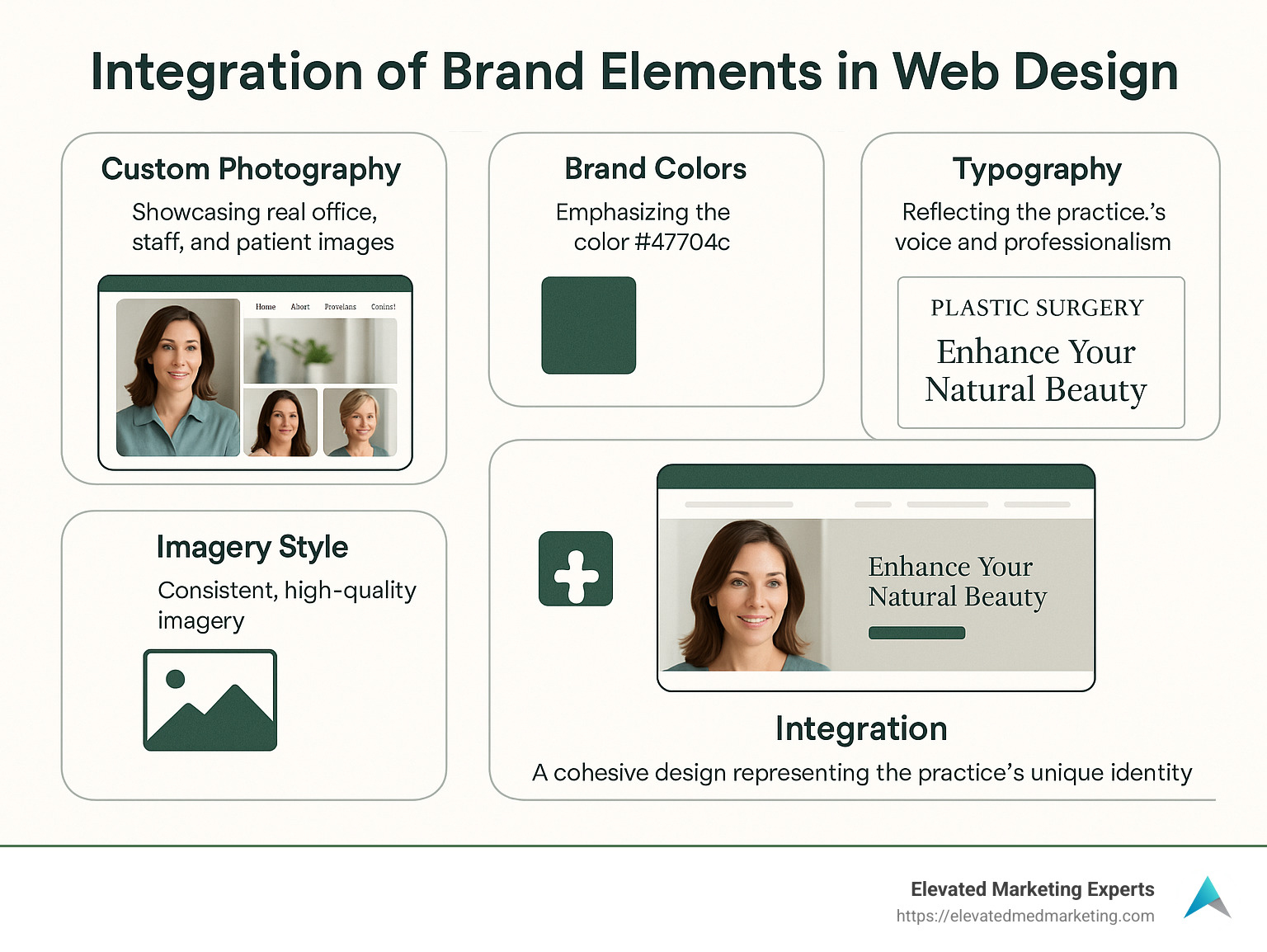
Forget standard templates—custom design elements make your website memorable and help visitors truly connect with your practice. When potential patients visit your site, authentic visual elements immediately build trust. Think about incorporating custom photography featuring your office, friendly staff, and (with their consent, of course) your happy patients. Real-life images always feel more trustworthy and genuine than generic stock photos.
Another simple way to lift your design is by adopting a signature color scheme. Your brand colors will create consistency across your website, social media, brochures, and even your waiting room decor. This visual consistency signals professionalism and attention to detail to potential patients.
You can also consider adding unique visual touches like custom illustrations or graphics to explain procedures in a clear, approachable way. Personalized icons for different treatment pages not only add personality to your site but also improve navigation, making it easier for visitors to find exactly what they’re looking for.
As Dana, Director of Client Strategies at a leading medical marketing firm, puts it: “No detail is too small when it comes to bringing your brand to life online.” And she’s exactly right—every little touch counts.
Brand Voice and Storytelling
Your website content shouldn’t sound stiff or overly clinical. Instead, use your unique voice and narrative style to help visitors get to know you and your practice better. Sharing your practice’s history can be warm and personal, letting patients see the human side behind your expertise. Briefly telling the story of how you got started and how your practice grew over the years helps visitors understand your journey and connect with you emotionally.
Don’t forget to highlight your surgeon’s philosophy clearly. Patients want to know what makes your approach special and how you view patient care, safety, and aesthetic outcomes. People naturally gravitate toward providers whose values align with theirs, so your philosophy can become one of your strongest selling points.
It’s also a good idea to include team profiles—not just of surgeons but of nurses, patient coordinators, and front-office staff. By sharing the friendly faces and personalities patients will encounter during their visit, you humanize the patient experience and set clear expectations.
Clearly outlining your mission and core values completes your storytelling. What does your practice stand for? What principles guide your patient care? Answering these questions up front reassures potential patients that you genuinely care about their wellbeing and long-term satisfaction.
One plastic surgeon who took the time to incorporate authentic storytelling into their new website reported, “After revitalizing my website with more personal content about my approach and philosophy, we saw a doubling of our online Google leads. The results speak volumes.”
Unique Value Proposition
Every plastic surgery practice has defining features that set it apart. Make sure your website clearly communicates exactly what makes you unique and valuable to prospective patients. This could mean mentioning specialized techniques you offer that few others do, such as advanced minimally invasive procedures or cutting-edge technology.
Perhaps you have a specialized focus—like serving patients exclusively looking for facial rejuvenation or body contouring. Emphasizing this specialization helps attract exactly the right patients who need your expertise most.
Highlighting your state-of-the-art technology and facilities is another powerful approach. Patients feel reassured knowing they’re receiving care in a modern, innovative environment. Sharing images or videos showcasing your advanced equipment brings your message home visually.
Finally, consider emphasizing the exceptional patient experience within your practice. Do you create a spa-like atmosphere to reduce patient anxiety? Provide personalized treatment plans? Offer comprehensive aftercare? Showcasing these details helps patients imagine the experience they’ll have under your care—and feel confident in choosing you.
By thoughtfully reflecting your unique brand and philosophy throughout your Plastic Surgery Website Design, you build stronger connections with patients right from the start. This authenticity leads to greater patient trust, satisfaction, and loyalty—exactly what your practice needs to thrive.
Common Mistakes to Avoid in Plastic Surgery Website Design
Even the most conscientious plastic surgery practices can make certain missteps when creating their website. Mistakes might seem small, but they can significantly impact your site’s ability to engage visitors, rank well on Google, and attract new patients. At Liftd Marketing Experts, we’ve worked with many plastic surgery practices over the years—and we’ve seen just about every mistake under the sun. Here’s what you’ll want to avoid (and how to fix it):
Overcomplicated Design
When it comes to Plastic Surgery Website Design, it’s natural to want to impress visitors with a stylish, sophisticated look. But sometimes, practices go a little overboard with fancy layouts, confusing navigation, and too many design elements. The result? Visitors get overwhelmed, frustrated, and quickly click away.
Instead, accept simplicity. A clean, minimalist design that’s easy on the eyes helps patients find exactly what they’re looking for. Prioritize clear navigation menus, plenty of white space, and carefully chosen visuals. Your website should feel welcoming—not intimidating!
Slow Loading Times
In our busy digital age, patience is in short supply. Studies show that 40% of visitors leave a website if it takes more than 3 seconds to load. Plastic surgery websites often suffer from slow load times because of large images in before-and-after galleries.
Fortunately, speeding things up isn’t complicated. Optimize your images for web use, ensuring they’re compressed without losing quality. Implement “lazy loading,” which only loads images as users scroll down the page. Using a reliable content delivery network (CDN) and streamlining your site’s code with professional help can also significantly boost your load speeds.
Non-Responsive Design
Here’s a biggie you can’t afford to ignore: Google announced that after July 5, 2025, it will no longer index websites that aren’t optimized for mobile. More than half of your audience is already visiting your site from their smartphone or tablet. If your site isn’t mobile-friendly, you’re missing out on tons of potential patients—and soon you won’t even appear in search results.
The solution is straightforward: adopt responsive design. This approach ensures your website automatically adapts its layout, images, and content to look great and function smoothly on any device—phones, tablets, laptops, or desktops. Trust us, your visitors—and Google—will thank you!
Lack of Clear Contact Information
Believe it or not, some practices accidentally hide their contact information deep within their sites, making it hard for potential patients to reach out. Visitors shouldn’t have to dig through pages or scroll endlessly to find your phone number or email address.
Make it easy for patients to connect. Display your phone number prominently in the header of every single page. Offer multiple ways to reach you clearly: phone, email, and an easy-to-use consultation form. Incorporating strategic calls-to-action like a bold “Request a Consultation” button throughout your site ensures patients always know exactly how to take the next step.
Poor Content Quality
Content is king, especially in Plastic Surgery Website Design. Low-quality or generic content doesn’t inspire patient confidence, nor does it help your website gain visibility in search results. Outdated, overly technical content that doesn’t address your visitors’ real questions or concerns will turn potential patients away.
Investing in high-quality, patient-centered content makes a huge difference. Clearly describe your procedures, answer frequently asked questions, and highlight your unique expertise and approach. Regular updates to your content demonstrate your practice’s commitment to staying current and relevant. Plus, fresh, informative content helps boost your Google rankings!
Neglecting SEO Fundamentals
You could have the most beautiful website design in the world—but if nobody sees it, what’s the point? Many plastic surgery websites are built without proper attention to search engine optimization (SEO). Without good SEO, your carefully crafted website may go unnoticed by prospective patients searching online.
To avoid this, incorporate solid SEO best practices. Start with keyword research and keyword-optimized pages. Make sure each page has unique metadata, descriptive headings, and structured content. Adding schema markup and focusing on local SEO—like your Google My Business profile and consistent name, address, and phone info—can dramatically improve your visibility online.
Forgetting the Emotional Component
Plastic surgery isn’t just about physical change. It’s deeply tied to emotions, confidence, and self-esteem. Websites that only focus on clinical information or technical details miss an important opportunity to connect emotionally with patients.
Don’t forget to speak to the emotional side of plastic surgery. Share genuine patient stories (with permission), emphasizing how procedures positively impacted their confidence, self-image, and quality of life. Highlight testimonials and video reviews that speak to the emotional journey, not just physical results. This approach creates a personal connection and reassures potential patients they’re in caring, compassionate hands.
Ignoring Legal and Ethical Guidelines
Finally, never forget the importance of legal and ethical considerations when creating your plastic surgery website. This is particularly true when showcasing patient photos or testimonials.
Always obtain written consent before using patient photos or testimonials. Include disclaimers about individual results varying from patient to patient. Maintain strict patient confidentiality by anonymizing images where appropriate. Following these guidelines protects your practice legally—and reassures prospective patients that you take their privacy seriously.
“Businesses lose about 50% of potential sales due to users not finding the right information on their websites.”
This statistic from Forrester Research underscores the importance of avoiding these common website mistakes. By steering clear of these pitfalls, you’ll have a professional, user-friendly site that engages visitors and turns them into happy patients.
Creating an exceptional Plastic Surgery Website Design doesn’t have to be complicated—especially when you partner with experts who understand the unique needs of your practice. At Liftd Marketing Experts, we’ve helped many aesthetic and wellness practices craft websites that attract, engage, and convert. Let us help you do the same!
Conclusion
Creating an effective website for your plastic surgery practice goes beyond just picking a pretty design—it’s a thoughtful blend of art, science, and strategy. Your website needs aesthetic appeal, of course, but also intuitive functionality, engaging content, and technical optimizations to succeed. Done right, your website becomes your most valuable marketing asset, quietly working around the clock to attract new patients, boost credibility, and grow your business.
In plastic surgery, first impressions matter—a lot. For many potential patients, your website will be their very first interaction with your practice (no pressure, right?). That means your online presence should accurately reflect your professionalism, expertise, and patient-focused approach. A beautifully designed website sends the message that your patient care will be just as meticulous and thoughtful.
A few key points we’ve covered:
Mobile optimization isn’t just good to have anymore—it’s essential. Google has announced they will stop indexing websites that aren’t mobile-friendly starting July 5, 2025. That’s a fancy way of saying: if your site doesn’t work beautifully on smartphones, potential patients might never find you.
High-quality visuals, especially carefully organized before-and-after galleries, aren’t just nice—they’re powerful. In fact, research shows that engaging galleries can increase visitor engagement by up to 400%. Similarly, strategically placed calls-to-action (CTAs) can help guide visitors into becoming actual patients, boosting your leads by as much as 184%.
SEO optimization is another essential ingredient for success. Websites that invest in proper search engine optimization see impressive results, with traffic increases of up to 400%. That’s more eyes on your practice, more consultations scheduled, and ultimately more happy patients through your doors.
Perhaps most importantly, your website should authentically reflect your practice’s unique brand, philosophy, and patient care approach. Generic templates and cookie-cutter designs won’t cut it—patients want a real sense of who you are and what makes your practice special.
At Liftd Marketing Experts, we understand the unique challenges and amazing opportunities that plastic surgeons and aesthetic practices face online. Creating beautifully effective Plastic Surgery Website Design is our specialty. Our team combines deep industry experience with marketing savvy to craft customized, highly effective websites that truly represent your practice.
Whether you’re building your very first site or refreshing an existing one, we can help you make it stand out. We take care of every detail—from stunning visuals and user-friendly navigation to powerful SEO and compelling content—so that your site becomes a welcoming, persuasive home online. (Think of us like a friendly concierge guiding your visitors right into your practice!)
Don’t let your website hold you back. Partner with experts who know exactly how to bring your practice to life online. Invest in your digital presence today, and smile as your practice grows tomorrow.


