

Tailored marketing approach: Your #1 Secret Weapon
Why Every Business Needs a Personalized Connection
A custom marketing approach is a strategy that customizes messages and campaigns to match the specific needs and behaviors of individual customers or audience segments. Instead of using generic, one-size-fits-all messaging, it focuses on creating relevant, personal connections.
Gone are the days when a single advertisement could speak to everyone. Today’s consumers expect brands to understand their unique needs. Research shows that 80% of customers are more likely to make a purchase from brands that offer personalized experiences, and this approach can deliver a significant increase in business results.
For plastic surgeons and medical spa owners, this shift is crucial. Potential patients are seeking solutions to specific concerns, from fine lines to body contouring. Generic messages about “looking younger” don’t resonate like targeted content that addresses their exact goals.
The challenge is moving beyond basic demographics to truly understand what motivates each patient. It’s the difference between casting a wide net and using precise targeting to connect with people genuinely interested in your services. At Liftd Digital Marketing, we’ve seen how a custom marketing approach transforms businesses, making personalization the foundation of sustainable growth.
What is a Custom Marketing Strategy and Why Does it Matter?
A custom marketing approach is the difference between being just another number in line and being greeted by a barista who knows your name and order. It’s about delivering the right message to the right person at the right time. Instead of shouting the same message to everyone, you’re having focused conversations with people who care about what you’re saying.
This approach treats every potential patient as a unique individual. They aren’t just looking for “cosmetic procedures”; they’re dealing with specific concerns like crow’s feet or stubborn fat. A custom marketing approach speaks directly to these individual worries and desires by using data to understand what people tell us through their actions, like the time they spend on your website.
There’s solid science behind why this works. Research on message tailoring, like the study “Message Targeting and Tailoring in Health Communication“, demonstrates that personalized health messages significantly outperform generic ones in changing behavior. When your marketing consistently shows up with helpful, relevant information, you build trust and become the go-to solution for patients.
From Generic to Genuine: Meeting Modern Customer Expectations
Today’s consumers are inundated with thousands of ads daily, most of which are irrelevant. To break through this noise, we must move from broadcasting to connecting. Modern customers expect brands to know their preferences and communicate accordingly. According to McKinsey’s research on personalization, companies that excel at this see massive improvements in customer satisfaction. In aesthetic medicine, where the market is competitive, a genuine connection beats generic messaging every time.
The Core Benefits of a Custom Marketing Approach

Adopting a custom marketing approach open ups benefits that directly impact your bottom line:
- Increased customer loyalty: When patients feel understood, they stick around for future treatments and refer their friends.
- Higher engagement rates: Relevant emails, social posts, and ads get noticed, leading people to stop, read, and take action.
- Improved conversion rates: Personalized marketing delivers an 88% increase in business results because it addresses specific concerns, making potential patients more likely to book a consultation.
- Better customer retention: It costs far less to keep existing patients happy than to find new ones.
- Improved customer insights: As you collect and analyze data, you learn not just what your patients want, but why they want it.
- Efficient resource allocation: Your marketing budget works harder by focusing on messages that resonate with genuinely interested people.
How to Build Your Custom Marketing Blueprint
Creating a custom marketing approach is like designing a custom treatment plan for a patient. You start by understanding their unique needs and then build a strategy that speaks directly to them. This blueprint is a living strategy that adapts as you learn more about your patients. Let’s walk through the essential steps.
Step 1: Collect and Analyze Customer Data
Data is the secret ingredient that makes personalization possible. Without it, you’re just guessing.
- CRM Systems: Your Customer Relationship Management system is a treasure chest of patient insights, holding the story of every interaction and treatment.
- Website Analytics: Tools like Google Analytics show how people behave on your site, revealing their interests through the pages they visit.
- Social Media: Platforms offer a window into your audience’s world, showing what content excites them and what questions they’re asking.
- Surveys and Feedback: Directly asking patients for information (zero-party data) is gold because it comes straight from the source.
All data must be handled with care, following privacy guidelines like GDPR and CCPA to build and maintain trust. Our SEO services for medical spas can help turn these insights into better search visibility.
Step 2: Segment Your Audience Effectively
Basic demographics only tell part of the story. To truly connect, you need to go deeper.
- Psychographics: Dive into what motivates your patients. Do they value natural results or prioritize cost? These insights help craft messages that resonate emotionally.
- Behavioral Segmentation: Look at what people do. A repeat website visitor who reads your blog is at a different stage than a first-time visitor.
- Geographic Segmentation: Even location can be powerful, as patients in different areas may have different concerns or budgets.
This allows you to create distinct groups, such as patients interested in preventative treatments versus corrective procedures. The goal is to build detailed buyer personas—character profiles of your ideal patients—so you can speak directly to their needs. Our PPC management services excel at reaching these specific segments with precision.
Step 3: Develop Personalized Content and Offers
This is where your strategy becomes reality. Instead of generic messages, you create content that feels custom-made.
- Dynamic Website Content: Adapt your site based on who’s visiting. A returning visitor interested in laser treatments could see relevant success stories.
- Personalized Email Campaigns: Send targeted emails based on a patient’s interests, turning broadcasts into conversations.
- Targeted Social Media Ads: Create specific ads for each audience segment, like preventative Botox for younger audiences and facial rejuvenation for older ones.
- Custom Landing Pages: If someone clicks an ad for lip fillers, they should land on a page dedicated to that topic, not a generic injectables page.
Matching your message to where each person is in their journey is key. Our content marketing strategy guide offers more insights into creating content that connects.
Executing and Measuring Your Custom Marketing Approach
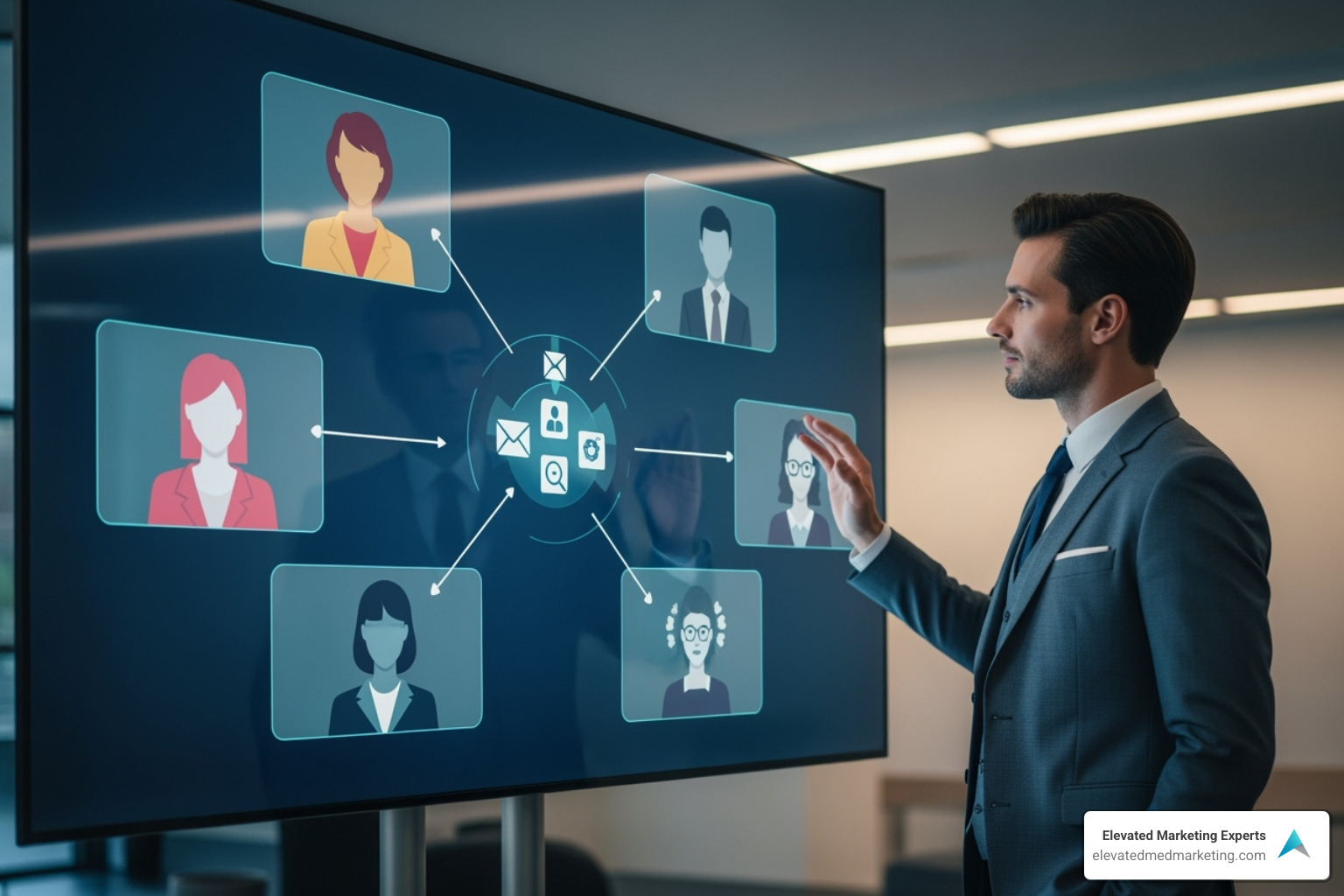
Developing a brilliant custom marketing approach is only half the battle; the real magic is in the execution and measurement. This phase is about bringing your blueprint to life with the right tools and using data to ensure continuous improvement.
The Power of Technology and Automation
Executing a custom strategy at scale is impossible without technology. Marketing automation platforms (like HubSpot or Marketo) streamline complex processes and deliver personalized messages automatically. These are the tools we integrate with our services to make personalization efficient.
Artificial intelligence (AI) is a game-changer, helping us:
- Generate personalized ad copy and email subject lines.
- Automatically adjust website content based on user behavior.
- Provide instant, personalized responses with chatbots.
- Analyze past data to predict future patient behavior.
This technological backbone ensures your custom marketing approach is both effective and scalable. As research from Aberdeen Group highlights, this leads to a significant increase in business results.
Measuring Success and ROI
The success of a data-driven custom marketing approach is measurable. We track key performance indicators (KPIs) to understand what’s working and optimize your return on investment (ROI).
| Key Metric | Meaning |
|---|---|
| Conversion Rate by Segment | The percentage of a targeted segment that completes a desired action (e.g., books a consultation). |
| Customer Lifetime Value (CLV) | The total revenue a patient is expected to generate. Personalization significantly boosts CLV. |
| Return on Ad Spend (ROAS) | The revenue generated for every dollar spent on advertising. A custom approach yields a higher ROAS. |
| Engagement Metrics | Click-through rates, time on page, and email open rates show how well your content resonates. |
| A/B Testing Results | Comparing different versions of a message to see which performs better for continuous refinement. |
Real-World Examples of Custom Marketing Mastery
Seeing personalization in action brings the concept to life. We can draw inspiration from companies that have mastered the custom marketing approach:
- Amazon’s Recommendation Engine: Suggests products based on your browsing history and past purchases, driving a huge portion of its revenue.
- Netflix’s Content Suggestions: Analyzes viewing habits to recommend shows, saving the company billions in customer retention costs.
- Spotify’s Customized Playlists: Curates music based on listening habits, helping users find new favorites.
- Aesthetic Practice Examples: A medical spa can send a birthday offer for a treatment a patient has previously shown interest in. A plastic surgeon can retarget a website visitor with ads for the specific procedure page they viewed, like rhinoplasty.
Navigating Challenges and the Future of Marketing
While a custom marketing approach delivers incredible results, it comes with challenges. The digital landscape is constantly shifting, privacy concerns are growing, and consumer expectations keep rising. Understanding these challenges upfront is key to navigating them successfully.
Overcoming Common Problems and Ethical Lines
- Data Privacy Concerns: Regulations like GDPR and CCPA are trust-building opportunities. Be transparent about how you collect and use patient data to strengthen your relationship.
- The “Creepy” Line: There’s a fine line between helpful and intrusive. The goal is to be relevant and thoughtful, not make patients feel like they’re being watched.
- Resource Intensity: A custom strategy requires investment in technology and content. However, the improved ROI justifies the cost by eliminating waste on ineffective broad campaigns.
- Maintaining Data Quality: Bad data leads to bad personalization. Regularly clean and update your patient information to ensure your systems are accurate.
- The Challenge of Scale: Personalizing for thousands of patients requires robust systems. Technology is your best friend here. For more insights, check out our guide on plastic surgery website design.
Future Trends: What’s Next for the Custom Marketing Approach?
The future of marketing is getting even more personal and intelligent.
- Hyper-personalization: Moving beyond segments toward true one-to-one marketing, where every interaction is uniquely crafted in real-time.
- AI and Machine Learning: AI will become even better at predicting patient needs and creating personalized content at scale.
- Predictive Personalization: We’ll be able to anticipate patient needs before they even realize them, like offering a follow-up skincare consultation at the perfect time.
- The Cookieless Future: The shift away from third-party cookies puts a greater emphasis on first-party and zero-party data—information you collect directly from your patients.
- Omnichannel Personalization: Ensuring a seamless, consistent, and personalized experience whether a patient is on your website, reading an email, or in your clinic.
Frequently Asked Questions about Custom Marketing
When we talk to plastic surgeons and medical spa owners about implementing a custom marketing approach, a few key questions always come up. Here are the answers to the most common concerns.
How is a custom marketing approach different from market segmentation?
This is a great question. Think of it this way:
Market segmentation is organizing your audience into groups based on shared traits (e.g., age, procedure interests). It’s the preparation.
A custom marketing approach is what you do with those groups. It’s the action of creating specific messages, offers, and content that speaks directly to each segment’s unique needs. Segmentation sorts your patients into different rooms; a custom approach is having a different, relevant conversation in each room.
Can small businesses afford to implement a custom marketing strategy?
Absolutely. Technology has made personalization accessible to practices of all sizes. You don’t need a massive budget to get started. Effective strategies can be simple:
- Segment your email list by procedure interest. This costs next to nothing but dramatically increases relevance.
- Use targeted social media ads. Platforms like Facebook and Instagram make it affordable to create specific ads for different age groups or interests instead of running one generic ad.
A custom marketing approach often pays for itself quickly by reducing wasted ad spend and improving conversion rates. It’s about working smarter, not just spending more.
What’s the most important first step in creating a custom marketing strategy?
If you do only one thing to start, get serious about your data. Everything else is built on this foundation.
Many practices jump into creating campaigns without truly understanding who their patients are. Start with what you already have: your patient management system and website analytics contain a goldmine of information. Look at which procedures generate the most interest and what content people engage with.
Most importantly, ask your patients directly what they want through simple surveys or feedback forms. This zero-party data is incredibly accurate and valuable. Clean, relevant data is the key to making personalization feel like magic to your patients.
Conclusion

As we’ve explored, a custom marketing approach is not just another buzzword—it’s the bridge to building lasting relationships with your customers. It’s about making potential patients feel seen and understood.
For plastic surgeons and medical spas, this shift from generic to genuine is especially powerful. Your patients are seeking solutions to deeply personal concerns. When your marketing speaks directly to them, you’re not just advertising; you’re offering understanding and building trust before they even walk through your door.
A custom marketing approach transforms your practice from just another option into the obvious choice. Instead of casting a wide net, you’re having meaningful conversations with people who genuinely need what you offer.
At Liftd Digital Marketing, we understand the unique challenges facing aesthetic practices. Our industry expertise allows us to craft custom marketing approaches that resonate deeply with your ideal patients, turning browsers into patients and patients into advocates.
Your ideal patients are searching for you right now. Let’s make sure they not only find you but feel understood when they do. Start building your custom plastic surgery ad strategy today.


