

SEO Services List: Top 10 Essential Strategies 2025
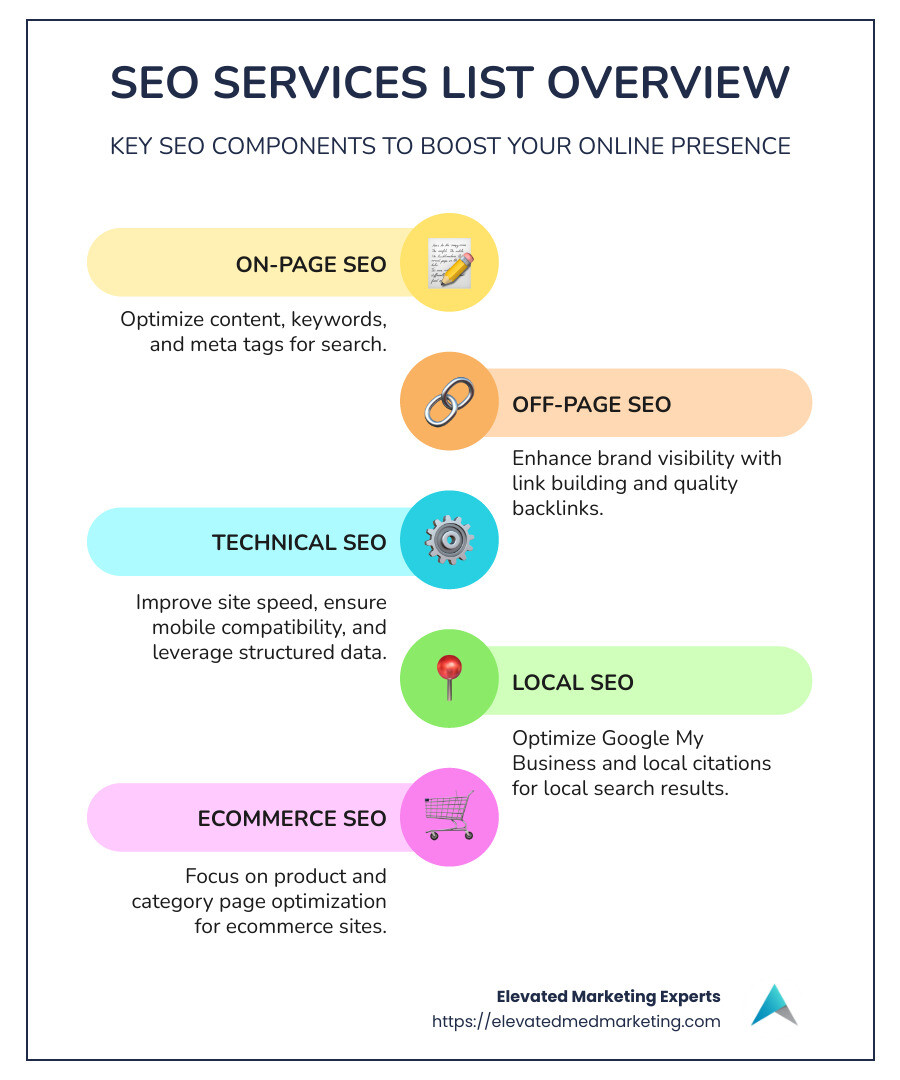
Understanding an seo services list is crucial for any business looking to improve its online presence. With the rapid advancements in digital marketing and search engine optimization, businesses must stay ahead to attract more visitors and increase conversions. Here’s a quick rundown of what you can expect from an seo services list:
- On-Page SEO: Enhancing content, keywords, and meta tags.
- Off-Page SEO: Building links, brand visibility, and gaining quality backlinks.
- Technical SEO: Improving site speed, mobile compatibility, and using structured data.
- Local SEO: Optimizing your Google My Business profile and local citations.
Now, let’s dig into how these services can transform your online strategies.
My name is Joe Amaral. With years of experience in digital marketing, I’ve seen how an effective seo services list can lift a business. As someone who has steerd corporate roles and founded multiple digital enterprises, I’m here to share insights that can make a difference. Transitioning your business to the next level starts with understanding the essence of SEO and digital marketing.
Core SEO Services
In digital marketing, understanding the core SEO services is key to boosting your online visibility and attracting the right audience. Let’s break down the three main pillars: On-Page SEO, Off-Page SEO, and Technical SEO.
On-Page SEO
On-Page SEO is all about optimizing elements on your website to improve search rankings. It includes:
Content Optimization: Ensure your content is relevant, informative, and includes the right keywords. Avoid keyword stuffing; instead, aim for a natural flow.
Keyword Research: Identify the terms your potential customers are searching for. This involves analyzing search volume, keyword difficulty, and search intent.
Meta Tags: Optimize title tags, meta descriptions, and headers. These elements help search engines understand the context of your content.
On-Page SEO acts as the foundation of your website’s search engine visibility. When done right, it can significantly improve your site’s user experience and search rankings.
Off-Page SEO
Off-Page SEO focuses on activities outside your website that impact your search engine rankings. This includes:
Link Building: Acquire high-quality backlinks from reputable sites. These act as endorsements for your content, boosting your authority in the eyes of search engines.
Brand Signals: Improve your brand’s visibility through social media mentions and online reviews. These signals contribute to your site’s credibility and trustworthiness.
Backlinks: Focus on obtaining links from industry-relevant sites. Quality over quantity is crucial here, as links from reputable sources carry more weight.
Off-Page SEO is like the word-of-mouth of the digital world. It helps establish your site’s authority and relevance in your industry.
Technical SEO
Technical SEO involves optimizing the technical aspects of your website to improve its crawlability and indexability. Key areas include:
Website Speed: Ensure your site loads quickly. A fast-loading site improves user experience and is favored by search engines.
Mobile Friendliness: Optimize your site for mobile devices. With more users browsing on smartphones, a mobile-friendly design is essential.
Structured Data: Use structured data to help search engines understand your content better. It can also improve your site’s appearance in search results with rich snippets.
Technical SEO ensures that search engines can easily access, crawl, and understand your website. It’s the backbone of a well-optimized site.
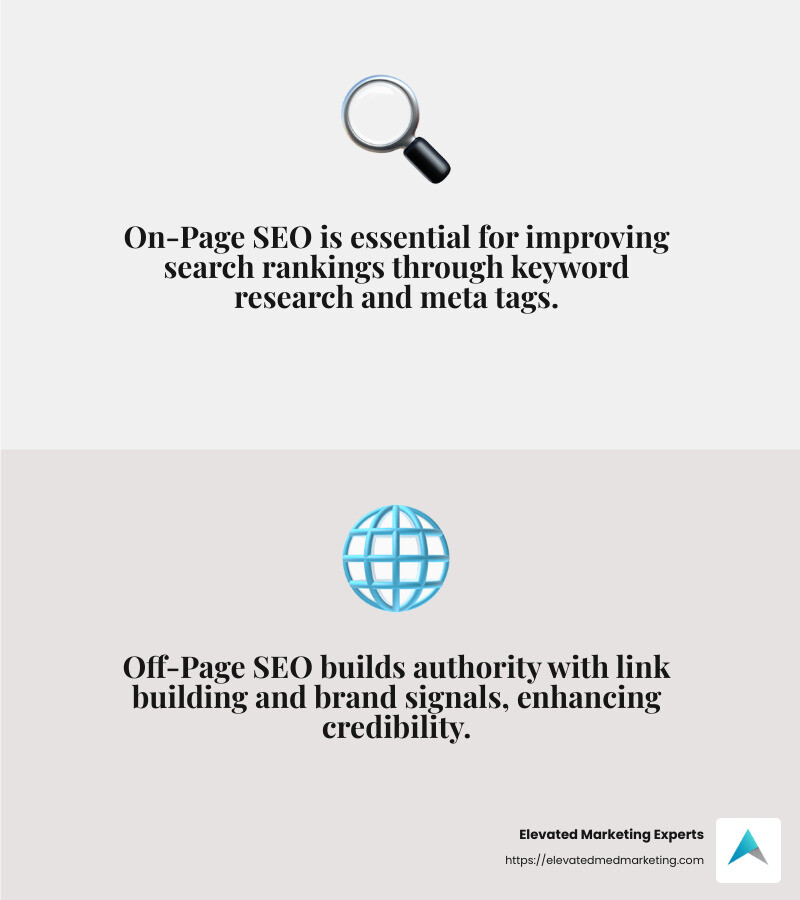
By mastering these core SEO services, you can create a robust foundation for your digital marketing strategy. Each pillar plays a vital role in enhancing your online presence and driving organic traffic to your site.
In the next section, we’ll explore how these core services extend to local SEO, helping you target specific geographic areas and reach more local customers.
On-Page SEO
On-Page SEO is the art of crafting each webpage to be a magnet for search engines and users alike. It’s essentially about making your site as attractive and understandable as possible to both humans and algorithms.
Content Optimization
Content is king, but only if it’s optimized. This means your content should not just be informative, but also aligned with what your audience is searching for. It’s crucial to address the user’s intent—what they really want to know or do when they search a keyword.
Avoid keyword stuffing! Instead, integrate keywords naturally. Aim for a smooth, engaging read that provides value. Use headers, bullet points, and visuals like images or infographics to break up text and make your content more digestible.
Keyword Research
Keyword research is the cornerstone of any successful SEO strategy. It’s about finding the right words and phrases your potential customers use when searching online.
Tools like Google’s Keyword Planner or Ahrefs can help identify high-volume, low-competition keywords. Long-tail keywords (those three or more words long) often have less competition and higher conversion rates. For instance, “best running shoes for flat feet” might be a goldmine compared to just “running shoes.”
Meta Tags
Meta tags are snippets of text that describe a page’s content. They don’t appear on the page itself but in the page’s code.
Title Tags: These are like headlines for your page in search results. They should be compelling and include your primary keyword. Think of them as your first impression—make it count!
Meta Descriptions: While not a direct ranking factor, a well-crafted meta description can boost your click-through rate. It should provide a brief, enticing summary of your content and include relevant keywords.
Headers (H1, H2, etc.): Use headers to organize your content and make it easier for both users and search engines to understand. Your H1 tag should be your main title and include your primary keyword.
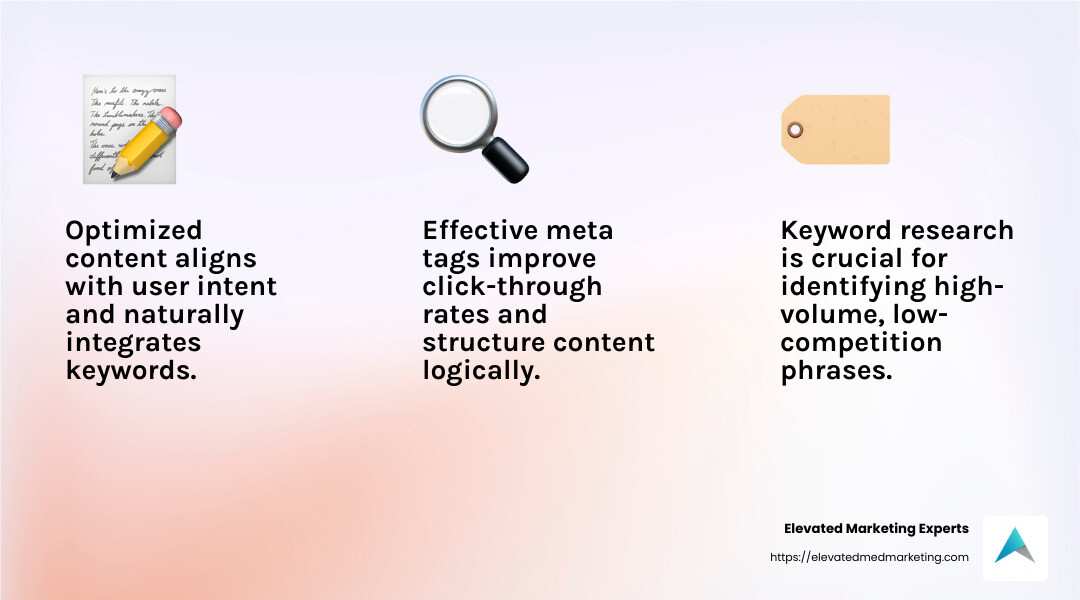
By focusing on these elements, On-Page SEO transforms your website into a well-oiled machine, ready to rank higher and attract more visitors. It’s about aligning every piece of your page with what users and search engines are looking for.
Next, we’ll dive into Off-Page SEO, where the focus shifts from your website to the vast digital world beyond.
Off-Page SEO
Off-Page SEO is all about boosting your website’s authority and visibility outside of your own pages. It’s like building a reputation that makes search engines trust you more. Here’s how it works:
Link Building
Link building is the heart of off-page SEO. It involves getting other websites to link back to yours. Think of these links as votes of confidence. The more quality links you have, the more credible your site appears to search engines like Google.
White Hat Techniques: Focus on creating valuable content that naturally attracts links. This could be through guest blogging or creating shareable infographics.
Avoid Black Hat Techniques: Buying links or using link farms can lead to penalties from Google. Always aim for genuine, high-quality links.
Brand Signals
Brand signals are mentions of your brand across the web. Even if they aren’t linked, they can still impact your SEO positively. Google considers these mentions as part of its brand evaluation.
Social Media: Engage with your audience on platforms like Facebook, Twitter, and Instagram. While social signals aren’t a direct ranking factor, they can increase your visibility and lead to more backlinks.
Online Reviews: Encourage customers to leave positive reviews on platforms like Google My Business and Yelp. These reviews can boost your brand’s credibility and influence local SEO.
Backlinks
Backlinks are crucial as they show search engines that other sites vouch for your content. But not all backlinks are created equal.
Quality Over Quantity: A link from a reputable site like a university or news outlet is more valuable than dozens from low-quality sites.
Anchor Text: The clickable text of a backlink should be relevant to the page it links to. This helps search engines understand the context of the link.
Competitor Analysis: Study where your competitors get their backlinks. Tools like Ahrefs or SEMRush can help you find these opportunities.
Off-Page SEO is about building a network of trust and authority around your website. It complements On-Page SEO by showing search engines that your site is both relevant and respected in its field.
Next, we’ll explore Technical SEO, where we focus on the behind-the-scenes aspects that keep your website running smoothly and efficiently.
Technical SEO
Technical SEO is like the backbone of your website. It ensures everything behind the scenes is working perfectly so search engines can easily crawl and index your site. Let’s explore the key aspects: website speed, mobile friendliness, and structured data.
Website Speed
Website speed is crucial. A slow site can frustrate users and lead to higher bounce rates. Search engines also consider speed as a ranking factor. If your site is sluggish, you risk losing visibility.
Optimize Images: Use compressed formats like JPEG or PNG to reduce load times.
Leverage Browser Caching: Store some data on users’ devices so pages load faster on repeat visits.
Minimize CSS and JavaScript: Reduce file sizes to speed up loading times.
Mobile Friendliness
With more people using smartphones to surf the web, a mobile-friendly site is essential. Search engines use mobile-first indexing, meaning they primarily look at the mobile version of your site for ranking.
Responsive Design: Ensure your site adjusts smoothly to different screen sizes. This improves user experience on all devices.
Touch-Friendly Navigation: Make sure buttons and links are easy to tap on small screens.
Fast Mobile Loading: Use tools like Google’s PageSpeed Insights to check and improve mobile speed.
Structured Data
Structured data helps search engines understand your content better. It uses a specific format, like Schema.org, to highlight important information.
Rich Snippets: Use structured data to improve your listings on search results with ratings, reviews, or event dates. These can increase click-through rates.
Breadcrumbs: Add structured data for breadcrumbs to improve navigation and help users understand your site’s hierarchy.
Product Markup: For eCommerce sites, use structured data to provide detailed product information, like price and availability.
In summary, Technical SEO ensures your site runs smoothly and efficiently, making it easy for search engines to crawl and index your pages. By focusing on speed, mobile optimization, and structured data, you not only improve user experience but also enhance your search engine rankings.
Next, we’ll explore Local SEO, focusing on techniques to make your business stand out in local search results.
Local SEO
Local SEO is all about making your business shine in local search results. If you’ve ever searched for a “coffee shop near me” and seen a list of nearby cafes, that’s local SEO at work. Let’s break down the key elements: Google My Business, citations, and the local pack.
Google My Business
Google My Business (GMB) is a free tool that lets you manage how your business appears on Google Search and Maps. It’s crucial for local SEO because it helps your business stand out in local searches.
Claim and Verify Your Listing: Ensure your business is listed and verified on GMB. This is the first step to appearing in local search results.
Complete Your Profile: Add your business name, address, phone number, operating hours, and website. Include high-quality photos and a compelling description.
Encourage Reviews: Positive reviews boost your credibility. Encourage happy customers to leave reviews and respond to them to show you care.
Citations
Citations are online mentions of your business’s name, address, and phone number (NAP). They help search engines verify your business’s existence and location.
Consistency is Key: Ensure your NAP information is consistent across all platforms. Inconsistent data can confuse search engines and hurt your rankings.
Local Directories: List your business in local directories like Yelp, Yellow Pages, and industry-specific sites. This increases your visibility and trustworthiness.
Automated vs. Manual Citations: Services like Yext offer automated citation management, ensuring your information is accurate across many directories. Alternatively, manual citation services like WhiteSpark can create citations custom to your industry.
Local Pack
The local pack is the set of three business listings that appear at the top of Google search results for local queries. Appearing in the local pack can significantly boost your visibility.
Focus on GMB Optimization: A well-optimized GMB profile increases your chances of appearing in the local pack. Keep your information up-to-date and engage with customer reviews.
Local Keywords: Use keywords that include your location (e.g., “best pizza in Chicago”) in your website content and GMB profile to improve local search rankings.
Local Links: Build links from local websites and organizations. These can boost your local authority and help you rank higher in local searches.
Local SEO is about ensuring your business is found by customers in your area. By optimizing your Google My Business profile, maintaining consistent citations, and aiming for the local pack, you can improve your local presence and attract more local customers.
Next, let’s dive into Ecommerce SEO, where we’ll explore strategies to optimize product and category pages for better search visibility.
Ecommerce SEO
Ecommerce SEO is essential for making your online store’s product and category pages visible to potential buyers. Let’s explore how you can optimize these pages and ensure a smooth mobile experience for your customers.
Product Pages
Your product pages are the heart of your ecommerce site. They need to be both informative and enticing.
Unique Descriptions: Write unique and detailed product descriptions. Avoid using manufacturer descriptions. Instead, highlight the features and benefits that appeal to your target audience.
High-Quality Images: Use clear, high-resolution images from multiple angles. This helps customers visualize the product better and can increase conversion rates.
Customer Reviews: Encourage buyers to leave reviews. Positive reviews build trust and can boost your page’s search rankings.
SEO-Friendly URLs: Use descriptive URLs that include relevant keywords. For example, instead of “www.yoursite.com/product123,” use “www.yoursite.com/red-running-shoes.”
Category Pages
Category pages help organize your products and make it easier for customers to find what they’re looking for.
Keyword Optimization: Use broad keywords that describe the category. For instance, if you sell shoes, a category might be “Men’s Running Shoes.”
Compelling Meta Tags: Write engaging meta titles and descriptions for each category. This can improve click-through rates from search results.
Internal Linking: Link to related products and categories within your site. This improves user navigation and helps search engines understand the structure of your site.
Mobile Optimization
With over 60% of organic search visits coming from mobile devices, mobile optimization is crucial for ecommerce success.
Responsive Design: Ensure your site adapts to different screen sizes. A mobile-friendly design improves user experience and can boost your search rankings.
Fast Loading Times: Mobile users expect quick load times. Use tools like Google PageSpeed Insights to identify and fix speed issues.
Voice Search Optimization: Many mobile users rely on voice search. Optimize for voice by using natural language and answering common questions related to your products.
Ecommerce SEO is about more than just driving traffic; it’s about creating a seamless shopping experience that turns visitors into customers. By focusing on product and category page optimization and ensuring a smooth mobile experience, you can improve your site’s visibility and increase sales.
Next, we’ll explore SEO Content Services, delving into the importance of content creation and marketing to boost your search engine rankings.
SEO Content Services
Creating great content is at the heart of any successful SEO strategy. Let’s explore how content creation, content marketing, and blog writing can boost your search engine rankings and bring more visitors to your site.
Content Creation
Content creation is about producing valuable and relevant content that speaks to your audience’s needs and interests. Here’s what it involves:
Understand Your Audience: Before creating content, know who you’re talking to. What are their problems? How can you help solve them?
Keyword Research: Use tools like Google’s Keyword Planner or Ahrefs to find keywords your audience is searching for. These keywords should guide your content topics.
Variety of Formats: Don’t just stick to blog posts. Use videos, infographics, and podcasts to engage different audience segments.
Quality Over Quantity: Focus on creating high-quality content that provides real value. Google rewards content that is informative and well-researched.
Content Marketing
Once your content is ready, content marketing ensures it reaches the right audience. Here’s how you can effectively market your content:
Promote Across Channels: Share your content on social media, email newsletters, and other platforms where your audience hangs out.
SEO Optimization: Use on-page SEO techniques like meta tags and alt text to make your content more findable.
Engage with Your Audience: Encourage comments and discussions on your content. This engagement can increase visibility and build community.
Regular Updates: Keep your content fresh by updating it regularly. This can help maintain or boost your rankings over time.
Blog Writing
Blog writing is a powerful tool for driving traffic and establishing authority in your niche. Here are some tips for effective blog writing:
Plan with a Content Calendar: Create a schedule for your blog posts. Consistency is key to maintaining audience interest and improving SEO.
Answer Questions: Use your blog to answer common questions your audience has. This not only provides value but can also improve your chances of appearing in featured snippets.
Internal Linking: Link to other relevant content on your site. This helps keep visitors on your site longer and improves SEO.
Monitor Performance: Use tools like Google Analytics to track which blog posts are performing well. Use this data to refine your strategy.
By focusing on content creation, marketing, and blog writing, you can improve your site’s visibility and attract more organic traffic. Next, we’ll explore Affordable SEO Services for Small Businesses, focusing on cost-effective strategies that deliver a strong return on investment.
Affordable SEO Services for Small Businesses
Finding affordable SEO services that deliver results is crucial for small businesses working with limited budgets. The key is to invest in services that are cost-effective and provide a good return on investment (ROI) without compromising on quality.
Cost-Effective Strategies
For small businesses, every dollar counts. Fortunately, there are SEO services that are both budget-friendly and effective:
On-Page SEO: This involves optimizing individual web pages to rank higher. It includes keyword placement, meta tags, and faster loading times. It’s a one-time investment that can yield long-term benefits.
Local SEO: Focus on local search tactics like Google My Business optimization and local citations. This helps your business appear in local searches, driving more foot traffic and local customers.
Content Creation: High-quality content doesn’t have to break the bank. Creating blogs, articles, and videos that target specific keywords can significantly boost your site’s visibility.
ROI-Focused Approaches
Small businesses need to see tangible results. Here’s how affordable SEO services can maximize your ROI:
Keyword Research: Targeting the right keywords can bring in the right audience. This helps ensure that the traffic you receive is more likely to convert into customers.
Link Building: Building high-quality backlinks can improve your site’s authority and improve rankings. Focus on earning links from reputable sites in your industry.
Performance Monitoring: Regularly track your SEO performance with tools like Google Analytics. This helps in identifying what’s working and where to adjust your strategy for better results.
Small Business-Friendly Options
Affordable SEO services are custom to meet the unique needs of small businesses. Here are some features to look for:
Transparent Pricing: Look for agencies that offer clear pricing without hidden fees. Many small business-friendly services charge around $100 per hour or offer project-based pricing.
Custom Strategies: Choose a service that provides a strategy custom to your business goals and industry. This personalized approach can be more effective than a one-size-fits-all solution.
Scalable Services: As your business grows, your SEO needs will evolve. Opt for services that can scale with you, allowing you to add more advanced strategies over time.
By focusing on these affordable SEO strategies, small businesses can improve their online presence and achieve a strong return on investment. Next, we’ll tackle some Frequently Asked Questions about SEO Services List to help clarify common concerns and considerations.
Frequently Asked Questions about SEO Services List
What does an SEO service include?
An SEO service typically starts with an SEO audit. This is like a health check for your website, identifying areas for improvement. It covers everything from on-page elements to technical issues.
Next, a custom strategy is crafted. This strategy is custom to your specific goals and industry needs. It includes optimizing your site’s content, structure, and backlinks.
Competitor analysis is another critical component. This involves looking at what your competitors are doing well and finding ways to do it better. It helps in identifying opportunities to outrank them in search results.
How much do SEO services cost?
The cost of SEO services varies widely. Most agencies offer different pricing models:
Hourly Rate: Some agencies charge between $50 and $100 per hour. This is often suitable for smaller projects or ongoing consultations.
Project-Based: For specific tasks like a website overhaul, you might pay a one-time fee ranging from $1000 to $5000.
Monthly Retainers: For ongoing SEO work, expect to pay between $2500 and $7500 per month. This is ideal for businesses that need continuous optimization and strategy adjustments.
The exact pricing depends on factors like the agency’s experience, the complexity of your project, and the competition in your industry.
Do SEO services work?
Yes, SEO services work, but success hinges on a few factors:
Goal Setting: Clear, specific goals are crucial. Whether it’s increasing traffic or boosting sales, knowing what you want to achieve helps guide the strategy.
Strategy Adaptation: SEO is not a one-time fix. It requires regular updates and tweaks based on performance data. Adapting your strategy as needed is key to staying ahead.
Choosing a Reputable Partner: Working with a trustworthy SEO agency is vital. Look for partners with proven track records and positive client reviews. This ensures that the tactics used align with best practices and deliver results.
By understanding what SEO services include, their costs, and how they work, businesses can make informed decisions and choose the right path to improve their online presence. Next, we will explore more about Elevated Marketing Experts and their industry expertise in delivering digital marketing solutions.
Conclusion
At Elevated Marketing Experts, we understand that navigating SEO can seem daunting, especially with so many services available. Our mission is to simplify this process and provide comprehensive digital marketing solutions custom specifically for the aesthetic and wellness industries.
Industry Expertise
What sets us apart is our deep industry knowledge. Our team specializes in working with plastic surgeons and medical spas, understanding their unique needs and challenges. This specialization allows us to craft strategies that resonate with your audience and drive meaningful results. We know the language, trends, and behaviors that are specific to your field, enabling us to deliver content that not only ranks well in search engines but also engages and converts your target audience.
Digital Marketing Solutions
Our suite of services goes beyond just SEO. We offer a full range of digital marketing solutions, including website design, Google Ads management, branding, content creation, and consulting. This holistic approach ensures that all aspects of your online presence are optimized for success. Whether you’re looking to improve your organic rankings, improve your website’s user experience, or launch a targeted ad campaign, we have the expertise to help you achieve your goals.
Partner with Us
Choosing the right partner for your digital marketing needs is crucial. By working with Elevated Marketing Experts, you’re not just getting a service provider; you’re gaining a partner committed to your success. Our proven track record and client success stories speak for themselves.
Ready to elevate your online presence? Explore our SEO content marketing services and see how we can help your business reach new heights. Let us be your guide in the changing digital landscape.
In conclusion, with our industry expertise and comprehensive digital marketing solutions, Elevated Marketing Experts is your go-to partner for all things SEO. Let’s work together to transform your online presence and achieve the success your business deserves.


