
Importance of PPC for Plastic Surgeons: Quick ROI in a Competitive Field
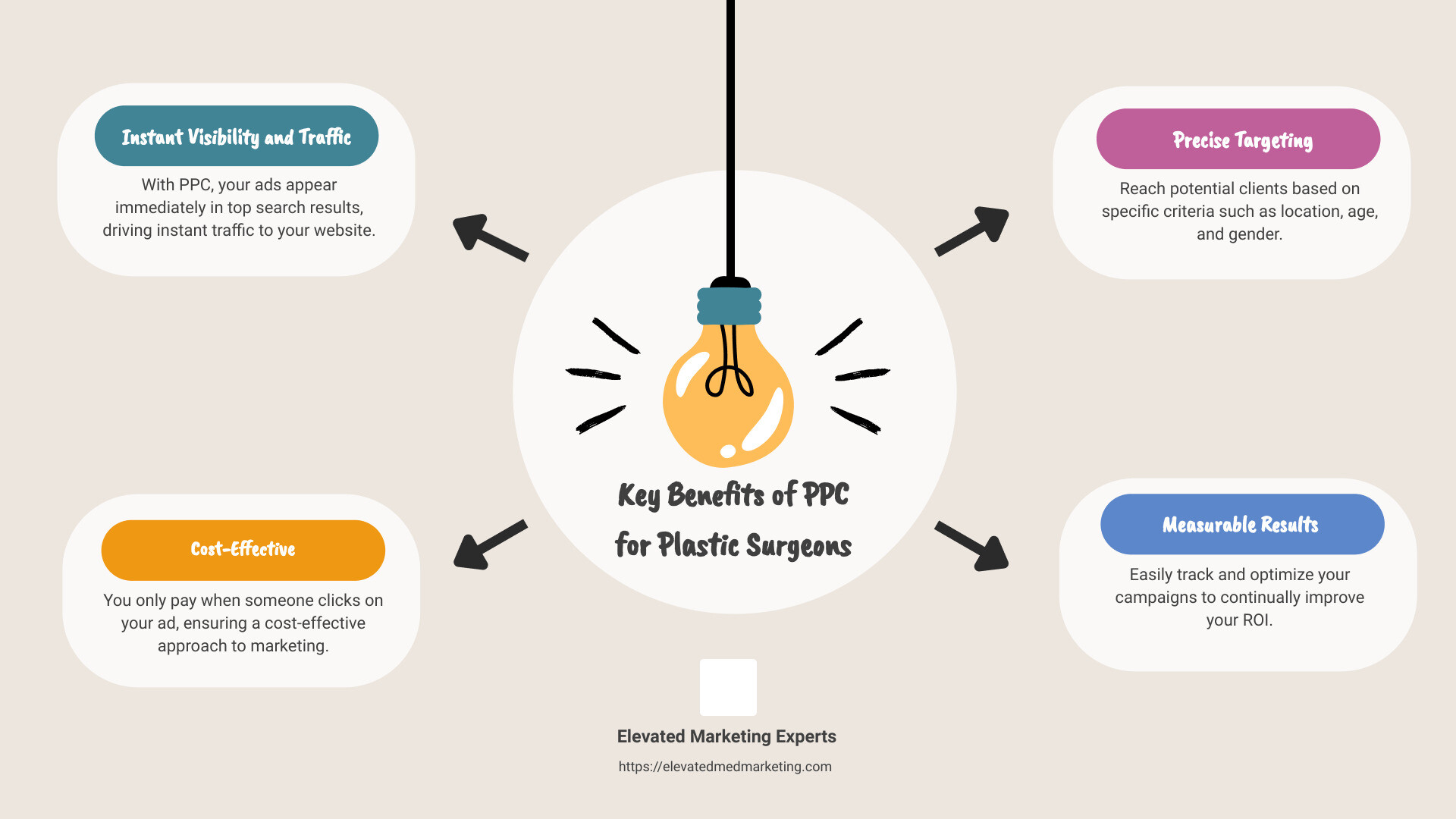
PPC for plastic surgeons is a powerful tool for attracting more patients fast. Right away, let’s cover the key benefits:
- Instant visibility and traffic: See results immediately, unlike SEO which takes months.
- Cost-effective: Pay only when someone clicks on your ad.
- Precise targeting: Reach potential clients by location, age, gender, and more.
- Measurable results: Easily track and optimize your campaigns.
Plastic surgery is one of the most competitive medical fields, with high demand for procedures like rhinoplasty, breast augmentation, and facelifts. To stand out, you need effective marketing strategies. PPC offers a quick way to appear in top search results, bringing new patients to your practice and a great return on investment (ROI).
I’m Joe Amaral, a digital marketing expert with experience in PPC for plastic surgeons. My career in this field started after many years in sales and management, followed by founding a successful digital marketing company. Today, my goal is to use the latest technology to help plastic surgeons grow their practices efficiently.
Understanding PPC for Plastic Surgeons
What is PPC for Plastic Surgeons?
Pay-per-click (PPC) is a digital marketing strategy where you pay a fee each time someone clicks on your ad. For plastic surgeons, it means placing paid ads on search engines like Google and Bing, as well as social media platforms like Facebook. These ads target potential patients actively searching for plastic surgery services.
Why is PPC so effective? Because you only pay when someone clicks on your ad, making it a cost-effective way to drive targeted traffic to your website. This model ensures your advertising budget is spent on individuals already interested in your services.
Benefits of PPC for Plastic Surgeons
1. Instant Visibility and Traffic
Unlike search engine optimization (SEO), which can take months to show results, PPC offers instantaneous visibility. As soon as your ads are live, they can appear at the top of search results, driving immediate traffic to your site.
2. Cost-Effectiveness
With PPC, you only pay when someone clicks on your ad. This means you’re not wasting money on ads that don’t engage your audience. Additionally, you can set a daily or monthly budget to control your spending.
3. Precision Targeting
PPC allows you to target your audience based on various demographics like location, age, gender, and income. This ensures your ads reach people most likely to be interested in your services. For instance, targeting users in high-income neighborhoods can be particularly effective for plastic surgery practices.
4. Measurable Results
One of the biggest advantages of PPC is the ability to measure and analyze your campaign’s performance. You can track metrics such as click-through rates (CTR), conversion rates, and return on ad spend (ROAS). This data helps you optimize your campaigns for better results.
5. Increased Patient Leads
By appearing at the top of search results, your practice gains more visibility, leading to increased patient inquiries and consultations. For example, a well-targeted ad for “rhinoplasty in New York” can attract individuals specifically looking for that procedure in your area.
6. High Return on Investment (ROI)
When done correctly, PPC can yield a high ROI. Since you’re targeting an audience already interested in plastic surgery, the likelihood of conversions is higher. This means more patients and more revenue for your practice.
In summary, PPC for plastic surgeons offers a quick, cost-effective way to attract new patients and grow your practice. By leveraging targeted ads and precise metrics, you can maximize your marketing efforts and achieve a high return on investment.
Next, we’ll dive into the factors influencing your PPC budget, including keyword competition, geographic location, and more.
Factors Influencing PPC Budget
When planning your PPC budget, several factors play a crucial role. Understanding these elements can help you allocate your resources effectively and get the best return on your investment.
Keyword Competition
Keyword competition refers to how many other advertisers are bidding on the same keywords you want to target. The higher the competition, the more you’ll need to bid to secure a top ad placement.
For example, highly competitive keywords like “plastic surgeon” can be very costly. According to industry experts, a keyword such as “plastic surgery” gets 100K to 1 million searches per month and is low competition, with an estimated bid between $1.90 and $6.52.
To manage costs, you can focus on long-tail keywords—more specific phrases like “rhinoplasty specialist in Dallas.” These often have lower competition and can be more cost-effective.
Geographic Location
Geographic targeting is essential for plastic surgeons as most patients look for local services. The cost of PPC ads can vary significantly based on the region you’re targeting.
For instance, advertising in a large metropolitan area like New York City will generally be more expensive than in a smaller town. Using geotargeting, you can focus your budget on specific zip codes or neighborhoods where your potential patients are more likely to be.
Setting your location settings to “presence” rather than “presence and interest” ensures you’re only targeting people physically located in your desired areas, reducing unnecessary spending.
Ad Quality and Relevance
The quality of your ads greatly influences your PPC costs. Google assigns a Quality Score to each ad based on its relevance to the keyword, expected click-through rate (CTR), and the quality of the landing page.
Ad Strength: Create visually appealing, enticing, and unique ad copy that communicates your services and value proposition. Including popular keywords in your headlines can also improve your ad strength.
Landing Page Experience: Ensure your landing page is mobile-friendly, loads quickly, and offers a clear call to action.
Higher quality scores lead to lower cost-per-click (CPC) and better ad placements. Compelling landing pages are crucial to drive conversions. They can help you craft engaging landing pages that combine informative text with a strong call to action.
Target Audience
Audience targeting allows you to home in on specific groups of people based on demographics, interests, and behaviors.
Demographics: Target your ads based on age, gender, income level, and more. For example, if your practice specializes in mommy makeovers, you might focus on women aged 30-45.
Interests and Behaviors: Use custom audiences to target people who have shown interest in plastic surgery or related topics.
Remarketing: Target people who have already visited your website. This group is more likely to convert because they have already expressed interest in your services. Using remarketing lists for search ads (RLSA) can help you target these potential patients effectively.
By understanding and optimizing these factors, you can make informed decisions about your PPC budget and maximize your marketing efforts.
Next, we’ll explore how to determine your initial PPC budget and scale it over time.
How to Determine Your PPC Budget
Setting an Initial Budget
When starting with PPC for plastic surgeons, it’s crucial to set an initial budget that you are comfortable with. This budget should allow you to test various strategies without breaking the bank.
Typical Spend Range: The cost of hiring a PPC agency can range from $350 to $5,000 per month. Additionally, you should allocate a percentage of your ad spend, typically 12-30%, for the agency fee.
Strategy Development: Begin with a modest budget to gather data and understand which keywords and ads perform best. For example, starting with $1,000 per month can give you enough room to test different keywords and ad copies.
Scaling Your Budget
Once you have initial data, you can start scaling your PPC budget based on performance.
Performance Analysis: Use tools like Google Ads Editor and Semrush PPC Toolkit to analyze your campaign performance. Look at metrics like click-through rates (CTR), conversion rates, and cost per click (CPC).
Data-Driven Adjustments: Make adjustments based on the data. If a specific keyword or ad copy is performing well, increase your budget for those areas. Conversely, reduce or eliminate spending on underperforming keywords.
Continuous Optimization: PPC is not a set-it-and-forget-it strategy. Continuously monitor your campaigns and make adjustments. Use automation tools like Wordstream PPC Advisor to optimize your bids and improve efficiency.
Cost Per Acquisition (CPA)
Focusing on Cost Per Acquisition (CPA) is essential for understanding the true cost of gaining a new patient.
Conversion Tracking: Set up conversion tracking to monitor actions like form submissions or phone calls. This will help you understand which ads and keywords are driving actual patient consultations.
Return on Ad Spend (ROAS): Calculate your ROAS to measure the effectiveness of your PPC campaigns. If you spend $1,000 on ads and gain $5,000 in revenue from new patients, your ROAS is 5:1.
Typical CPA for Plastic Surgery Procedures: The typical CPA for various procedures can vary:
– Rhinoplasty: ~$81
– Tummy Tuck: ~$308
– Liposuction: ~$220
– Facelift: ~$100
By focusing on CPA and continuously optimizing your campaigns, you can ensure a strong return on your PPC investment.
Next, we’ll explore best practices for creating effective PPC campaigns.
Best Practices for PPC Campaigns
Comprehensive Keyword Research
Effective PPC campaigns start with thorough keyword research. This involves identifying the terms your potential patients use when searching for plastic surgery services.
Long-Tail Keywords: These are more specific and less competitive than broad keywords. For example, instead of “plastic surgeon,” you might target “best rhinoplasty surgeon in Phoenix.” Long-tail keywords often have lower costs per click (CPC) and attract more qualified leads.
Google Keyword Planner: This free tool is excellent for finding new keywords. By entering a general term like “plastic surgery,” you can find related keywords, their search volumes, and competition levels.
Competition Analysis: Tools like Ahrefs can help you see which keywords your competitors are bidding on. This can provide insights into profitable keywords and gaps in your strategy.
Compelling Ad Copy Creation
Creating compelling ad copy is crucial for attracting clicks and conversions. Your ad copy should be clear, persuasive, and relevant to the searcher’s intent.
Persuasive Headlines: Your headline is the first thing searchers see. Make it compelling and include targeted keywords. For example, “Top-Rated Rhinoplasty Surgeon in Phoenix.”
Targeted Keywords: Incorporate your primary keywords naturally into your ad copy. This improves your ad relevance and quality score, which can lower your CPC.
Ad Extensions: Use ad extensions to provide additional information and increase your ad’s visibility. Extensions like call buttons, location information, and site links can improve the user experience and boost click-through rates.
High-Converting Landing Pages
Once a user clicks on your ad, they should be taken to a high-converting landing page. This page should be designed to encourage visitors to take the next step, whether that’s booking a consultation or calling your office.
User Experience: Ensure your landing page is user-friendly and mobile-optimized. Over 80% of traffic comes from mobile devices, so a smooth mobile experience is crucial.
Clear Call-to-Action (CTA): Your landing page should have a clear, compelling CTA. Whether it’s “Book a Free Consultation” or “Call Now,” make sure it’s easy to find and click.
A/B Testing: Continuously test different versions of your landing pages to see which performs best. Change one element at a time, like the headline or CTA, to identify what drives the most conversions.
Tracking and Performance Analysis
Tracking and analyzing your PPC campaign performance is essential for ongoing success. This helps you understand what’s working and where you need to make adjustments.
Conversion Tracking: Set up conversion tracking to monitor actions like form submissions and phone calls. This data helps you see which ads and keywords are driving real patient consultations.
Analytics: Use tools like Google Analytics to gain deeper insights into user behavior on your landing pages. Look at metrics like bounce rate, time on site, and pages per session.
Monthly Reports: Regular reporting helps you keep track of your campaign’s performance. Tools like Reporting Ninja and Swydo can automate this process, providing you with detailed insights and recommendations for improvement.
By following these best practices, you can create effective PPC campaigns that drive qualified leads and maximize your return on investment.
Next, we’ll explore common issues you might face in PPC for plastic surgeons and how to solve them.
Common Issues and Solutions in PPC for Plastic Surgeons
Navigating Google Policies
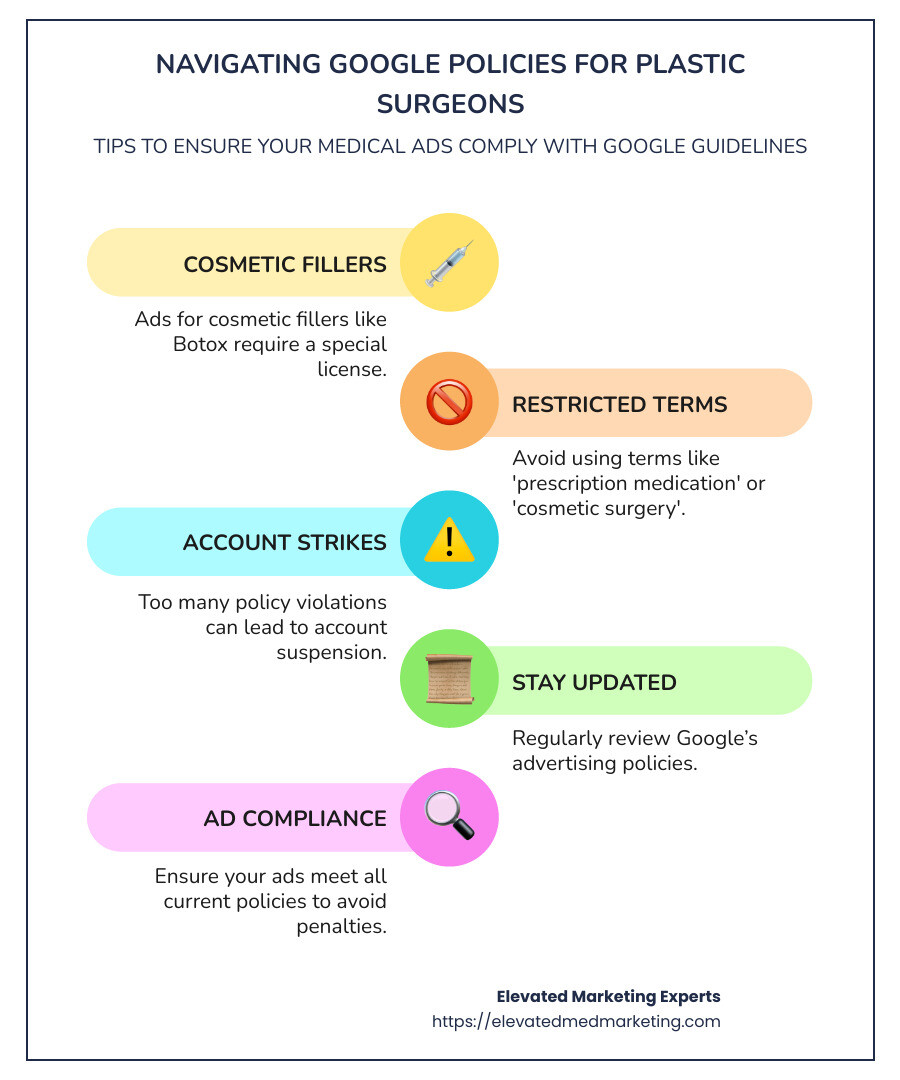
When running PPC for plastic surgeons, navigating Google’s strict advertising policies is often the first challenge. Google has specific guidelines for healthcare-related ads, and failing to comply can result in ad disapprovals or even account suspensions.
Cosmetic Fillers: Ads for cosmetic fillers like Botox are restricted because they are prescription medications. Google requires a special license to advertise these products, which can be expensive and tricky to obtain. To work around this, create landing pages specifically custom to services you can advertise without restrictions.
Restricted Medical Terms: Google often lumps many medications and medical terms into restricted categories. This can severely limit your ad’s visibility. For example, terms like “prescription medication” or “cosmetic surgery” might trigger restrictions. Be mindful of the language you use in your ads to avoid these pitfalls.
Strike System: Google has implemented a strike system for advertising accounts. If your account is flagged for too many policy violations, you risk getting banned from advertising on Google entirely. Always stay updated on Google’s policies and ensure your ads comply to avoid strikes.
Overcoming Retargeting Limitations
Retargeting is a powerful tool in digital marketing, but it comes with limitations for healthcare-related ads. Google prohibits retargeting for most health-related advertisements due to privacy concerns.
Custom Audiences: One effective way to bypass this limitation is by using custom audiences. Instead of retargeting based on previous website visits, you can create custom audiences based on specific search behaviors. For example, target users who have searched for terms like “best plastic surgeon near me” or “top-rated liposuction clinic.”
Alternative Strategies: While traditional retargeting may be off the table, there are other strategies you can employ:
– Email Marketing: Collect emails through your website and send targeted campaigns to nurture leads.
– Social Media: Platforms like Facebook and Instagram offer robust targeting options that can serve as an alternative to Google’s retargeting limitations.
– Content Marketing: Create valuable content that addresses common questions and concerns of your potential patients. This can help keep your brand top-of-mind even without direct retargeting.
By understanding and navigating these common issues, you can create compliant, effective PPC campaigns that drive results for your plastic surgery practice.
Next, we’ll answer some frequently asked questions about PPC for plastic surgeons.
Frequently Asked Questions about PPC for Plastic Surgeons
How long does it take to see results from PPC?
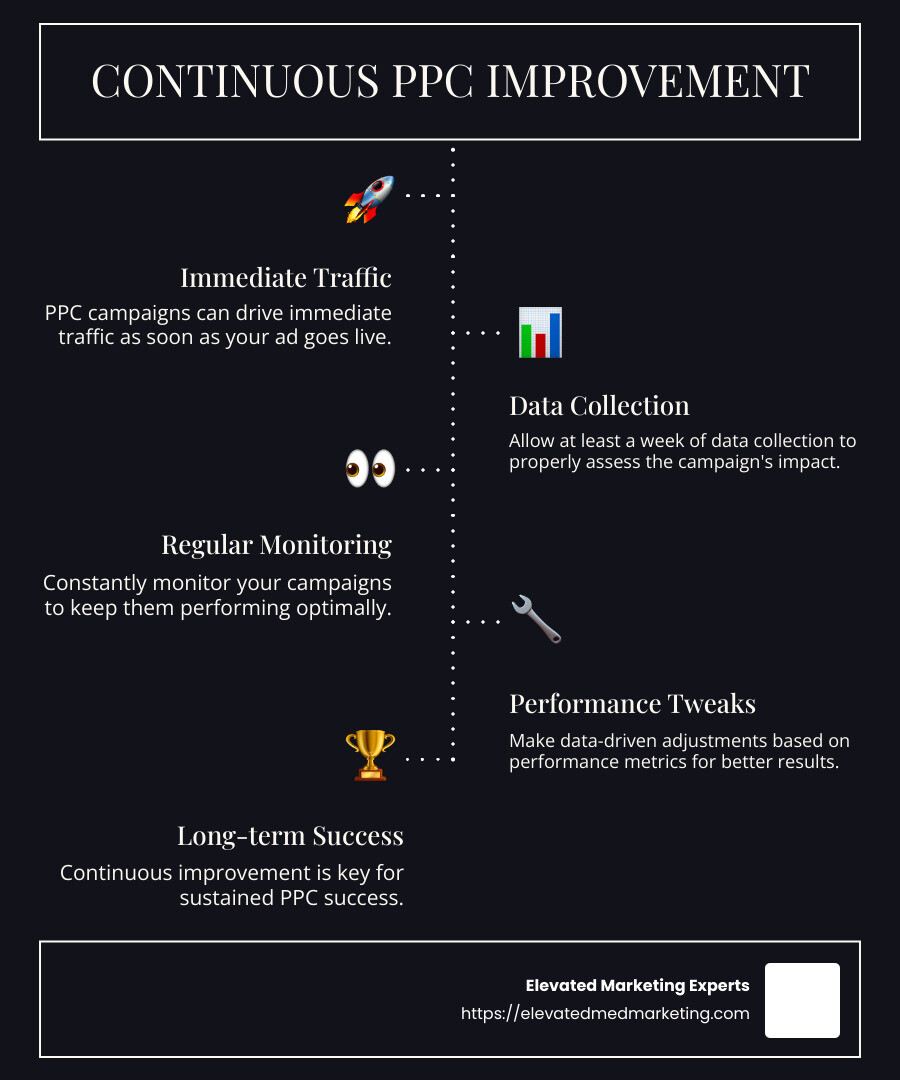
One of the biggest advantages of PPC for plastic surgeons is the immediate traffic it can generate. Once your ad goes live, you should start seeing clicks and visits to your website almost instantly. However, to properly assess the impact of your campaign, you’ll need at least a week of data.
Continuous Improvement: PPC is not a “set it and forget it” strategy. Regularly monitoring and tweaking your campaigns based on performance metrics is crucial for long-term success.
Is PPC alone enough to increase traffic?
While PPC is a powerful tool for driving immediate traffic, it works best when combined with other strategies like SEO and social media.
Complementary Strategies:
– SEO: Search engine optimization can help you rank organically over time, reducing your dependence on paid ads. It’s a slower process but crucial for long-term visibility.
– Social Media: Platforms like Facebook and Instagram offer excellent opportunities for engagement and brand building. They can complement your PPC efforts by driving traffic and nurturing leads.
A comprehensive approach that includes PPC, SEO, and social media will yield the best results for your practice.
How much should I be involved in managing PPC campaigns?
Deciding between DIY and hiring an agency is a significant choice.
DIY vs Agency:
– DIY: Managing your own PPC campaigns gives you complete control and can save you money. However, it requires a significant time investment and a steep learning curve.
– Agency: Hiring a professional agency can free up your time and often results in more effective campaigns. While it’s an added expense, a good agency can save you money by optimizing your ad spend and improving ROI.
Time Commitment: If you choose to manage PPC yourself, be prepared to spend considerable time on keyword research, ad creation, and performance tracking. If you prefer to focus on your practice, hiring an agency might be the better option. Agencies like Elevated Marketing Experts specialize in PPC for plastic surgeons and can handle all aspects of your campaigns, from strategy to execution.
Next, let’s dive into some best practices for running successful PPC campaigns.
Conclusion
Choosing the right partner for your PPC for plastic surgeons campaigns can make a significant difference in your practice’s success. At Elevated Marketing Experts, we bring years of industry experience and a comprehensive suite of services custom to meet the unique needs of plastic surgeons.
Industry Experience
We understand that plastic surgery marketing is unique and requires specialized knowledge. Our team has spent years refining strategies specifically for plastic surgeons. This means we know how to steer the competitive landscape, optimize your ad spend, and generate high-quality leads.
Comprehensive Services
Our services go beyond just managing PPC campaigns. We offer a holistic approach that includes:
- Keyword Research: Identifying the most effective keywords to target your ideal patients.
- Landing Page Design: Crafting high-converting landing pages that turn clicks into booked appointments.
- Audience Targeting: Using advanced targeting methods to reach the right demographics.
- Remarketing: Re-engaging visitors who have shown interest in your services.
- Ad Monitoring and Testing: Continuously optimizing your campaigns to ensure the best performance.
Contact Information
Ready to elevate your plastic surgery practice? Contact us today to learn how we can help you attract, convert, and retain more patients. Our team of experts is here to provide one-on-one guidance every step of the way.
Visit Elevated Marketing Experts to get started and elevate your plastic surgery practice to new heights.
Feel free to reach out to us via our website or call us directly to schedule a consultation. Let’s work together to make your practice stand out in this competitive field.


