

PPC Competitive Analysis: Top 5 Proven Strategies 2025
PPC competitive analysis is crucial for businesses seeking to gain a competitive edge in the digital advertising space. By dissecting your competitors’ advertising strategies, you can identify actionable insights that inform your own PPC campaigns. Here are key points you need to know:
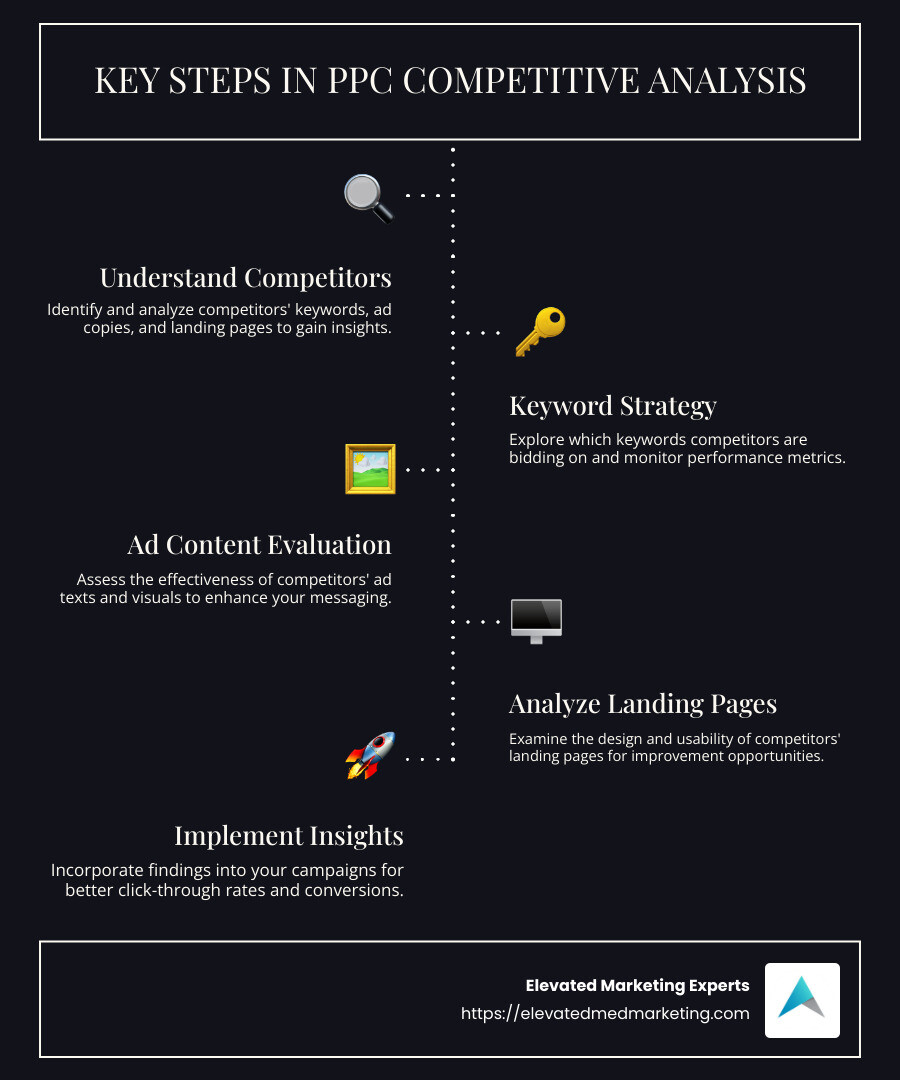
- Understanding Your Competitors: Learn what keywords they bid on, analyze their ad copies, and check their landing pages.
- Keyword Strategy: Find which keywords your competitors are bidding on and track performance metrics like click-through rates and conversion rates.
- Ad Content: Evaluate the effectiveness of their ad text and visuals to fine-tune your messaging.
- Landing Page Experience: Analyze the design, layout, and usability of competitors’ landing pages.
Incorporating these strategies into your own PPC campaigns can lead to significant improvements, from boosting click-through rates to enhancing conversions.
My name is Joe Amaral, and I have a deep-seated passion for digital marketing, with experience in PPC competitive analysis. Having founded and led several marketing ventures, my aim has always been to innovate in the digital marketing domain, ensuring businesses like yours excel in their advertising efforts.
Understanding PPC Competitive Analysis
PPC competitive analysis is like having a secret map to your competitors’ treasure. It helps you see what they’re doing right—and wrong—so you can make smarter decisions for your own campaigns.
Key Metrics to Track
To start, focus on key metrics that reveal the effectiveness of your competitors’ PPC efforts. Here are some to watch:
Click-Through Rate (CTR): Measures how often people click on an ad after seeing it. A high CTR indicates engaging ad content.
Cost-Per-Click (CPC): Shows how much your competitors are paying for each click. Lower CPCs can mean more efficient spending.
Conversion Rate: Tells you how many clicks turn into actual sales or leads. It’s a direct measure of ad effectiveness.
By keeping an eye on these metrics, you can adjust your own strategy to optimize for better results.
Gleaning Competitor Insights
Knowing what your competitors are up to can give you a leg up. Use tools like SEMrush or SpyFu to dig into their keyword strategies and ad performance. You can uncover:
Top Keywords: Identify which keywords are driving traffic to your competitors. This can highlight new opportunities for your campaigns.
Ad Copy and Visuals: Analyze the language and images your competitors use. Are they focusing on discounts, fast delivery, or something else?
Landing Page Design: Examine their landing pages for design and user experience. Do they have smooth navigation and clear CTAs?
Understanding these elements can help you create more compelling ads and landing pages that resonate with your target audience.
Conducting a Thorough PPC Analysis
A thorough PPC analysis involves examining every facet of your competitors’ strategies. Here’s a simple checklist:
Identify Competitors: Use tools like Google Ads Auction Insights to see who’s competing for the same keywords.
Analyze Ads: Check the messaging, tone, and offers in their ads. Are they using emotional appeals or logical arguments?
Review Landing Pages: Evaluate the aesthetics and functionality. Is the user journey seamless from ad click to conversion?
By gathering these insights, you can refine your own PPC campaigns to better meet your business goals and outperform the competition.
PPC competitive analysis isn’t a one-time task. Regularly update your analysis to stay ahead of trends and adapt to market changes. This ongoing effort will ensure your campaigns are always optimized for success.
Top Tools for PPC Competitive Analysis
When it comes to PPC competitive analysis, having the right tools can make all the difference. These tools help you spy on your competition, uncover their strategies, and refine your own campaigns for better performance. Let’s explore some of the top tools that can lift your PPC game.
SpyFu
SpyFu is like a magnifying glass for your competitors’ PPC strategies. It lets you see the keywords they’re buying, the ads they’re running, and even how much they’re spending. This tool is fantastic for finding new keyword opportunities and optimizing your ad strategies based on what works for others.
- Keyword Insights: SpyFu reveals every keyword your competitors are purchasing, helping you spot gaps in your own list.
- Ad History: You can view past ads to understand what messaging resonates with audiences over time.
SEMrush
SEMrush is a powerhouse for digital marketing analysis, offering a suite of features for PPC research. It provides insights into your competitors’ ad strategies, including keywords, ad copies, and even landing page designs.
- Advertising Research: SEMrush gives you a peek into competitors’ ad spend and performance metrics, allowing you to benchmark your efforts against theirs.
- Ad Copies and History: Analyze variations in ad copies to identify successful messaging strategies and promotional offers.
Ahrefs
Ahrefs is another all-in-one tool that excels in keyword research and competitor analysis. While it’s often used for SEO, its capabilities in PPC analysis should not be overlooked.
- Keyword Explorer: Find countless keyword options and analyze their competitiveness.
- Competitor Analysis: Ahrefs helps you identify who your main competitors are and what keywords they’re targeting.
Google Ads Auction Insights
Google Ads Auction Insights provides a unique perspective by letting you compare your campaign performance with other advertisers in the same auctions. This tool is crucial for understanding where you stand in the competitive landscape.
- Performance Comparison: See how often your ads appear compared to your competitors and identify areas for improvement.
- Bidding Strategies: Adjust your bids based on insights into competitors’ ad positions.
Meta Ad Library
Formerly known as Facebook Ad Library, Meta Ad Library is a treasure trove of information for social media ads. It allows you to see all the ads running across Meta platforms, including Facebook and Instagram.
- Ad Transparency: View active and inactive ads to understand competitors’ social media strategies.
- Trend Analysis: Stay on top of industry trends and get inspiration for your own campaigns.

Using these tools, you can perform a thorough PPC competitive analysis that keeps you ahead of the competition. Each tool offers unique insights, so consider using a combination to get the most comprehensive view of your competitors’ strategies. By leveraging these insights, you can refine your campaigns, optimize your ad spend, and ultimately drive better results.
Steps to Conduct a PPC Competitive Analysis
Conducting a PPC competitive analysis involves several key steps. Each step helps you understand and outmaneuver your competitors in the digital ad space. Let’s break it down into simple, actionable steps.
1. Identify Competitors
The first step is to know who you’re up against. Use tools like SpyFu, Ahrefs, and Google Ads Auction Insights to find the brands competing for the same keywords. A simple Google search with your main keywords can also reveal who is buying ads in your niche. Once identified, focus on those who share your target audience and offer similar products or services.
2. Analyze Ad Copy
Next, dive into the ad copy of your competitors. Look at their headlines, descriptions, and calls to action (CTAs). Are they using emotional triggers, offering discounts, or highlighting unique selling points? This analysis can inspire your own ad creation and help you understand what messaging resonates with the audience.
Tip: Pay attention to ad extensions like site links and callouts, which can boost ad relevance and click-through rates.
3. Keyword Strategies
Keywords are the backbone of any PPC campaign. Identify the keywords your competitors are bidding on using tools like SEMrush and SpyFu. Look beyond the keywords themselves; analyze performance metrics such as click-through rates (CTR), conversion rates, and cost-per-click (CPC). Understanding these can help refine your own keyword strategy for better engagement and conversions.
4. Landing Pages
Once users click on an ad, they land on a page designed to convert them into customers. Evaluate your competitors’ landing pages for design, layout, and user experience. Consider aspects like navigation ease, mobile optimization, and clarity of CTAs. A well-crafted landing page can significantly improve conversion rates.
5. Bidding Strategies
Finally, examine how your competitors allocate their budgets and set their bids. The Google Ads Auction Insights tool can show you how your ads perform relative to others in the same auction. Analyze their bidding patterns to determine if they are aggressive or conservative. Adjust your bids accordingly to find a balance that works for your budget and goals.
By following these steps, you can conduct a comprehensive PPC competitive analysis that informs your strategy and helps you stay ahead in the ad game. Each step provides valuable insights that, when acted upon, can improve your ad campaigns and improve your return on investment (ROI).
Benefits of PPC Competitive Analysis
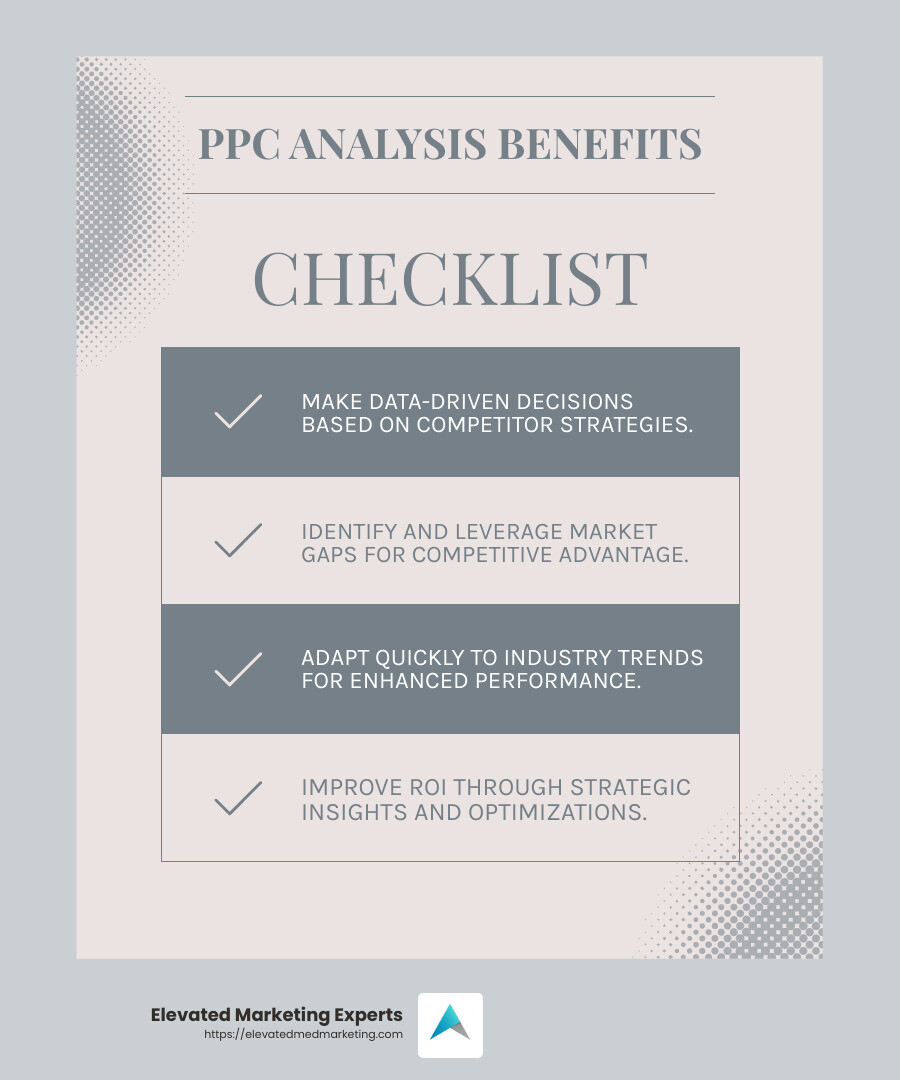
PPC competitive analysis offers numerous advantages that can transform your advertising strategy. Let’s explore how it helps make data-driven decisions, uncover market gaps, adapt to trends, and improve ROI.
Data-Driven Decisions
PPC competitive analysis is like having a treasure map of your competitors’ strategies. By examining their keywords, ad copy, and bidding tactics, you gain insights into what’s working and what’s not. This information allows you to make informed, data-driven decisions. Instead of guessing, you can tailor your campaigns based on real-world data, increasing the chances of success.
Uncovering Market Gaps
Analyzing competitors not only shows you what they are doing but also what they are missing. These gaps can be golden opportunities for your business. For example, if competitors focus heavily on broad keywords but ignore niche ones, you can step in and capture that untapped traffic. This strategy not only diversifies your audience but can also lower your cost-per-click (CPC).
Trend Adaptation
Keeping an eye on competitors helps you stay updated with industry trends. If you notice a shift towards video ads or a new type of ad extension being used widely, it’s a signal to consider incorporating these trends into your strategy. This proactive approach ensures your campaigns remain relevant and engaging to your target audience.
Improved ROI
The goal of any PPC campaign is to maximize return on investment (ROI). By leveraging the insights gained from PPC competitive analysis, you can optimize your campaigns for better performance. You refine your keyword targeting, improve ad copy, and adjust bidding strategies to ensure every dollar spent contributes to your business goals.
By focusing on these benefits, you can lift your PPC campaigns and maintain a competitive edge in the digital advertising landscape. Up next, we’ll answer some frequently asked questions about PPC competitive analysis to help you further understand its impact and applications.
Frequently Asked Questions about PPC Competitive Analysis
What are the key aspects of PPC?
In pay-per-click (PPC) advertising, understanding the key components is crucial for success. Here are the core elements:
Keywords: These are the terms or phrases that trigger your ads. Selecting the right keywords ensures your ads reach the right audience. Tools like Google Keyword Planner can help identify high-performing keywords.
Ads: Your ad copy is what captures the audience’s attention. It should be compelling and relevant to the keywords. Analyze your competitors’ ads to see what works and what doesn’t.
Bid: This is the amount you’re willing to pay for each click on your ad. A higher bid can improve ad placement, but balance cost and performance.
Landing Page: This is where users land after clicking your ad. It’s crucial for conversions and should align with the ad copy, offering a seamless experience.
Conversion Path: The journey a user takes from clicking your ad to completing a desired action, like making a purchase. Optimizing this path is vital for maximizing conversions.
How to do competitor analysis for paid ads?
Conducting a thorough PPC competitive analysis involves several steps:
Identify Competitors: Use tools like SpyFu or SEMrush to find out who your top competitors are in the PPC space.
Analyze Strategy: Look at their keyword strategies, ad formats, and bidding tactics. Understanding their approach can help refine your own strategy.
Target Audience: Determine who your competitors are targeting. This can provide insights into potential audience segments you may have overlooked.
Budget: Gauge how much competitors are spending. This can give you an idea of the market’s competitive landscape and help set realistic budget expectations.
Performance: Assess competitors’ performance metrics like click-through rate (CTR), cost-per-click (CPC), and conversion rates. This helps benchmark your campaigns against industry standards.
What is PPC Analytics?
PPC analytics is all about evaluating the performance of your paid advertising campaigns. Here’s what it involves:
Performance Evaluation: Regularly review how your ads are doing in terms of reach and engagement.
Key Metrics: Focus on metrics such as CTR, CPC, and conversion rate. These indicators show how well your ads are performing and where improvements are needed.
CTR (Click-Through Rate): This metric shows the percentage of people who click on your ad after seeing it. A high CTR indicates that your ad is relevant and engaging.
CPC (Cost Per Click): This is the amount you pay for each click on your ad. Monitoring CPC helps manage your budget effectively and ensures you’re getting a good return on investment.
Conversion Rate: This measures the percentage of users who complete a desired action after clicking your ad. A high conversion rate means your landing page and conversion path are optimized.
By understanding these aspects, you can harness the power of PPC competitive analysis to optimize your advertising efforts and achieve better results.
Conclusion
In the dynamic world of digital marketing, staying ahead of the competition is crucial. At Elevated Marketing Experts, we understand the unique challenges faced by aesthetic and wellness practices. Our expertise in PPC competitive analysis enables us to provide custom digital marketing solutions that help our clients thrive.
With our deep industry knowledge, we offer comprehensive services ranging from organic SEO and website design to Google Ads management and content creation. Our goal is to improve your online presence and drive growth for your practice.
Our team leverages cutting-edge tools like SEMrush and SpyFu to conduct thorough competitor analyses, ensuring we uncover market gaps and capitalize on them. By understanding your competitors’ strategies, we craft campaigns that maximize your return on investment.
By choosing Elevated Marketing Experts, you’re partnering with experts who are committed to your success. Let us help you steer the complexities of PPC advertising and elevate your practice to new heights.
For more information about how we can assist with your PPC strategies, visit our Search Engine Marketing page.
Stay ahead in the ad game with Elevated Marketing Experts—your trusted partner in digital success.


