

The Importance of a Strong First Impression in Plastic Surgery Website Design and Development
Plastic Surgery Website Design and Development
Plastic surgery website design and development is crucial for setting the right first impression and establishing credibility in a competitive market. Here’s a quick overview of why that matters:
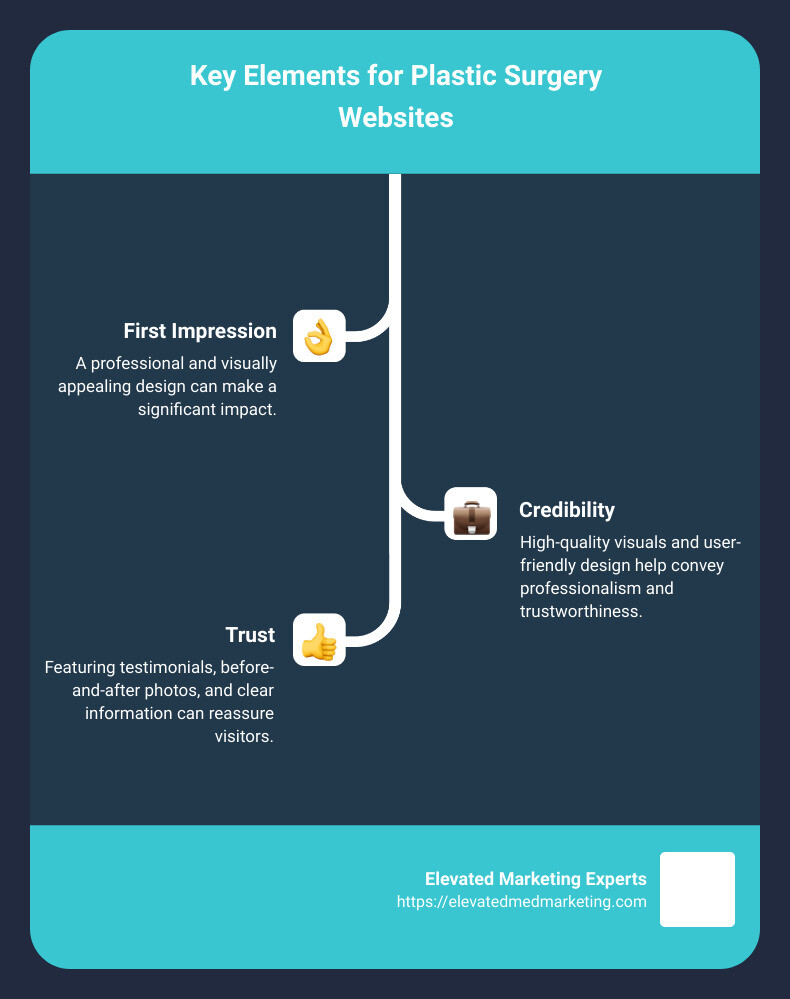
1. First Impression: Your website is often the first point of contact potential patients have with your practice. A professional and visually appealing design can make a significant impact.
2. Credibility: High-quality visuals and user-friendly design help convey professionalism and trustworthiness.
3. Trust: Featuring testimonials, before-and-after photos, and clear information can reassure visitors and build confidence in your expertise.
4. Competitive Market: In the highly competitive world of plastic surgery, a well-designed website can set you apart from other practices.
I’m Joe Amaral, with a deep passion for creating impactful digital experiences. Having co-founded and led multiple digital marketing companies, I’ve gained experience in plastic surgery website design and development.
Findy Phase
The findy phase is where the magic begins. This is where we gather all the essential information to create a website that truly reflects your practice and meets your specific needs.
Personalized Branding Strategy
Client Goals
First, we sit down with you to understand your goals. Are you looking to attract more local patients? Or perhaps you want to highlight a specific service like rhinoplasty or breast augmentation? Knowing your goals helps us tailor the website to meet them.
Branding Strategy
Next, we dig into your branding strategy. This involves understanding your practice’s philosophy, values, and what sets you apart from competitors. As Shiela, our Creative Director, puts it, “It’s not just aesthetics. It’s your brand.” We use this information to create a cohesive and compelling brand narrative.
Content Direction
Content is king. We discuss the direction of the content, including what kind of information you want to provide to your visitors. This could be educational articles, patient testimonials, or detailed descriptions of your services. Mapping out the content helps us create a website that is not only informative but also engaging.
Design Features
We also talk about the design features you want. Do you prefer a modern, sleek look, or something more traditional? What kind of images and colors resonate with your brand? These details help us create a visually appealing site that aligns with your brand identity.
Strategic Marketing Goals
Everything we design is aimed at achieving your strategic marketing goals. Whether it’s increasing web traffic, boosting conversion rates, or improving your online presence, our design will be focused on delivering results.
Customer Needs
Understanding your customers is crucial. We analyze what your potential patients are looking for and what kind of user experience they expect. This helps us design a website that meets their needs and keeps them engaged.
Brand Guidelines
We adhere to your brand guidelines to ensure consistency across all platforms. This includes using your logo, color scheme, and preferred fonts. Consistency helps in building brand recognition and trust.
Timeline and Budget
We discuss the timeline and budget for the project. Knowing these constraints helps us plan the project efficiently. We aim to deliver high-quality work within your budget and timeframe.
Technical Constraints
Every project has its technical constraints. Whether it’s integrating with existing systems or ensuring the site is mobile-friendly, we identify these constraints early on to avoid any issues down the line.
Design Trends
We keep an eye on the latest design trends to ensure your website looks fresh and modern. However, we balance trends with timeless design principles to create a site that stands the test of time.
Accessibility
Accessibility is a key consideration. We aim to make your website usable for everyone, including people with disabilities. This includes features like an accessibility menu and easy-to-read fonts.
By focusing on these elements during the findy phase, we set the stage for a successful plastic surgery website design and development project. This phase is all about understanding your practice and your needs so that we can create a website that not only looks great but also achieves your business goals.
Design Phase
The design phase is where your plastic surgery website starts to come to life. This phase focuses on creating a user experience (UX) that is both engaging and functional. Let’s break down the key elements that make for a successful design.
Brand Definition
First, we need to define your brand. This involves understanding your practice’s unique identity and how you want to present it online. We use your color scheme, image types, and brand voice to create a cohesive look and feel.
Writing and Marketing
Effective writing and marketing are crucial. Your website should communicate your services clearly and compellingly. We focus on crafting messages that resonate with your audience. This includes everything from procedure descriptions to blog posts.
Color Scheme and Image Types
Choosing the right colors and images can make a big difference. Colors like blue can build trust, while gold can give a sense of luxury. High-quality images are also essential.
Brand Audit and Research
Before diving into the design, we conduct a brand audit and research your practice’s profile. This helps us understand your strengths and areas for improvement.
Wireframe and Prototype
Next, we create a wireframe and prototype. A wireframe is a simple sketch of your website layout, while a prototype is a more detailed, clickable version. This helps us map out the customer journey and ensure that the design meets your strategic goals.
Customer Journey
The customer journey is all about guiding visitors through your site in a way that leads them to take action. This could be scheduling a consultation, reading testimonials, or viewing before-and-after photos.
In summary, the design phase is where we turn your vision into a reality. By focusing on user experience, brand definition, writing, marketing, color schemes, and image types, we create a website that not only looks great but also performs well. Next, we’ll move into the development phase to bring these designs to life.
Development Phase
The development phase is where your website moves from design to reality. This step involves turning flat visuals into a fully functional website. Let’s dive into the tools and components that make this possible.
Tools and Components
Collaboration is key during development. Our creative and technical teams work together closely to ensure a seamless transition from design to development. This collaboration ensures that every detail from the design phase is accurately implemented.
Best practices guide every step of our development process. We focus on creating websites that are not only visually appealing but also functional and accessible.
Innovation is at the heart of our approach. We use the latest technologies and methodologies to build websites that are fast, secure, and optimized for the best user experience.
Functional websites are essential. We ensure that all elements, from navigation to interactive features, work smoothly and intuitively. This involves rigorous testing to identify and fix any issues before the site goes live.
Accessible websites are a priority. We integrate accessibility features to make sure everyone, including people with disabilities, can use your site. This not only broadens your audience but also improves your SEO.
We use a suite of tools custom to the needs of plastic surgery websites. These tools help us streamline the development process, ensuring that your website is built efficiently and effectively.
Smooth production is achieved through our structured workflow. Each phase of development is carefully planned and executed to avoid any hiccups.
Finally, a seamless transition from development to launch is crucial. We make sure that the website is fully functional and ready to go live without any last-minute surprises.
In the next section, we’ll discuss the launch phase, where we ensure your website is ready for the world to see.
Launch Phase
Post-Launch Monitoring
Once your plastic surgery website is live, the work isn’t over. Post-launch monitoring is crucial to ensure your site performs well and meets your goals. Here’s what you need to focus on:
Usability
Your website should be easy to steer for everyone. Test it on different devices and browsers to make sure it works well everywhere. Get feedback from real users to find any issues.
Performance
A fast website keeps visitors happy. Use tools like Google PageSpeed Insights to check your site speed. Optimize images, compress files, and use a good hosting service to improve loading times.
Visibility
Your site needs to be visible in search engines. Use SEO best practices to help people find you. This includes using the right keywords, having quality content, and getting backlinks from other sites.
Rigorous Testing
Before and after launch, test your website thoroughly. Check for broken links, missing images, and other errors. Make sure all forms work and that contact information is correct.
Monitoring
Keep an eye on your website’s performance over time. Use tools like Google Analytics to track visitor behavior. Look for patterns and make adjustments as needed.
SEO
SEO is ongoing. Regularly update your content with relevant keywords. Keep an eye on your rankings and make changes to improve them.
Optimization
Continuously optimize your site for better performance. This includes updating plugins, fixing any issues, and improving user experience.
IT Support
Have a plan for technical support. This ensures any problems are fixed quickly. Regular maintenance checks can prevent issues before they happen.
Tracking Impact
Measure the success of your website. Use metrics like visitor numbers, bounce rates, and conversion rates. This helps you understand what works and what needs improvement.
Post-launch monitoring ensures your plastic surgery website stays effective and continues to meet your goals. Next, we’ll explore best practices for plastic surgery website design to keep your site top-notch.
Best Practices for Plastic Surgery Website Design
High-Quality Images
In plastic surgery, high-quality images are essential. They are not just for aesthetics; they build trust and credibility. Before and after photos are very powerful. They show real results and help potential patients visualize their own changes.
Photo galleries should be well-organized and easy to steer. For example, you can feature a photo gallery of your surgeons at work to give visitors an up-close look at your practice. High-resolution images are a must. They should be clear, well-lit, and professional.
Showcase Patient Testimonials
Patient testimonials are like gold. They provide social proof and help build trust. Prospective clients often look at customer reviews to decide which plastic surgeon to choose.
Encourage your satisfied clients to leave positive feedback on review sites like Google and Yelp. Use tools to curate the best reviews and feature them prominently on your website. This can help convert visitors into patients.
Optimize User Experience
A good user experience is crucial for any website, especially in plastic surgery. Your site should be easy to steer and fast. Use Google PageSpeed Insights to check your site speed and get suggestions for improvement. Faster sites not only provide a better user experience but also rank better on search engines.
Include an accessibility menu to make your site more inclusive. This allows visitors with disabilities to adjust the website settings to their preferences.
Display Business Details
Make sure your contact information is easy to find. Include your phone number, email address, and social media links on the menu bar and footer. This makes it easy for potential clients to reach out with questions or to schedule a consultation.
For local SEO, displaying your business details prominently is key. Consider using a fixed widget that shows your contact details and a call-to-action button. This makes it easy for visitors to take the next step.
By following these best practices, you can create a plastic surgery website that is not only visually appealing but also functional and effective. Next, we’ll answer some frequently asked questions about plastic surgery website design and development.
Frequently Asked Questions about Plastic Surgery Website Design and Development
What is web design?
Web design is the process of creating the visual layout and user experience of a website. It involves web graphics, user interface (UI), and user experience (UX). Good web design ensures that visitors can easily steer, find information, and interact with the site.
Web graphics include images, icons, and other visual elements that make the site appealing. User interface refers to the design of the website’s interactive elements, like buttons and menus. User experience focuses on how intuitive and enjoyable it is for visitors to use the site.
How important is web design for plastic surgery marketing?
Web design is crucial for plastic surgery marketing. Your website often serves as the first impression potential patients have of your practice. A well-designed site can:
- Build trust and credibility. A professional appearance can reassure visitors about the quality of your services.
- Improve conversion rates. A user-friendly design can guide visitors to book consultations or contact you.
- Improve SEO. A well-structured site is easier for search engines to index, improving your visibility in search results.
What are the benefits of a WordPress website?
WordPress is a popular choice for plastic surgery websites because it offers:
- Easy management. With a user-friendly interface, updating content is straightforward.
- Plugins. Over 10,000 plugins can add functionality, like photo galleries and contact forms.
- Google-friendly. WordPress sites are structured in a way that search engines like, helping with SEO.
- Scalability. As your practice grows, your website can easily expand with it.
In summary, a well-designed website can significantly impact your practice’s success. From making a great first impression to improving your SEO, the right design and platform are essential.
Conclusion
At Elevated Marketing Experts, we understand that having a well-designed website is crucial for the success of your plastic surgery practice. Our extensive industry experience allows us to provide custom marketing solutions that address your specific needs.
Building Your Online Presence
A strong online presence is vital in today’s digital world. We focus on creating a website that not only looks good but also performs well. This involves:
- SEO: Optimizing your site to rank higher on search engines, making it easier for potential patients to find you.
- Website design: Crafting a visually appealing and user-friendly site that reflects your brand.
Comprehensive Marketing Solutions
Our services go beyond just web design. We offer a complete suite of digital marketing strategies, including:
- Google Ads: Driving targeted traffic to your website through paid advertising.
- Branding: Ensuring consistent and professional representation of your practice across all platforms.
- Content creation: Developing engaging and informative content that resonates with your audience.
Ongoing Support and Consulting
Our commitment doesn’t end once your website is live. We provide continuous IT support and consulting to ensure your site remains up-to-date and effective. This includes:
- Post-launch monitoring: Tracking your site’s performance and making necessary adjustments.
- Optimization: Regularly updating content and features to keep your site fresh and relevant.
Partnering with Elevated Marketing Experts means you’re not just getting a website; you’re getting a team dedicated to helping your practice grow.
Ready to lift your plastic surgery practice? Contact us today to get started on creating a high-performing, beautifully designed website that attracts and converts patients.


