

Plastic Surgery Ads Management: Top 5 Winning Tips 2025
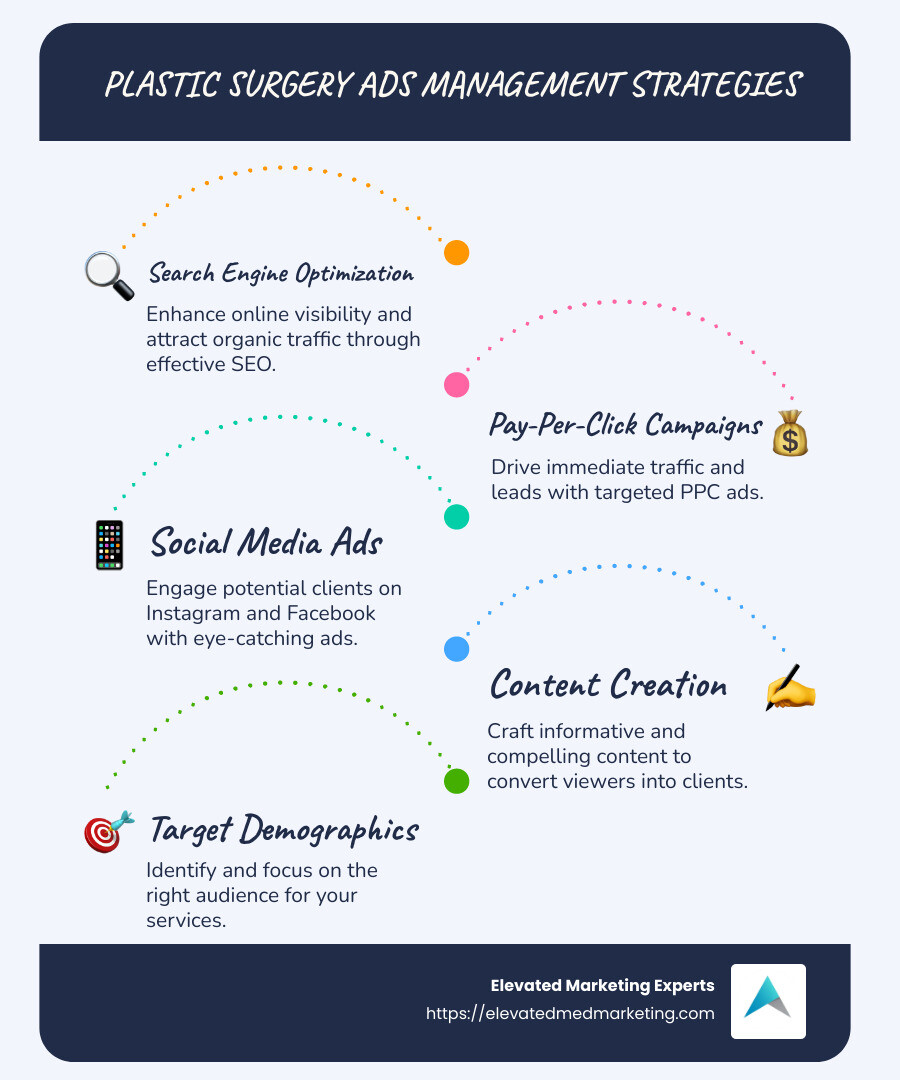
Plastic Surgery Ads Management is an essential part of any successful plastic surgery practice aiming to stand out in today’s competitive market. At its core, managing ads effectively involves several key strategies:
- Developing a strong online presence through search engine optimization (SEO) and pay-per-click (PPC) campaigns.
- Utilizing engaging social media ads on platforms like Facebook and Instagram.
- Crafting compelling and informative content that attracts potential clients.
The rise in cosmetic procedures has reshaped how consumers approach beauty and aesthetics, making it more important than ever for practices to leverage digital marketing techniques. A well-implemented marketing strategy ensures plastic surgeons reach their desired audience, converting interest into appointments.
We’ll dig into best practices and strategies for optimizing your advertising efforts. Whether you’re focused on Google Ads, social media campaigns, or enhancing your website’s appeal, there’s a wealth of tools at your disposal to lift your practice’s visibility and draw in the right clientele.
My name is Joe Amaral. With a background in digital marketing and a passion for problem-solving, I’ve helped many plastic surgery practices refine their marketing strategies. Throughout my career, I’ve focused on Plastic Surgery Ads Management, using innovative approaches to boost their online reach and drive patient engagement.
Understanding Plastic Surgery Ads Management
Plastic Surgery Ads Management is all about reaching the right audience at the right time. It involves strategically using different advertising platforms to attract potential clients. Let’s break down some of the key platforms and strategies used in this field:
Pay-Per-Click (PPC) Advertising
PPC is a powerful tool for plastic surgery ads. It allows practices to bid on keywords related to specific procedures. The higher your bid, and the better your ad quality, the more likely your ad is to appear at the top of search engine results. Google Ads is the most popular PPC platform, offering various campaign types like Search, Display, and Local ads.
Search Ads: These are text-based ads that appear on Google’s search results pages. They reach users actively searching for specific procedures, making them highly effective for targeting potential patients.
Display Ads: These picture-based ads appear on relevant websites. They are great for building brand awareness and reaching a broader audience.
Local Ads: Perfect for practices focusing on local clientele. They use location targeting to ensure your ads are shown to nearby users.
Google Ads
Google Ads is a cornerstone of Plastic Surgery Ads Management. It provides a platform for reaching users who are actively searching for cosmetic procedures. Google Ads campaigns can be custom to target specific demographics and locations, making them highly effective for attracting new patients.
Quality Score: Google uses this metric to gauge the relevance of your ads and landing pages. A higher score can lower costs and improve ad positioning.
Ad Extensions: These are extra bits of information you can add to your ads, like phone numbers or location details, which can improve click-through rates.
Facebook Ads
Facebook Ads offer a different approach. They allow you to target users based on their online habits and interests, rather than just their search queries. This can be particularly useful for building brand awareness and engaging with potential clients who may not yet be actively seeking procedures.
Remarketing Ads: These ads target users who have previously visited your website or engaged with your content, keeping your practice top-of-mind.
Audience Insights: Facebook provides detailed insights into your audience’s demographics and behaviors, helping refine your targeting strategy.
Instagram Ads
Instagram, with its visual-based platform, is ideal for showcasing the transformative effects of cosmetic procedures. It’s a great way to engage potential clients through compelling visuals and stories.
Image and Video Ads: Use high-quality before-and-after images or videos to demonstrate your expertise and attract attention.
Stories Ads: These full-screen ads appear between users’ stories, offering a creative way to engage your audience.
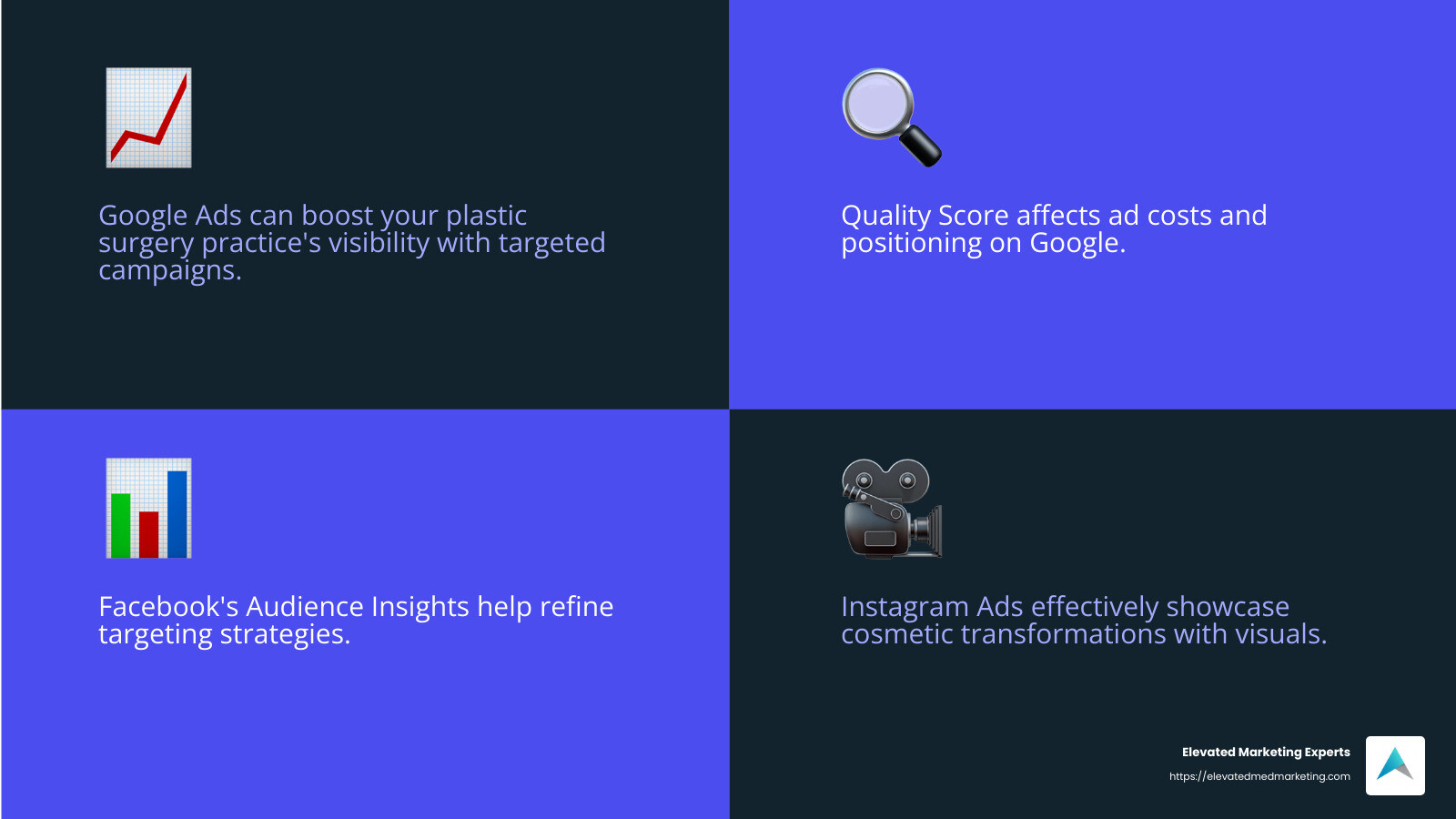
By understanding and effectively utilizing these platforms, plastic surgery practices can improve their online presence and attract more clients. Whether through the precision of Google Ads or the engaging visuals of Instagram, the right strategy can make all the difference.
Next, we’ll explore effective strategies for optimizing your plastic surgery ads, focusing on target demographics, keyword optimization, and A/B testing.
Effective Strategies for Plastic Surgery Ads
When it comes to Plastic Surgery Ads Management, there are several strategies that can significantly improve your campaign’s success. Let’s explore three key areas: targeting the right demographics, optimizing keywords, and employing A/B testing.
Target Demographics
Understanding your audience is crucial. For plastic surgery practices, this means identifying key demographics that are most likely to seek out your services. Consider factors like age, gender, location, and even lifestyle preferences. Here’s how you can zero in on your ideal audience:
Age and Gender: Different procedures appeal to different age groups. For instance, younger audiences might be interested in minimally invasive procedures, while older demographics might seek more comprehensive surgeries like facelifts.
Location: Use location targeting to focus on potential clients in your area. Local SEO can also improve visibility for searches like “plastic surgeons near me.”
Interests and Behaviors: Platforms like Facebook and Instagram allow you to target users based on their interests and online behaviors, which can be particularly useful for reaching those who might not yet be actively searching for procedures.
Keyword Optimization
Effective keyword optimization is the backbone of any successful PPC campaign. The right keywords ensure your ads appear in front of users actively searching for your services. Here’s how to get it right:
Keyword Research: Use tools like Google Keyword Planner to find terms that your potential patients are using. Focus on long-tail keywords like “affordable rhinoplasty in [your city]” to capture more specific search queries.
Negative Keywords: Identify and exclude keywords that are irrelevant to your services. This helps prevent your ads from showing up in unrelated searches, thus saving budget and improving click-through rates.
Match Types: Choose the appropriate match type—broad, phrase, or exact—to control how closely search queries need to match your keywords. Exact matches can be more cost-effective but might limit reach.
A/B Testing
A/B testing, or split testing, is an essential strategy for refining your ads. It involves creating two versions of an ad to see which performs better. Here’s how you can leverage A/B testing:
Ad Copy: Test different headlines and descriptions to see which resonates more with your audience. Sometimes a small tweak can lead to significant improvements in engagement.
Visuals: For platforms like Instagram, experiment with different images or videos. High-quality before-and-after photos can be particularly compelling.
Call-to-Action (CTA): Try different CTAs to see which prompts more users to click. Phrases like “Book a Free Consultation” or “Learn More” can be tested for effectiveness.
By focusing on these strategies, you can optimize your plastic surgery ads to better reach and engage your target audience. Next, we’ll dig into the top platforms for advertising plastic surgery, such as Google Ads, Facebook, and Instagram.
Top Platforms for Plastic Surgery Advertising
When it comes to Plastic Surgery Ads Management, choosing the right platform is key. Different platforms offer unique advantages, so let’s explore the top contenders: Google Ads, Facebook, Instagram, and Bing Ads.
Google Ads
Google Ads is a powerhouse for reaching potential patients actively searching for plastic surgery services. Here’s why it’s so effective:
Search Intent: Google Ads targets users with high purchase intent. When someone searches for “top plastic surgeon in [your city],” they’re likely ready to book a consultation.
Local Service Ads: A newer feature that lets you advertise directly on Google Maps. This is perfect for targeting local patients who are looking for nearby services.
Cost-Effective: While bidding on keywords can be competitive, Google Ads generally offers a lower cost per patient acquisition compared to other platforms.
Facebook Ads excel in reaching potential patients based on their interests and online behaviors. Here’s how you can leverage Facebook:
Detailed Targeting: Facebook allows you to target users based on demographics, interests, and behaviors. For instance, you can focus on users interested in beauty and wellness.
Engagement: Facebook is a social platform, so ads that encourage interaction—like polls or comment prompts—can perform well.
Data Collection: Facebook provides insights into users’ online habits, helping you refine your targeting strategies.
Instagram Ads are ideal for visually showcasing the transformative nature of plastic surgery. Here’s why Instagram is a great choice:
Visual Appeal: High-quality images and videos perform exceptionally well. Before-and-after photos are especially effective.
Younger Audience: Instagram skews younger, making it perfect for targeting millennials interested in cosmetic procedures.
Stories and Reels: Use these features to create engaging, short-form content that captures attention quickly.
Bing Ads
Though less popular than Google, Bing Ads should not be overlooked. Here’s why it can be a valuable addition to your advertising strategy:
Lower Competition: Fewer advertisers mean less competition, potentially lowering your cost per click.
Demographics: Bing users tend to be older and more affluent, aligning with demographics that often seek plastic surgery.
Integration with Microsoft Products: Bing integrates seamlessly with Microsoft products, providing an additional layer of targeting options.
Each of these platforms offers unique benefits for advertising plastic surgery services. By understanding their strengths, you can strategically allocate your budget to maximize reach and engagement. Up next, we’ll discuss budgeting for plastic surgery ads to ensure you’re getting the most out of your investment.
Budgeting for Plastic Surgery Ads
Budgeting for Plastic Surgery Ads Management is crucial for maximizing your return on investment. Let’s break down the key components: ad spend, cost per conversion, and budget forecasting.
Ad Spend
When it comes to ad spend, there’s no one-size-fits-all. For plastic surgery practices, spending between $2,000 and $5,000 a month is a reasonable starting point. This range allows for targeted campaigns that focus on specific procedures or geographic areas. That costs can rise in larger cities or competitive markets.
Pro Tip: Start with a modest budget and gradually increase it as you gather data on what works best for your practice.
Cost Per Conversion
Understanding the cost per conversion is vital for evaluating the effectiveness of your ads. This metric tells you how much you’re paying to acquire a new patient. On platforms like Google Ads, the cost per conversion can vary widely based on keyword competitiveness and targeting strategies.
Optimize Keywords: Focusing on the right keywords can significantly lower your cost per conversion. For example, targeting “affordable rhinoplasty near me” might be more cost-effective than a broader term like “plastic surgery.”
A/B Testing: Regularly test different ad copies and landing pages to see which combinations yield the best conversion rates. This can help you optimize your budget by focusing on high-performing elements.
Budget Forecasting
Budget forecasting is an essential part of managing your ad spend effectively. It involves predicting future ad costs and adjusting your budget accordingly to ensure you achieve your marketing goals.
Analyze Competitor Spending: Keep an eye on your competitors’ ad strategies. Understanding their spending can help you anticipate changes in keyword costs and adjust your budget forecast.
Use Analytics Tools: Platforms like Google Ads provide robust analytics tools that can help you predict future costs and performance. Regularly review these insights to make informed budgeting decisions.
Set Clear Goals: Define what success looks like for your campaigns. Are you aiming for more consultations, increased web traffic, or higher brand visibility? Clear goals will guide your budget allocation.
By carefully managing your ad spend, understanding your cost per conversion, and using budget forecasting, you can make the most of your advertising efforts. This strategic approach ensures that every dollar spent contributes to attracting new patients and growing your practice.
Next, we’ll tackle frequently asked questions about managing plastic surgery ads to address common concerns and provide further clarity.
Frequently Asked Questions about Plastic Surgery Ads Management
What does a plastic surgery manager do?
A plastic surgery manager oversees the entire advertising process for a clinic. Their role includes directing ad campaigns, supervising marketing efforts, and ensuring quality guidelines are followed. Managers work closely with marketing agencies to craft strategies that align with the clinic’s goals. By focusing on patient demographics and interests, they help create ads that resonate with potential clients. A good manager also ensures that ads comply with medical advertising regulations, maintaining the clinic’s reputation.
Can you advertise plastic surgery?
Yes, you can advertise plastic surgery, but it requires careful planning and execution. Marketing agencies specializing in medical advertising can help steer the complexities of promoting cosmetic procedures. They understand how to reach the right patient clientele while adhering to ethical guidelines. Platforms like Google Ads and Facebook are popular choices, but each has its own set of rules regarding medical advertising. Agencies can guide you through these regulations to ensure your ads are effective and compliant.
How do people afford multiple plastic surgeries?
Many patients use financing options to afford multiple plastic surgeries. Medical credit cards and financing plans are common solutions that allow patients to pay for procedures over time. These options make cosmetic improvements more accessible to a broader audience. Clinics often partner with financial institutions to offer custom payment plans, making it easier for patients to manage costs without compromising on their desired treatments. By providing flexible payment options, clinics can attract more clients and increase their conversion rates.
Conclusion
In the competitive world of cosmetic surgery, effective advertising is crucial. Elevated Marketing Experts stands out with its deep industry experience and custom digital marketing solutions designed specifically for plastic surgeons and medical spas.
Our team understands the unique challenges and opportunities in the cosmetic surgery market. We’ve spent years refining strategies that help clinics grow their online presence and reach more potential patients. From organic SEO to Plastic Surgery Ads Management, we cover all aspects of digital marketing.
Our comprehensive services include:
- Website Design: Creating user-friendly, SEO-optimized websites that attract and convert visitors.
- Google Ads Management: Crafting targeted ad campaigns to reach the right audience at the right time.
- Branding and Content Creation: Building a strong brand identity and producing engaging content that resonates with your audience.
- Consulting: Offering strategic advice to help your practice grow and succeed.
By choosing us, you’re not just hiring a marketing agency. You’re partnering with experts who are committed to elevating your practice to new heights. Our holistic approach ensures that every aspect of your marketing strategy is aligned with your goals, helping you stand out in a crowded market.
If you’re ready to take your plastic surgery practice to the next level, contact us today. Let’s work together to create a marketing strategy that delivers results.


