

Plastic Surgeon Content Marketing: 7 Powerful Ways for 2025
Why Plastic Surgeon Content Marketing Is Your Practice’s Secret Weapon
Plastic surgeon content marketing is the strategic creation and distribution of valuable, educational content to attract, engage, and convert potential patients into loyal clients. Here’s what it includes:
Core Components:
– Educational blog posts about procedures, recovery, and patient care
– Before-and-after visual galleries showcasing real results
– Video content including procedure explanations and patient testimonials
– Social media content custom to different age groups and platforms
– Email campaigns that nurture leads through the patient journey
– SEO-optimized content that ranks on Google for relevant searches
Key Benefits:
– Generates 7.8× more traffic than practices without content strategies
– Costs 62% less than traditional advertising while producing 3× more leads
– Builds trust and credibility through patient education
– Helps practices avoid price-based competition
The aesthetic surgery market is more competitive than ever. With Americans spending over $13.5 billion on aesthetic procedures annually, standing out requires more than just surgical skill. Today’s patients research extensively online before choosing a surgeon, making content marketing essential for practice growth.
Content marketing transforms your practice from a service provider into a trusted advisor. When you consistently share valuable information, you build relationships with potential patients long before they book a consultation. This approach leads to higher-quality leads, shorter sales cycles, and patients who are already convinced of your expertise.
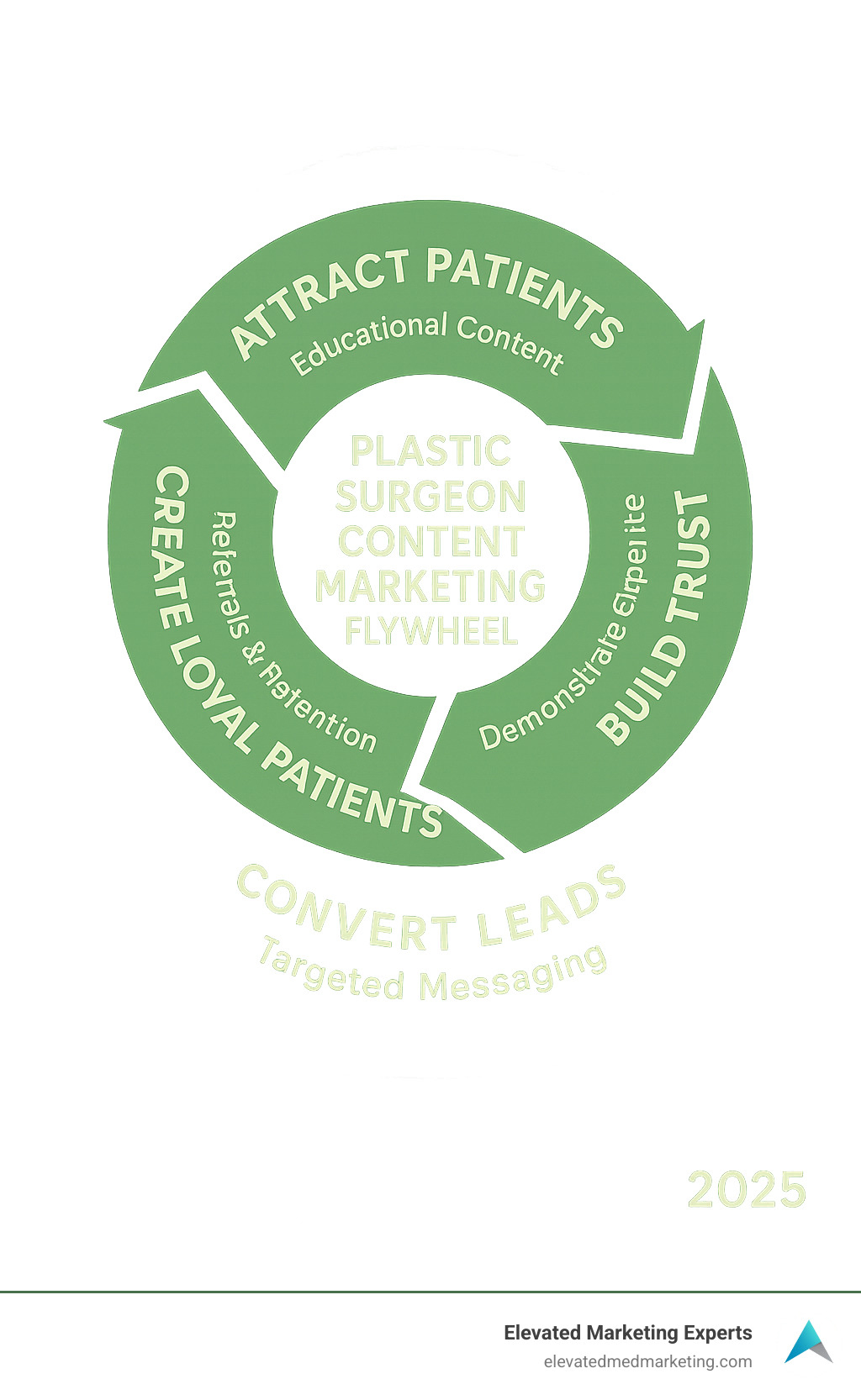
Why Content Marketing Matters for Plastic Surgeons
Think about the last time you made a major purchase. You probably spent hours researching online, reading reviews, and comparing options. Your patients do the same thing – except they’re not buying a car or a house. They’re considering surgery that will change how they look and feel about themselves.
Patient education is everything in plastic surgery marketing. Unlike buying a coffee or booking a haircut, cosmetic procedures require serious thought, research, and most importantly, trust. Your potential patients need to understand what they’re getting into – the procedure details, potential risks, recovery timeline, and realistic results they can expect.
Here’s where plastic surgeon content marketing becomes your secret weapon. Practices that prioritize content creation see 7.8× more traffic year-over-year compared to those that don’t. Even better, their conversion rates are 6× higher than practices without content strategies. These numbers aren’t just impressive statistics – they represent real consultations walking through your door.
The beauty of content marketing goes beyond just generating leads. It gives you what industry experts call “power over price.” When patients see you as the go-to authority through your educational content, they stop shopping around based purely on cost. You escape the dreaded commoditization trap where practices compete mainly on price instead of expertise and results.
Content marketing also builds a protective moat around your practice. When you consistently share valuable, educational content, you become the trusted resource in your market. New competitors can’t easily copy years of relationship-building and trust that comes from helpful content.
More info about Content Marketing for Plastic Surgeons
Main Benefits & Proof Points
Let’s talk numbers that matter to your bottom line. Plastic surgeon content marketing costs 62% less than traditional advertising methods while generating 3× more leads. This dramatic difference comes from content’s compound effect – that blog post you write today could still be attracting patients two years from now.
The math gets even better when you consider lead generation efficiency. Traditional advertising stops working the moment you stop paying. Content marketing keeps delivering results long after you hit publish. One educational video about tummy tuck recovery might answer hundreds of patient questions and generate dozens of consultations over its lifetime.
Real practices are seeing incredible results. One plastic surgeon experienced a 372% increase in pageviews and generated 32 web form leads after implementing a comprehensive content strategy. Another practice saw a 335% increase in leads and 950% growth in social traffic within just three months of launching their content program.
Scientific research on multimedia content confirms that mixing text, images, and video dramatically increases message retention and engagement. For plastic surgeons, this means patients arrive at consultations already educated, engaged, and ready to move forward with treatment.
The bottom line? Content marketing doesn’t just generate cost-effective leads – it generates better leads. Patients who’ve consumed your educational content understand your approach, trust your expertise, and are more likely to say yes to treatment recommendations.
Plastic Surgeon Content Marketing Strategy Framework
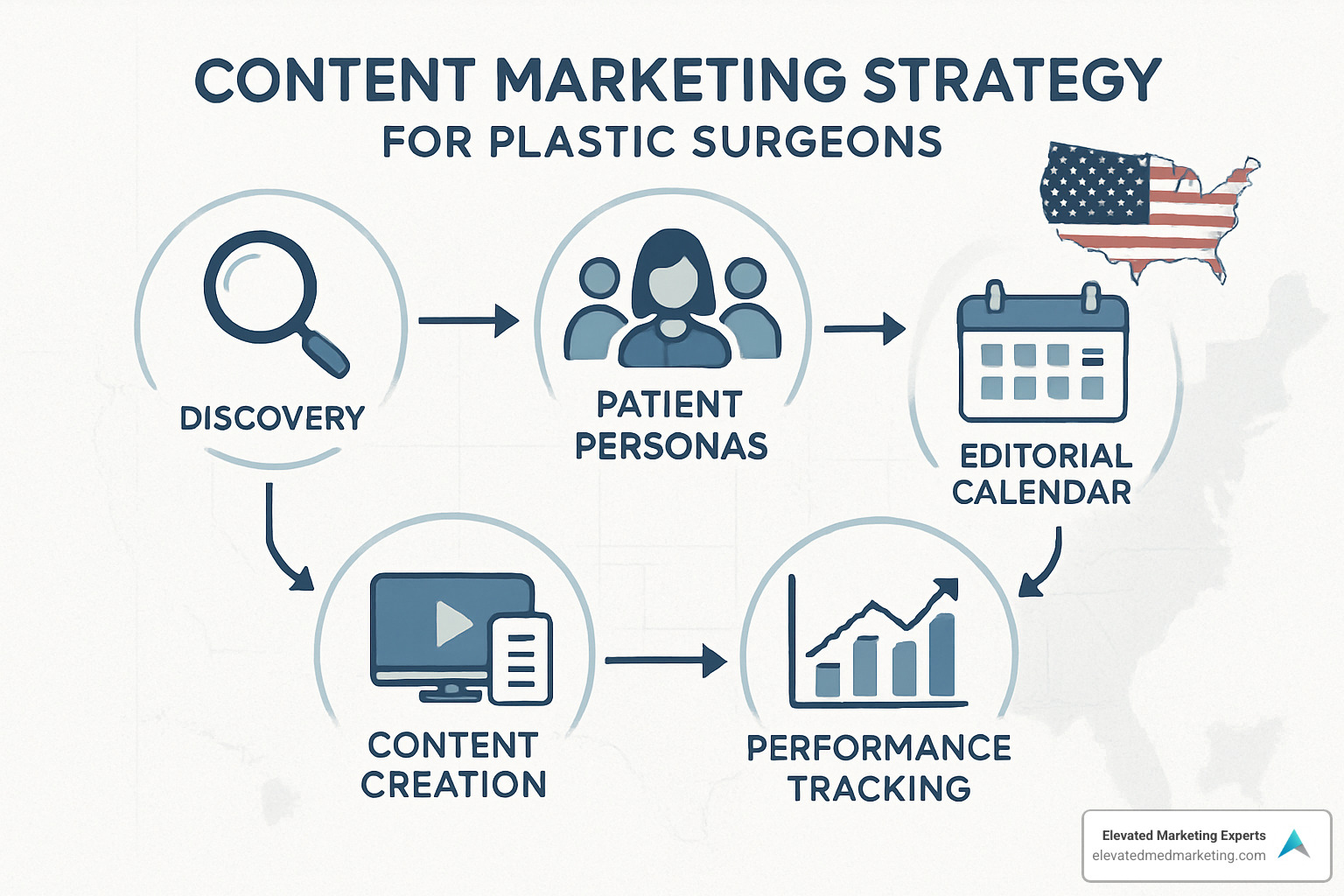
Building a successful plastic surgeon content marketing strategy isn’t about throwing content at the wall and hoping something sticks. It’s about creating a thoughtful framework that guides every piece of content you create.
Understanding your unique position is where everything starts. What makes your practice different from the surgeon down the street? Maybe you specialize in natural-looking results, or you’re known for your gentle bedside manner. These exercises help you find what sets you apart, so your content can highlight these strengths.
Patient personas are your content compass. A 25-year-old considering breast augmentation has completely different concerns than a 65-year-old looking into a facelift. The younger patient might worry about recovery time and how long she’ll need off work. The older patient might focus more on safety and finding a surgeon with extensive experience.
When you understand these differences, your content becomes laser-focused. Instead of generic posts about “cosmetic surgery,” you create targeted content that speaks directly to each group’s specific worries and desires.
Editorial calendars keep you organized and consistent. Map out content around natural timing – mommy makeover content before summer beach season, facial procedure information before holiday gatherings. This strategic timing ensures your content reaches patients when they’re most likely to be considering these procedures.
Your voice and style guidelines are crucial for building trust. Medical content needs to balance authority with approachability. You want to sound knowledgeable without being intimidating, professional without being cold. Consistency across all your content channels – from blog posts to social media – helps patients recognize and trust your brand.
Compliance considerations can’t be an afterthought. HIPAA regulations protect patient privacy, while FTC guidelines require honest disclaimers about results. Building these requirements into your strategy from day one prevents headaches later and keeps your practice protected.
Content Strategy for Plastic Surgeons
Plastic Surgeon Content Marketing Roadmap
Every successful content strategy starts with crystal-clear goal setting. Are you trying to fill your consultation calendar? Build awareness in your community? Position yourself as the go-to expert for specific procedures? Your primary objective shapes every content decision that follows.
Once you know where you’re headed, map your content to different funnel stages. Patients at the awareness stage need basic education about procedures and what to expect. Those in the consideration phase want detailed comparisons, cost information, and credentials. Decision-stage patients need that final push – financing options, consultation scheduling, and reassurance about their choice.
Choosing the right KPIs makes the difference between busy work and business growth. Social media likes feel good, but consultation bookings pay the bills. Focus on metrics that directly impact your bottom line – qualified leads, email subscribers, and actual patient conversions.
High-Impact Content Types for Plastic Surgeon Content Marketing
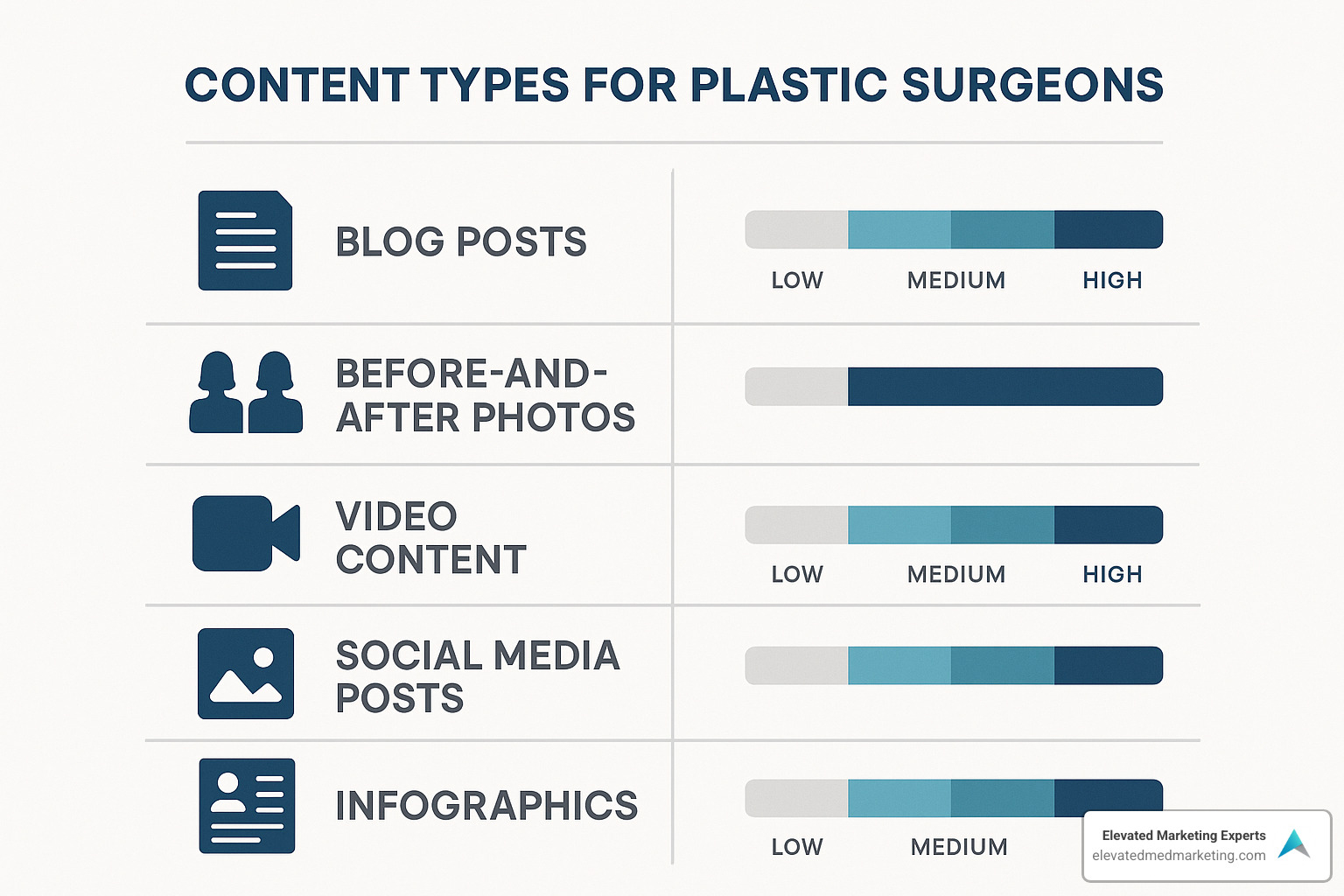
Blog posts are your content marketing workhorses. They boost your SEO, establish your expertise, and give you endless opportunities to answer patient questions. Topics like “What to Expect During Recovery” and “How to Choose the Right Surgeon” address real patient concerns while showcasing your knowledge.
Before-and-after photos speak louder than any marketing copy ever could. These visual testimonials demonstrate your surgical skills and help patients imagine their own potential results. Keep your photography consistent with proper lighting and angles – and always, always get proper patient consent.
Video content dominates engagement across every platform. Whether it’s procedure explanations, patient testimonials, or behind-the-scenes glimpses of your practice, video builds trust in ways that text simply can’t match. Short-form videos on TikTok and Instagram Reels are particularly powerful for reaching younger patients.
Patient testimonials provide the social proof that hesitant patients need. Real people sharing their experiences, recovery journeys, and satisfaction with results carry more weight than any advertisement. Video testimonials feel more authentic, but written reviews have their place too.
Educational resources like eBooks, checklists, and white papers position you as the authority while capturing valuable lead information. A “Pre-Surgery Preparation Checklist” or “Financing Your Procedure Guide” provides genuine value while building your email list.
Platforms & Distribution: Getting in Front of the Right Patients
Finding your patients online isn’t about being everywhere at once – it’s about being in the right places with the right message. The key is understanding where your ideal patients spend their time and what type of content they’re looking for.
Facebook remains the powerhouse for plastic surgery marketing, showing the greatest patient use and engagement among all social platforms. This makes sense when you consider that most cosmetic surgery patients are established professionals with disposable income. They’re on Facebook researching, asking questions in private groups, and looking for trustworthy information.
Instagram generates significantly higher engagement than Twitter for plastic surgery content, which shouldn’t surprise anyone. Visual results speak louder than words in our industry. When someone’s considering a procedure, they want to see your work, not just read about it.
Facebook works best for patients aged 36-70, particularly those considering body contouring procedures like liposuction. The platform’s detailed targeting options let you reach people based on interests, behaviors, and demographics that align perfectly with your ideal patients.
Live Q&A sessions on Facebook create genuine connections. There’s something powerful about answering real questions in real-time. Patients see you as approachable and knowledgeable, not just another surgeon hiding behind stock photos.
Instagram excels with visual storytelling and attracts the 17-35 age group interested in breast augmentation and other improvement procedures. Stories disappear after 24 hours, making them perfect for behind-the-scenes content. Reels reach new audiences through Instagram’s algorithm. IGTV allows longer educational content.
Use Instagram Highlights strategically. Create categories for your credentials, procedure galleries, patient testimonials, and frequently asked questions. This gives new visitors a quick way to learn about your practice and expertise.
TikTok reaches Gen Z patients who are just starting to consider cosmetic procedures. The platform rewards educational content that’s entertaining and authentic. You don’t need to dance or follow trends – just be yourself while explaining procedures and debunking myths.
YouTube functions as both a social platform and search engine. Patients often search for procedure information on YouTube before they even think about booking consultations. Longer-form educational videos, detailed procedure explanations, and patient testimonials perform exceptionally well.
Email marketing remains your most direct connection to potential patients. While social media algorithms control who sees your content, email lands directly in their inbox. Create automated sequences that nurture leads through their decision-making process. Send monthly newsletters with helpful tips and practice updates.
Latest research on platform ROI provides concrete data on which platforms generate the best return on investment for plastic surgery practices, helping you make informed decisions about where to focus your efforts.
Age-Based Channel Playbook
Understanding your patient demographics transforms your plastic surgeon content marketing from guesswork into strategy. Different age groups have distinct preferences for platforms, content types, and communication styles.
Patients aged 17-35 seeking breast augmentation live on Instagram, Snapchat, and TikTok. They want to see aesthetic results, lifestyle content, and authentic stories from other patients. Their decision-making process is visual and social – they’re likely to share content with friends and seek opinions from their network.
Focus on confidence and self-expression messaging with this group. They’re not just buying a procedure; they’re investing in how they want to feel about themselves. Daily posting works well, with high-quality visuals that show your artistic eye and attention to detail.
The 36-70 age group considering liposuction splits their time between Facebook, Instagram, and YouTube. They want educational content that addresses safety concerns and realistic recovery expectations. These patients do thorough research and appreciate detailed information.
Your messaging should emphasize health, wellness, and life improvement. They’re often motivated by wanting to feel better in their clothes or regain confidence they’ve lost over time. Consistent educational content with professional imagery builds the trust they need to move forward.
Patients over 70 interested in blepharoplasty primarily use Facebook. They value before-and-after photos that show natural-looking results, safety information, and testimonials from peers. This group appreciates straightforward communication without unnecessary complexity.
Repurposing & Syndication for Plastic Surgeon Content Marketing
Smart content creators know that one great piece of content can work across multiple platforms. The key is adapting your message to fit each platform’s unique style and audience expectations.
That comprehensive blog post about rhinoplasty recovery can become snippet videos for social media. Extract the most important points and create 30-60 second videos that provide immediate value while driving traffic back to your full article. This approach maximizes your content investment while maintaining consistent messaging.
Carousel posts work beautifully for breaking down complex topics. Take your detailed guide about choosing the right surgeon and turn it into digestible slides. Each slide should provide standalone value while encouraging viewers to swipe through the entire series.
Your newsletter becomes a content hub that ties everything together. Summarize your recent blog posts, highlight your best social media content, and add exclusive insights that reward your email subscribers. This approach creates a content ecosystem where each channel supports the others.
More info about Plastic Surgery Marketing Strategies
Measuring Success, SEO & Compliance

Let’s be honest – vanity metrics feel good, but they don’t pay the bills. When measuring your plastic surgeon content marketing success, you need to focus on numbers that actually matter to your practice’s growth.
Having 10,000 Instagram followers sounds impressive at dinner parties. But what really counts is whether those followers are booking consultations and becoming patients. The smartest practices track consultation bookings directly from content, email subscribers who convert to patients, and cost per lead from content marketing efforts.
Here’s what moves the needle: patient lifetime value from content-generated leads and return on investment from your content marketing spend. These metrics tell you whether your content strategy is actually growing your practice or just making you feel busy.
Google Analytics becomes your best friend when you set up proper tracking. Create goals for consultation bookings and email signups. Use UTM parameters to see which blog posts and videos generate your most valuable traffic. It’s like having a crystal ball for your content performance.
Call tracking systems bridge the gap between online content and phone consultations. When someone reads your blog post about breast augmentation recovery and calls your office, you’ll know exactly which content piece sparked their interest.
Content Marketing SEO Services
SEO Essentials for Plastic Surgeon Content Marketing
Search engine optimization transforms your content from a hidden gem into a patient magnet. When someone searches for “plastic surgeon near me” or “tummy tuck recovery tips,” your content should be right there waiting for them.
Keyword clusters work better than chasing individual keywords. Instead of creating separate pages for “breast implants,” “breast augmentation,” and “breast improvement,” build comprehensive resources that cover entire topic areas. Google loves thorough, helpful content that answers all related questions in one place.
Building topical authority happens when you consistently publish quality content about your specialties. If you’re known for mommy makeovers, create extensive content covering every aspect – from choosing the right procedures to recovery timelines to financing options. Google notices this expertise and rewards it with higher rankings.
Internal linking keeps visitors engaged while helping search engines understand your site structure. When you mention recovery time in a procedure overview, link to your detailed recovery guide. This strategy creates a web of helpful resources that patients can explore.
Backlinks from reputable sources signal credibility to search engines. Guest posting on medical blogs, getting listed in professional directories, and earning mentions from local news outlets all contribute to your site’s authority.
Ethical & Regulatory Guardrails
Medical marketing comes with serious responsibilities. The good news? Following ethical guidelines actually builds stronger patient relationships and protects your practice from costly mistakes.
Patient consent isn’t just a legal requirement – it’s the foundation of trust. Every before-and-after photo, testimonial, and case study needs explicit written permission. Create comprehensive consent forms that cover all your marketing channels, so you’re protected as your content strategy grows.
Authenticity matters more than flashy claims. Avoid words like “perfect results” or “guaranteed outcomes” unless you can back them up completely. Patients appreciate honest, realistic expectations much more than over-the-top promises. Include disclaimers about individual results varying – it’s not just legally smart, it’s respectful to your patients.
HIPAA compliance extends to every piece of content you create. This means being careful about patient information in background shots, casual conversations, and even the reflection in your office windows. Train your entire team on privacy requirements so everyone understands their role in protecting patient information.
FTC guidelines require transparency about any partnerships or sponsored content. If you recommend products or partner with other businesses, disclose these relationships clearly. Your patients deserve to know about any potential conflicts of interest.
Frequently Asked Questions about Plastic Surgeon Content Marketing
How does content marketing build trust and credibility with potential patients?
Think about the last time you made a major purchase. You probably researched online, read reviews, and looked for expert advice before deciding. Your patients do the same thing – except they’re making decisions about their bodies, not just their wallets.
Plastic surgeon content marketing builds trust by turning you into that expert advisor patients are looking for. When you consistently share helpful information about procedures, recovery tips, and realistic expectations, you’re showing patients that you care about their education, not just their credit card.
Here’s what makes the difference: transparency beats sales pitches every time. Patients can spot pushy marketing from a mile away. But when you take time to explain why certain procedures work better for different body types, or share honest recovery timelines, you’re building genuine credibility.
The magic happens through multiple touchpoints. Your educational blog posts demonstrate knowledge. Before-and-after photos showcase your surgical skills. Patient testimonial videos provide social proof. This comprehensive approach works because different people learn in different ways – some need to read the details, others want to see results, and many want to hear from real patients.
Which content formats generate the highest ROI for plastic surgery practices?
After working with countless practices, I’ve seen which content types consistently deliver the best return on investment. The winners might surprise you.
Video content takes the crown for engagement and conversions. Short procedure explanation videos, patient testimonials, and behind-the-scenes glimpses of your practice create emotional connections that static content can’t match. The sweet spot is videos under 60 seconds for social media – they’re long enough to provide value but short enough to hold attention.
Before-and-after photo galleries serve as your most powerful sales tools. These visual testimonials do something no amount of text can accomplish – they help patients visualize their potential results. The key is professional consistency: same lighting, similar angles, and clean backgrounds that let your work shine.
Educational blog posts might seem old-fashioned, but they’re the workhorses of content marketing. A well-written article about “What to Expect During Recovery” can attract patients for years after you publish it. These posts build your authority with Google while answering the questions patients are already searching for.
How long before I see measurable results from my content marketing program?
This is the question every practice owner asks, and I understand why. You’re investing time and money, so you want to see results. Here’s the realistic timeline based on what I’ve observed with successful practices.
Within the first 30-60 days, you’ll notice the early signs: more website visitors, increased social media engagement, and growing email subscriber lists. These metrics feel good, but they’re just the beginning of the story.
The 6-9 month mark is where things get interesting. Your content starts gaining traction in search results. Patients begin recognizing your practice name. Phone calls increase, and the quality of your consultations improves because patients arrive better educated and more committed.
Real revenue impact typically appears around 9-12 months. This timeline reflects the reality of cosmetic surgery – patients don’t impulse-buy procedures. They research, consider, save money, and build trust with their chosen surgeon. Your content marketing supports this entire journey.
Conclusion
Plastic surgeon content marketing isn’t just another marketing tactic – it’s the bridge that connects your surgical expertise with patients who need your help. When you consistently share valuable, educational content, you transform from just another practice competing on price into the trusted authority patients actively seek out.
The numbers don’t lie. Content marketing leaders are generating 7.8× more traffic while spending 62% less than practices stuck in the traditional advertising cycle. But here’s what matters more: they’re building genuine relationships with patients who choose them because of trust, not just convenience or cost.
Yes, content marketing requires patience. You’ll start seeing people engage with your content within the first month or two. Real business impact – more consultations, better-qualified leads – typically shows up around the 6-9 month mark. And the significant revenue growth that makes all the effort worthwhile? That usually happens within 9-12 months of consistent effort.
But here’s the beautiful part about content marketing: it compounds over time. That blog post you write today about breast augmentation recovery will still be attracting patients two years from now. That educational video explaining the difference between implant types? It becomes a 24/7 sales assistant, answering questions and building trust even while you sleep.
The key to long-term success is continuous optimization. Patient questions change. Social media platforms evolve. New competitors enter your market. The practices that thrive are the ones that pay attention, adapt their approach, and keep improving based on what actually works.
Your next step? Take an honest look at your current content efforts. Are you consistently educating patients about procedures they’re considering? Do you have a presence where your ideal patients spend their time online? Are you capturing leads and nurturing them through the decision process?
The aesthetic surgery market is getting more crowded every year. The practices that start building their content marketing foundation now will be the ones patients turn to when they’re ready to move forward. The question isn’t whether you can afford to invest in content marketing – it’s whether you can afford to let your competitors build those relationships instead.


