

Online Marketing Plastic Surgery: 7 Powerful Proven Strategies 2025
Why Plastic Surgery Practices Need Strategic Online Marketing
Online marketing plastic surgery has become essential for practice growth, with over 70% of cosmetic surgery patients starting their journey online before booking a consultation. The global cosmetic surgery market is projected to grow at a 9.6% compound annual growth rate from 2022 to 2030, making digital visibility more critical than ever.
Key Online Marketing Strategies for Plastic Surgery:
- Website Optimization – Mobile-friendly design with clear calls-to-action and before/after galleries
- Search Engine Optimization (SEO) – Local rankings and Google Business Profile optimization
- Content Marketing – Educational blogs, FAQ videos, and patient testimonials
- Paid Advertising – Google Ads and social media campaigns targeting specific procedures
- Social Media Marketing – Instagram for younger patients, Facebook for older demographics
- Reputation Management – Online reviews and testimonial collection systems
The shift is dramatic. In 2010, only 30% of plastic surgeons used social media for advertising. By 2019, 62% recognized its value for practice growth. Today’s patients expect to find you online – 63% prefer providers closer to home, and 90% use online reviews to make decisions.
As a digital marketing entrepreneur with over a decade of experience building successful marketing companies, I’ve seen how online marketing plastic surgery strategies can transform practices from struggling to thriving. My background in both technology and marketing has given me unique insights into what drives patient acquisition in the aesthetic industry.
Why Digital Marketing Is Mission-Critical for Plastic Surgeons
The plastic surgery world has completely flipped upside down. Gone are the days when a simple Yellow Pages ad or waiting for doctor referrals would keep your practice busy. Today’s competitive landscape looks nothing like it did even five years ago.
You’re not just competing with other plastic surgeons anymore. Nurse practitioners, physician assistants, and medical spas are all vying for the same patients. Everyone’s offering similar procedures, and patients have more choices than ever before.
Here’s the reality check: 88% of patients under 50 and 60% of patients over 50 research plastic surgeons online before they ever pick up the phone. If you’re not showing up in their search results, you might as well be invisible.
The referral shift is probably the biggest change I’ve witnessed in my years helping practices grow. Those reliable referrals from family doctors? They’re drying up fast. Patients are taking control of their healthcare decisions, doing their own homework, and choosing providers based on what they find online.
Local demand is where the magic happens. About 63% of patients prefer a provider closer to home, which makes your Google Business Profile optimization absolutely crucial. When someone searches “plastic surgeon near me” or “breast augmentation in [your city],” you need to be right there at the top.
The beauty of modern online marketing plastic surgery strategies is that they work on multiple channels simultaneously. Some patients start with Google searches, others scroll through Instagram, and many read reviews on several platforms before making contact. You need to meet them wherever they are.
Scientific research shows that practices successfully aligning their marketing and operational strategies are better positioned for long-term success. It’s not just about getting patients in the door – it’s about delivering on what you promise.
Generational Trends & Platform Usage
Understanding your patients’ social media habits isn’t just helpful – it’s essential for effective online marketing plastic surgery campaigns. The numbers tell an incredible story: average daily social media usage jumped from 90 minutes in 2012 to 147 minutes in 2022.
Millennials and Gen Z are absolutely driving the TikTok boom in aesthetic marketing. These younger patients want authentic, educational content that pulls back the curtain on procedures. They want to see real patient journeys, not just polished before-and-after photos.
Instagram remains the powerhouse for influencing patients’ desire to undergo procedures like breast augmentation. The visual nature of the platform makes it perfect for showcasing results and building trust.
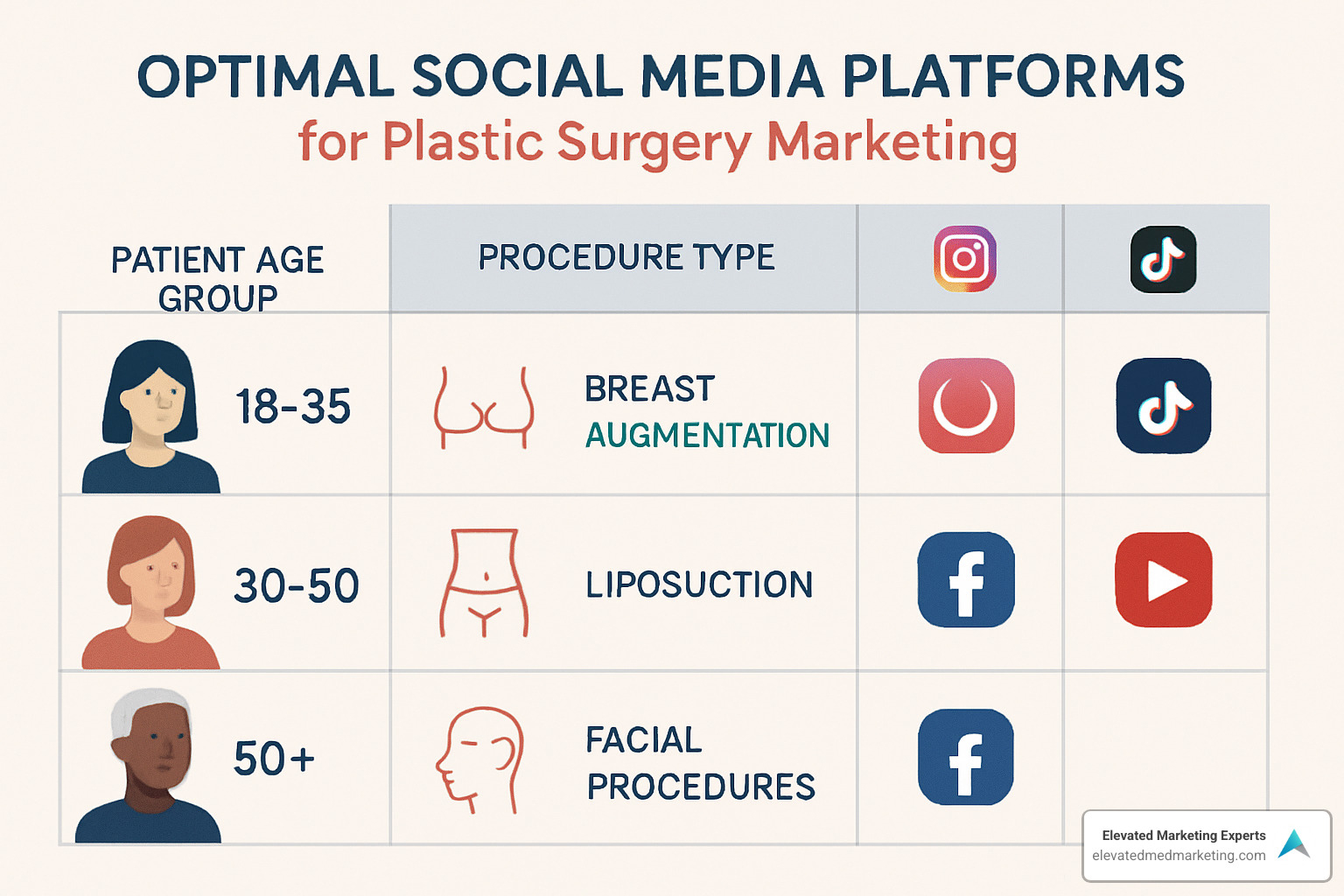
Different age groups live on different platforms. Your 17-35 year old patients are scrolling through Instagram, Snapchat, and TikTok, mostly interested in breast augmentation and body contouring procedures.
Your 36-70 year old patients prefer Facebook, Instagram, and YouTube. They want educational, safety-focused content about procedures like liposuction.
Patients over 70 stick mainly to Facebook and respond best to before-and-after photos of procedures like blepharoplasty.
Key Benefits Over Traditional Ads
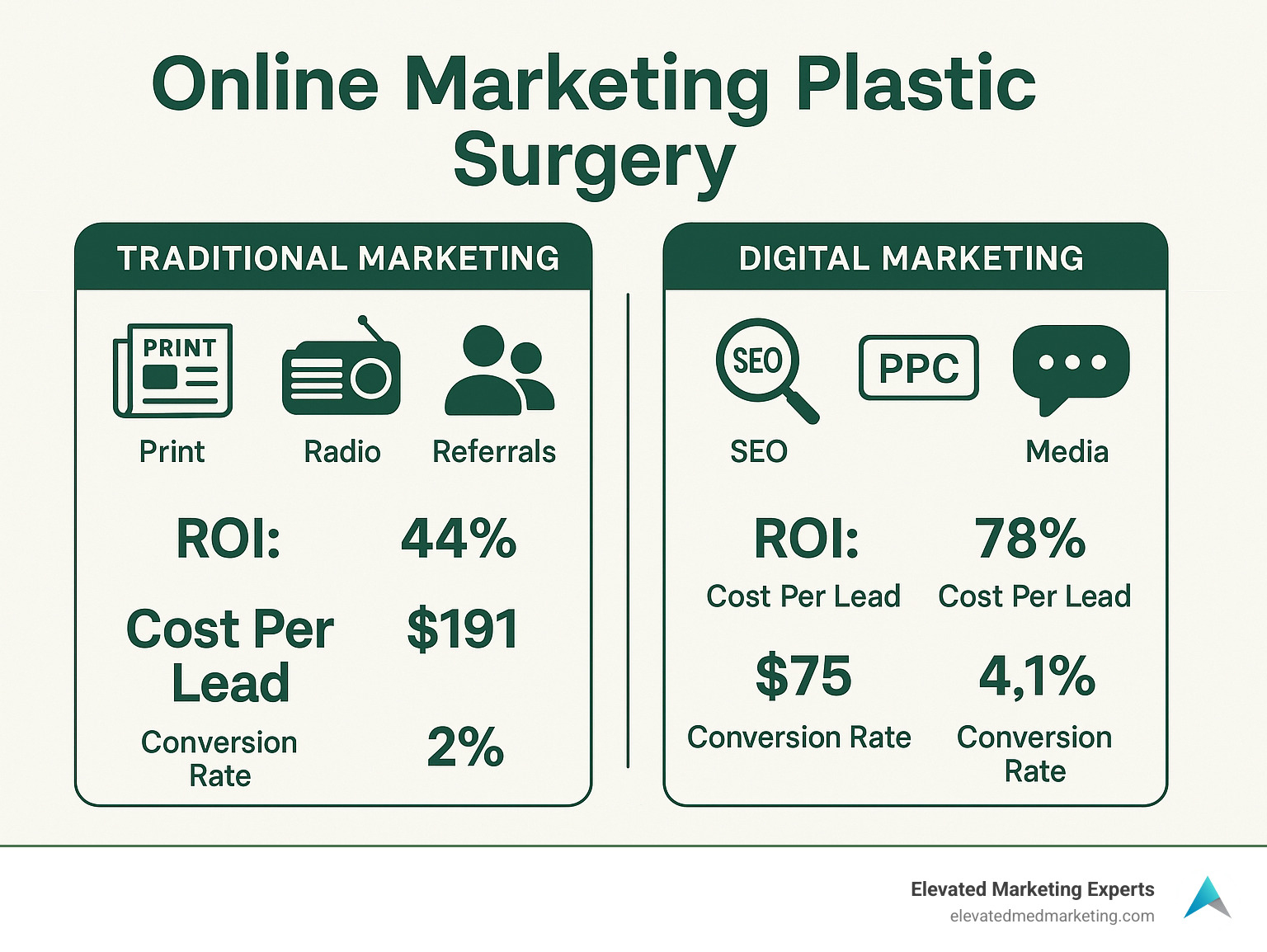
The difference between traditional advertising and digital marketing is like comparing a shotgun to a laser. With laser targeting, you can reach exactly the right people instead of hoping your message lands with someone interested.
Trackable KPIs give you crystal-clear insights into what’s working. You can see exactly how many people visited your website, which pages they looked at, and how many booked consultations.
The ROI difference is honestly mind-blowing. Research shows that SEO delivers the lowest cost per acquisition over the long term. Some practices report costs as low as $25 per conversion for certain campaigns.
Scalability means when you find something that works, you can expand it immediately. Your 24/7 presence is like having a tireless salesperson working around the clock.
Online Marketing Plastic Surgery: Strategies That Deliver Maximum ROI
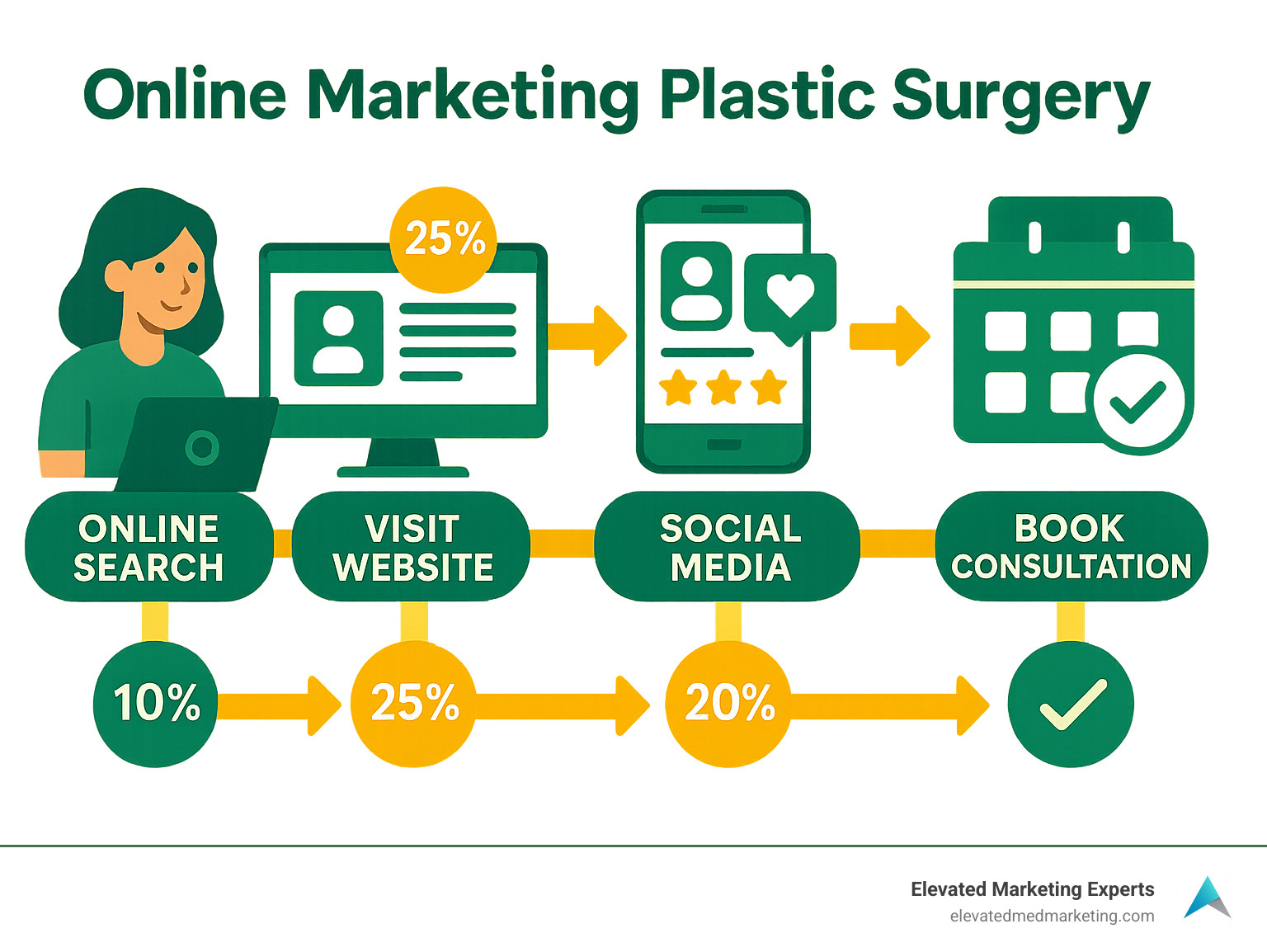
Think of online marketing plastic surgery as building a bridge between your expertise and the patients who need you. Most patients don’t just wake up one morning and book a consultation. They research, compare, read reviews, and often spend weeks or months moving through what we call the conversion funnel.
Understanding this patient journey is crucial. Someone might first find you through a Google search, visit your website, follow you on Instagram, read reviews, and finally book a consultation after seeing a friend’s results. Each touchpoint matters, and they all need to work together seamlessly.
Goal setting should feel realistic and exciting at the same time. Maybe you want to see 20% more consultations this year, or perhaps you’re launching a new service like mommy makeovers. Whatever your goals, they should drive every marketing decision you make.
Budget planning doesn’t have to be overwhelming. Most successful practices invest 3-5% of their gross revenue into marketing. If you’re newer or in a growth phase, you might bump that up to 7-10%. The sweet spot is balancing quick wins from paid advertising with the long-term growth that comes from SEO and content marketing.
Here’s where things get serious: compliance considerations. HIPAA regulations aren’t suggestions – they’re the law. Every patient photo, testimonial, and review response must protect patient privacy. FTC and AMA guidelines also regulate what claims you can make about procedures and results.
The “Perfect” Practice Website for Online Marketing Plastic Surgery
Your website is working 24/7, even when you’re sleeping. It’s often the first impression potential patients have of your practice, and 97% of purchasing decisions are influenced by website experience.
User experience starts with mobile optimization. Over half your visitors are browsing on their phones. If your site looks broken on mobile, they’re gone in seconds. Navigation should feel intuitive – patients shouldn’t need a map to find your procedure pages or contact information.
Page speed matters more than you might think. Google uses Core Web Vitals as ranking factors, and patients will bounce if pages take forever to load. Optimize those images, clean up your code, and consider AMP pages for lightning-fast loading.
Before-and-after galleries showcase your artistry, but they need to be done right. Use consistent lighting and angles so patients can actually see the change. Organize by procedure type and include diverse examples that represent your patient base. Most importantly, make sure you have proper consent for every single photo.
Clear calls-to-action guide visitors toward that consultation booking. Instead of boring “Contact Us” buttons, try “Schedule Your Consultation” or “Start Your Change.” Place these strategically throughout your site.
Schema markup might sound technical, but it helps Google understand your content better. This can lead to rich results in search listings, like showing your reviews or business hours directly in search results.
SEO & Local Search Blueprint for Online Marketing Plastic Surgery
SEO is the gift that keeps on giving. Unlike paid ads that stop working the moment you stop paying, good SEO builds momentum over time. It’s like planting a tree – it takes patience, but eventually provides shade for years.
Keyword mapping starts with thinking like your patients. They’re not searching for “abdominoplasty” – they’re looking for “tummy tuck before and after.” The difference in search volume is massive: 60,500 monthly searches versus just 590. Speak their language, not medical textbook language.
On-page optimization means making each page laser-focused on specific keywords without sounding robotic. Your title tags, descriptions, and content should flow naturally while still hitting those important search terms. Create dedicated pages for each procedure and location you serve.
Technical SEO handles the behind-the-scenes stuff that helps Google crawl and understand your site. Think XML sitemaps, SSL certificates, and fixing broken links. Core Web Vitals optimization improves both user experience and search rankings.
Google Business Profile optimization is absolutely crucial for local visibility. Claim your listing, fill out every section completely, and upload high-quality photos. Keep your name, address, and phone number consistent everywhere online.
Citation building involves getting your practice listed on relevant directories like Healthgrades and RealSelf. Consistency is key here too. One wrong phone number across multiple listings can confuse both Google and patients.
The proximity factor in local search favors practices closer to the searcher. This makes local SEO especially important for capturing the 63% of patients who prefer nearby providers.
Content That Converts
Great content does triple duty: it builds trust, educates patients, and improves your search rankings. The trick is creating content that actually helps people instead of just trying to sell them something.
Blog pillars should cover what keeps your patients up at night: procedure details, safety concerns, recovery expectations, and cost considerations. Write comprehensive guides for each service, but ditch the medical jargon.
FAQ videos let patients see and hear from you before they even book a consultation. People want to connect with their potential surgeon on a human level. These videos also perform incredibly well on social media and can be repurposed across multiple platforms.
Patient stories provide the social proof that statistics simply can’t match. Share change journeys that focus on both physical results and emotional benefits like newfound confidence. Always get proper consent and respect patient privacy above all else.
The content funnel approach creates materials for different stages of the patient journey. Top-of-funnel content educates about procedures and safety. Middle-of-funnel content helps with comparisons and showcases your credentials. Bottom-of-funnel content focuses on booking consultations.
Live video generates higher engagement than pre-recorded content, especially on Facebook. Consider hosting live Q&A sessions, facility tours, or educational presentations.
Accelerating Growth with Paid & Social Advertising
Organic tactics create long-term momentum, but paid media is how you fill tomorrow’s schedule. The goal is simple: show up when intent is highest, stay visible while prospects compare options, and make it effortless to book.
Google Ads capture the “ready now” searches (e.g., “breast augmentation surgeon near me”). Build separate PPC funnels for research terms (“tummy tuck recovery”) and high-intent terms (“tummy tuck consult”). Layer in remarketing so visitors who viewed your gallery see your ads everywhere they browse.
Instagram Reels and TikTok ads are best for awareness with younger audiences. Short, authentic clips covering procedure FAQs or patient journeys routinely outperform polished commercials. Keep them educational, captioned, and mobile-first.
Typical costs: in most U.S. metros, Google Ads leads run $60–$150, while social leads trend lower but require more nurturing. Track spend against your average case value so you know exactly how much you can pay per lead while staying profitable.
High-Performance PPC Playbook
- Match ad groups to intent: educational keywords in one campaign, “book consultation” keywords in another.
- Use negative keywords to filter bargain hunters (“free plastic surgery”).
- Call-only ads convert mobile users who prefer dialing.
- Local Service Ads (LSAs) sit above standard ads and charge per lead, making them ideal for tightly regulated medical queries.
- Always send clicks to dedicated landing pages that mirror the ad’s promise and feature a single, clear CTA.
Tracking & Optimizing ROI
- Append UTM tags to every ad URL so Google Analytics can trace the full patient journey.
- Build a closed-loop report that follows each lead from click to consultation to surgery revenue.
- Review dashboards weekly. Pause keywords with poor cost-per-lead, raise budgets on campaigns producing booked surgeries.
When paid media, organic SEO, and reputation marketing work together, you create a self-reinforcing system: traffic in the door now, credibility that compounds over time, and data that tells you exactly where to scale.
Reputation, Retention & Compliance Essentials
Your online reputation can make or break your practice. With 90% of patients using online reviews to choose their surgeon, your digital reputation directly impacts your bottom line. Even more telling? 43% of patients are willing to go out-of-network for a provider with excellent reviews.
Online reviews have become the new word-of-mouth referrals. But unlike traditional referrals that happened behind closed doors, these conversations are public and permanent. The good news? You can actively participate in shaping this narrative.
Review platforms extend far beyond Google Reviews. Your patients are talking about you on RealSelf, Healthgrades, Yelp, and specialty aesthetic sites. Each platform attracts different audiences and has unique review criteria.
Response etiquette matters more than you might think. When you respond to reviews professionally and thoughtfully, you’re not just addressing that one patient – you’re showing every future patient how you handle feedback. Thank patients for positive reviews, and address concerns in negative reviews with empathy and professionalism.
Email nurture campaigns keep your practice top-of-mind between appointments. These aren’t just appointment reminders – they’re opportunities to share educational content, announce new procedures, and maintain relationships that encourage referrals.
SMS reminders have become essential for reducing no-shows and improving patient satisfaction. Automated appointment confirmations, pre-procedure instructions, and follow-up care reminders streamline your operations while making patients feel cared for.
HIPAA compliance governs every aspect of your patient communications and data handling. All your marketing platforms, email systems, and communication tools must be HIPAA-compliant to protect patient privacy. This isn’t optional – it’s the law.
FTC and AMA advertising rules require truthful, non-misleading claims in all your marketing. Avoid superlatives like “best” or “guaranteed results.” Ensure all before-and-after photos represent typical outcomes, not exceptional cases.
Review & Testimonial Mastery
Getting authentic reviews requires a systematic approach, not just hoping satisfied patients will remember to leave feedback. Unique review links for each platform make the process simple for patients. Consider using QR codes on appointment cards or including direct links in follow-up emails.
AI response tools can help manage review volume while maintaining personalized responses. These tools draft responses that you can customize before posting, ensuring consistency while saving precious time.
Website showcase of reviews and testimonials builds immediate credibility for new visitors. Feature diverse patient stories and outcomes while maintaining proper consent and privacy protections.
Video testimonials provide exponentially more emotional impact than written reviews. When patients can share their complete journey – from initial concerns through recovery and final results – it creates powerful connections with potential patients.
Patient Retention Flywheel
Drip campaigns nurture relationships with past patients and encourage repeat business. Send birthday offers, procedure anniversary check-ins, and information about new services or technologies.
Referral incentive programs turn satisfied patients into practice ambassadors. Offer consultation credits, product discounts, or exclusive events for patients who refer friends and family.
Membership clubs create ongoing relationships and predictable revenue streams. Offer exclusive pricing on treatments, priority booking, and special events for members who pay annual fees.
The retention flywheel concept recognizes that happy patients naturally become referral sources, creating compound growth over time. When you focus on exceptional patient experiences, you create a self-reinforcing cycle where satisfied patients bring in new patients, who then become advocates themselves.
Frequently Asked Questions about Online Marketing for Plastic Surgeons
These are the questions we hear most often from plastic surgeons just starting their digital marketing journey. Don’t worry – we’ve all been there, wondering when results will show up and how much money we should spend.
How long before I see results from SEO?
Here’s the honest truth: online marketing plastic surgery SEO takes patience, but it’s worth the wait.
Most practices start seeing meaningful results in 3-4 months if they’re in smaller markets with less competition. But if you’re in a major city like Los Angeles or New York? Plan on 6 months or more before you see significant changes.
That said, you won’t be sitting in the dark the whole time. Some improvements happen much faster than others.
Technical fixes like site speed improvements and broken link repairs often show results in just 2-4 weeks. Google notices these changes quickly and starts crawling your site more effectively.
New content you publish – like blog posts about procedures or FAQ pages – typically starts appearing in search results within 4-8 weeks. Don’t expect them to rank on page one immediately, but you’ll see them gaining traction.
Local SEO efforts like optimizing your Google Business Profile usually take 6-12 weeks to fully kick in. This is often where practices see their first real wins, especially for “plastic surgeon near me” searches.
Competitive keywords – the ones everyone wants to rank for – take the longest. Plan on 6-12 months to see significant movement for terms like “breast augmentation” or “tummy tuck” in your city.
The key is starting early and staying consistent. Practices that begin SEO alongside their other marketing efforts always outperform those who wait until they’re “ready.”
What PPC budget should a new practice start with?
Most new practices should plan on $3,000-$5,000 per month for Google Ads when they’re starting out. I know that sounds like a lot, but here’s how to think about it.
Put about 60% of your budget toward search campaigns targeting high-intent keywords. These are people typing “breast augmentation surgeon” or “tummy tuck consultation” – they’re ready to book.
Allocate 25% for local campaigns focused on “near me” searches and location-based terms. These convert really well because people are specifically looking for someone nearby.
Save the remaining 15% for remarketing to people who visited your website but didn’t book a consultation. These campaigns cost less per click and often have higher conversion rates.
Start conservative and increase your budget as you figure out what works. Watch your cost per lead and conversion rates closely during your first 90 days. This data will tell you where to invest more money.
Remember to consider your average procedure value when setting budgets. If your typical patient spends $8,000 and you convert 10% of your leads, you can afford higher advertising costs than practices focused on smaller procedures.
Are before-and-after photos allowed on every platform?
This is where things get tricky. Every platform has different rules for medical before-and-after photos, and they change these policies regularly.
Google Ads is the strictest – they generally don’t allow before-and-after photos for cosmetic procedures at all. It’s frustrating, but that’s their current policy.
Facebook and Instagram do allow them, but they have restrictions on graphic content. Keep your photos tasteful and professional. They might also limit who sees your posts, so don’t rely solely on these platforms.
TikTok permits medical before-and-after content, but their algorithm might not show it to as many people. The platform tends to favor other types of content.
YouTube allows these photos but may add age restrictions or require special labeling. Make sure you’re following their community guidelines.
Your own website gives you the most freedom. You can display any before-and-after photos you want, as long as you have proper patient consent.
Speaking of consent – this is crucial. Always get written permission that specifically explains how you’ll use each patient’s photos. Consider creating separate consent forms for different platforms and uses.
Keep all your consent documentation organized and easily accessible. You never know when you might need to prove you had permission to use someone’s photos.
The rules change frequently, so stay updated on each platform’s current policies. What’s allowed today might not be allowed next month.
Conclusion
The world of online marketing plastic surgery has evolved from a nice-to-have into an absolute necessity. With patients spending nearly two and a half hours daily on social media and 70% starting their surgical journey online, your digital presence directly determines your practice’s future.
Success isn’t about choosing between SEO or paid ads, or picking Instagram over Google. It’s about creating a seamless experience that guides patients from their first search to their final follow-up appointment. The practices thriving today understand that online marketing plastic surgery means building trust through education, showcasing expertise through content, and maintaining relationships long after the surgery is complete.
At Liftd Marketing Experts, we’ve seen how the right digital strategy can transform a struggling practice into a thriving one. Our team specializes exclusively in helping plastic surgeons and medical spas steer this complex landscape. We understand the unique challenges you face – from HIPAA compliance to platform restrictions on medical content.
The foundation always starts with the basics: a mobile-optimized website that converts visitors into consultations, local SEO that captures patients searching in your area, and reputation management that turns satisfied patients into powerful advocates. From there, we layer in advanced strategies like targeted social media campaigns, conversion-optimized Google Ads, and patient retention systems that keep your schedule full.
What sets successful practices apart isn’t just generating more leads – it’s attracting the right patients who are genuinely interested in your services and can afford your procedures. Quality beats quantity every time, and strategic online marketing plastic surgery helps you achieve both.
The competitive landscape will only intensify as more practices recognize digital marketing’s importance. The question isn’t whether you should invest in online marketing, but whether you can afford not to. Every day you wait is another day your competitors are capturing patients who could have been yours.
Ready to lift your practice’s growth with proven digital marketing strategies? Our team brings years of specialized experience in aesthetic marketing, helping practices like yours achieve sustainable growth while maintaining the highest standards of patient care and compliance.
Let’s schedule a consultation to discuss how we can help transform your online presence into a powerful patient acquisition system. Together, we’ll create a comprehensive strategy that not only fills your consultation calendar but builds lasting relationships with patients who become lifelong advocates for your practice.


