

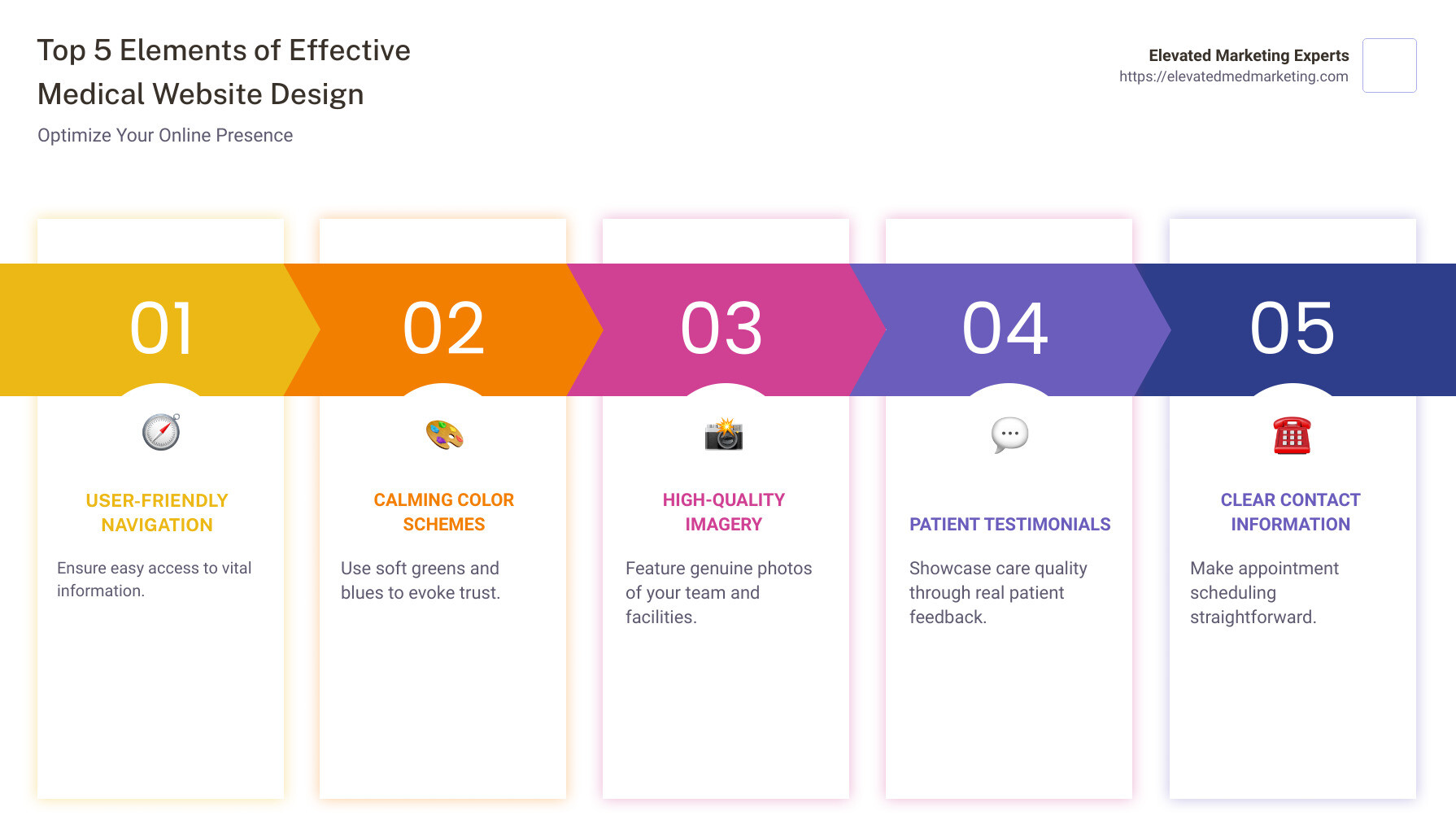
In search of ‘medical website design ideas’? You’re in the right place. For medical professionals looking to establish or revitalize their online presence, the design of your website is crucial. Here’s a brief overview to get you started:
- Key Elements: Inviting color schemes, user-friendly navigation, and clear communication of services.
- Color Psychology: Utilize shades that evoke trust and calm, such as soft greens and blues.
- Photography: High-quality, genuine photos of your team and facility to build trust.
- Testimonials: Showcase patient testimonials to highlight your expertise and care quality.
- Contact Information: Make it easy for visitors to reach out or schedule appointments.
Achieving a balance between functionality and aesthetics is fundamental. Your website is often the first impression potential patients have of your practice; make it count.
When navigating the complex world of medical website design, remember: your website represents your practice online. It can set the tone for patient experiences and expectations, making or breaking their decision to choose your services. Thus, investing time and thought into your website’s design is not just about aesthetics—it’s about connecting with and reassuring potential patients even before they step through your door.
The Role of Color in Medical Website Design
When it comes to designing a website for the medical field, every element matters—especially color. Color isn’t just about making a site look pretty; it plays a crucial role in how patients feel and react to your website. Let’s dive into why light green is often a top choice and how it can foster optimism and aid in memory.
Light Green: A Breath of Fresh Air

Light green is a color that’s closely associated with health, tranquility, and renewal. It’s no coincidence that many healthcare providers choose this color for their branding and website design. Light green can make your website feel welcoming and calming, which is exactly what you want when you’re trying to reassure patients or visitors who might be anxious about health concerns.
Optimism: Your Website’s First Impression
The color green can invoke a sense of optimism. When patients visit your website, they’re often looking for hope—whether it’s for recovery, finding the right doctor, or even just understanding their symptoms better. A light green color scheme can subconsciously encourage visitors to feel more hopeful about their health journey, making them more likely to engage with your content or book an appointment.
Memory: Making Your Site Stick
Research suggests that colors can significantly impact memory performance. Light green, being easy on the eyes, can help visitors remember your website and, by extension, your practice. This is crucial in a crowded healthcare market where standing out and being memorable can lead to more patient inquiries and appointments.
Incorporating Light Green
To effectively incorporate light green into your medical website design, consider the following tips:
- Backgrounds and Accents: Use light green as a background color or for key accents to draw attention to important sections like appointment booking buttons or contact information.
- Typography and Icons: Pair light green with contrasting colors for text and icons to ensure readability and highlight essential information.
- Imagery: Include images on your site that complement the light green color scheme, such as photos of nature, which can enhance the calming effect of your website.
In conclusion, the role of color in medical website design cannot be understated. Light green, in particular, can make your website not just a source of information but a place of optimism and reassurance. By thoughtfully incorporating this color into your design, you can create a memorable and comforting online space that encourages visitors to trust and choose your practice for their healthcare needs.
Moving on, let’s explore the essential features that every medical website should have to effectively serve patients and streamline operations.
Essential Features for a Medical Website
When designing a medical website, certain features are non-negotiable. These elements ensure the site serves its primary function—making healthcare services accessible while providing a seamless user experience. Here, we delve into the must-haves for any medical website.
Products and Services
First and foremost, a medical website must clearly outline the products and services offered. Whether it’s general practice, specialized medical treatments, or wellness programs, visitors should easily find what they’re looking for. This section should be more than just a list; include detailed descriptions, benefits, and possibly even short, engaging videos that explain complex services in simple terms. Clarity is key to helping potential patients understand what you offer and why it matters to them.
Contact Details
Next up, your website must prominently display contact details. This includes the physical address of the practice, phone numbers, and email addresses. For larger practices or hospitals, consider adding a directory that lists different departments and their respective contact information. Making this information readily available and easy to find is crucial. It reduces frustration for users trying to get in touch and demonstrates a level of openness and accessibility on the part of the healthcare provider.
Appointment Requests
The ability to request appointments online is a feature that significantly enhances the user experience. With more people preferring the convenience of online interactions, integrating this functionality is a must. This system should be simple, allowing patients to choose the type of service they need, select a preferred date and time, and submit their request within minutes. Providing a confirmation message or email after booking can further improve the experience, offering reassurance that their request has been received and is being processed.
Why These Features Matter
Incorporating these essential features into your medical website design isn’t just about ticking boxes; it’s about creating a bridge between healthcare providers and those in need of their services. A website that clearly lists available services demystifies healthcare for patients. Easy-to-find contact details encourage communication and foster trust. Meanwhile, online appointment requests cater to modern patient needs, emphasizing convenience and efficiency.
By focusing on these key elements, you can ensure your medical website not only attracts visitors but also converts them into patients. It’s about making that first digital interaction as informative and seamless as possible—the first step in a potentially long-term healthcare journey.
Keep these essential features in mind. They’re the foundation upon which a successful medical website is built, setting the stage for more specialized functionalities and design elements that can further enhance the user experience and operational efficiency.
Next, we’ll look into the cost considerations in medical website design, an important aspect for healthcare providers planning to develop or revamp their online presence.
Cost Considerations in Medical Website Design
When it comes to medical website design, understanding the costs involved is crucial. There’s a wide range of options, from a simple redesign to adding complex features, and each has its own price tag.
Simple Redesign
Starting with a simple redesign, the goal is to refresh the look without overhauling the entire structure. This might include updating colors, fonts, and images. It’s like giving your website a new coat of paint. This approach is more budget-friendly and can significantly improve the user experience without a hefty investment. Think of it as sprucing up your waiting room—it makes a difference in how patients feel about your practice.
Complex Features
On the other end, incorporating complex features can drive up costs. This includes things like online appointment booking, patient portals, or integrating electronic health records (EHR). These features enhance the functionality of your website, making it a more valuable resource for patients. However, they require more sophisticated coding and security measures, especially to comply with HIPAA regulations.
Imagine adding a state-of-the-art MRI machine to your clinic. It’s a significant investment, but it improves your service quality and patient satisfaction. Similarly, investing in complex website features can enhance patient engagement and operational efficiency.
Balancing Cost and Value
When planning your medical website, consider both the immediate costs and the long-term value. A simple redesign might be all you need to attract more patients. But, investing in complex features could improve patient retention and streamline your operations, ultimately saving money.
Your website is often the first point of contact with potential patients. It’s worth investing in a design that reflects the quality of your care. Whether you opt for a simple refresh or a feature-rich overhaul, ensure your website is accessible, informative, and user-friendly.
We’ll explore some of the best medical website design inspirations to give you a clearer idea of what’s possible within various budget ranges. The right investment in your website can turn it from a simple digital brochure into a comprehensive healthcare platform.
Top Medical Website Design Inspirations
In medical website design, standing out while maintaining a sense of professionalism and clarity is crucial. Let’s dive into some top inspirations that strike the perfect balance between innovation and user-friendliness.
Zocdoc
Why it shines: Zocdoc is a prime example of how a modern interface and typography can elevate the user experience. The site’s design is not just about looks; it’s about making healthcare access as straightforward as possible. With its bold, clean typography and an intuitive layout, Zocdoc makes finding a healthcare provider, reading reviews, and booking appointments feel seamless.
Takeaway: A modern design paired with straightforward functionality can significantly enhance user engagement and satisfaction.
Michigan Avenue Primary Care
Why it works: This site embodies the essence of professionalism while being user-friendly. Michigan Avenue Primary Care has managed to create a welcoming online space that mirrors the level of care they provide offline. The website’s design is clean, with a focus on easy navigation and accessibility of essential information like services offered, contact details, and how to request appointments.
Key insight: Professionalism in medical website design doesn’t have to come at the cost of accessibility. A user-friendly interface encourages patients to take the next step in their healthcare journey.
Nicklaus Children’s Hospital
What sets it apart: Nicklaus Children’s Hospital’s website is a testament to friendly design. The use of moving blobs and vibrant colors throughout the site injects a sense of warmth and welcome, crucial for a children’s hospital. This approachable design makes the website not just a source of information but a comforting space for parents and children alike to explore their healthcare options.
Lesson learned: Incorporating playful elements like animations can make medical websites feel more approachable, especially when catering to children and families.
These examples underscore the importance of blending aesthetics with functionality. Whether it’s through modern typography, professional and clean layouts, or friendly and engaging animations, the goal remains the same: to create a welcoming and efficient online environment for patients. Consider how these elements can be adapted to fit the unique needs and brand identity of your medical practice.
Incorporating Interactive Elements
Interactive elements on a medical website can transform a static information page into a dynamic and engaging experience for visitors. Let’s explore how Olathe Health, Rest Assured, and ECU Health have utilized these features to enhance user interaction and accessibility.
Olathe Health
Hero Image Sections: Olathe Health uses large, captivating hero images at the top of their homepage. These aren’t just static pictures; they often include interactive elements like sliders or video content that users can engage with. This approach not only grabs attention but also provides a more immersive experience, making the website feel alive and dynamic. It’s a clever way to introduce users to their services and facilities without overwhelming them with text right away.
Rest Assured
Accessibility Features: Rest Assured takes the user experience to the next level by integrating accessibility features directly into their design. This includes options for text size adjustments, high-contrast color schemes, and text-to-speech functionality. Such features are crucial for ensuring that all visitors, regardless of their physical abilities, can navigate the site comfortably and find the information they need without barriers.
ECU Health
Sidebar Links and Colorful Graphics: ECU Health incorporates sidebar navigation with vibrant, colorful graphics that make it easy for users to find what they’re looking for. These sidebars often include interactive links to various sections of the site, such as patient care services, visitor information, and health resources. The use of colorful graphics not only makes the navigation more intuitive but also adds a visual appeal that can make the website more memorable to visitors.
Each of these examples demonstrates how interactive elements can enhance the functionality and appeal of a medical website. By engaging visitors with hero image sections, ensuring accessibility for all users, and making navigation intuitive with sidebar links and colorful graphics, these sites improve the overall user experience. This not only helps in retaining visitors’ attention but also in conveying information in a more effective and user-friendly manner.
As we continue to explore medical website design ideas, keep in mind how these interactive features can be tailored to meet the needs of your audience, making your website not just a source of information, but a dynamic platform for patient engagement and communication.
Leveraging Trust and Credibility
In the realm of medical website design, trust and credibility are not just important; they’re everything. Let’s dive into how three distinct websites—Mayo Clinic, SAIVA.AI, and Weber Facial Plastic Surgery—have mastered this art.
Mayo Clinic
The Mayo Clinic stands as a beacon of trust and credibility in the medical field. How do they do it? Through a sleek design paired with quality information. Their website is a testament to their commitment to patient care and medical excellence. The design is clean and uncluttered, making it easy for visitors to find what they need without feeling overwhelmed. This simplicity, combined with their wealth of accessible and well-organized health information, establishes the Mayo Clinic not just as a healthcare provider, but as a valuable resource for medical knowledge.
SAIVA.AI
Next, we have SAIVA.AI, which takes a slightly different approach. They leverage custom graphics and color use to build trust and credibility. The vibrant and unique visuals on their site are not just eye-catching; they’re memorable. These custom graphics serve a dual purpose: they make complex medical concepts more understandable, and they imbue the site with a sense of innovation and forward-thinking. This tells visitors that SAIVA.AI is not just current with the times but is actively pushing the boundaries of medical technology and research.
Weber Facial Plastic Surgery
Lastly, Weber Facial Plastic Surgery shows us the power of animations and patient testimonials. Their website uses smooth transitions and engaging animations to draw visitors in, making the exploration of their services an interactive experience. However, it’s the patient testimonials that truly stand out. Real stories from real patients not only provide social proof but also humanize the brand. These testimonials, combined with the professional yet inviting design of the website, reassure potential patients that they’re in capable hands.
Each of these websites uses different elements to build trust and credibility, but they all share a common thread: they understand their audience. They know that visitors are looking for reassurance, quality information, and a sense of connection. By integrating these elements into their designs—whether through sleek layouts, custom graphics, or engaging testimonials—they not only convey their expertise and reliability but also create an environment where patients feel seen, understood, and cared for.
Remember that building trust and credibility is not just about the information you provide, but how you present it. It’s about creating a space that feels welcoming and reassuring, where patients can find hope, answers, and support.
In the next section, we’ll delve into frequently asked questions about medical website design, addressing common queries and concerns to help you further refine your approach to creating a trustworthy and credible online presence.
Frequently Asked Questions about Medical Website Design
When it comes to crafting a medical website, there are several common questions that often arise. Let’s tackle these head-on to provide you with clear, straightforward answers.
What should be on a medical website?
A medical website should serve as a digital front door for your practice. It needs to include:
- A clear description of your services and specialties. Patients need to understand what you offer and how it can help them.
- Contact information that’s easy to find. This includes phone numbers, email addresses, and physical location details.
- Appointment booking capabilities. If possible, integrate a system that allows patients to request or book appointments directly from your website.
- About Us page. Introduce your team and share your qualifications, experience, and approach to patient care.
- Patient resources. This might be FAQs, articles, or links to trusted sites for further reading.
- Testimonials and reviews. Social proof can reassure potential patients that they’re making the right choice.
What is the best color for a medical website?
Color plays a crucial role in how your website is perceived. While there’s no one-size-fits-all answer, light green is often recommended for medical websites. It’s associated with health, tranquility, and optimism. Light blues can also be soothing and trust-inducing. The goal is to make your website feel welcoming and calming. Avoid overly bright or harsh colors that might be jarring or evoke stress.
How much does it cost to build a medical website?
The cost of building a medical website can vary widely based on several factors:
- Complexity and features. A simple website with basic information will cost significantly less than a site with advanced features like appointment scheduling, patient portals, or custom graphics.
- Design approach. Custom designs are more expensive than using pre-designed templates.
- Maintenance and updates. Ongoing costs to keep your site secure, up-to-date, and functioning smoothly should also be considered.
As a rough estimate, a basic medical website might start around $2,000 to $5,000, while more complex sites could run $10,000 to $20,000 or more. This is an investment in your practice’s future, helping you attract and retain patients.
Moving forward, your website is often the first point of contact between your practice and potential patients. By addressing these FAQs in your design process, you’re well on your way to creating a site that not only looks great but serves as a valuable resource for your visitors. Let’s keep these insights in mind as we explore the inspiration and expertise offered by Elevated Marketing Experts in the next section.
As we wrap up our exploration of medical website design ideas, it’s clear that the journey to creating an engaging, functional, and aesthetically pleasing medical website is both an art and a science. Drawing inspiration from the examples and strategies we’ve discussed, from the soothing light greens of Maven’s site to the interactive elements of ECU Health, the possibilities are endless. Yet, the goal remains the same: to build a website that communicates trust, expertise, and care to your patients.
At Elevated Marketing Experts, we understand the unique challenges and opportunities that come with medical website design. Our team is dedicated to transforming these insights into actionable, impactful website designs that not only meet but exceed industry standards. Whether you’re looking to refresh your current site or starting from scratch, we’re here to guide you every step of the way.
Why Choose Elevated Marketing Experts?
- Tailored Design: We believe that every medical practice is unique. That’s why we offer customized website design solutions that reflect your practice’s personality, specialties, and patient care philosophy.
- User-Centric: Our designs prioritize the user experience, ensuring that your site is accessible, easy to navigate, and informative, making it easier for patients to find the information they need and take action.
- SEO-Optimized: Being found online is crucial. Our websites are built with SEO best practices in mind, helping you rank higher in search results and reach more potential patients.
- Compliance and Security: We understand the importance of privacy and security, especially in the healthcare industry. Our websites comply with HIPAA and other relevant standards, giving you and your patients peace of mind.
Let’s Build Something Great Together
Your medical website is more than just a digital brochure; it’s a platform for patient care, information, and engagement. With the right design elements, features, and expert guidance, your website can become a powerful tool in your practice’s future, helping you attract and retain patients.
Are you ready to take your medical website to the next level? Let Elevated Marketing Experts help you turn your vision into reality. Our team is excited to work with you to create a website that not only looks fantastic but also enhances your online presence and patient engagement.
Inspiration is just the beginning. With Elevated Marketing Experts by your side, you can achieve a medical website that stands out from the crowd for all the right reasons. Contact us today to learn more about how we can help with your medical website design needs. Together, we can create a site that truly reflects the quality of care you provide to your patients.


