

Medical website design and development is crucial, especially for plastic surgeons and medical spa owners looking to enhance their online presence. A well-designed medical website not only supports your digital marketing efforts but also meets the evolving needs of your patients. It serves as the foundation for your brand’s online representation, directly influencing patient engagement and satisfaction.
In a nutshell, a successful medical website should be:
– Responsive and mobile-friendly, ensuring accessibility on any device.
– Secure, protecting patient information according to HIPAA guidelines.
– User-friendly, with easy navigation and clear call-to-action elements.
– Rich in quality content that educates and engages your audience.
– Search engine optimized to improve visibility on Google and other search engines.
The cost of developing or redesigning a medical website can vary greatly based on complexity, ranging from $10,000 to over $50,000. The development timeframe typically spans 4 to 6 weeks, depending on the scope and specific requirements like content creation and integration of branding elements.
Understanding the balance between cost, audience needs, and the essential features of your medical website is the first step in creating a platform that effectively supports your practice’s goals and addresses your pain points, such as improving SEO rankings, revitalizing ineffective ads, and leveraging expert digital marketing strategies.
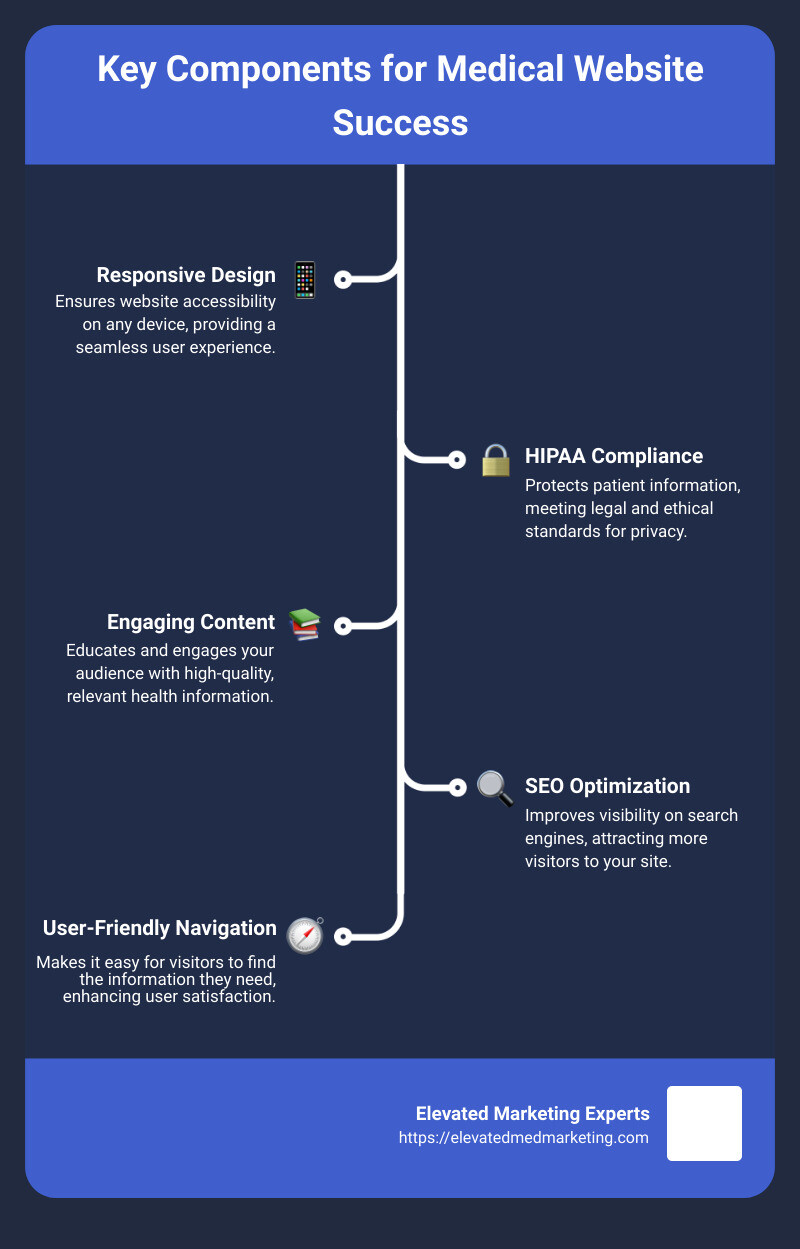
By focusing on these foundational elements, your practice can achieve a robust online presence that not only attracts but also retains patients, establishing a solid digital footprint in the competitive healthcare industry.
Essential Features for a Medical Website
When it comes to medical website design and development, certain features are non-negotiable. These elements not only enhance the user experience but also help in conveying the professionalism and credibility of your medical practice. Let’s dive into the essential features every medical website should incorporate.
Responsive Design
Your website must look great and function flawlessly across all devices—be it a desktop, tablet, or smartphone. A responsive design ensures that your site automatically adjusts to the screen size and orientation of the device it’s being viewed on. This is critical, as a significant portion of internet traffic comes from mobile devices.
Mobile-friendly
Closely related to responsive design, having a mobile-friendly website means ensuring that users on smartphones and tablets have a seamless experience. This includes fast loading times, easy-to-click buttons, and ensuring that text is readable without zooming. A positive mobile experience can significantly influence a potential patient’s decision to choose your practice.
Interactive Elements
Interactive elements like appointment booking forms, chatbots for instant communication, or interactive maps for directions make your website more engaging. These features not only improve the user experience but also facilitate the patient journey from discovery to appointment booking.
Strong Imagery
A picture is worth a thousand words, especially in healthcare. Strong imagery can convey the warmth, professionalism, and sophistication of your practice. Use high-quality, authentic photos of your staff, facilities, and patients (with their permission) to build trust and connection with potential patients.
Brand Incorporation
Your website should be a direct reflection of your brand. This means incorporating your practice’s colors, logo, and ethos into the design. A consistent brand image across your website and other marketing materials reinforces your identity and makes your practice more memorable.
Easy Navigation
Users should find what they’re looking for on your site within a few clicks. Easy navigation is crucial to keeping potential patients engaged. A well-organized menu, clear headings, and a search feature can help users navigate your site effortlessly.
Detailed Services
Your website should clearly outline the services you offer. This includes detailed descriptions of treatments and procedures, what patients can expect, and why they should choose your practice for their healthcare needs. Providing this information helps educate potential patients and sets realistic expectations.
Success Statistics
If you have them, share success statistics or outcomes from treatments and procedures. This could include patient satisfaction scores, recovery times, or success rates. Such data reinforces the value and effectiveness of your services, encouraging potential patients to choose your practice.
By integrating these essential features into your medical website design and development, you create a powerful tool that not only attracts but also retains patients. Your website is often the first point of contact between your practice and potential patients. Making a strong, positive impression can significantly impact your practice’s success. As we move into discussing the Cost and Development Timeframe, keep these critical features in mind to ensure your website serves as an effective digital representation of your medical practice.
Cost and Development Timeframe
When it comes to medical website design and development, understanding the cost and development timeframe is crucial for planning and budgeting purposes. Let’s break down these elements to give you a clearer picture.
Cost of Development
The cost of developing a medical website can vary greatly depending on several factors, including the complexity of the site, the amount of custom coding required, and whether you’re starting from scratch or redesigning an existing site.
Simple Redesign: For practices looking to refresh their existing website without extensive custom features, costs can range from $10,000 to $25,000. This option is suitable for those who want an updated look and feel, with minor improvements in functionality.
Complex Sites: For a new, custom-designed website with advanced features such as custom coding, secure patient portals, or integrated appointment scheduling systems, the cost can range from $30,000 to $50,000. These types of sites are more suitable for larger practices or medical facilities that require a wide range of functionalities to serve their patients effectively.
Elevated Marketing Experts, a leading agency in medical website design, emphasizes the importance of viewing your website as an investment rather than an expense. Their projects start at $5,000, scaling up based on the project’s scope and complexity. A well-designed website acts as a 24/7 salesperson for your practice, attracting and converting new patients without commission.
Development Timeframe
The timeline for developing a medical website can vary based on the project’s complexity, content creation needs, and branding requirements.
Standard Timeline: On average, the development process takes about 4-6 weeks to complete. This timeframe allows for the necessary planning, design, content creation, and testing phases to ensure a high-quality final product.
Content Creation: Creating engaging, informative content is a critical part of the development process. Whether it’s developing content for your services, blog posts, or patient education materials, quality content takes time to develop but is essential for SEO and patient engagement.
Branding Requirements: If your project includes branding or rebranding elements, such as logo design or developing a brand color scheme, this can add to the timeline. Consistent branding across all marketing materials, including your website, helps strengthen your practice’s identity and makes a lasting impression on potential patients.
In summary, when planning for your medical website design and development, budgeting for $10,000 to $50,000 and allowing 4-6 weeks for the project completion will set realistic expectations. The investment in a high-quality, patient-friendly website will pay dividends in attracting and retaining patients, enhancing your online presence, and ultimately contributing to the growth and success of your practice. We’ll delve into creating engaging content for your medical website, a key component in connecting with and educating your audience.
Creating Engaging Content for Your Medical Website
Creating content for your medical website isn’t just about filling pages with words. It’s about communicating effectively with your patients and potential patients. Let’s break down how to do this in a way that’s both engaging and informative.
Healthcare Content Writing
Start with the basics. Who are you? What do you specialize in? Why should a patient choose you? Your homepage should answer these questions at a glance. But don’t stop there. Dive deeper into what you do. Describe your core conditions treated and services offered in detail. Use language that your audience will understand – this means avoiding medical jargon when possible or clearly explaining it when necessary.
Finding Your Brand Voice
Your brand voice is how your practice’s personality comes through in your writing. Are you a pediatric clinic that’s all about creating a friendly, reassuring environment for kids and parents alike? Your tone might be warm and nurturing. Or, are you a cutting-edge cosmetic surgery practice? Then, a sophisticated and professional voice might suit you better. Consistency in your brand voice across all content helps build trust and recognition.
Highlighting Core Conditions and Treatments
Each condition you treat and each treatment you offer deserves its own page. Why? Because detailed, dedicated pages help patients find exactly what they’re looking for through search engines. For instance, if someone is searching for “laser hair removal in [Your City],” having a page specifically about your laser hair removal service increases the chances of them finding you. These pages should explain the condition or treatment, how you address it, and what patients can expect.
Blog Integration
A blog is a powerful tool for a medical website. It allows you to dive deeper into topics related to your field, share news or updates about your practice, and address common questions or concerns. Regularly updated blogs also signal to search engines like Google that your website is active, which can help improve your site’s ranking. Plus, blog posts are easily shared on social media, increasing your online visibility.
SEO Optimization
Search Engine Optimization (SEO) ensures that your content is discovered by people searching for related topics. Use keywords naturally throughout your content that potential patients might use to find services like yours. Tools like Google’s Keyword Planner can help identify these keywords. SEO isn’t just about keywords; it’s also about creating quality content that addresses the needs and questions of your audience. Google rewards content that is genuinely useful.
In summary, crafting engaging content for your medical website means focusing on clear, informative writing that speaks directly to your audience’s needs. It means finding and consistently using a brand voice that reflects the personality and values of your practice. It involves creating detailed pages for each condition and treatment you offer, integrating a blog for deeper engagement, and optimizing all your content for search engines. This approach not only helps you connect with your audience but also improves your online visibility, making it easier for new patients to find you.
We’ll explore how compliance and accessibility play critical roles in your medical website’s effectiveness and user experience.
Compliance and Accessibility
Creating a medical website that’s both accessible and compliant isn’t just good practice—it’s a necessity. Let’s dive into the essentials of HIPAA compliance, WCAG 2.1 AA, ADA compliance, the importance of accessibility features, secure hosting, and the role of website care plans.
HIPAA Compliance: Protecting Patient Data
HIPAA, or the Health Insurance Portability and Accountability Act, sets the standard for protecting sensitive patient data. Any medical website collecting or handling health information must ensure that all forms, appointment booking systems, and contact methods are encrypted and secure. This isn’t just about legal compliance; it’s about building trust with your visitors, reassuring them that their personal and health information is safe.
WCAG 2.1 AA and ADA Compliance: Making Your Site Accessible to All
The Web Content Accessibility Guidelines (WCAG) 2.1 AA and the Americans with Disabilities Act (ADA) set forth standards to ensure websites are accessible to individuals with disabilities. This includes features like text-to-speech compatibility, easy navigation for those with mobility impairments, and content that’s accessible to users with visual impairments. Making your website compliant with these guidelines is not only about avoiding legal pitfalls but also about ensuring that your website is usable and welcoming to everyone.
Accessibility Features: Enhancing User Experience
Incorporating accessibility features such as alt text for images, keyboard navigation, and transcripts for audio and video content can significantly improve the user experience for all visitors, not just those with disabilities. These features make your site more inclusive and can help in retaining visitors, potentially increasing patient engagement and appointments.
Secure Hosting: Safeguarding Your Website
Secure hosting is crucial for maintaining the integrity and performance of your website. It protects against cyber threats, ensures smooth operation, and provides regular backups to prevent data loss. For medical websites, choosing a hosting service that complies with HIPAA requirements is essential to protect patient information and build trust with your visitors.
Website Care Plans: Ongoing Protection and Compliance
Finally, investing in a website care plan offers peace of mind that your medical website remains compliant, secure, and up-to-date. These plans often include regular updates, security checks, and compliance audits to ensure that your site continues to meet legal standards and user expectations.
In conclusion, ensuring your medical website is compliant and accessible is not just about meeting legal requirements—it’s about providing a safe, welcoming, and positive experience for all your visitors. By focusing on these aspects, you can enhance patient trust, improve engagement, and maintain a strong online presence.
We’ll look into the strategies for marketing your medical website and optimizing it for search engines to attract and retain more patients.
Marketing and SEO Strategies
In medical website design and development, your site’s visibility is as crucial as its content and functionality. Let’s dive into the strategies that can help your medical practice stand out online.
Medical SEO
Medical SEO is the backbone of any successful medical website. It’s about making sure people find your site when they’re looking for health information or services you offer. It’s not just about stuffing your site with medical terms. It’s about creating valuable content that answers your potential patients’ questions. For instance, if you specialize in dermatology, articles on “how to prevent acne” or “skin care routines” could be beneficial.
A great example is the med spa digital marketing approach discussed earlier, which emphasizes on-page and off-page optimization, keyword research, and content marketing. This strategy ensures that your website is user-friendly and provides valuable content to your audience.
Digital Advertising
Digital advertising can significantly boost your online visibility. Platforms like Google Ads allow you to target specific demographics, interests, and even locations. This means your ads will be seen by people actively looking for the medical services you provide. It’s like handing out flyers to only those who said they need them.
Physician Reputation Management
Your online reputation is vital. Positive reviews and ratings not only improve your SEO but also build trust with potential patients. Encourage your satisfied patients to leave reviews on platforms like Google, Yelp, and Healthgrades. But remember, responding to reviews, both positive and negative, in a professional manner is equally important.
Listings Management
Ensure your practice’s information is consistent across all online directories. Inconsistencies in your practice’s name, address, and phone number can confuse potential patients and negatively impact your SEO. Tools like Moz Local can help you manage these listings more efficiently.
Content Marketing
Content is king, even in the medical field. Engaging, informative content can attract more visitors to your site and keep them there longer. This could be through blog posts, infographics, or videos that discuss common health concerns, advancements in medical technology, or tips for maintaining a healthy lifestyle.

Social Media Engagement
Social media platforms are powerful tools for connecting with potential patients. Share your content, engage in health awareness campaigns, and even conduct live Q&A sessions. Each platform has its unique audience and style. For instance, Instagram and Snapchat are great for before-and-after photos of treatments, while LinkedIn can help you connect with other medical professionals.
Incorporating these strategies into your medical website design and development process can significantly improve your online presence, attract more patients, and ultimately, grow your practice. The key is consistency and providing value to your audience. By doing so, you’re not just a medical practitioner; you’re a trusted source of health information.
As we wrap up this section, let’s not forget that the digital world is changing. Keeping up with the latest trends and algorithms is crucial for maintaining a strong online presence. Let’s move on to address some of the most frequently asked questions about medical website design.
Frequently Asked Questions about Medical Website Design
In the journey of establishing a robust online presence for medical practices, several questions frequently pop up. Let’s dive into some of the most common inquiries regarding medical website design and development.
How much does Medical Website Design Cost?
When it comes to the cost of medical website design, there’s no one-size-fits-all answer. The investment can vary significantly based on several factors including the complexity of the site, custom features, and the level of content creation required. Elevated Marketing Experts mention that their pricing starts at $5,000 and increases depending on the project scope. Generally, for a comprehensive, custom-designed website, costs can range from $10,000 to over $50,000 for more complex sites. This cost accounts for design, development, content, and any specific functionalities to make the site both user-friendly and compliant with healthcare regulations.
How long does the medical website development take?
The timeline for developing a medical website can also vary widely. According to Elevated Marketing Experts, the process typically takes 4-6 weeks. However, this timeframe can extend based on several factors such as the need for custom coding, content creation, and the incorporation of specific branding elements like logos. For larger practices or hospitals requiring more intricate websites, the development phase could reach up to 90 days. It’s essential to have a clear plan and maintain open communication with your design team to ensure timelines are met.
Can I add a blog to my website design project?
Absolutely! Incorporating a blog into your medical website is a fantastic way to provide valuable content to your patients, improve SEO, and establish your practice as a thought leader in your field. Regularly updated blogs can attract more visitors to your site and help convert them into patients by providing them with helpful, relevant information. Whether you decide to write the blog content yourself, have your staff contribute, or hire expert medical copywriters, adding a blog is a strategic move for enhancing your online presence. Elevated Marketing Experts and other agencies often offer guidance on how to effectively publish and optimize blog content for the web.
Understanding the cost, timeframe, and additional features like blog integration are crucial steps in planning for a successful medical website design project. With the right team and a clear vision, your website can become a powerful tool to attract new patients and serve as a valuable resource for your existing ones. Let’s keep these considerations in mind as we move forward to explore the compliance and accessibility aspects of medical website design.
Conclusion
At Elevated Marketing Experts, we believe in the power of continuous improvement, patient engagement, and integrated digital marketing to transform your medical website into a dynamic platform that not only attracts new patients but also retains and educates existing ones. Our journey through the complex landscape of medical website design and development underscores the importance of a user-centric approach that marries aesthetics with functionality, ensuring your digital presence is both impactful and accessible.
Continuous Improvement is at the heart of what we do. The digital world is changing, and so are the needs and behaviors of patients searching for medical information and services online. By adopting a mindset of continuous improvement, we ensure that your website remains at the forefront of digital trends and healthcare innovations. This approach allows us to refine and adapt your online presence to meet the changing needs of your patients and the industry at large.
Patient Engagement is crucial for any medical practice looking to thrive in the digital age. A well-designed website serves as the first point of contact between you and your potential patients. Through our expertly crafted websites, we aim to create an engaging and informative experience for your visitors, turning them from casual browsers into loyal patients. From detailed service pages to interactive elements like appointment schedulers, our focus is on making your website a valuable resource for both new and existing patients.
Digital Marketing Integration plays a pivotal role in amplifying your online presence and attracting more patients to your practice. Our comprehensive approach includes medical SEO, content marketing, social media engagement, and more, ensuring your website ranks high in search results and reaches your target audience effectively. By integrating these strategies, we not only enhance your website’s visibility but also foster trust and credibility with your patients.
In conclusion, the journey to creating an effective medical website is multifaceted, requiring expertise in design, development, content creation, and digital marketing. At Elevated Marketing Experts, we are committed to guiding you through every step of this journey, ensuring your website not only meets but exceeds industry standards. Whether you’re looking to launch a new website or revamp an existing one, our team is here to transform your digital vision into reality.
Let’s work together to create a medical website that reflects the excellence of your practice, engages your audience, and drives growth. To learn more about our approach to medical website design and development, and how we can help you achieve your digital goals, visit us today.
Together, we can elevate your online presence and ensure your medical practice thrives in the digital landscape.


