

Medical Marketing for Doctors: 3 Magic Tips 2025
Why Medical Marketing for Doctors is Essential in Today’s Digital Healthcare Landscape
Medical marketing for doctors has become a necessity, not a luxury, in today’s competitive healthcare environment. With 72% of internet users searching online for health information and 6.75 million health-related searches conducted on Google daily, patients are making healthcare decisions before they ever step foot in your office.
Key Medical Marketing Services for Doctors:
- Website Design & Development – Professional, mobile-optimized sites with patient portals
- Search Engine Optimization (SEO) – Local ranking to capture “near me” searches (up 900%+)
- Pay-Per-Click Advertising (PPC) – Targeted Google and Facebook ads for immediate results
- Online Reputation Management – 90% of patients use reviews to evaluate doctors
- Content Marketing – Educational blogs, videos, and patient resources
- Social Media Marketing – Platform-specific strategies for patient engagement
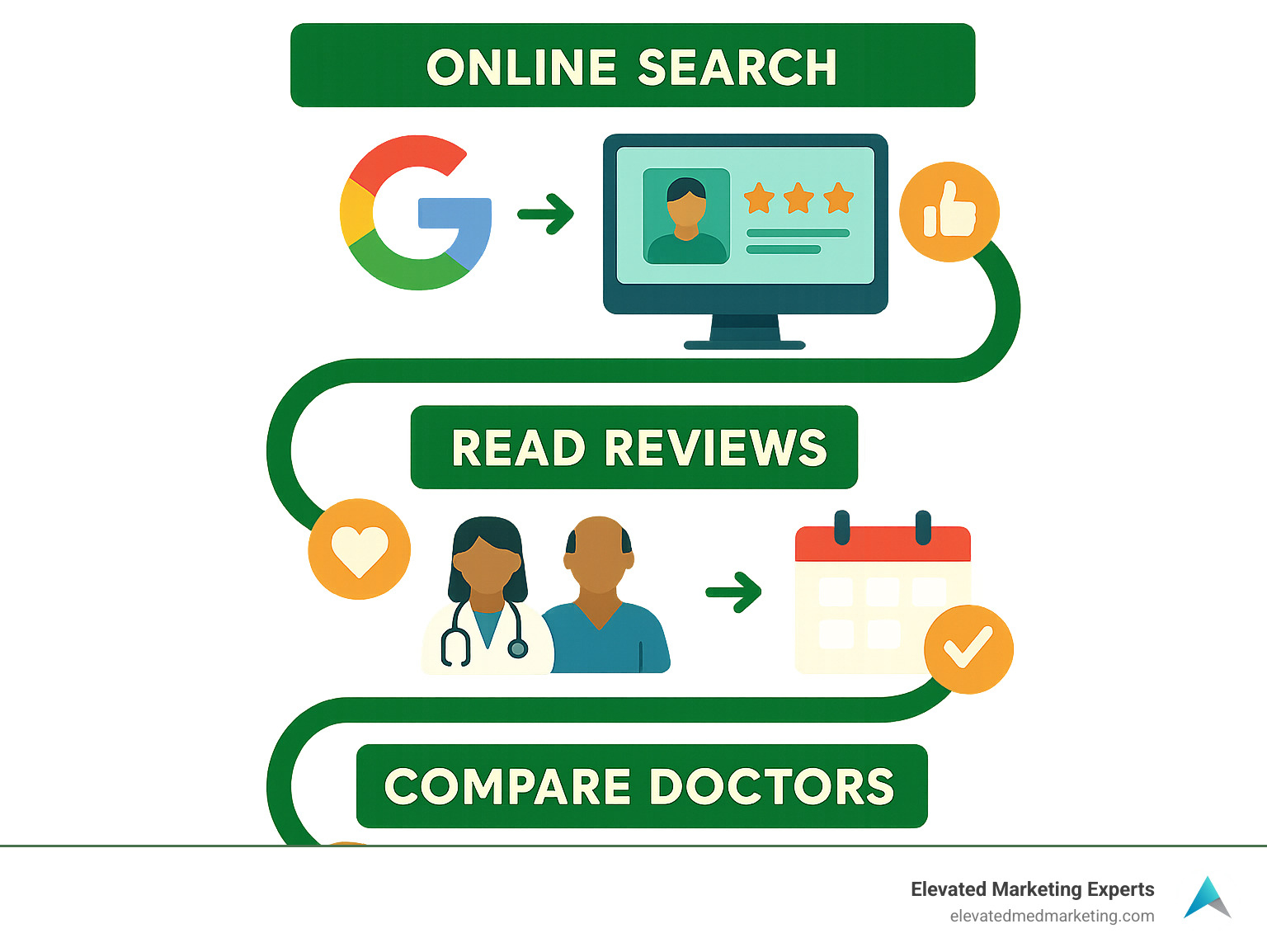
The shift is dramatic. Gone are the days when word-of-mouth referrals and Yellow Pages ads were enough. Today’s patients research everything online first. They compare doctors like they compare restaurants, reading reviews and browsing websites before making appointments.
The competition is fierce. With physician shortages expected to reach 46,000-121,900 by 2032, successful doctors aren’t just competing locally anymore – they’re competing for attention in an oversaturated digital space where 41% of patients use social media to choose their healthcare providers.
I’m Joe Amaral, founder of three successful digital marketing companies with over a decade of experience helping healthcare practices grow their patient base through strategic medical marketing for doctors. I’ve seen how the right digital strategy can transform a struggling practice into a thriving one, and I’m here to guide you through the exact services and strategies that deliver results.
Common medical marketing for doctors vocab:
Build Your Digital Foundation: Website & Online Presence

Think of your website as your practice’s digital front door. When patients search for a doctor online, your website is often their first impression of you and your practice. And here’s the reality – 61% of consumers are more likely to contact local businesses with mobile-friendly sites. That means if your website doesn’t work well on phones, you’re losing potential patients before they even give you a chance.
I’ve seen too many excellent doctors lose thousands of potential patients because their website took forever to load or looked terrible on mobile devices. A poor website isn’t just a missed opportunity – it’s actively driving patients to your competitors.
Medical marketing for doctors starts with getting your digital foundation right. Your website needs to work flawlessly on every device, load quickly, and most importantly, make it easy for patients to take the next step and book an appointment.
Create a Professional, High-Converting Website
A great medical website isn’t just about looking professional (though that matters too). It’s about creating an experience that makes patients feel confident about choosing you as their doctor. The best websites guide visitors naturally toward booking an appointment without feeling pushy or overwhelming.
Responsive design is non-negotiable in today’s mobile-first world. Google now prioritizes mobile-friendly sites in search results, and over 70% of website visitors will leave immediately if a site doesn’t work properly on their phone. Your website must automatically adjust to look perfect whether someone’s viewing it on a smartphone, tablet, or desktop computer.
Speed matters more than you think. If your website takes longer than 3 seconds to load, most visitors will give up and try someone else. That’s not just frustrating for patients – it’s lost revenue for your practice. Fast loading times are essential for keeping potential patients engaged.
Clear calls-to-action should appear on every page, making it obvious what you want visitors to do next. Whether it’s “Schedule Your Consultation” or “Call Today,” these buttons need to stand out and appear in logical places throughout your site.
Easy navigation means patients can find what they’re looking for without getting lost in confusing menus. Your website should feel intuitive, with a logical structure that guides visitors from learning about your services to booking an appointment.
Patient portals are increasingly important for existing patients who want to access their information online. This feature not only improves patient satisfaction but also reduces administrative work for your staff.
For practices offering aesthetic services, before-and-after galleries can be incredibly powerful for showing potential patients what’s possible. Just make sure you have proper consent and follow all privacy regulations.
Trust-building features make the biggest difference in converting website visitors into patients. Professional staff bios that include personal touches like hobbies or fun facts help patients feel more connected to your team. High-quality photos of your actual office and staff (not stock photos) show patients exactly what to expect when they visit.
I always recommend investing in professional photography rather than using generic stock images. Patients want to see real faces and real spaces where they’ll receive care. The Website Design for Healthcare approach focuses on creating authentic connections with potential patients.
Dominate Local Listings and Directories
Local listings are absolutely crucial for medical marketing for doctors because this is where patients go to find and research healthcare providers. A staggering 94% of local businesses receive calls directly from their Google Business Profile listing, making this one of the most important marketing tools available to your practice.
Google Business Profile should be your top priority. Set up a Google Business Profile immediately if you haven’t already. This free tool allows you to control how your practice appears in Google searches and on Google Maps. It’s where patients will see your hours, read reviews, view photos, and get directions to your office.
Healthcare-specific directories like Healthgrades, Vitals, and RateMDs are where patients specifically go to find and evaluate doctors. These platforms carry extra weight because they’re designed for healthcare, and patients trust them for medical information.
Yelp remains important, especially in urban markets where competition is fierce. While some doctors resist Yelp, ignoring it means missing out on a significant source of patient reviews and visibility.
NAP consistency (Name, Address, Phone) is more important than most doctors realize. Your practice information must be identical across all platforms. Even small variations like “Dr. Smith” on one site and “Doctor Smith” on another can hurt your local search rankings. Search engines get confused when they can’t verify that all these listings refer to the same business.
Local citations from reputable directories signal to search engines that your practice is legitimate and established in your community. The more consistent citations you have, the more likely you are to appear in local search results when patients are looking for doctors in your area.
Keep your listings updated with current photos, office hours, and service descriptions. Respond professionally to all reviews, both positive and negative. This ongoing maintenance might seem tedious, but it’s essential for maintaining strong local visibility and attracting new patients to your practice.
Attract New Patients with Search Engine Optimization (SEO)

Think of SEO as planting a tree in your practice’s backyard. While paid ads are like buying flowers from the store – they look great right away but need constant replacement – SEO grows stronger and more valuable over time. We’ve watched practices transform from getting 36 clicks per day to 132 clicks per day through strategic medical marketing for doctors SEO implementation.
The beautiful thing about SEO is that it works while you sleep. When patients search for “dermatologist near me” at 2 AM (and yes, they do), your optimized website can be there to greet them. Unlike paid advertising where you pay for every click, SEO brings you qualified patients without ongoing costs once it’s established.
Keyword research forms the foundation of your SEO strategy – understanding exactly what your patients type into Google when they need your services. On-page optimization ensures each page of your website speaks Google’s language clearly. Technical SEO makes sure your site loads quickly and works perfectly on mobile devices, while link building from reputable medical sources tells Google you’re a trusted authority.
More info about Search Engine Optimization reveals that medical SEO requires patience and consistency. You can’t pay Google to rank you higher organically – it must be earned through quality content, technical excellence, and genuine patient value.
Win Your Neighborhood with Local SEO
Here’s where medical marketing for doctors gets exciting: local SEO is your secret weapon for dominating your geographic area. The 900%+ increase in “near me” searches means patients are practically raising their hands saying “I need help and I want it close to home.”
Local SEO is different from general SEO because it focuses on geographic intent. When someone searches for “plastic surgeon in Miami” or “pediatrician near me,” they’re not looking for general information – they’re ready to book an appointment with someone nearby.
Google Map Pack optimization is crucial because those three businesses that appear in the map results get the majority of clicks. Your practice needs to earn one of those coveted spots through consistent NAP information, positive reviews, and location-specific content.
Localized service pages work incredibly well for medical practices. Instead of one generic “services” page, create dedicated pages for each treatment in each location you serve. A page titled “Botox Injections in Downtown Miami” will always outrank a generic “Botox” page for local searches.
More info about Local SEO for Medical Spas shows how location-specific strategies can dramatically increase appointment bookings from nearby patients who are ready to schedule immediately.
Establish Expertise with Content Marketing
Content marketing is where your medical expertise shines through and patients get to know you as a real person, not just another doctor. When you consistently answer patient questions through helpful content, you build trust before they ever walk through your door.
Video marketing has become incredibly powerful for medical practices. A simple “Meet the Doctor” video where you talk about why you became a physician, show your office, and maybe mention your golden retriever can do more for patient trust than any fancy brochure.
Patient education materials serve a dual purpose – they help your current patients understand their care better while attracting new patients through search engines. When someone searches “what to expect after rhinoplasty,” your detailed guide can be exactly what they need.
Effective content types for medical practices:
- “How-to” guides for pre/post-procedure care that reduce patient anxiety
- “Meet the Doctor” video series showcasing your personality and expertise
- Blog posts on new treatments and industry developments
- Downloadable checklists for new patients to prepare for visits
- Patient education materials explaining procedures in simple terms
- Infographics that make complex medical information easy to understand
More info about Content Marketing demonstrates that quality content brings around three times the results of traditional marketing while establishing your authority in your field.
The key is consistency and authenticity. Write like you’re explaining something to a friend, not like you’re writing a medical textbook. Your patients will appreciate the clear communication, and Google will reward you with higher rankings for being genuinely helpful.
The Ultimate Guide to Medical Marketing for Doctors

Successful medical marketing for doctors requires a comprehensive approach that addresses every stage of the patient journey. From initial awareness through treatment and follow-up, each touchpoint is an opportunity to build relationships and generate referrals.
The modern patient journey is complex. They might see your social media post, read your blog article, check your reviews, visit your website, and compare you with competitors before ever calling your office. Your marketing needs to support this entire process.
Harness Social Proof: Reviews and Testimonials
Online reviews are the new word-of-mouth referrals. With 94% of healthcare patients using online reviews and 75% only considering doctors with 4+ star ratings, your reputation management strategy is critical.
The Power of Reviews:
- 68% of patients form opinions with just 5 reviews
- Patients are 91% more likely to choose providers with higher reviews
- 98% of consumers see reviews as essential for decisions
- 50% trust online reviews as much as personal recommendations
Review Generation Strategy:
- Ask at the right time – When patients give compliments or after successful treatments
- Make it easy – Provide direct links to review platforms
- Follow up systematically – Automated emails post-appointment
- Respond professionally – Thank positive reviewers, address concerns diplomatically
Video Testimonials:
Video testimonials are incredibly powerful for building trust. Tools like CaptureMD make it easy for patients to leave 50-second video testimonials that you can feature on your website and social media.
Drive Immediate Results with Paid Advertising (PPC)
While SEO builds long-term visibility, PPC advertising delivers immediate results. Google Ads is particularly effective for medical practices because patients searching for healthcare services have high intent to book appointments.
PPC Strategy for Medical Practices:
- Target high-intent keywords like “urgent care open now”
- Use location-based targeting within your service area
- Create compelling ad copy focusing on patient benefits
- More info about Pay Per Click
- Implement remarketing to re-engage website visitors
Effective PPC Campaigns:
- Google Ads for search-based patient acquisition
- Facebook Ads for awareness and demographic targeting
- Remarketing campaigns to convert previous website visitors
- Geotargeting to reach patients in your service area
We’ve seen medical spa treatments generate dozens of appointments per month through targeted PPC campaigns with budgets as low as $2,400/month, achieving 26X ROI in some cases.
Improve the Patient Journey with Digital Tools
Modern patients expect convenience and digital accessibility. Practices that accept digital tools see significant improvements in patient satisfaction and operational efficiency.
Essential Digital Tools:
- Online appointment booking – 95% of patients would use online booking if available
- Patient self-scheduling – Reduces administrative burden
- E-commerce for self-pay services – 10% of patients can shop and pay online
- Automated appointment reminders – Reduces no-shows
- Telemedicine integration – Expands service accessibility
The Convenience Factor:
Only 25% of practices currently offer self-scheduling, creating a massive opportunity for early adopters. Patients increasingly expect the same convenience from healthcare that they get from other service industries.
Stay Compliant: A Guide to Ethical Medical Marketing for Doctors
HIPAA compliance isn’t optional – it’s the foundation of ethical medical marketing for doctors. Every marketing activity must protect patient privacy while building trust.
HIPAA-Compliant Marketing Guidelines:
- Never use patient information without explicit consent
- Avoid identifying details in testimonials or case studies
- Use general health information rather than specific cases
- The CDC defines health marketing as using customer-centered strategies
- Implement proper data management systems
Best Practices for Compliance:
- Obtain written consent for testimonials and photos
- Train staff on privacy requirements
- Use HIPAA-compliant marketing platforms
- Focus on educational content rather than patient-specific stories
- Work with experienced healthcare marketing professionals
Measure What Matters: A Guide to Data-Driven Medical Marketing for Doctors
Without proper tracking, you’re flying blind. Successful medical marketing for doctors requires measuring the right metrics and making data-driven decisions.
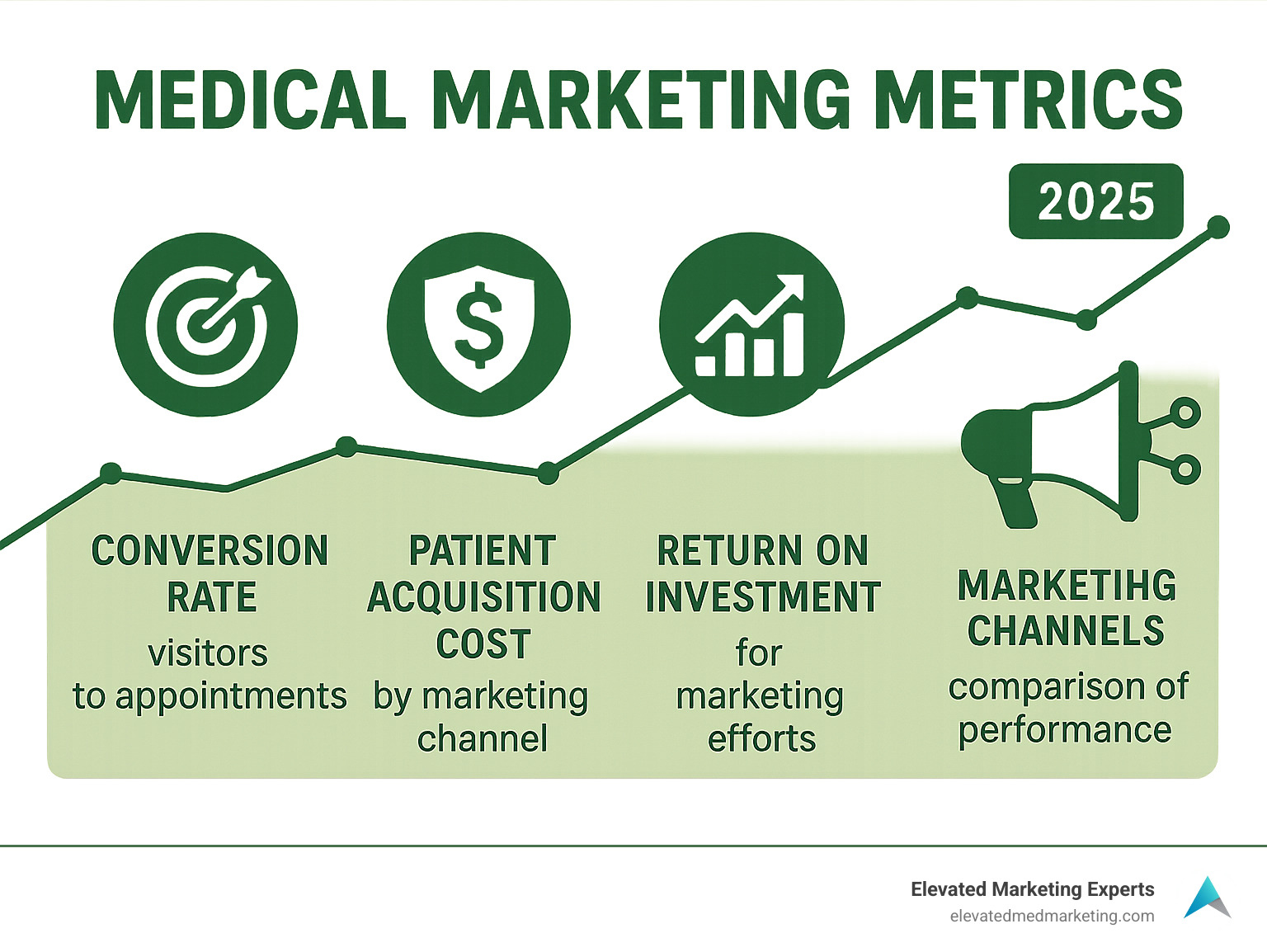
Key Performance Indicators (KPIs):
- Website traffic and source analysis
- Conversion rates from visitors to appointments
- Patient acquisition cost by marketing channel
- Return on investment for paid campaigns
- Review ratings and response rates
Essential Tracking Tools:
- Google Analytics for website performance
- Google Looker Studio for visual dashboards
- Call tracking for phone conversions
- CRM systems for patient journey analysis
We recommend using live dashboards rather than static monthly reports. Real-time data allows for quick adjustments and better decision-making.
Frequently Asked Questions about Medical Marketing
How much should a medical practice budget for marketing?
The short answer? Most successful practices invest 5-15% of their revenue in marketing. But here’s the thing – it’s not just about the percentage. It’s about understanding where your practice is in its journey and what you’re trying to achieve.
If you’re just starting out or trying to grow aggressively, you might need to invest closer to 10-15% of your revenue. Think of it as planting seeds for future growth. Established practices that have a steady patient flow can often maintain their momentum with 5-8% of revenue dedicated to marketing.
Your specialty makes a difference too. If you’re a dermatologist in a city with twenty other dermatologists, you’ll need to invest more to stand out than if you’re the only plastic surgeon in a smaller town. Geographic market competition and local advertising costs can dramatically affect your budget needs.
Here’s how we typically recommend breaking down your medical marketing for doctors budget: 40% for digital advertising like Google Ads and Facebook campaigns, 30% for SEO and content marketing to build long-term visibility, 20% for website maintenance and optimization, and 10% for reputation management tools and review systems.
Marketing isn’t an expense – it’s an investment. The practices that treat it as such are the ones that thrive.
What is the single most important marketing strategy for a new doctor?
I get this question a lot, and while every marketing expert might give you a different answer, I’m going to be brutally honest with you. There isn’t one single strategy that trumps everything else. But there are three foundational elements that work together like a three-legged stool.
First, you need a professional, SEO-optimized website. This is your digital headquarters – the place where patients go to decide if they trust you. Without it, you’re essentially invisible online.
Second, set up and optimize your Google Business Profile. This is non-negotiable. When patients search for doctors near them, this is often the first thing they see about your practice.
Third, create a system for generating patient reviews. This could be as simple as asking happy patients to leave reviews, or as sophisticated as automated follow-up emails. Reviews build the trust that converts browsers into bookers.
These three elements create a powerful foundation for all your other marketing efforts. Try to skip one of them, and your other marketing investments won’t deliver the results you’re hoping for. Get these three right, and you’ll have a solid base for everything else you want to do.
Can doctors use social media without violating HIPAA?
Absolutely! This is one of the biggest misconceptions in medical marketing for doctors. You can definitely use social media while staying completely HIPAA-compliant. The secret is knowing what to share and what to keep private.
Focus on general health information, practice updates, and getting to know your team. Share health tips that apply to everyone, introduce your staff members, show behind-the-scenes glimpses of your office, and discuss new treatments or technologies you’re offering. Patients love seeing the human side of their healthcare providers.
What you want to avoid is anything that could identify a specific patient. Never share patient photos without explicit written consent, don’t discuss specific cases (even if you think you’re being vague), and avoid any details that could identify someone. More info about Social Media Marketing Category can help you understand the do’s and don’ts.
The key is thinking of social media as a way to educate and connect, not as a place to showcase your work through patient examples. Share your expertise and personality – that’s what patients really want to see anyway. They want to know you’re knowledgeable, approachable, and someone they can trust with their health.
Grow Your Practice with a Specialized Partner
Here’s the truth about medical marketing for doctors: it’s not something you can tackle with a one-size-fits-all approach. The most successful practices we’ve worked with understand that healthcare marketing requires specialized knowledge, industry expertise, and a deep understanding of how patients make healthcare decisions.
Think about it this way – you wouldn’t ask a general contractor to perform surgery, so why trust your practice’s growth to a marketing agency that treats medical practices like any other business? The stakes are too high, and the compliance requirements too complex.
Why Healthcare Marketing Specialization Matters:
Medical marketing operates in a unique environment where HIPAA compliance isn’t optional, patient trust is paramount, and the decision-making process is deeply personal. Generic marketing strategies simply don’t work when you’re dealing with patients who are researching procedures that could change their lives.
At Liftd Marketing Experts, we’ve built our entire business around understanding these nuances. We specialize in helping plastic surgeons and medical spas steer the complex world of digital marketing while staying compliant and building genuine patient relationships.
The Industry Experience Advantage:
When you work with specialists who understand aesthetic and wellness practices, you’re not starting from scratch. We already know which keywords patients use when searching for procedures, how to structure websites that convert consultations, and how to create content that builds trust without making unrealistic promises.
We’ve seen practices struggle with agencies that treat medical marketing like they’re selling shoes online. The result? Wasted budgets, compliance headaches, and marketing that actually hurts their reputation instead of helping it.
A Holistic Approach That Actually Works:
The healthcare advertising market is growing at 5.4% annually, reaching $52.1 billion by 2028. This growth creates incredible opportunities, but it also means increased competition. Practices that invest in comprehensive, professional medical marketing for doctors strategies will capture the largest share of this expanding market.
Our approach integrates all the strategies we’ve discussed – from SEO and website optimization to reputation management and paid advertising – into a cohesive system that works together. We don’t just run your Google Ads or build your website. We create a complete digital ecosystem that supports your practice’s growth goals.
The Partnership Difference:
The most successful practices don’t try to become marketing experts themselves. They focus on what they do best – providing exceptional patient care – while partnering with specialists who handle the complexities of digital marketing.
This isn’t about handing over control of your marketing. It’s about gaining a partner who understands your industry, respects your expertise, and can translate your clinical excellence into marketing messages that resonate with potential patients.
Ready to see what specialized medical marketing for doctors can do for your practice? More info about Content Marketing and our other services can help you build the patient base your practice deserves.
Remember: marketing isn’t an expense – it’s an investment in your practice’s future. The question isn’t whether you can afford to invest in marketing, but whether you can afford not to in today’s competitive healthcare landscape.


