
How Much Does PPC Advertising Cost: Top Insights 2024
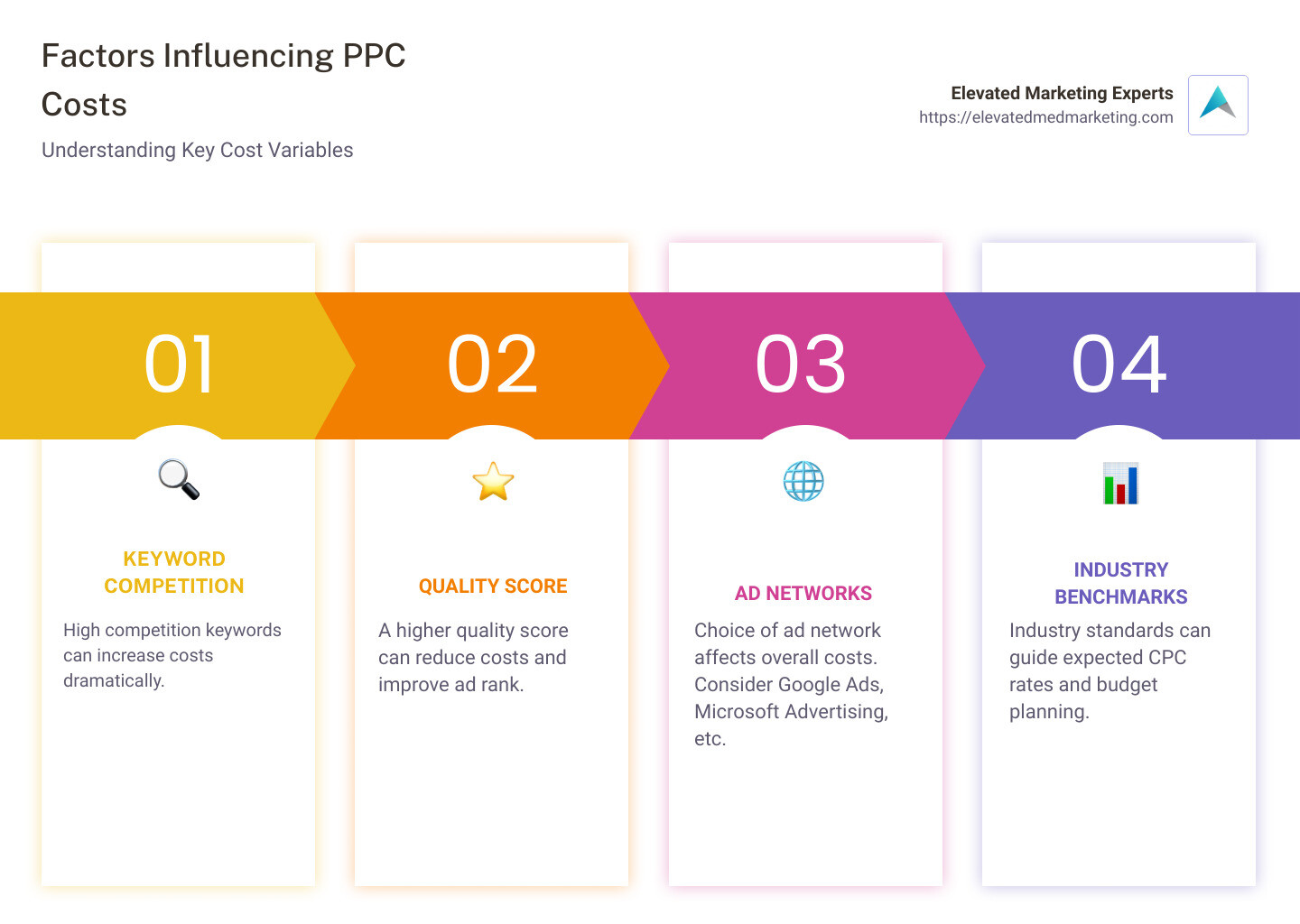
When you hear about digital marketing, one of the first questions often asked is how much does ppc advertising cost? This is a crucial inquiry for businesses aiming to drive traffic quickly and achieve measurable results. Typically, PPC advertising costs can range from $350 to $5,000 per month, depending on multiple factors such as campaign size, industry competitiveness, and ad platform. To put it simply, understanding these cost factors can guide you to optimize your budget and maximize your return on investment swiftly.
PPC advertising, or pay-per-click, is a dynamic approach to gaining visibility online. It allows businesses to appear in search results instantly, making it a vital complement to slower, organic SEO tactics. However, the cost of running a PPC campaign varies widely due to factors such as keyword competition and quality score. Knowing what influences these costs will empower you to make informed decisions and tailor strategies that resonate with your target audience effectively.
I’m Joe Amaral, and my journey through the digital marketing field began with a passion for creativity and problem-solving. With comprehensive expertise rooted in various marketing roles, I have a deep understanding of how much does ppc advertising cost and what it takes for medical spas and plastic surgeons to thrive online.
Understanding PPC Advertising Costs
When diving into PPC advertising, one of the first things to grasp is ad spend. This is the total amount you allocate to your campaigns. It’s crucial to set a realistic budget that aligns with your business goals.
Next up is cost-per-click (CPC). This is the price you pay every time someone clicks on your ad. CPC can vary significantly depending on the industry, keyword competition, and ad quality. For instance, competitive sectors like legal and finance often see higher CPCs. According to WordStream, the average CPC in the legal industry is around $6.75, while in e-commerce, it’s about $1.16.
To make sense of these costs, understanding industry benchmarks is essential. Benchmarks provide a reference point to evaluate your campaign’s performance. For example, Google Search Ads typically have an average CPC of $0.67, while LinkedIn Ads are on the higher end at $5.26. Knowing these benchmarks helps you assess whether your campaign costs are reasonable or if adjustments are needed.
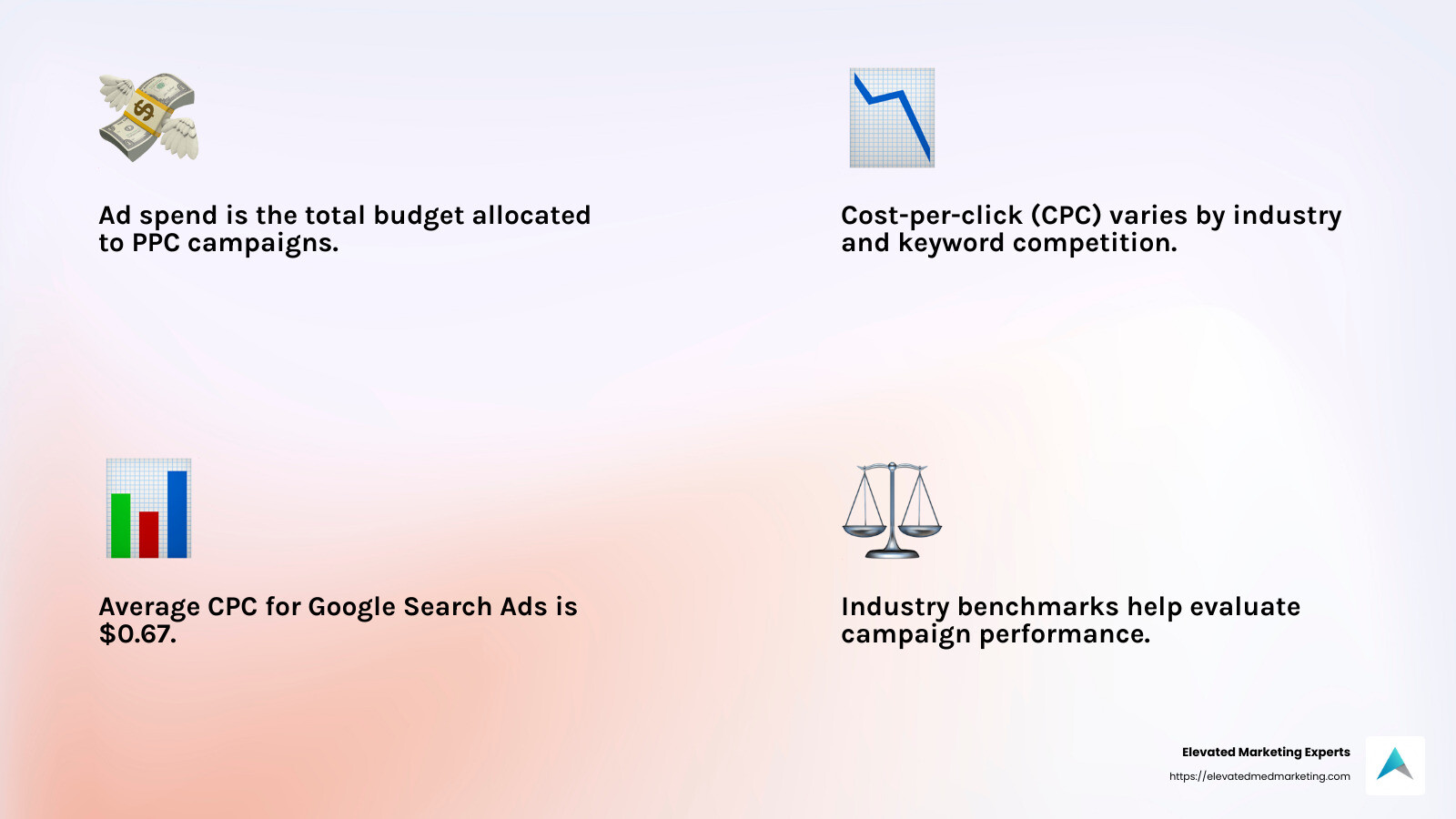
In summary, knowing the intricacies of ad spend, CPC, and industry benchmarks can help you steer the complex world of PPC advertising. This knowledge allows for better budgeting, more strategic bidding, and ultimately, a more successful campaign.
Now that we’ve covered the basics of understanding PPC costs, let’s explore the factors that influence these costs further.
How Much Does PPC Advertising Cost?
When it comes to how much does PPC advertising cost, it’s important to know that costs can vary widely based on several factors. However, we can provide some average costs to give you a ballpark figure.
Average Costs
For a general idea, small businesses might spend anywhere from $1,000 to $10,000 per month on PPC campaigns, depending on their goals and industry. Medium-sized businesses often ramp up their budgets, spending between $20,000 and $50,000 monthly. Larger enterprises can easily spend upwards of $100,000 each month to maintain a strong online presence.
Google Ads
Google Ads is one of the most popular platforms for PPC advertising. On average, the cost-per-click (CPC) for Google Ads can range from $1 to $2 on the Google Search Network. However, this can spike significantly in competitive industries. For example, the legal sector can see CPCs as high as $6.75, as noted by WordStream.
Google Ads offers flexibility, allowing advertisers to set their own budgets and bids. This makes it suitable for businesses of all sizes. The platform uses a bidding system, where your ad’s placement is determined by your bid amount and quality score.
Microsoft Advertising
Microsoft Advertising, which covers Bing, Yahoo!, and DuckDuckGo, tends to have lower average CPCs compared to Google Ads. You can expect to pay around $1.54 per click. This makes it an attractive option for those looking to stretch their PPC budget further.
Microsoft’s platform is less crowded, meaning less competition and potentially lower costs. This can be particularly beneficial for smaller businesses or those in niche markets.
In conclusion, while the cost of PPC advertising varies, understanding the average costs for platforms like Google Ads and Microsoft Advertising can help set realistic expectations. Now, let’s dig into the factors that influence these PPC costs further.
Factors Influencing PPC Costs
When diving into how much does PPC advertising cost, it’s crucial to understand the factors that can affect these costs. Let’s break down some key influencers: keyword competition, quality score, and ad networks.
Keyword Competition
Keywords are the backbone of PPC campaigns. But not all keywords are created equal. Some are more competitive, meaning more businesses are bidding on them. This drives up the cost-per-click (CPC). For instance, in industries like legal or finance, CPCs can skyrocket due to fierce competition. According to WordStream, the average CPC in the legal industry is around $6.75.
Choosing the right keywords involves balancing between competitive and less competitive terms. Long-tail keywords, which are more specific, often cost less and can still drive valuable traffic.
Quality Score
Quality Score is Google’s way of rating the quality and relevance of your ads, keywords, and landing pages. It’s scored from 1 to 10, with 10 being the best. A higher Quality Score can lead to lower costs and better ad positions.
Here’s how it works: Google considers factors like expected click-through rate, ad relevance, and landing page experience. A well-optimized ad with a high Quality Score could pay less per click than a competitor with a lower score, even if the competitor bids more. This means focusing on creating relevant and engaging ads that resonate with your audience is key to keeping costs down.
Ad Networks
The choice of ad network also impacts PPC costs. Different networks have different pricing structures and audience reach.
Google Ads is the most popular, with a wide reach and a robust bidding system. It’s great for businesses wanting to reach a broad audience, but it can be pricey due to high competition.
Microsoft Advertising (covering Bing, Yahoo!, and DuckDuckGo) offers lower average CPCs, around $1.54 per click. It’s less crowded, making it a cost-effective option, especially for niche markets.
Social media platforms like Facebook and Instagram Ads have their own pricing models. They often focus on audience targeting and can offer lower CPCs, but the effectiveness varies based on the business type and goals.
Each platform has its pros and cons, so it’s important to choose one that aligns with your business objectives and budget. By understanding these factors, you can better plan and optimize your PPC strategy for maximum return on investment.
Next, let’s explore different PPC management pricing models that businesses can consider.
PPC Management Pricing Models
Understanding PPC management pricing models is essential for businesses looking to get the most out of their advertising budget. Let’s explore the four main models: flat fee, percentage of ad spend, performance-based fees, and hybrid models. Each has its own benefits and considerations.
Flat Fee
A flat fee model involves paying a set amount each month for PPC management. This model is straightforward and offers predictability in budgeting. For example, if an agency charges a flat fee of $1,500 per month, clients know exactly what to expect in terms of costs. This model is excellent for businesses that prefer a fixed cost structure without any surprises.
However, flat fees may not always reflect the level of effort required, especially if a campaign requires significant adjustments or additional work during certain months.
Percentage of Ad Spend
In the percentage of ad spend model, agencies charge a fee based on a percentage of the total ad budget. Typically, this ranges from 10% to 20% of the monthly ad spend. This model aligns the agency’s interests with the client’s, as both parties benefit from an increase in ad spend and, ideally, performance.
For instance, if a company spends $10,000 on ads, and the agency’s fee is 15%, the management cost would be $1,500. This model scales with the campaign, but it can become costly as ad spend increases.
Performance-Based Fees
Performance-based fees tie the agency’s compensation to specific performance metrics, such as conversions or sales. This model motivates agencies to focus on delivering tangible results. For example, an agency might charge a fee for each lead generated or sale made.
While this model can be attractive due to its focus on outcomes, it may result in higher fees to compensate for the risk and effort involved. Detailed contracts are necessary to ensure clear expectations and definitions of success.
Hybrid Model
The hybrid model combines elements of the above pricing structures. For example, an agency might charge a flat fee for basic management services and add a performance bonus if certain KPIs are met. This approach balances predictability with performance incentives.
Hybrid models can be complex, requiring careful tracking and clear communication between the agency and client. However, they offer flexibility and can be custom to fit the unique needs of different businesses.
Each pricing model has its pros and cons, and the best choice depends on your business goals, budget, and the complexity of your PPC campaigns. By understanding these models, you can make an informed decision that aligns with your strategy and maximizes your return on investment.
Next, we’ll dive into frequently asked questions about PPC costs to further clarify common concerns and considerations.
Frequently Asked Questions about PPC Costs
How much does PPC ads cost?
The cost of PPC ads can vary widely. On average, according to WebFX, the average cost-per-click (CPC) can range from $1.16 for e-commerce industries to $6.75 for legal services. These figures highlight how industry benchmarks influence costs, with more competitive sectors generally facing higher CPCs.
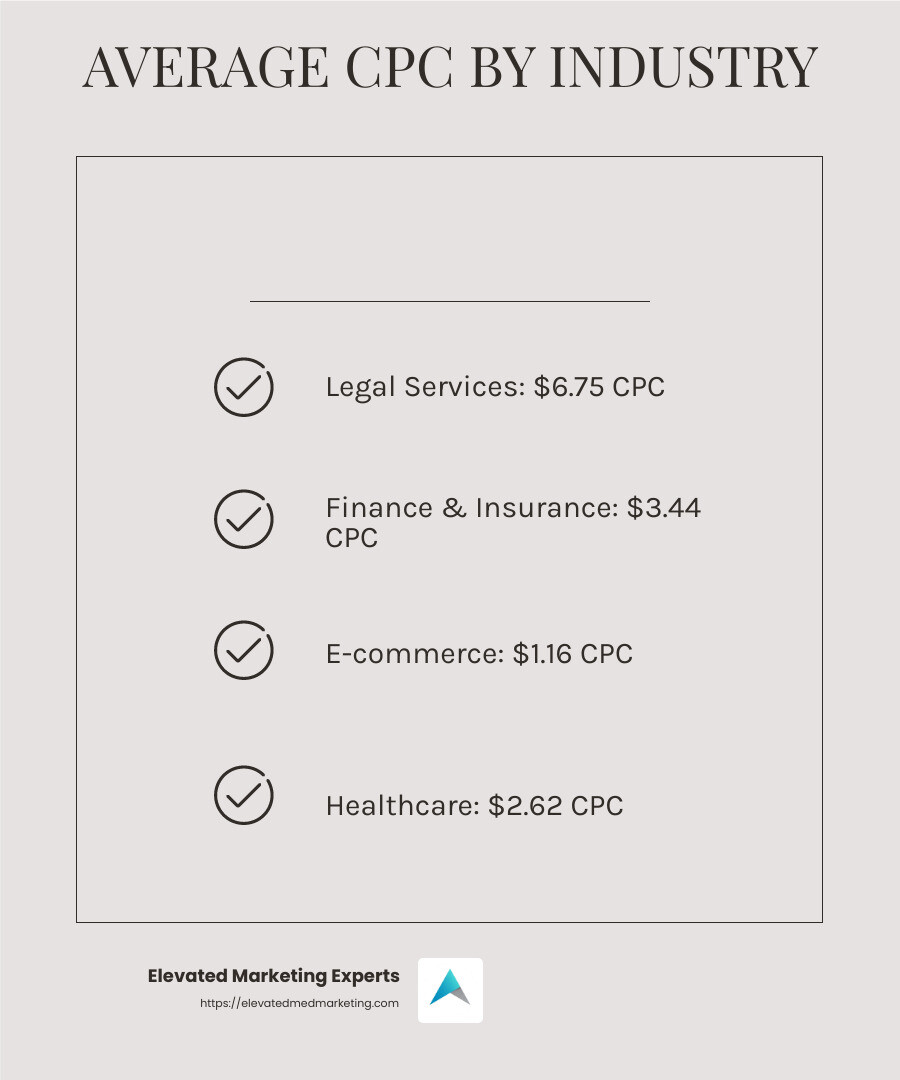
Here’s a quick look at average CPCs by industry:
| Industry | Average CPC |
|---|---|
| Legal Services | $6.75 |
| Finance & Insurance | $3.44 |
| E-commerce | $1.16 |
| Healthcare | $2.62 |
The keyword competition and the quality score of your ads also affect the cost. A higher quality score can lead to lower CPCs, making your campaigns more cost-effective.
Is $500 enough for Google Ads?
For small advertisers or businesses just starting with PPC, a $500 budget can be a reasonable starting point. However, the effectiveness of this budget depends on several factors:
- Target Keywords: If you’re targeting high-competition keywords, $500 might not go far. Opting for long-tail keywords can stretch your budget further.
- Ad Quality: A high-quality score can help reduce costs, allowing your ads to perform better within a limited budget.
- Geographic Targeting: Narrowing your focus to specific locations can help maximize impact without overspending.
While $500 can give you a taste of Google Ads, scaling up may be necessary to see significant results and return on investment (ROI).
What is the total cost of PPC?
Calculating the total cost of a PPC campaign involves more than just your ad spend. Here’s a simple formula to consider:
Total PPC Cost = Ad Spend + Management Fees
Management fees can vary based on your chosen pricing model, such as flat fee or percentage of ad spend. For example, if your ad spend is $1,000 and your agency charges a 15% management fee, the total cost would be $1,150.
Measuring the ROI of your PPC efforts is crucial. A well-optimized campaign should ideally deliver a positive ROI, meaning the revenue generated exceeds the total costs.
In summary, understanding these cost components and how they relate to your business goals will help you make informed decisions about your PPC strategy.
Conclusion
In PPC advertising, understanding costs is just the beginning. At Elevated Marketing Experts, we specialize in crafting custom strategies specifically for aesthetic and wellness practices. Our industry expertise ensures that your campaigns are not only cost-effective but also highly targeted.
Why Choose Elevated Marketing Experts?
Industry Expertise: We focus exclusively on helping plastic surgeons and medical spas grow their online presence. Our deep understanding of this niche allows us to create strategies that resonate with your target audience.
Custom Strategies: Every business is unique, and so is our approach. We don’t believe in one-size-fits-all solutions. Instead, we develop personalized PPC campaigns that align with your specific goals and budget.
Proven Results: Our track record speaks for itself. We have helped numerous clients achieve significant growth through well-optimized PPC campaigns. Whether it’s increasing brand awareness or driving more qualified leads, our strategies deliver results.
Comprehensive Services: Beyond PPC, we offer a full range of digital marketing services, including organic SEO, website design, and content creation. This holistic approach ensures all aspects of your online presence work together seamlessly.
If you’re ready to elevate your PPC strategy and see real results, contact us today. Let’s work together to boost your online presence and grow your business.
In conclusion, partnering with a specialized agency like Elevated Marketing Experts can make all the difference in navigating the complexities of PPC advertising. With our expertise and customized strategies, you’re well on your way to achieving your marketing goals.


