

Introduction
Google Ads PPC management is a crucial tool for businesses, like medical spas and plastic surgery clinics, looking to enhance their online visibility and attract more clients. It operates on a pay-per-click (PPC) model, where you are charged only when someone clicks on your ad. This approach is essential because it allows precise budget control and targeted advertising, aiming to place your services in front of users actively seeking what you offer.
Utilizing Google Ads effectively necessitates ongoing management to ensure that your campaigns remain relevant and cost-effective. This includes selecting the right keywords, setting appropriate bids, crafting compelling ad copies, and continuously optimizing based on performance data. Without effective management, you risk overspending or missing potential clients.
For those new to this, imagine placing a billboard in the digital world where you only pay when someone interested in your advertisement takes the initiative to learn more. This accessibility and efficiency are why PPC management is pivotal in digital marketing strategies, especially in competitive fields like cosmetic and medical services.
Understanding Google Ads PPC Management
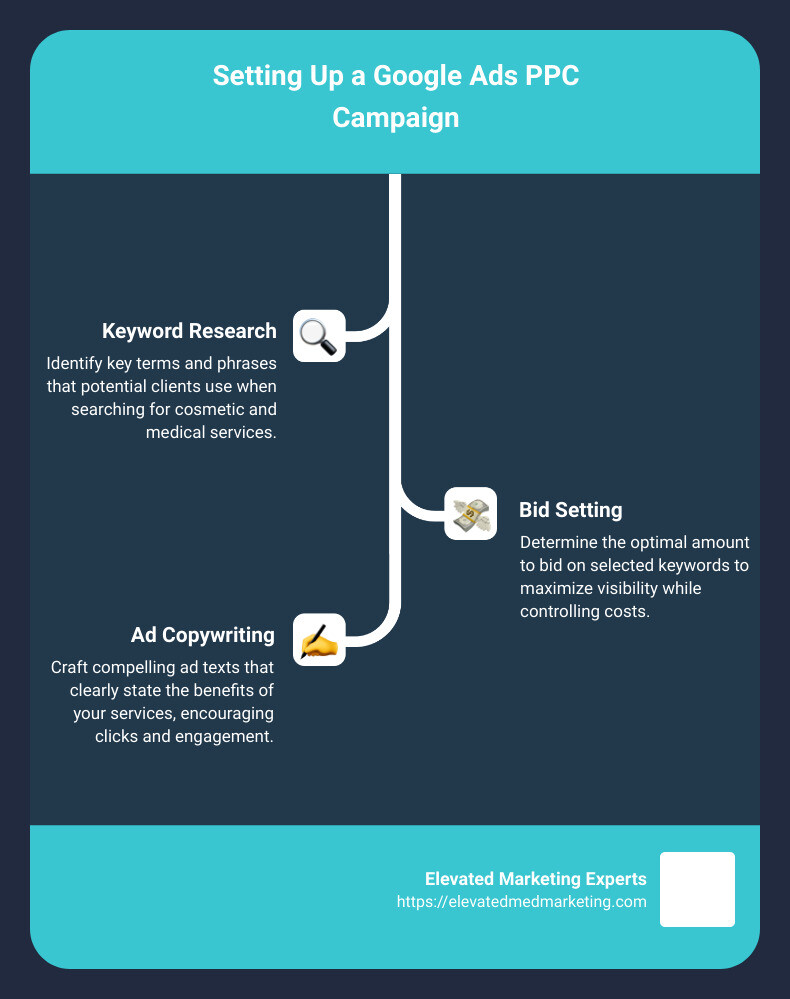
When you dive into Google Ads PPC management, you’re entering a space where strategy, precision, and adaptability play crucial roles. Managing PPC effectively means more than just setting up ads; it involves a deep understanding of the market, selecting the right keywords, and continuously optimizing your approaches.
PPC Management
PPC management is the process of overseeing and managing a company’s PPC ad spend. This often involves strategies and ad buys while minimizing the overall expenditure. This management can be done by in-house teams or external agencies, and it includes everything from strategy planning to performance tracking.
Strategy
A solid PPC strategy begins with defining your goals. Are you looking to increase sales, boost lead generation, or perhaps improve brand awareness? Your goals will dictate the kind of campaigns you run. For instance, lead generation might focus on capturing emails through a landing page, while brand awareness might utilize broader keywords and display ads.
Keywords
The backbone of any PPC campaign is keyword selection. Keywords should be highly relevant to the services or products offered, with a focus on those that potential customers are likely to use when searching online. Tools like Google’s Keyword Planner can aid in finding the right keywords by showing search volumes and trends. The most effective keywords often balance high search volumes with low competition.
SEM Strategies
Search Engine Marketing (SEM) strategies encompass more than just keywords. It involves understanding your audience, the competitive landscape, and the specifics of different search engines. SEM strategies should align with the overall digital marketing strategy, ensuring that all channels contribute towards the common goals.
Copywriting
The copy used in PPC ads needs to be compelling enough to catch the eye and convince potential customers to click through. This means creating clear, concise, and engaging messages that speak directly to the needs and desires of the target audience. A/B testing different ad copies can help determine what works best in driving traffic and conversions.
By mastering these elements, businesses can create effective PPC campaigns that not only reach their target audience but also drive them towards meaningful actions. The key to successful Google Ads PPC management is continuous optimization and adaptation based on performance data and changing market conditions. This proactive approach ensures that every dollar spent on PPC is an investment towards achieving business objectives.
Tools and Software for Effective PPC Management
To run successful PPC campaigns, have the right tools and software at your disposal. These tools not only streamline the process but also enhance the effectiveness of your campaigns. Here’s a breakdown of what you need for top-notch Google Ads PPC management.
Campaign Management Tools
Managing a PPC campaign without the right tools can be like navigating a ship without a compass. Tools like Google Ads Manager are indispensable. They provide a centralized platform where you can create, manage, and optimize your PPC campaigns efficiently. With these tools, you can adjust bids, manage keywords, set budgets, and track performance all in one place.
Software Solutions
Beyond Google Ads Manager, there are several other software solutions that can amplify your PPC efforts. For instance, Marin Software integrates well with Google and offers advanced campaign management features that cater to both small and large-scale enterprises. WordStream Advisor is another excellent tool that helps manage your Google Ads spend and optimizes your campaigns for better performance.
Automated Rules
Automated rules are a game-changer in PPC management. They allow you to set specific conditions for your campaigns to run automatically based on triggers you define. For example, you can set a rule to increase your bid by 10% if your ad falls below the first SERP. This automation saves time and makes your campaign management more efficient.
Performance Tracking
To know if your PPC campaigns are hitting their marks, you need robust performance tracking tools. Google Ads provides detailed reports that help you understand metrics like click-through rates, conversion rates, and overall campaign effectiveness. Tools like SEMRush and Unbounce also offer analytics that can help refine your strategies by providing insights into keyword performance and landing page efficacy.
By utilizing these tools and software, you can ensure your PPC campaigns are not only well-managed but primed for maximum ROI. The key to successful PPC management is not just in setting up campaigns but continuously monitoring and adjusting them to align with your business goals and market dynamics. With these tools, you’re equipped to make informed decisions that drive success.
Key Strategies for Successful PPC Campaigns
When it comes to Google Ads PPC management, there are several critical strategies that you must employ to ensure your campaigns are successful. These strategies involve careful planning and ongoing adjustments across various aspects of your campaigns.
Keyword Strategy
A solid keyword strategy is the backbone of any PPC campaign. It involves:
- Researching and selecting the right keywords that are relevant to your business and have a good balance of traffic volume and competition.
- Utilizing negative keywords to prevent your ads from appearing for searches that are not relevant to your business, thus saving your budget for more qualified leads.
- Refining your keyword list regularly based on performance data to drop underperforming keywords and capitalize on successful ones.
Ad Creation
Creating compelling ads is crucial for attracting clicks. Here’s how you can optimize your ad creation:
- Craft engaging headlines that include your main keyword to grab attention.
- Use clear and concise language in your ad copy that speaks directly to the user’s needs or pain points.
- Employ A/B testing to compare different versions of your ads and determine which performs better in terms of click-through and conversion rates.
Landing Pages
Your landing pages can make or break your PPC campaigns. They should:
- Be highly relevant to the ad they’re linked from to ensure a cohesive user experience.
- Focus on a single call-to-action (CTA), making it clear what the visitor should do next.
- Be optimized for conversions, using persuasive elements like testimonials, benefits, and guarantees.
Budgeting
Effective budget management is essential to maximize your PPC campaign results while maintaining cost efficiency:
- Set a realistic budget based on your business goals and the competitive landscape of your keywords.
- Use bid adjustments to allocate more budget to high-performing keywords or times of day.
- Monitor spending closely to ensure you’re not exceeding your budget and make adjustments as needed.
Conversion Tracking
To understand the effectiveness of your PPC campaigns, you must track conversions:
- Set up conversion tracking in Google Ads to see what happens after a customer clicks on your ads.
- Use this data to evaluate the ROI of your campaigns and identify which elements are driving results.
- Optimize based on insights gained from tracking to improve future campaign performance.
A/B Testing
Regular testing is key to refining your PPC strategies and achieving better outcomes:
- Test different elements of your ads and landing pages, including headlines, descriptions, images, and CTAs.
- Analyze the results to understand what works best with your target audience.
- Implement the successful elements broadly across your campaigns to increase overall effectiveness.
By focusing on these key strategies, you can enhance the performance of your PPC campaigns and achieve better returns on your investment. Each element from keyword strategy to A/B testing plays a crucial role in the complex ecosystem of Google Ads PPC management. Continuously optimizing these elements will lead to more targeted traffic, higher conversion rates, and ultimately, greater business success. Now, let’s move on to explore the common challenges in PPC management and how to effectively address them.
Common Challenges and Solutions in PPC Management
Managing a PPC campaign can feel like navigating a constantly shifting landscape. Here are some of the most common challenges you might face, along with practical solutions to help you maintain control and optimize your campaigns.
Budget Control
Challenge: Keeping spending within limits without sacrificing results.
Solution: Set clear daily or monthly budget caps and use automated rules to pause campaigns if they exceed your budget threshold. Regularly review performance reports to adjust your spend based on which campaigns and keywords deliver the best ROI.
Keyword Research
Challenge: Identifying the right keywords that balance reach and cost.
Solution: Utilize tools like Google’s Keyword Planner and third-party software like SEMRush to find relevant, high-traffic keywords with lower competition. Incorporate long-tail keywords that are more specific and often less expensive, improving your chance of reaching the most interested users.
Ad Placement
Challenge: Ensuring your ads appear in the right context to reach your target audience.
Solution: Beyond choosing the right keywords, refine your ad placement by using targeted options in Google Ads, such as device targeting, location targeting, and ad scheduling. Regularly analyze the placement reports to adjust where and when your ads appear.
Conversion Optimization
Challenge: Driving not just clicks, but actions that benefit your business (like sales or sign-ups).
Solution: Focus on creating compelling landing pages that resonate with the ad’s message. Test different elements of your pages (like headlines, images, and call-to-action buttons) using A/B testing to determine what converts best. Tools like Unbounce can be exceptionally helpful in designing and testing these pages.
Negative Keywords
Challenge: Preventing ads from showing for searches that are not relevant to your business, which wastes budget.
Solution: Regularly update your list of negative keywords. Review search query reports to find irrelevant terms that trigger your ads. Adding these as negative keywords will refine your targeting and reduce wasteful spending.
By addressing these challenges head-on with strategic solutions, you can significantly improve the overall effectiveness of your PPC campaigns. These adjustments not only help in managing your budget effectively but also in enhancing the quality of traffic and leads generated, ensuring that every dollar spent is an investment towards achieving your business goals. Moving forward, let’s delve into how we can maximize ROI with Google Ads PPC management to ensure that every campaign you run delivers optimal results.
Maximizing ROI with Google Ads PPC Management
Maximizing return on investment (ROI) is the ultimate goal of any PPC campaign, especially when using Google Ads. By focusing on several key metrics and strategies, businesses can ensure that they are not only attracting traffic but converting this traffic into tangible results. Here, we’ll explore the essential aspects such as cost-per-click (CPC), click-through rate (CTR), conversion rate, and how to utilize performance reports effectively.
Cost-per-click (CPC)
CPC is the amount you pay each time someone clicks on your ad. To maximize ROI, it’s crucial to optimize your CPC by targeting keywords that are not only relevant but also cost-effective. This strategy involves balancing the bid amount with the potential return, ensuring you’re not overspending for the traffic you receive.
Click-through Rate (CTR)
CTR is a vital indicator of how appealing your ads are to your target audience. A higher CTR means that your ads are relevant and engaging. Improving your CTR can involve refining your ad copy, enhancing your call-to-action, and utilizing engaging visuals. A compelling ad leads to higher engagement, which can significantly reduce your CPC.
Conversion Rate
Your conversion rate is the percentage of visitors who take the desired action after clicking on your ad. This could be making a purchase, signing up for a newsletter, or any other defined goal. To boost this rate, ensure your landing pages are optimized, your offers are irresistible, and your pages load quickly to prevent drop-offs.
Return on Investment (ROI)
Calculating ROI involves assessing the profitability of your PPC campaigns. It’s essential to track not just the immediate returns but also the long-term value that these conversions bring to your business. Tools like Google Ads provide detailed insights that help you measure the cost per acquisition (CPA) and ensure that your advertising spend generates positive returns.
Performance Reports
Regularly reviewing performance reports is crucial. These reports provide a wealth of data on all aspects of your campaigns, from which ads are performing best to how different demographics are responding. By analyzing these reports, you can make informed decisions that enhance your campaigns’ effectiveness.
OuterBox Strategies
OuterBox has demonstrated significant success in Google Ads management by focusing on detailed keyword research, strategic bid management, and continuous campaign optimization. For example, by adopting smart campaigns and optimizing shopping feeds, OuterBox helped Lethal Performance increase eCommerce revenue by 479% with only a 124% increase in spend.
By integrating these strategies and continuously refining your approach based on performance data, you can significantly enhance the effectiveness of your Google Ads campaigns. This not only maximizes ROI but also ensures that your business remains competitive in an increasingly crowded online space. Next, we will address some frequently asked questions about Google Ads PPC management to further clarify this complex topic.
Frequently Asked Questions about Google Ads PPC Management
What is Google Ads PPC management?
Google Ads PPC management involves overseeing and optimizing pay-per-click (PPC) ad campaigns on Google Ads. This process includes setting up campaigns, selecting the right keywords, organizing ad groups, crafting compelling ads, and managing bids. Effective management aims to maximize the return on investment (ROI) by attracting high-quality traffic to your website, leading to more conversions and sales.
How do I manage PPC ads?
Managing PPC ads effectively requires a strategic approach and continuous optimization. Here are some key steps:
Keyword Research: Identify the keywords that your target audience uses when searching for your products or services. Tools like Google’s Keyword Planner can help you find the right keywords.
Campaign Setup: Organize your PPC campaigns by themes that match your business offerings. This makes it easier to manage and optimize.
Ad Creation: Write clear and engaging ad copy that includes a strong call to action. Make sure your ads are relevant to the keywords you are bidding on.
Landing Pages: Develop landing pages that are aligned with your ads. They should provide the information promised in the ad and make it easy for visitors to take action.
Bid Management: Set and adjust your bids to ensure that you are competitive, yet not overspending. Utilize automated rules in Google Ads to manage bids based on the performance of the ads.
Performance Tracking and Optimization: Regularly review the performance of your campaigns. Use metrics like click-through rate (CTR) and conversion rate to gauge success and make necessary adjustments.
Is Google PPC worth it?
Yes, Google PPC can be incredibly worthwhile if managed correctly. It offers:
- Targeted Reach: You can reach your specific target audience when they are most likely to be interested in your products or services.
- Measurable ROI: Google Ads provides detailed analytics that help you measure the effectiveness of your campaigns and adjust strategies accordingly.
- Quick Results: Unlike organic search methods, PPC can yield immediate results, driving traffic to your site as soon as your ads go live.
- Budget Control: You have complete control over how much you spend on your campaigns. You can set daily budgets and adjust them as needed.
In conclusion, Google Ads PPC is a powerful tool for businesses looking to increase visibility and drive sales. However, it requires careful management to ensure that you are getting the most out of your investment. By continuously optimizing your campaigns and staying up-to-date with Google’s best practices, you can achieve significant success in your digital marketing efforts. Next, we will explore how to maximize ROI with Google Ads PPC management to make every dollar count.
Conclusion
At Elevated Marketing Experts, we understand that the landscape of Google Ads PPC management is both dynamic and demanding. It’s not just about setting up campaigns; it’s about nurturing them to yield the highest possible return on investment. Our commitment to continuous optimization and leveraging deep industry expertise sets us apart.
Continuous Optimization: Our approach to Google Ads PPC management is rooted in the belief that there is always room for improvement. Whether it’s refining ad copy, adjusting bids, or exploring new keywords, we are relentless in our pursuit to enhance campaign performance. We utilize cutting-edge tools and techniques to monitor and tweak campaigns, ensuring they remain aligned with evolving market trends and business objectives.
Industry Expertise: With years of experience under our belts, our team at Elevated Marketing Experts brings a wealth of knowledge to the table. We’ve seen what works and what doesn’t, and we apply this invaluable insight to every campaign we manage. Our expertise not only covers Google Ads but also spans across all facets of digital marketing, providing a holistic approach to online advertising.
By choosing Elevated Marketing Experts, you’re not just getting a service provider; you’re partnering with a team that’s as invested in your success as you are. We’re here to help you navigate the complexities of Google Ads PPC management and to ensure your campaigns are as effective and efficient as possible.
Ready to take your PPC campaigns to the next level? Visit our service page on Elevated Marketing Experts’ Google Ads Management and let’s start optimizing for success together.


