

Introduction
When navigating the maze of Google Ads management pricing, several factors come into play that dictate the overall investment you will make into your campaigns. For any medical practice or spa looking to enhance its online presence, understanding the difference between ad spend and management fees is crucial. Ad spend is the direct cost you pay to Google when someone clicks on your ads, whereas management fees are what you pay an agency to craft and supervise those ads.
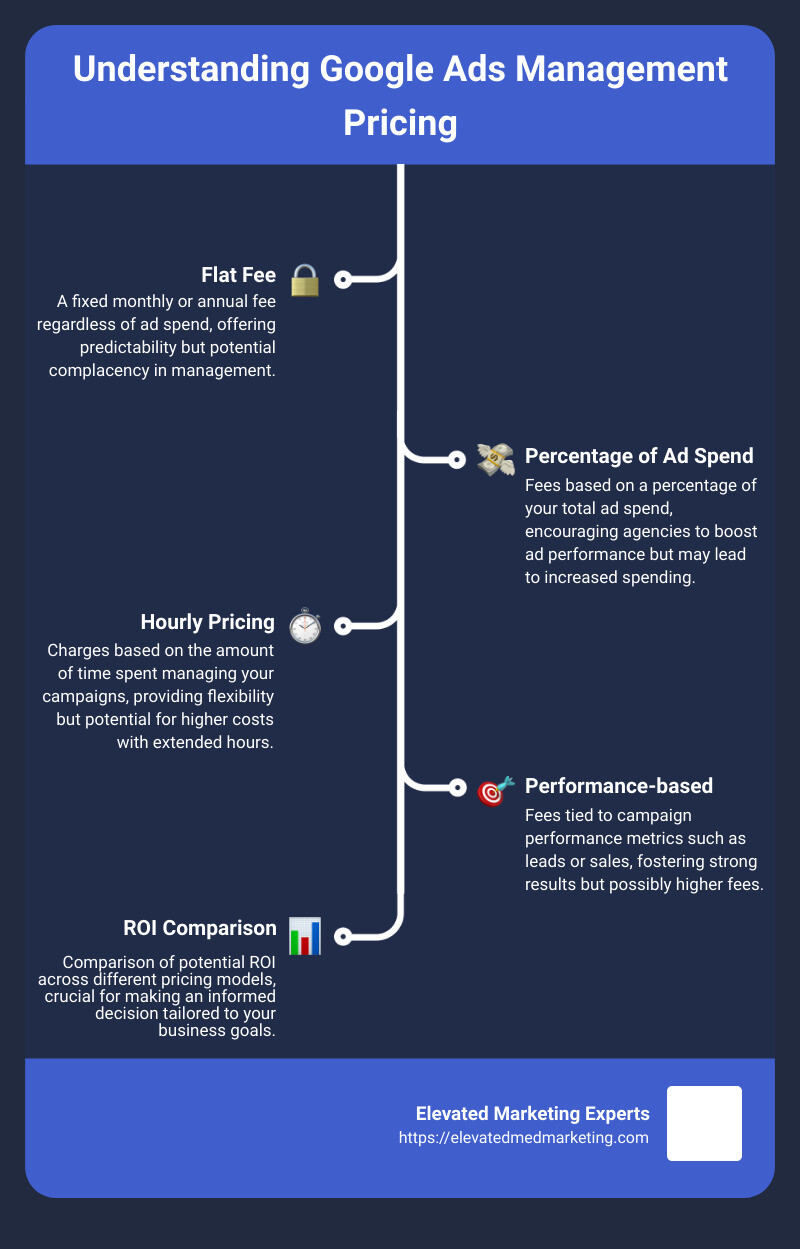
When choosing a Google Ads management service, recognize the various pricing models offered by agencies. These include a percentage of ad spend, flat fees, hourly rates, and performance-based fees. Each model has its advantages and caveats, impacting your marketing strategy and budgeting.
Google Ads management can seem overwhelming, but with the right knowledge and components, it becomes a manageable and profitable endeavor. Properly set up and managed campaigns can transform your ad spend into substantial return on investment, bringing more clients through your doors.
Understanding Different Pricing Models
When it comes to Google Ads management pricing, knowing the different pricing models available can help you make a more informed decision that aligns with your business needs and goals. Here’s a breakdown of the most common models:
Flat Fee
What is it?
A flat fee model involves a fixed price for managing your Google Ads, regardless of your ad spend. This fee usually ranges from $500 to $4,000 per month, depending on the agency and the services provided.
When is it ideal?
This model is perfect if you prefer predictable costs each month, without any surprises. It’s particularly suitable for small to medium-sized businesses with a stable and consistent monthly ad spend.
Percentage of Ad Spend
What is it?
In this model, the agency charges you a percentage of your total ad spend. The typical range is 15%-30% of your ad spend. For instance, if you spend $10,000 on ads, and the agency charges 20%, your fee would be $2,000 for that month.
When is it ideal?
This is a great option if your ad spend fluctuates. It aligns the agency’s incentives with your performance, as they earn more only when you spend more. It’s suitable for businesses that expect their ad spend to scale with growing results.
Hourly Pricing
What is it?
Agencies charge based on the amount of time they spend managing your campaigns. The hourly rate can vary widely but typically falls between $50 and $200 per hour.
When is it ideal?
This model is beneficial if you need specialized services that don’t require full-time management, or if you prefer to pay for work done rather than for outcomes. It’s good for companies with smaller budgets or those who need occasional campaign adjustments.
Performance-based
What is it?
Here, fees are tied to the performance of your campaigns. For example, the agency might charge $30 per lead or a particular percentage of the revenue generated through the ads.
When is it ideal?
This model motivates the agency to drive results. It’s best for businesses that have clear conversion tracking and want to closely align payment with results. However, this could lead to higher fees if your campaigns perform exceptionally well.
Choosing the Right Model
Selecting the right pricing model depends on several factors:
– Budget flexibility: If your budget varies, percentage-based or performance-based might be preferable.
– Desire for predictability: If fixed costs are important for your budgeting, consider a flat fee.
– Campaign goals: If you aim for specific performance targets, a performance-based model can align goals between you and the management agency.
– Level of involvement: If you need extensive campaign management, flat fee or percentage-based models might provide more comprehensive services.
Understanding these models helps in negotiating with potential agencies and choosing a partnership that best fits your business strategy and financial planning. Each model has its pros and cons, and the right choice varies based on your specific needs and the complexity of your Google Ads campaigns.
Key Factors Influencing Google Ads Management Costs
When exploring Google Ads management pricing, several key factors heavily influence the overall cost. These include Ad Spend, Campaign Complexity, Service Level, and Agency Expertise. Let’s dive into each of these to understand how they impact what you’ll end up paying.
Ad Spend
The most direct factor is Ad Spend. This is the amount you pay Google to run your ads. It’s important to distinguish this from management fees, which are what you pay an agency to manage these ads. Generally, if your ad spend increases, your management cost might also increase, especially if you’re using a pricing model that charges a percentage of the ad spend.
Campaign Complexity
Next up is Campaign Complexity. More complex campaigns require more resources to manage effectively. If your campaign uses advanced targeting, multiple ad formats, or runs in several languages, it could drive up the cost. Agencies need to put in more work and expertise to manage these complexities, which can reflect in higher fees.
Service Level
Service Level refers to the extent of services provided by the agency. This can range from basic monitoring and adjustments to full-service management including strategic planning, creative development, and detailed analytics. Higher service levels involve more comprehensive management and consequently, higher costs.
Agency Expertise
Lastly, Agency Expertise plays a crucial role. Agencies that have a proven track record, specialized knowledge, and a strong reputation in managing Google Ads can command higher fees. Their expertise can often lead to better ad performance, which can justify the higher cost.
Understanding these factors helps in assessing the quotes you receive from different agencies. It allows you to gauge whether you’re getting good value for your money based on the complexity of your campaigns and the level of service you expect. The goal is to maximize your return on investment, not just to minimize costs. Choose an agency that aligns with your business needs and can demonstrate real value in their services.
The Pros and Cons of Each Pricing Model
When selecting a Google Ads management pricing model, it’s crucial to understand the advantages and disadvantages of each option. This knowledge will help you choose a model that aligns best with your business goals and budget.
Flat Fee
Pros:
– Predictability: You know exactly how much you’ll pay each month, making budgeting simpler and more predictable.
Cons:
– Potential Complacency: Since the fee doesn’t change based on performance, there’s less incentive for the agency to continuously improve your ads’ performance. Over time, this might lead to a “set it and forget it” approach.
Percentage of Ad Spend
Pros:
– Scalability: This model grows with your campaign. As your ad spend increases, the agency benefits, which can motivate them to scale your campaigns effectively.
Cons:
– Motivation to Increase Spend: Agencies might encourage higher ad spending to increase their earnings, which isn’t always in line with your company’s best interests.
Hourly Pricing
Pros:
– Flexibility: You pay for the work done, so if your campaign needs less attention in a particular month, you pay less.
Cons:
– Potential for Higher Costs: If your campaign requires more work than anticipated, costs can escalate quickly, making this model unpredictable and potentially expensive.
Performance-based
Pros:
– Motivation for Results: Agencies are directly motivated to improve campaign performance because their pay depends on achieving specific metrics.
Cons:
– Risk of Higher Fees: While you only pay for results, these fees can be high, especially if the set performance targets are met or exceeded regularly.
Each pricing model offers distinct benefits and risks. Your choice should depend on factors like how much control you want over costs, how predictable you need your budget to be, and how closely you want your agency’s goals aligned with your own. Understanding these pros and cons ensures that you select a pricing model that not only fits your current needs but also supports your long-term business objectives.
How to Choose the Right Google Ads Management Pricing Model
Choosing the right Google Ads management pricing model is crucial for the success of your ad campaigns. It directly affects your financial planning and the potential return on investment (ROI). Here’s how to align your business goals and other factors with the most suitable pricing model:
Business Goals
Start by clearly defining what you want to achieve with your Google Ads. Are you looking to increase brand awareness, generate leads, or drive sales? Your goals can dictate which pricing model gives you the leverage for success. For example:
– Lead Generation: A flat fee or performance-based model might be beneficial as these can focus on generating the specific outcomes you desire.
– Brand Awareness: Percentage of ad spend could work better as it aligns the agency’s efforts with your goal to reach a wider audience.
Budget Considerations
Your budget plays a pivotal role in selecting a pricing model. A clear understanding of your budget helps in making an informed decision:
– Limited Budget: If you have a tight budget, a flat fee model provides predictability and helps in managing finances better.
– Flexible Budget: If your budget is flexible, a percentage of ad spend model can be advantageous as it scales with your ad spend.
Campaign Size
The size of your campaign can influence the complexity and the amount of work needed to manage your ads effectively:
– Small Campaigns: For smaller campaigns, an hourly rate might seem reasonable as these campaigns may require less ongoing management.
– Large Campaigns: For larger, more complex campaigns, a flat fee or percentage of ad spend model might be necessary to cover the extensive management efforts.
Expected ROI
Consider the return on investment you expect from your Google Ads campaigns. This expectation can guide you towards a pricing model that aligns with achieving optimal results:
– High Expected ROI: If you are aiming for a high ROI, a performance-based model can be motivating for the agency to drive better results.
– Steady ROI: For more predictable returns, a flat fee or hourly pricing can provide consistent management without the pressure of high performance stakes.
Example Case Study: A small local business opted for a flat fee model for their Google Ads management, aiming for steady local visibility. This model allowed them to maintain a consistent monthly advertising budget, which was crucial for their small-scale operations. Over six months, they saw a gradual increase in local traffic and improved brand recognition within their community.
When selecting a model, also consider the transparency and flexibility of the agency. You want to ensure that there are no hidden fees and that the agency is willing to adjust the strategy based on campaign performance and changing business goals.
In conclusion, aligning your business goals, budget, campaign size, and expected ROI with the right Google Ads management pricing model is essential for maximizing your advertising effectiveness. By carefully considering these factors, you can choose a model that not only fits your current needs but also supports your long-term business objectives.
Common Additional Fees and What to Watch Out For
When planning your budget for Google Ads management, it’s crucial to anticipate not just the basic management fees but also the potential additional costs that can arise. Understanding these additional fees will help you avoid surprises and ensure a smoother collaboration with your Google Ads management agency.
Setup Costs
Setup fees are common when you first start with an agency. These fees cover the initial work required to create your campaigns, including research, strategy development, and account setup. While some agencies might include these costs in their standard management fee, others may charge them separately. Always verify whether a setup fee applies and what it entails to avoid unexpected costs.
Add-on Services
Many agencies offer basic packages with options for additional services at extra costs. These can include creating custom landing pages, graphic design for display ads, or advanced analytics reports. For instance, if you need specialized landing pages for your campaigns, this might not be covered under the standard management fee and could incur additional charges.
Keyword Limits
Some agencies set limits on the number of keywords they will manage under a standard package. If your campaign requires extensive keyword targeting, you might face extra fees to expand your keyword list. This practice is highlighted in the initial research where agencies charge extra for exceeding the set number of keywords or campaigns. Understanding these limits upfront can help you plan your strategy more effectively and avoid overspending.
Campaign Adjustments
Adjusting your campaigns to respond to market changes or new business objectives is crucial for maintaining effective Google Ads performance. However, some agencies might charge for significant campaign adjustments or strategy pivots, especially if these require substantial work beyond the usual management scope. It’s essential to clarify how much flexibility is included in your management fee and what might trigger additional charges.
Watch Out:
– Clarity and Transparency: Always ask for a detailed breakdown of what the management fee includes and what would constitute an additional service. This clarity will help you budget accurately and assess the value you’re receiving.
– Contract Terms: Review the terms of your agreement to understand how additional fees are handled and whether there are any clauses that could potentially increase your costs unexpectedly.
– Communication: Establish a clear communication channel with your agency to discuss any potential changes in strategy or additional needs that might arise. This ongoing dialogue can help manage costs and ensure that both parties are aligned on expectations and budget.
By being aware of these potential additional fees and discussing them openly with your prospective Google Ads management agency, you can enter into a partnership that meets your needs without unanticipated expenses. This proactive approach not only helps in managing your budget effectively but also in building a trusting and transparent relationship with the agency.
Frequently Asked Questions about Google Ads Management Pricing
How Much Does It Typically Cost to Manage a Small Campaign?
The cost of managing a small Google Ads campaign can vary based on several factors including the complexity of the campaign, the pricing model chosen, and the agency’s expertise. Generally, for small campaigns, management fees can range from $300 to $500 per month. This cost might be higher if the campaign requires more intricate strategies or additional services.
Is It Better to Pay a Flat Fee or a Percentage of Ad Spend?
Choosing between a flat fee and a percentage of ad spend depends on your specific needs and budget constraints:
Flat Fee: This model is predictable and usually simpler for budgeting purposes. It works well for smaller businesses or those with a fixed budget for advertising. It ensures that the cost remains the same regardless of how much you spend on ads.
Percentage of Ad Spend: This model aligns the agency’s incentives with your ad spend, potentially motivating the agency to focus on scaling your campaigns. However, as your ad spend increases, so does your management fee, which can sometimes lead to unexpectedly high costs if not monitored closely.
How Can I Reduce My Google Ads Management Costs?
Reducing your Google Ads management costs can be achieved through several strategies:
Self-Management: Learning the basics of Google Ads and managing your campaigns in-house can save you the management fees. However, this requires time and effort to understand and optimize effectively.
Choosing the Right Pricing Model: Select a pricing model that aligns with your business size and ad spend. For small to medium-sized campaigns, a flat fee might be more cost-effective.
Negotiating Terms: Some agencies are open to negotiation, especially if you are committing to a long-term partnership. Discussing your budget and expectations can lead to a customized fee structure that fits your needs.
Regular Performance Reviews: Regularly reviewing the performance of your campaigns can help identify inefficiencies or wasted ad spend, allowing for timely adjustments that optimize costs.
By understanding these key aspects of google ads management pricing, you can make more informed decisions that align with your business goals and budget. The goal is to maximize your ROI, so choosing the right pricing model and managing costs effectively are crucial steps.
Conclusion
As we wrap up our discussion on google ads management pricing, emphasize the value of partnering with a team that understands your unique business needs. At Elevated Marketing Experts, we pride ourselves on our ability to tailor our services to each client, ensuring that your Google Ads campaigns are not only cost-effective but also highly effective in achieving your specific marketing goals.
Making an Informed Decision is crucial when it comes to selecting a Google Ads management agency. It’s not just about finding the lowest price; it’s about finding the best value. Our approach at Elevated Marketing Experts is transparent and focused on long-term success. We believe in providing clear insights and detailed explanations so that you understand where every dollar of your budget is going and how it contributes to your overall business objectives.
A Long-term Partnership with Elevated Marketing Experts means more than just managing your Google Ads. It means having a dedicated team that is consistently looking for ways to improve your campaigns and adapt to the ever-changing digital landscape. Our commitment to regular communication and performance reviews ensures that we are always aligned with your evolving business needs and are proactively making adjustments to optimize your campaigns.
Choosing the right Google Ads management partner is about much more than cost; it’s about trust, transparency, and a shared commitment to your success. We invite you to learn more about our aesthetic practice Google Ads management services and discover how we can help you achieve your marketing goals.
By partnering with Elevated Marketing Experts, you’re not just hiring an agency; you’re gaining a team that is as invested in your success as you are. Together, we can navigate the complexities of Google Ads management and ensure that your campaigns are poised for success, now and in the future.


