

Google Ads Cost: 5 Surprising Facts You Must Know
Google ads cost can be a daunting topic for any small business owner, especially when you seek to connect with customers in the healthcare industry, such as a plastic surgery clinic or medical spa. At its core, Google Ads is a digital advertising powerhouse that operates on a pay-per-click (PPC) network. As a business owner, understanding its costs can help you wisely allocate your advertising budget to maximize returns. Here’s a concise look at what affects your investment:
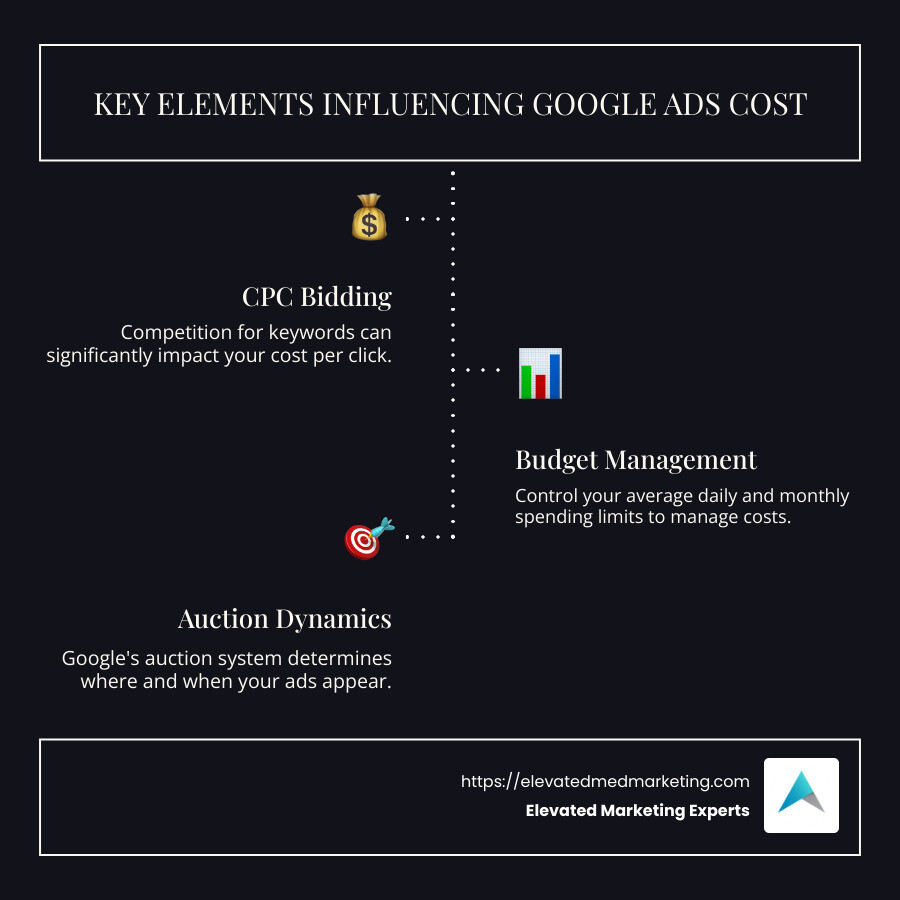
- CPC Bidding: Competition for keywords can significantly impact your cost.
- Budgeting: You control your average daily and monthly spending limits.
- Auction Dynamics: Google uses an auction system that determines where and when your ads appear.
These elements mean that businesses can create targeted ad campaigns ensure they only pay when potential customers engage. With the potential to earn $2 for every $1 spent, it’s clear why Google Ads is popular among marketers.
My name is Joe Amaral, a passionate digital marketing expert who’s cultivated insights on Google Ads cost through a journey of entrepreneurship and industry innovation. I am here to guide you through the complexities of digital marketing, particularly focusing on optimizing your ad spend and enhancing visibility in a competitive market.
Understanding Google Ads Cost
When diving into Google Ads, it’s crucial to understand the cost structure. This can help you make informed decisions and maximize your advertising budget. Let’s break down the key components:
CPC Bidding
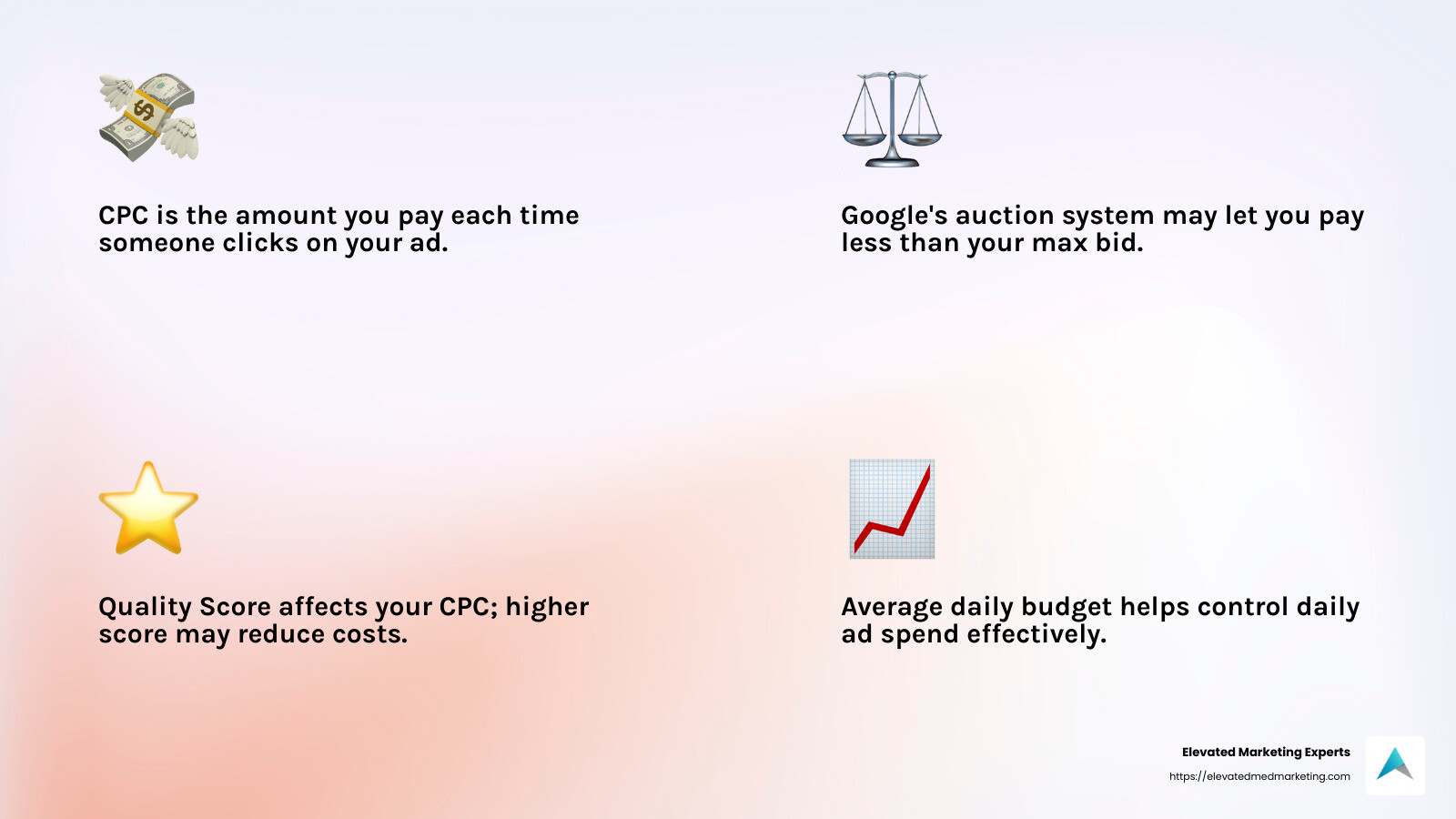
Cost-per-click (CPC) is the amount you pay each time someone clicks on your ad. You set a maximum CPC bid, which is the highest amount you’re willing to pay for a click. However, thanks to Google’s auction system, you might pay less than your max bid.
The Google Ads auction considers your Quality Score—a measure of how relevant your ad and landing page are to the user. A higher Quality Score can lower your CPC, allowing you to compete effectively even with a smaller budget.
Average Daily Budget
Your average daily budget is the amount you’re comfortable spending each day on your ads. This gives you control over your daily expenditure. For instance, if you set a daily budget of $10, Google will aim to keep your spending around that amount, though it might fluctuate slightly to account for days with more traffic.
This flexibility allows small businesses to start with a modest budget and gradually increase it as they see results.
Monthly Spending Limit
To avoid overspending, Google calculates your monthly spending limit by multiplying your average daily budget by the average number of days in a month (about 30.4). This ensures that, even if your daily spending varies, you won’t exceed your monthly budget.
For example, if your daily budget is $10, your monthly spending limit would be approximately $304. This system helps businesses plan their finances without surprises.
Understanding these aspects of Google Ads cost can help you create a more effective and budget-friendly advertising strategy. With the right approach, you can make every dollar count in your marketing efforts.
Factors Influencing Google Ads Cost
When you’re planning your Google Ads campaign, several factors can influence your Google Ads cost. Let’s explore these key elements to help you strategize effectively:
Industry
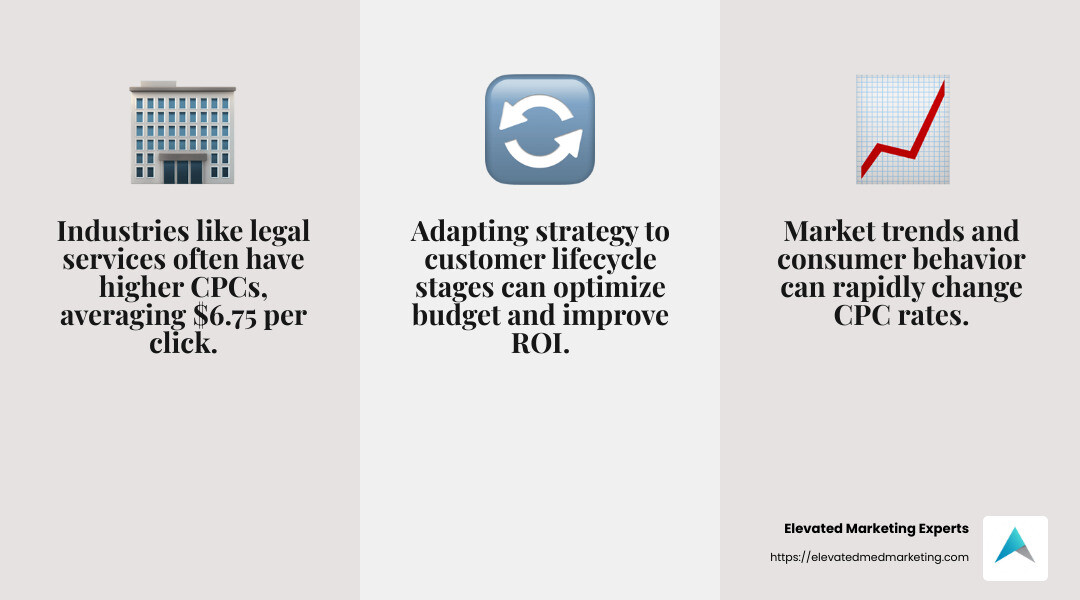
Your industry plays a significant role in determining your ad costs. Some industries are more competitive, which means higher costs. For instance, legal and consumer services sectors often see higher cost-per-click (CPC) rates, with legal services averaging around $6.75 per click on the Search Network. In contrast, ecommerce might only see CPCs around $1.16.
Why the difference? It’s all about competition. More businesses bidding for the same keywords drive prices up. So, if you’re in a competitive industry, you might need a larger budget to see results.
Customer Lifecycle
The stage your customer is in their buying journey also impacts costs. Customers in the awareness phase might require different keywords than those ready to purchase. These keywords can vary in cost.
Consider the lifecycle:
- Awareness Stage: Keywords here might be broader and less expensive.
- Consideration Stage: Keywords become more specific and, often, more costly.
- Decision Stage: Keywords are highly targeted, potentially leading to higher CPCs due to increased competition.
Tailoring your strategy to target different lifecycle stages can optimize your spending and improve ROI.
Market Trends
Market trends and consumer behavior also affect Google Ads costs. As trends shift, so does keyword competitiveness. For example, during a pandemic, keywords related to health services might see a spike in CPC due to increased demand.
Keeping an eye on trends helps you adjust your bidding strategy. If a keyword suddenly becomes more competitive, you may need to increase your bid or find alternative keywords.
In summary, understanding how industry, customer lifecycle, and market trends influence your Google Ads costs can help you allocate your budget more wisely. By tailoring your strategy to these factors, you can make more informed decisions and maximize your advertising effectiveness.
Next, we’ll explore how the Google Ads auction works and how you can leverage it to optimize your ad spend.
How Google Ads Auction Works
Understanding the Google Ads auction is key to optimizing your Google Ads cost. Let’s break down the process into simple terms, focusing on Ad Rank, Quality Score, and the bidding process.
Ad Rank
Ad Rank determines where your ad appears on the search results page. It’s calculated using your maximum bid and your ad’s Quality Score.
Here’s the formula:
Ad Rank = Max Bid x Quality Score
A higher Ad Rank means a better position for your ad. This doesn’t just depend on how much you’re willing to pay. It also involves the quality and relevance of your ad.
Quality Score
Quality Score is Google’s way of rating the quality and relevance of your ads, keywords, and landing pages. It ranges from 1 to 10, with 10 being the best.
Factors influencing Quality Score include:
- Expected Click-Through Rate (CTR): How likely users are to click your ad.
- Ad Relevance: How well your ad matches the user’s search intent.
- Landing Page Experience: The relevance and user-friendliness of the landing page.
A high Quality Score can lower your costs and improve your ad position. According to an expert from Liftd Marketing Experts, “Optimizing your landing pages is just as important as optimizing your ad copy.”
Bidding Process
In Google Ads, you set a maximum bid, which is the most you’re willing to pay per click. But, you often pay less than this amount.
The actual cost-per-click (CPC) is determined by the formula:
CPC = (Ad Rank of the ad below yours / Your Quality Score) + $0.01
This means you could pay less than a competitor with a lower Quality Score, even if they have a higher bid. So, improving your Quality Score can help you achieve better positions at lower costs.
Understanding how the auction works allows you to strategically set your bids and improve your Quality Score, ultimately optimizing your Google Ads cost.
Next, we’ll dive into Google Ads cost benchmarks to give you a clearer picture of what to expect.
Google Ads Cost Benchmarks
When you’re diving into Google Ads, understanding cost benchmarks can help you set realistic expectations and budgets. Let’s break down the key components: the Search Network, Display Network, and average CPC costs.
Search Network
The Google Search Network displays your ads on Google Search results and other Google sites. Here, the average cost-per-click (CPC) typically ranges between $1 and $2. This range can vary, though, depending on the competitiveness of your industry and the keywords you’re targeting. For instance, keywords in highly competitive fields like legal or accounting can have much higher CPCs.
Display Network
The Google Display Network showcases your ads across millions of websites, videos, and apps. Here, clicks tend to be cheaper, with the average CPC often falling below $1. This network is fantastic for raising brand awareness and reaching a broader audience at a lower cost.
CPC Averages
While the overall CPC averages give a general idea, it’s crucial to note that these are influenced by several factors, such as keyword intent, industry, and competition level.
For example, a broad keyword like “exterminator” can have a high CPC of around $16 due to its competitive nature. On the other hand, long-tail keywords like “how to get rid of ants in the kitchen” might have a CPC as low as $1.40, offering a cost-effective way to target users with specific needs.
Most businesses find that long-tail keywords, which make up the majority of searches, offer a sweet spot of lower costs and strong intent. These keywords can drive valuable traffic without breaking the bank.
By understanding these benchmarks, you can better manage your Google Ads cost and make informed decisions about your advertising strategy.
Next, we’ll tackle some frequently asked questions about Google Ads costs to address common concerns and help you optimize your campaigns.
Frequently Asked Questions about Google Ads Cost
How much does Google Ads cost per click?
The cost per click (CPC) for Google Ads is a critical factor to understand. On the Search Network, the average CPC generally ranges from $1 to $2, although it can be much higher in competitive industries like legal or finance. For the Display Network, the average CPC is typically lower, often falling below $1. This network is ideal for reaching a wider audience at a reduced cost.
However, the actual CPC you’ll pay can vary based on factors like keyword competition and quality score. For example, in the consumer services sector, CPC can soar to $6.40 on the Search Network, reflecting the intense competition in this field.
Is $10 a day enough for Google Ads?
A daily budget of $10 can be sufficient for small businesses, especially those just starting with Google Ads. While it might not allow for extensive reach in high-competition industries, it can still generate valuable traffic if you target long-tail keywords and niche markets.
To maximize this budget, focus on optimizing your quality score and selecting keywords with lower competition. This approach can help ensure your ads are shown to the right audience without overspending.
What is the average monthly spend on Google Ads?
For small to midsize businesses, the average monthly spend on Google Ads varies widely. According to recent data, most small businesses spend between $100 and $10,000 per month. This range largely depends on industry, competition, and the specific goals of the advertising campaign.
For instance, businesses in the real estate sector might spend more due to higher CPCs, whereas ecommerce businesses might find a lower spend sufficient due to the typically lower CPCs in their niche.
In summary, while starting with a modest budget is common, businesses often adjust their spending based on campaign performance and industry demands. Understanding your industry benchmarks and continuously optimizing your campaigns is key to making the most of your Google Ads cost.
In the next section, we’ll dig into how the Google Ads auction works and how you can leverage it to your advantage.
Conclusion
Navigating Google Ads can seem overwhelming, but with the right partner, it doesn’t have to be. At Elevated Marketing Experts, we specialize in crafting digital marketing solutions that cater specifically to the needs of aesthetic and wellness practices. Our expertise in Google Ads management ensures that your campaigns are not only cost-effective but also aligned with your business goals.
Our team understands that every dollar counts, especially in competitive industries. By focusing on optimizing your campaigns, we help you achieve a better return on your investment. We leverage tools like Google’s Keyword Planner and our deep industry knowledge to ensure your ads reach the right audience at the right time.
Our approach is holistic, integrating Google Ads with other marketing channels like SEO, social media, and content marketing to maximize your online presence. This synergy is key to standing out in crowded markets and driving real results for your business.
If you’re ready to elevate your digital marketing strategy, we’re here to guide you every step of the way. Visit our Pay-Per-Click Advertising Cost page to learn more about how we can help you make the most of your Google Ads cost.
By partnering with us, you’ll gain access to a team dedicated to helping your business thrive. Let’s work together to transform your digital presence and achieve your marketing goals.


