

Future proof marketing: Conquer 2025’s Challenges
Why Your Current Marketing Might Be Obsolete by Tomorrow
Future proof marketing is a strategic approach that builds resilience and adaptability into your marketing, ensuring long-term relevance regardless of market disruptions.
Quick Answer: Future-Proof Marketing Essentials
- Adaptability: Build flexible systems that can evolve with change
- Customer-Centricity: Focus on deep customer understanding over tactics
- Data-Driven Decisions: Use analytics to guide strategy, not guesswork
- Technology Integration: Leverage AI and automation while maintaining human connection
- Continuous Learning: Treat marketing as an ongoing practice, not a one-time plan
The marketing landscape is changing at an unprecedented pace. 73% of marketers admit that short-term focus hurts long-term planning, while a new generation of digitally-native customers expects seamless digital experiences.
We’re in the fourth industrial revolution, where a convergence of technologies is reshaping customer behavior. Traditional five-year marketing plans are now obsolete.
For medical and aesthetic practices, the stakes are high. Patients research online, compare reviews, and expect premium, personalized experiences. Yet, few businesses have a complete customer view, and most underuse their marketing technology.
I’m Joe Amaral. With over a decade of experience in marketing and software, I’ve learned that future-proofing isn’t about predicting the future—it’s about building the capacity to adapt when it arrives.
The Unshakeable Foundations: Core Principles of Future-Proofing
Future-proof marketing isn’t about predicting the future; it’s about building systems that can adapt and strengthen when change hits.
The businesses that survived the pandemic didn’t see it coming—they pivoted fast, connected with customers in new ways, and turned challenges into opportunities.
Adaptability is your secret weapon. It’s about making flexibility part of your DNA. Thriving aesthetic practices shift from in-person to virtual consultations overnight and adjust messaging as patient concerns change. They ask, “What’s the best way to serve our patients right now?”
Customer-centricity is the heart of long-term success. It means listening to patients, understanding their fears, and addressing their real concerns, not just pushing services. Since 80% of consumers prefer personalized marketing, genuine connection is key. This means understanding that a patient researching a mommy makeover has different concerns than one considering Botox.
Building trust through authenticity is critical. With 86% of consumers valuing authenticity, being genuine is necessary, as patients easily spot fake reviews. Your practice’s personality, real patient stories, and honesty create trust that can’t be faked. You’re selling the change and confidence that comes with your procedures.
Resilience means bouncing forward. When a new platform or algorithm change occurs, resilient practices find opportunities, learn from mistakes, and continuously optimize.
Storytelling is your most powerful tool. Technology changes, but human nature doesn’t. People want to feel understood and see themselves in success stories. The ultimate sale is about change, not features.
The Fourth Industrial Revolution’s (4IR) Impact on Marketing
The Fourth Industrial Revolution is a massive technological shift changing how patients find, research, and trust your practice. It merges digital, virtual, and biological technologies, creating new opportunities and challenges that reshape patient expectations daily.
Smart technology integration is now standard. Patients expect the same seamless experience from your practice as they get from their smart devices, including personalized booking and anticipatory follow-up care.
New customer interaction channels like VR consultations, AR preview apps, and 24/7 AI chatbots are becoming normal. These changes run deep, reshaping entire industries. The challenge is that patients now expect Netflix-level personalization from every business. Understanding them as well as Spotify understands their music taste is now table stakes.
The Power of Hyper-Personalization
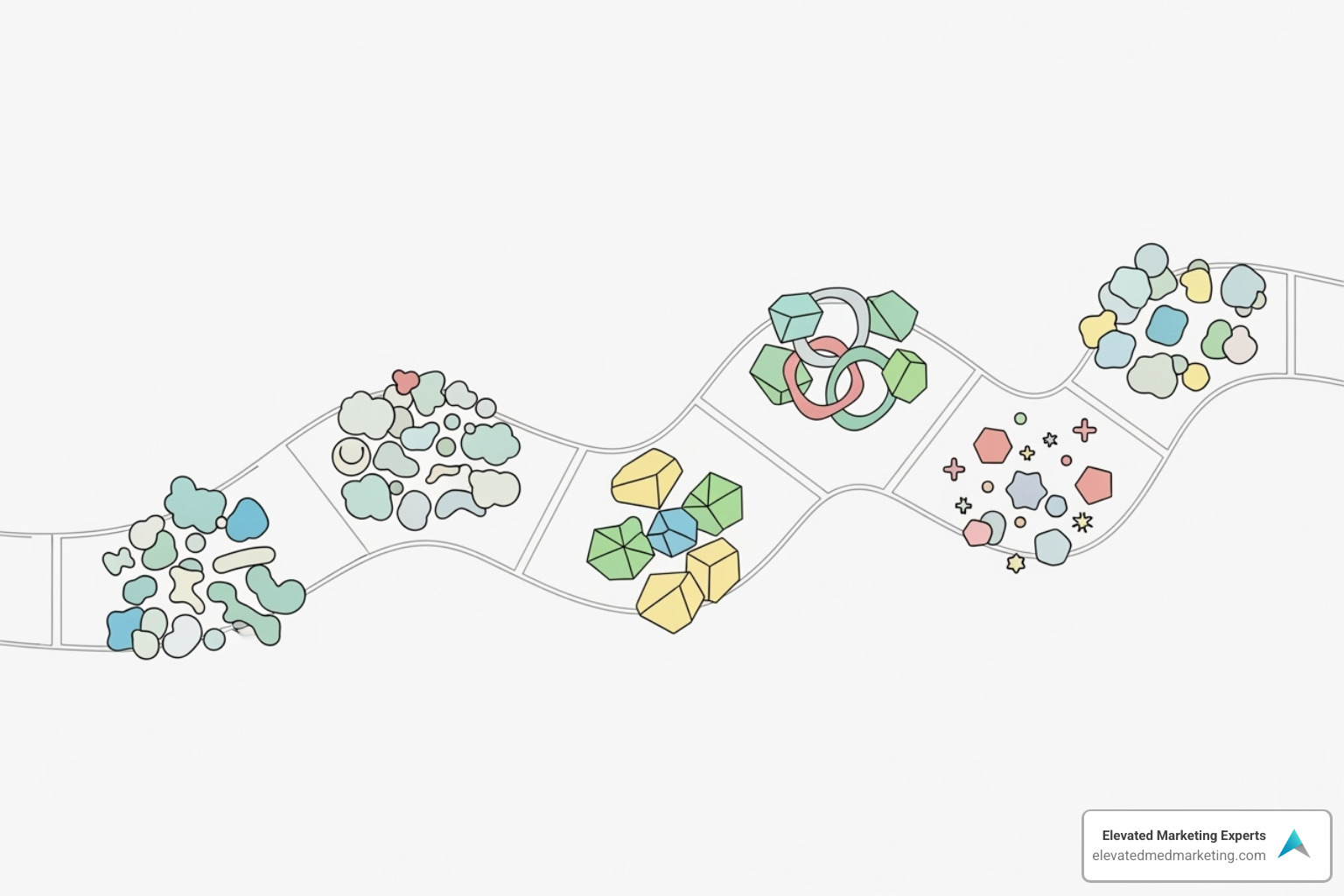
Generic marketing is actively ignored. Patients, trained by Amazon and Netflix, expect experiences designed specifically for them.
Moving beyond basic segmentation means understanding individual motivations. A 35-year-old considering a procedure could be a busy mom or a career-focused professional; their needs are completely different.
One-to-one personalization at scale is achievable. As seen with Netflix and Spotify, it works. In fact, personalization can deliver 5-8x ROI and lift sales by 10% or more. For aesthetic practices, this means showing relevant information and following up with answers to their specific concerns.
The expectation for custom experiences is growing. With 72% of consumers only engaging with targeted messages, patients expect you to remember their goals and communicate accordingly. The key is to be helpful without being creepy. Transparency about data use and a focus on genuine value builds trust.
Our guide on personalization in marketing explores how aesthetic practices can implement these strategies effectively.
The Blueprint for Future-Proof Marketing: Strategy, Data, and Technology

Think of future proof marketing as building a house on a solid foundation. Your strategy needs a blueprint that can weather any storm. The old way of creating rigid, five-year marketing plans is obsolete because today’s market moves too fast.
An agile approach over static plans is critical. Businesses with flexible systems survive disruptions by being able to pivot quickly.
Moving from guesswork to data-driven insights is where the magic happens. Every patient interaction generates data. Connecting these points provides powerful insights and helps avoid costly mistakes, a core tenet of our data-driven marketing approach.
Surprisingly, most marketers only use one-third of their marketing technology. This MarTech underutilization represents massive untapped potential, especially for medical practices where every interaction matters.
The Central Role of AI and Machine Learning
Artificial intelligence is no longer science fiction; it’s a core business tool. The AI marketing market is projected to hit $40 billion by 2025 for good reason.
AI in marketing goes beyond simple automation. It involves systems that analyze patient interactions, predict interests, and create personalized content. AI-powered experimentation removes guesswork from optimization, allowing AI to test and adjust campaign variations in real-time.
The reality is, only 39% of marketers are confident in their organization’s AI use, with many still at a beginner level. Overcoming AI beginner status starts by seeing AI as a tool to amplify, not replace, human creativity. The key is gradual upskilling and reskilling. Successful practices view AI as a creative partner; AI analyzes data, but humans provide the empathy to understand a patient’s concerns.
Our guide on leveraging AI in marketing breaks down practical applications for medical practices.
Building Your Future-Proof Marketing Technology Stack
Your marketing technology stack is your practice’s growth engine. It must be robust for today’s demands and flexible for tomorrow’s opportunities. Key components include:
- Customer Data Platform (CDP): Acts as your practice’s memory bank, centralizing every patient interaction to create a complete journey map.
- AI-powered analytics: Find patterns in data you’d miss manually, providing insights that fuel better decision-making.
- Automation tools: Handle repetitive tasks like email follow-ups and social media posting, freeing your team to focus on patient care.
- Content Management System (CMS): Enables personalized website experiences, showing returning visitors content relevant to their interests.
A modular framework is crucial. It allows you to swap out components as technology evolves, avoiding the need to rebuild your entire stack. Improved connectivity ensures all systems communicate seamlessly, creating a streamlined experience that patients appreciate.
Why Data Centralization is Non-Negotiable
A sobering statistic: only 14% of organizations have a single customer view. This means most businesses make decisions with incomplete data. For medical practices, this fragmentation can make a patient feel like a number, not a person.
Breaking down organizational silos is essential. Patient data is often scattered across analytics, CRM, and billing systems. Without communication between them, you lose the complete story. Achieving a 360-degree customer view is critical in medical marketing, where trust and personalization drive decisions.
Unifying data sources in a central system enables genuine personalization. Improving data quality is a natural benefit of centralization, leading to reliable insights and effective AI. As third-party cookies disappear, first-party data—information patients willingly share—becomes your most valuable asset for building trust through sustainable, personalized marketing.
For aesthetic practices, centralized data creates seamless, informed patient interactions, building relationships that drive referrals and long-term loyalty.
Overcoming the Problems: Challenges CMOs Face on the Path to the Future

Being a Chief Marketing Officer today is challenging. The landscape changes so fast that mastering one platform is difficult before another emerges. CMOs face conflicting demands: the relentless pressure for immediate sales versus the need for patience and investment to build a future proof marketing strategy.
We also hear constant agency frustration. Many leaders are dissatisfied with traditional agency models, feeling they overpay for tasks that could be automated. The fragmentation of media and customer experiences adds complexity. A patient journey can span Instagram, Google, review sites, and your website. Creating a seamless, connected experience across these touchpoints is a major challenge.
Finally, organizational silos and resistance to change are significant problems. When different teams use different systems, alignment is difficult. For practices facing this, building a resilient brand for the future is essential.
The Battle Between Short-Term Needs and Long-Term Vision
You’re not alone in this battle: nearly three-quarters of marketers (73%) admit that focusing on immediate needs hurts their long-term planning.
Short-term thinking creates a vicious cycle. Constantly putting out fires prevents you from fireproofing the building. This happens when practices jump between tactics without letting any strategy mature. Chasing every new marketing fad is an expensive trap. The key is distinguishing between lasting trends relevant to your audience and temporary fads.
The solution is proving value through small-scale experiments. Start small, test a new approach with a limited budget, collect data, and scale what works. This demonstrates long-term value without major risk. However, this requires genuine C-suite buy-in. Success depends on leadership that views marketing as an investment, not just an expense.
Bridging the Talent and Technology Gap
The gap between technology’s capabilities and a team’s skills is a common concern. The good news is most organizations are choosing to upskill and reskill their existing teams, who already understand the practice’s brand and patients.
Fostering a culture of continuous learning is a survival strategy. Yesterday’s cutting-edge tools are today’s basics. Thriving teams are curious and experiment, so we encourage practices to set aside weekly time for learning. A major barrier is the fear of getting it wrong with new technology, especially AI. Mistakes will happen, and that’s okay. Winning practices accept a “test and learn” mentality.
Building adaptive capabilities means focusing on broad skills like data analysis and strategic thinking, not just platform-specific training. These skills are transferable and enduring. Technology evolves, but marketing fundamentals—understanding your audience, creating value, building relationships—are constant. Combining these principles with modern tools is powerful. For more, see our guide on content marketing trends for the future.
Frequently Asked Questions about Future-Proof Marketing
Talking about future proof marketing can feel overwhelming. Here are answers to the most common questions we get from plastic surgeons and medical spa owners.
What is the first step to future-proofing my marketing?
The first step is a fundamental mindset shift. Stop seeing marketing as a one-time setup and view it as a living system that requires adaptability and continuous learning. After this shift, conduct an honest audit of your current efforts. Where is your data coming from? Is your technology being used effectively? How well do you understand your patients? The goal is to build systems that can evolve, creating a flexible foundation, not a rigid, outdated plan.
How can a small business with a limited budget apply these principles?
Future proof marketing is not just for large budgets. Smaller practices can be more agile. Start by understanding your patients deeply using free tools like surveys and Google Analytics. For technology, think affordable and scalable, looking for integrated platforms with free or tiered pricing. Your most powerful, low-cost tools are authenticity and storytelling through real patient testimonials and behind-the-scenes content. Finally, focus and master one or two key channels where your patients are active before expanding. Doing one thing well is better than ten things poorly.
Is future-proofing just about adopting the latest technology?
No. Thinking technology alone is the answer is a common mistake. Technology is a powerful accelerant, but it’s useless without the right strategy and a deep understanding of your patients. Most marketers underuse their tech. Future proof marketing is a holistic approach blending human insight with technology, empathy with automation, and data with storytelling. Successful practices use technology to improve human connection, not replace it. Think of technology as an assistant that helps you understand and communicate with patients more effectively, freeing you up for high-value work. Without the right strategy, even the best tech is just an expensive paperweight.
Conclusion: Secure Your Relevance in the Market of Tomorrow
The journey through future proof marketing shows that success comes from building the capacity to thrive through change, not from predicting it. The Fourth Industrial Revolution, hyper-personalization, AI, and data management are not trends but essential components for survival.
The path forward rests on four pillars: Adaptability for a changing world, Customer-centricity as your North Star, Data-driven decisions to replace guesswork, and Technology integration to amplify human expertise.
For marketing leaders, the tension between short-term pressures and long-term vision is real. Yet, these challenges create immense opportunities for those who commit to continuous learning.
Future-proofing is an ongoing practice, not a one-time fix. It means treating marketing as a living system that evolves. This approach helps you capitalize on disruption while competitors scramble. The competitive advantage of being prepared is immense. When change happens, your systems adapt, your team pivots, and your patients continue to receive exceptional experiences.
For medical and aesthetic practices, this landscape requires specialized navigation. Patient acquisition, trust-building, and compliance in healthcare are complex issues that generic agencies often don’t understand.
At Liftd Marketing Experts, we specialize in these unique challenges. We understand the balance between results and privacy, and we know how to build authority where credibility is paramount. Our experience with plastic surgeons and medical spas means we craft solutions that honor your practice’s medical nature while driving real growth.
The future belongs to practices that build resilience today. Don’t get left behind when you could be leading the way. Start building your future-proof marketing plan for your plastic surgery practice today and secure your relevance in tomorrow’s market.


