

Cross-promotion opportunities: 7 Powerful Ways for Massive Growth 2025
Why Cross-Promotion Opportunities Are Your Secret Weapon for Brand Growth
Cross-promotion opportunities represent one of the most cost-effective ways to expand your reach in today’s crowded marketplace. These strategic partnerships allow two or more brands to promote each other’s products or services, tapping into warm audiences that already trust your partner’s recommendations.
Top Cross-Promotion Opportunities for Medical Practices:
• Email newsletter swaps – Exchange mentions in each other’s newsletters
• Social media collaborations – Joint posts, stories, and live streams
• Bundled service offerings – Combine complementary treatments or products
• Co-hosted events – Webinars, workshops, or patient appreciation events
• Referral programs – Structured systems for mutual patient referrals
• Content partnerships – Guest blogging and podcast appearances
• Joint giveaways – Contests that require following both brands
The numbers speak for themselves: 92% of consumers trust recommendations from people they know, while traditional advertising continues to lose effectiveness. Cross-promotion leverages this trust by introducing your brand through partners your target audience already values.
For medical practices and aesthetic clinics, this strategy is particularly powerful. When a trusted wellness brand recommends your services, you’re not starting from zero – you’re being introduced to a warm audience that’s already interested in health and beauty solutions.
Why This Matters Now
Research shows that 54% of companies report partnerships drive more than 20% of their total revenue. In the medical and aesthetic industry, where patient acquisition costs continue to rise, cross-promotion offers a refreshing alternative to expensive paid advertising.
I’m Joe Amaral, and through my decade-plus experience building and scaling digital marketing companies, I’ve seen how strategic cross-promotion opportunities can transform a practice’s growth trajectory. From my early days finding digital marketing as a company founder to now leading my third startup, I’ve helped countless medical practices build profitable partnerships that compound over time.

Understanding Cross-Promotion Opportunities
Cross-promotion is a common marketing strategy that feels like a breath of fresh air in today’s expensive advertising landscape. Instead of shouting into the void hoping someone will listen, you’re getting a warm introduction through a trusted friend.
Think of it this way: when your favorite wellness influencer mentions a new aesthetic treatment, you’re more likely to pay attention than if you saw a random ad, right? That’s the magic of cross-promotion working in action.
Cross-promotion opportunities create genuine win-win scenarios where businesses collaborate to share audiences. Unlike traditional advertising where you’re starting cold, these partnerships introduce your practice to people who already trust your partner’s judgment. It’s like having a mutual friend make introductions at a networking event – the conversation starts on much warmer ground.
The mutual benefit aspect is what makes this strategy so sustainable. Both parties gain access to new audiences without the hefty price tag of paid advertising. When done thoughtfully, audience overlap becomes your secret weapon rather than a problem to avoid.
Here’s what makes this approach particularly powerful: 70% of consumers trust opinions shared online by other customers. When your partner recommends your services, their audience doesn’t see it as another sales pitch. They see it as a trusted recommendation from someone whose judgment they value.
What Are Cross-Promotion Opportunities?
Cross-promotion opportunities are collaborative efforts where non-competing brands team up to expand their reach. These partnerships can range from simple social media mentions to elaborate co-branded campaigns – the key is finding the right fit for your practice and goals.
The sweet spot lies in partnering with businesses that complement your services without directly competing. For aesthetic practices, this creates exciting possibilities. You might partner with wellness coaches who share your patient demographic, or beauty product retailers whose customers are already interested in looking their best.
Fitness studios offer another natural partnership opportunity. Their members already value health optimization and often seek aesthetic treatments to complement their fitness journey. Nutritionists who work with clients interested in overall wellness can also be perfect partners.
The most important factor isn’t the size of their audience – it’s the alignment of values and goals. Your partner’s brand should feel like a natural extension of your own values. When there’s genuine alignment, their audience will connect with your message authentically.
Why Cross-Promotion Opportunities Matter for Growth
Strategic partnerships deliver benefits that compound over time, making them one of the smartest investments for growing practices. The immediate reach expansion is just the beginning of what these collaborations can accomplish.
Brand awareness multiplication happens when you tap into your partner’s established trust and credibility. You’re not just accessing their follower count – you’re borrowing their reputation. This social proof accelerates the relationship-building process that typically takes months to develop.
Warm introductions drive better results than cold outreach every single time. Converting leads who come through trusted partners costs significantly less while delivering higher conversion rates. Many practices see their customer acquisition costs drop by up to 40% through strategic partnerships.
Credibility gets an instant boost when respected brands in your industry recommend your services. Association with established wellness brands positions you as a trusted authority, even if your practice is relatively new to the market.
Cost savings become substantial over time. While traditional advertising costs keep climbing, cross-promotion offers sustainable growth without proportional cost increases. The Partnerize study showing that 54% of companies generate over 20% of revenue through partnerships proves this cost-effectiveness at scale.
Network effects create the most exciting long-term opportunities. One successful partnership often opens doors to an entire ecosystem of potential collaborators. This creates exponential growth possibilities that single partnerships could never achieve alone.
High-Impact Cross-Promotion Strategies
When it comes to cross-promotion opportunities, the most successful practices don’t just pick one strategy and hope for the best. They create a thoughtful mix of tactics that work together to amplify their reach and build lasting partnerships.
Think of it like building a friendship – you don’t just meet someone once and expect a lifelong bond. The same goes for cross-promotion. The practices we work with that see real growth layer multiple approaches to create genuine connections with their partners’ audiences.
Social media swaps have become incredibly popular, and for good reason. When two brands do Instagram takeovers or LinkedIn article exchanges, it feels natural and authentic. Your partner’s audience gets to see behind the scenes of your practice, while you share their expertise with your followers. Joint live streams take this even further – there’s something magical about real-time collaboration that builds trust instantly.
Email newsletter collaborations remain one of our favorites because the numbers don’t lie. With email marketing delivering an average $42 return for every $1 spent, newsletter swaps pack serious punch. When your wellness partner mentions your latest treatment in their weekly newsletter, you’re reaching people who already value health and beauty advice.
Co-hosted events create those memorable moments that stick with potential patients long after the event ends. Whether it’s a virtual webinar about holistic wellness or an in-person workshop on skin health, these cross-promotion opportunities let both partners shine while providing real value to attendees.
Product and service bundles work beautifully in the aesthetic space. Imagine partnering with a high-end skincare boutique to offer a “complete glow package” that includes their products and your facial treatments. Customers love the convenience, and both businesses benefit from the increased value proposition.
The rise of influencer partnerships has opened new doors, especially with micro-influencers who have 10,000 to 100,000 followers. These collaborations often deliver better engagement than celebrity partnerships, with 58% of consumers making purchases based on influencer recommendations. The key is finding influencers whose values align with both partner brands.
Joint webinars and podcasts tap into the growing audio content trend. With 546.7 million podcast listeners worldwide in 2024, these partnerships offer tremendous reach potential while positioning both partners as industry experts.
Collaborative giveaways create excitement that spreads organically. Instagram contests can grow followers 70% faster over three months, with contests achieving a 34% conversion rate. The best giveaways require participants to follow both accounts, creating mutual benefit.
Co-branding initiatives and structured referral programs round out the strategy mix. These longer-term approaches build sustainable growth by creating systematic ways for partners to support each other’s businesses.
Our Medspa Social Media Marketing experience has shown us that combining multiple strategies creates a compound effect that’s much more powerful than any single approach.
Digital Channels That Scale
Digital platforms offer the most scalable cross-promotion opportunities because you can track everything and reach audiences far beyond your local area. But not all digital channels work the same way, and choosing the right ones makes all the difference.
Instagram collaborations are perfect for aesthetic practices because the platform is built for visual storytelling. Joint posts showcasing before-and-after results, story takeovers where partners share their expertise, and IGTV content featuring both brands create authentic engagement. The visual nature of Instagram lets potential patients see real results and genuine partnerships in action.
LinkedIn partnerships work exceptionally well when you’re targeting professional demographics. Article exchanges and joint thought leadership content establish authority while reaching decision-makers who value quality and expertise. We’ve seen practices build incredible referral networks through consistent LinkedIn collaboration.
Joint live streams create those “you had to be there” moments that build community. Real-time collaboration on Instagram Live or Facebook Live feels authentic because it is authentic. Co-hosting “Ask the Expert” sessions with complementary wellness providers gives both partners a chance to showcase their knowledge while providing valuable content.
SMS and Messenger marketing might surprise you with their effectiveness. Facebook Messenger achieves 60-70% open rates within the first hour – that’s incredible reach for time-sensitive promotions or exclusive offers from partner businesses.
Email marketing integrations remain the foundation of many successful partnerships. The channel’s high ROI and ability to deliver detailed, educational content makes it perfect for building trust over time. When your wellness partner includes a thoughtful recommendation for your services in their monthly newsletter, it carries real weight with their subscribers.
The secret to digital success isn’t being everywhere at once. It’s choosing platforms where both partners have strong, engaged audiences and focusing your energy there.
Offline & Experiential Plays
While digital channels help you scale quickly, offline cross-promotion opportunities often create the deepest connections with potential patients. There’s something about meeting in person that builds trust in ways that online interactions can’t quite match.
Pop-up events work beautifully in the wellness space. Collaborative events where partners offer mini-consultations, treatment demonstrations, or educational workshops let people experience both brands in a relaxed, no-pressure environment. We’ve seen practices host “wellness weekends” with yoga instructors, nutritionists, and skincare experts that create buzz for months afterward.
Loyalty program integration turns one-time collaborations into ongoing partnerships. When customers can earn points at your practice that they can use at partner locations (and vice versa), it creates a network effect that keeps people engaged with both brands long-term.
In-store bundling displays might seem old-school, but they work especially well in retail partnerships. Physical displays featuring information about complementary services help customers find solutions they didn’t know they needed.
Conference and trade show collaborations let you share costs while amplifying your presence. Splitting booth space or co-presenting at industry events makes expensive marketing opportunities more accessible while showing potential partners that you’re serious about collaboration.
| Strategy Type | Average ROI | Setup Time | Scalability | Best For |
|---|---|---|---|---|
| Social Media Collaborations | 3-5x | 1-2 weeks | High | Brand awareness |
| Email Newsletter Swaps | 8-12x | 2-3 weeks | Medium | Lead generation |
| Joint Events | 4-6x | 4-8 weeks | Low | Relationship building |
| Referral Programs | 6-10x | 2-4 weeks | High | Long-term growth |
Finding & Pitching the Right Partners
Finding the perfect partner for your cross-promotion opportunities is like finding the right dance partner – when it clicks, you both look amazing. When it doesn’t? Well, let’s just say nobody wants to watch that performance.
The foundation of successful partnerships starts with understanding who your ideal customer really is. For aesthetic practices, this often means looking beyond the obvious choices. You could partner with another beauty brand, but what about that high-end fitness studio whose members are already investing in their appearance? Or the wellness coach whose clients are seeking confidence boosts?
Partner fit goes deeper than surface-level similarities. You want businesses that serve your exact customer profile without stepping on your toes. Think of it as finding your business’s perfect complement, not its twin.
The magic happens when you dig into the numbers. Tools like Lettergrowth and Madneto can help you peek behind the curtain of potential partners’ audiences. You’re looking for more than just follower counts – you want engaged, authentic audiences that genuinely interact with content.
Audience overlap should excite you, not worry you. When done right, you’re not splitting a pie – you’re baking a bigger one together. The key is ensuring your services naturally flow together in your customers’ minds.
Our experience with Content Creation for Brands has shown us that the most successful partnerships feel inevitable to customers. They think, “Of course these two work together!”
Vetting Checklist Before You Commit
Before you shake hands on any partnership, take a step back and do your homework. Due diligence might not be the most exciting part of building partnerships, but it’s what separates the pros from the amateurs.
Start with the basics: list size and quality matter more than vanity metrics. A partner with 5,000 highly engaged subscribers often delivers better results than one with 50,000 passive followers. Look for engagement rates that tell the real story – genuine comments, shares, and interactions that show an active community.
Brand reputation checks aren’t just smart business – they’re essential protection. A quick Google search can save you from partnering with someone whose reputation might rub off on yours in all the wrong ways. Check their reviews, look at how they handle customer complaints, and make sure their values actually align with what they preach online.
The numbers don’t lie, so ask for them. Email open rates above 20% show a healthy, engaged list. Social media analytics reveal whether their audience actually cares about what they’re sharing. Previous partnership results give you a preview of what you might expect.
Legal considerations might seem boring, but they’re your safety net. Make sure potential partners follow FTC disclosure guidelines, have proper business insurance, and can commit to written agreements. These details protect both of you down the road.
Crafting a Win-Win Pitch
The best partnership pitches feel like you’re solving a puzzle together rather than asking for a favor. When you reach out to potential partners, you want them thinking “This could be amazing” instead of “What’s in it for them?”
Start by showing you’ve actually paid attention to their work. Generic pitches get deleted faster than spam emails. Mention something specific about their recent content or success that caught your eye. This immediately separates you from everyone else sliding into their DMs.
Your value proposition should make their life easier, not harder. Instead of asking what they can do for you, lead with what you’re bringing to the table. Maybe it’s access to your email list, social media exposure, or a ready-made collaboration concept they can implement immediately.
Concrete examples work better than vague promises. Rather than saying “We could do some social media stuff together,” try “I’d love to feature you in our monthly wellness newsletter that reaches 3,000 potential clients, and we could co-host an Instagram Live about confidence and self-care.”
Timeline and success metrics show you’re serious about results. Propose a specific timeframe – maybe a month-long collaboration with weekly check-ins. Suggest tracking metrics like email click-through rates, social media engagement, or referral conversions.
Make responding easy with a clear next step. “Would you be interested in a 15-minute call this week to explore this?” works much better than leaving them to figure out how to respond.
The most successful partnerships we’ve seen start with pitches that feel more like friendly invitations than business proposals. When both parties are genuinely excited about the possibilities, the results tend to exceed everyone’s expectations.

Executing & Measuring Campaign Success
Getting your cross-promotion opportunities off the ground is exciting, but the real magic happens when you track everything properly. Without good measurement, you’re basically flying blind – and nobody wants that when you’ve invested time and energy into building partnerships.
The foundation of successful execution starts with UTM tracking. Think of these as little digital breadcrumbs that show you exactly where your traffic comes from. Create unique UTM parameters for each partner and campaign, so you can see which partnerships are actually bringing in valuable visitors versus just vanity metrics.
Referral link systems work hand-in-hand with UTM tracking. These trackable links give proper credit where it’s due, showing you which partners are driving real conversions. Most email platforms and social media tools have this built right in, so you don’t need to reinvent the wheel.
Here’s where things get interesting: A/B testing your partnership content can make a huge difference. We’ve seen practices boost their conversion rates by 30% or more just by tweaking their messaging or timing. Even small improvements compound quickly when you’re working with warm audiences.
Your engagement dashboard becomes your command center during campaigns. Set up real-time tracking for reach, engagement, click-through rates, and conversions. This isn’t just about pretty charts – it’s about making quick decisions when something’s working (or when it’s not).
Don’t forget to tag everything in your CRM. When you can track which patients came from partnerships months later, you’ll understand the true long-term value of your collaborations. This data becomes gold when you’re planning future partnerships.
One of our favorite success stories involves OptinMonster, which added over 95,000 email subscribers in just seven months using cross-promotional strategies. That’s the kind of compound growth that transforms practices.
For deeper insights into email marketing performance, check out this scientific research on email ROI – the numbers will surprise you.
Launch Playbook
The pre-launch phase sets you up for success or failure. About 2-4 weeks before going live, nail down your creative assets and messaging with your partner. Create a shared content calendar so nobody’s posting at the same time or sending mixed messages.
Get your internal teams aligned too. Your front desk staff should know about the partnership so they can handle questions smoothly. Nothing kills momentum like confused team members who don’t know what’s happening.
Launch week is when the rubber meets the road. Start with a soft launch to your core audiences first – this gives you a chance to spot any issues before they become big problems. Keep your phone handy for quick communication with partners, and don’t be afraid to make adjustments based on what you’re seeing.
The post-launch optimization phase is where good partnerships become great ones. Analyze your data weekly, not monthly. Test different approaches and double down on what’s working. Most importantly, start planning your next collaboration while the current one is fresh in everyone’s mind.
Metrics That Matter
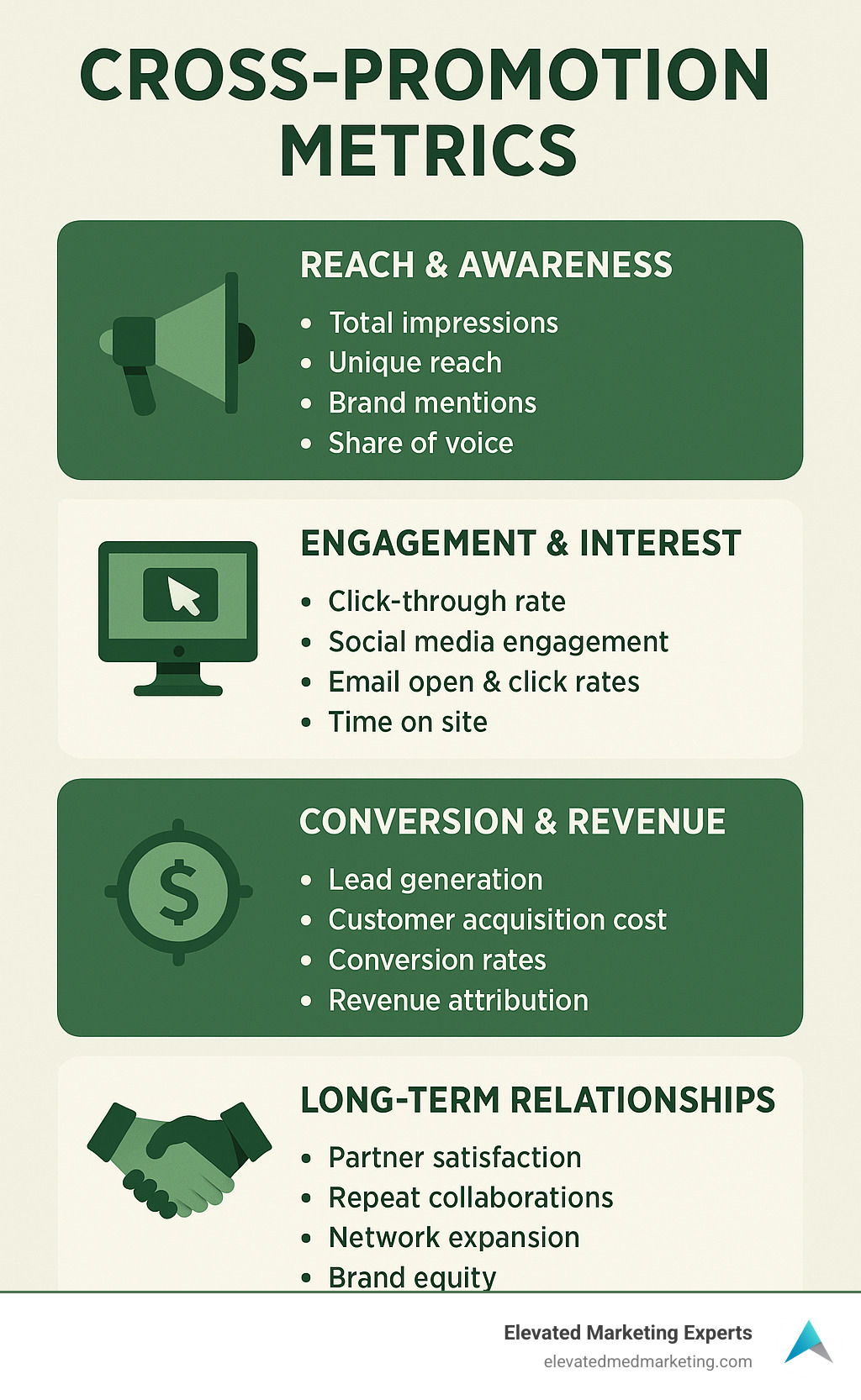
Reach and awareness metrics tell you how many people you’re actually touching. Look at total impressions across all channels, but be careful not to double-count shared audiences. Track brand mentions and see if your share of voice in the market is growing.
Engagement indicators show you if people actually care about what you’re sharing together. Click-through rates, social media engagement, and email performance all paint a picture of genuine interest versus passive scrolling.
The conversion and revenue tracking is where partnerships prove their worth. Monitor lead generation, customer acquisition costs, and conversion rates by traffic source. Most importantly, track the lifetime value of partner-acquired customers – they often stick around longer than other leads.
Don’t overlook relationship building metrics either. Partner satisfaction, repeat collaboration opportunities, and network expansion through introductions often matter more than immediate revenue. The best partnerships compound over time.
Avoiding Pitfalls & Covering Legal Bases
Let’s be honest – not every partnership is a match made in heaven. I’ve watched promising cross-promotion opportunities crumble faster than a stale cookie, often due to issues that could have been prevented with better planning.
The most painful failure I witnessed involved a high-end aesthetic clinic that partnered with a discount beauty retailer. The brand mismatch was so jarring that both audiences felt confused and betrayed. The luxury clinic’s patients couldn’t understand why they were being pitched budget products, while the retailer’s price-conscious customers felt intimidated by premium treatment offers.
Audience fatigue is another partnership killer. When you bombard your followers with constant cross-promotional content, they start tuning out entirely. I’ve seen practices lose 15% of their email subscribers in a single month because they forgot that their audience signed up for valuable content, not a parade of partner promotions.
Then there’s the classic problem of unclear roles. Picture this: both partners think the other is handling the creative assets, the launch date arrives, and nobody has anything ready. It’s like a comedy sketch, except your reputation is the punchline.
Intellectual property misuse can turn partnerships toxic quickly. Using your partner’s content without permission or proper attribution doesn’t just strain relationships – it can land you in legal hot water. The same goes for FTC disclosure requirements. The Federal Trade Commission takes partnership transparency seriously, and ignoring disclosure rules can result in hefty fines.
This is why written contracts aren’t just recommended – they’re essential. Handshake deals might feel friendly, but they leave too much room for misunderstanding. When expectations aren’t clearly documented, even the best partnerships can sour.
For deeper insights into building successful business relationships, check out these proven business partnership tips from industry experts.
Common Mistakes to Dodge
The biggest mistake I see practices make is launching partnerships without clear KPIs. It’s like driving to a destination without knowing where you’re going – you might end up somewhere, but probably not where you wanted to be.
Uneven value exchange destroys partnerships from the inside. When one partner consistently provides more value than they receive, resentment builds quickly. I’ve mediated these conversations, and they’re never pleasant. Make sure the give-and-take feels fair from day one.
Partner overlap is another trap. Collaborating with someone who serves your exact same audience can actually hurt your growth instead of helping it. You want partners whose audiences complement yours, not compete with them.
Forgetting follow-up might be the most expensive mistake of all. Many practices treat partnerships like one-night stands instead of building long-term relationships. The best partnerships compound over time – that first collaboration should be the beginning, not the end.
Poor communication kills more partnerships than any other factor. When partners stop talking regularly, small issues become big problems. Inadequate communication turns minor misunderstandings into relationship-ending disputes.
Finally, ignoring legal requirements can cost you more than just the partnership. Platform penalties, legal fees, and reputation damage aren’t worth the risk of cutting corners on compliance.
Key Clauses for Peace of Mind
Smart contracts protect everyone involved. Usage rights and permissions should spell out exactly how each partner can use the other’s content, logos, and brand assets. Include how long these rights last and what happens when the partnership ends.
Exclusivity and competition clauses prevent awkward situations where your partner launches a similar collaboration with your competitor the following week. Define what constitutes a competing partnership and establish notification requirements for future collaborations.
Data sharing and privacy protection is crucial, especially in healthcare. Specify what customer information can be shared between partners and ensure everything complies with GDPR, CCPA, and other privacy regulations. Your patients trust you with their information – don’t betray that trust.
Performance and compliance standards keep everyone accountable. Set minimum performance expectations for both parties and include FTC disclosure requirements right in the contract. This way, nobody can claim they didn’t know the rules.
Exit clauses and dispute resolution might seem pessimistic, but they’re like insurance – you hope you’ll never need them, but you’ll be grateful they exist if things go wrong. Clear termination procedures and dispute resolution mechanisms can save thousands in legal fees and preserve relationships even when partnerships don’t work out.
The goal isn’t to create contracts so complex that lawyers need translators. It’s to ensure everyone understands their responsibilities and feels protected. Good contracts actually strengthen partnerships by removing uncertainty and building trust.
Frequently Asked Questions about Cross-Promotion Opportunities
How can small brands start without a big list?
Here’s the truth that might surprise you: small brands often make better partners than massive companies with huge followings. When you’re just starting out, you don’t need thousands of subscribers to create meaningful cross-promotion opportunities.
Your best partnerships often start right in your backyard. Look at the businesses you already work with – maybe it’s the wellness coach who refers patients to you, or the high-end salon down the street. These existing relationships already have built-in trust, which makes collaboration feel natural to both audiences.
Quality beats quantity every single time. A small but engaged audience of 1,000 people who actually open emails and interact with content will outperform a disengaged list of 10,000. Smart partners recognize this. They’d rather reach 500 people who are genuinely interested than blast 5,000 who ignore everything.
Think beyond your subscriber count. Maybe you have something valuable that bigger brands want – like specialized expertise, a prime location, or unique equipment. A boutique med spa might not have 50,000 followers, but they could offer a major skincare brand exclusive access for product demonstrations or expert testimonials.
Ali Abouelatta proved this works in practice. Starting small, he gained 465 subscribers in eight months purely through cross-promotions. No massive budget, no celebrity partnerships – just consistent effort with the right partners.
The key is starting where you are, not waiting until you’re “big enough.” Your first partnership might be small, but it can lead to bigger opportunities as you build experience and credibility.
What tools help track cross-promotion ROI?
Tracking your cross-promotion opportunities doesn’t require expensive software or complex setups. Start with the tools you probably already have, then add specialized options as your partnerships grow.
Google Analytics should be your foundation. Set up UTM parameters for each partner and campaign – it takes five minutes but gives you detailed insights about which partnerships actually drive valuable traffic. You’ll see exactly how partner visitors behave differently from other traffic sources.
Your email marketing platform likely has built-in tracking features you’re not using yet. ConvertKit, Mailchimp, and Constant Contact all show you which subscribers came from partner promotions and how they engage over time. This data helps you identify which partnerships deliver long-term value, not just quick hits.
Social media native analytics tell the real story about engagement. Instagram Insights, Facebook Analytics, and LinkedIn Analytics show you how partnership content performs compared to your regular posts. Look for higher engagement rates and new follower quality, not just vanity metrics.
For more sophisticated tracking, OptinMonster excels at capturing leads from partnership traffic with exit-intent campaigns. If you’re running referral programs, platforms like ReferralCandy or Friendbuy handle the tracking automatically.
The most important metric isn’t clicks or impressions – it’s customer acquisition cost comparison. Calculate how much it costs to acquire customers through partnerships versus paid advertising. Most practices find partnerships cost 40-60% less while delivering higher-quality leads.
Don’t overcomplicate the tracking. Pick 3-5 key metrics that matter to your business goals, track them consistently, and optimize based on what you learn.
Should I avoid partnering with direct competitors?
This question comes up constantly, and the short answer is yes, avoid direct competitors in most cases. But like everything in business, there are exceptions worth considering.
Direct competitor partnerships usually create more problems than opportunities. Your customers get confused about what makes you different. You risk losing patients to your partner. Worst of all, you might accidentally share proprietary information that gives competitors an edge.
The messaging feels forced and inauthentic too. How do you genuinely recommend a competitor without undermining your own value proposition? It’s nearly impossible to pull off convincingly.
But there are smart exceptions. Geographic separation changes everything – partnering with a similar practice in another city can work beautifully. You’re not competing for the same customers, but you can share best practices and refer traveling patients to each other.
Different specializations within the same field also work well. A general aesthetic practice might partner with someone who specializes exclusively in advanced laser treatments. You’re technically competitors, but your focuses are different enough to create genuine value for both audiences.
Industry advocacy represents another exception. When practices band together for educational initiatives or to promote industry standards, competition takes a backseat to shared goals. These partnerships build credibility for everyone involved.
Better alternatives deliver stronger results anyway. Adjacent service providers like wellness coaches, nutritionists, or high-end fitness studios share your target demographic without competing directly. Upstream partners like equipment suppliers or downstream partners like skincare retailers create natural collaboration opportunities.
The best cross-promotion opportunities happen when your partner’s success actually helps your business grow. That’s hard to achieve with direct competitors, but easy with complementary businesses.

Conclusion
Cross-promotion opportunities represent one of the most sustainable and cost-effective growth strategies available to modern businesses. Unlike paid advertising, which requires constant investment, successful partnerships create compounding returns that strengthen over time.
The most successful practices we work with view partnerships not as one-time promotional exchanges, but as long-term relationship investments. These ongoing collaborations create innovation opportunities, expand professional networks, and generate referral streams that continue producing results years after the initial partnership.
The network effect of strategic partnerships cannot be overstated. One successful collaboration often leads to introductions to additional partners, creating an exponential growth pattern that’s impossible to achieve through solo marketing efforts.
Your Next Steps:
- Audit Your Current Network: Identify existing relationships that could evolve into formal partnerships
- Define Your Ideal Partner Profile: Create specific criteria for partner selection based on audience alignment and value compatibility
- Develop Partnership Assets: Create professional materials that make partnership proposals easy and attractive
- Implement Tracking Systems: Set up analytics and measurement tools before launching your first collaboration
- Start Small and Scale: Begin with low-risk partnerships to refine your process before pursuing larger opportunities
The medical and aesthetic industry offers unique partnership opportunities due to the interconnected nature of health, wellness, and beauty services. Patients seeking aesthetic treatments often value holistic wellness approaches, creating natural collaboration opportunities with fitness professionals, nutritionists, wellness coaches, and luxury lifestyle brands.
At Liftd Marketing Experts, we’ve helped countless medical practices build profitable partnership programs that generate consistent growth without the ongoing costs of traditional advertising. Our systematic approach to partner identification, campaign execution, and performance optimization ensures that your cross-promotion opportunities deliver measurable results.
Ready to explore how strategic partnerships can accelerate your practice’s growth? Boost Your Business with a Med Spa Digital Marketing Agency and work with us to build your next high-converting cross-promotion campaign. Our team specializes in identifying partnership opportunities specific to medical and aesthetic practices, ensuring that your collaborations align with industry regulations while maximizing growth potential.
The best time to build partnerships is before you need them. Start cultivating relationships today, and you’ll have a robust network of collaboration opportunities ready when growth acceleration becomes your priority.


