

cosmetics seo: 7 Powerful Ways to Dominate in 2025
The Beauty Industry’s Digital Change
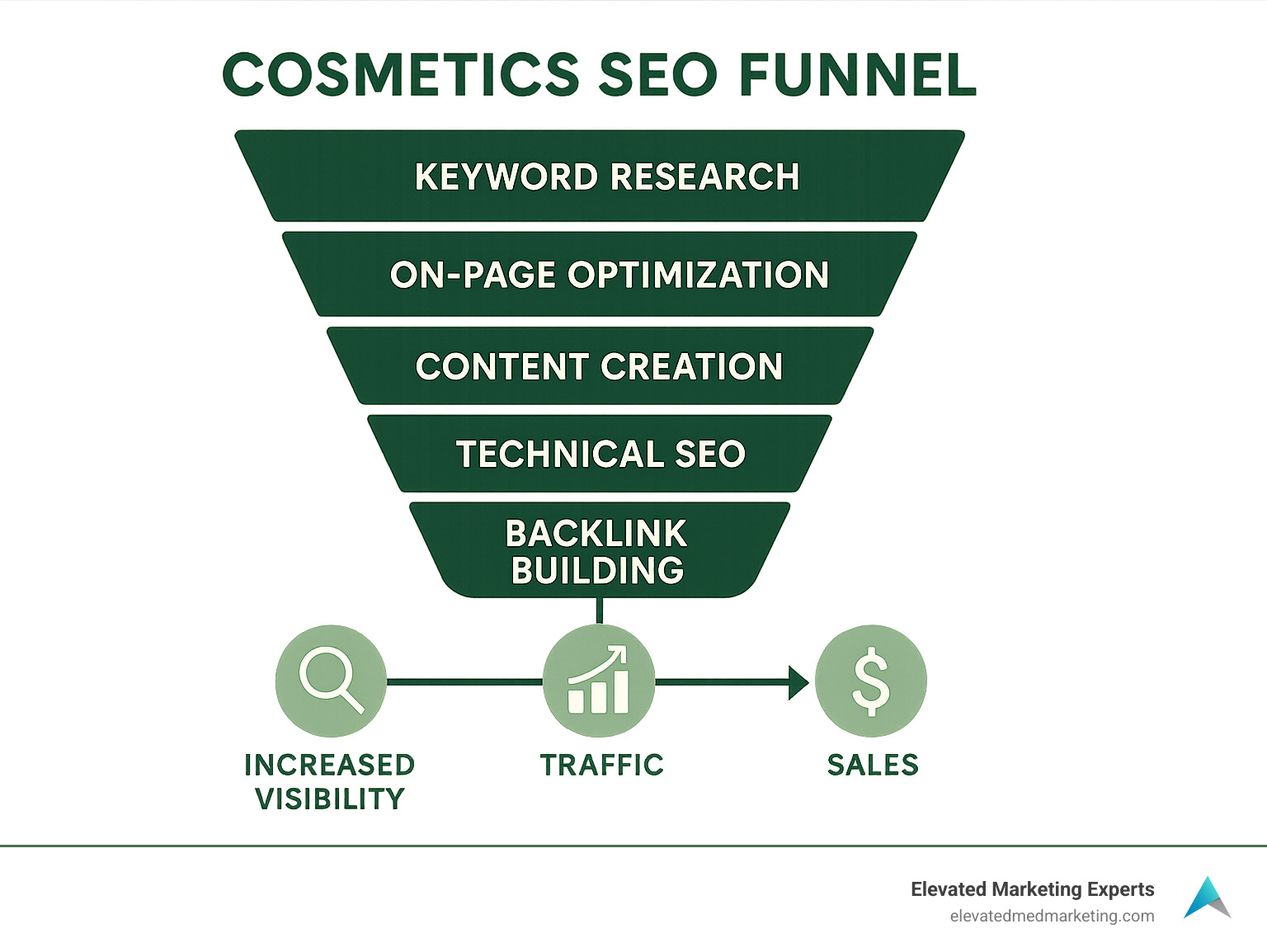
Cosmetics SEO is the process of optimizing beauty and skincare websites to rank higher in search engines through strategic keyword usage, content creation, technical optimization, and link building custom specifically for the beauty industry.
Here’s what you need to know about cosmetics SEO:
| Cosmetics SEO Element | Why It Matters |
|---|---|
| Beauty-specific keywords | Target terms like “organic skincare,” “cruelty-free makeup,” and “anti-aging serums” |
| Image optimization | Essential for product photos and before/after galleries |
| Mobile-first approach | 75% of beauty shoppers use mobile devices |
| Product schema markup | Enables rich snippets with reviews and pricing |
| Content strategy | Tutorial videos, skincare guides, and ingredient education |
In today’s $800 billion beauty market, standing out online isn’t optional—it’s essential. The beauty industry faces unique digital challenges: image-heavy websites that must load quickly, constantly evolving trends, and customers searching for specific product attributes like “red skin,” “pore minimizing,” and “clean beauty.”
When potential customers search for beauty products, 95% of their clicks go to first-page results, with the top three positions capturing 54% of all clicks. Without proper cosmetics SEO, your stunning products might remain hidden from your ideal customers.
This guide will walk you through proven strategies to boost your beauty brand’s visibility, traffic, and sales through search engine optimization custom specifically for cosmetics and skincare businesses.
I’m Joe Amaral, and I’ve helped numerous beauty brands increase their organic visibility through cosmetics SEO, changing their digital presence from invisible to irresistible in a competitive online landscape. My approach combines technical expertise with a deep understanding of beauty consumer behavior to create sustainable growth strategies.
Cosmetics SEO: Why Beauty Brands Need It

Let’s face it – the beauty world is crowded. Really crowded. With countless brands vying for attention in the $800 billion global beauty market, standing out isn’t just nice – it’s necessary for survival. This is where cosmetics SEO becomes your secret weapon.
The numbers tell a compelling story about why beauty brands can’t afford to ignore search visibility. Almost 95% of all web traffic goes to Google’s first page (yep, that first page is prime real estate!). More than half of website visits – 53% to be exact – come from organic search, with the top three search results capturing 54% of all clicks. And here’s the kicker: 75% of users never venture beyond page one.
Translation? If your beauty brand isn’t visible in search, you might as well be invisible to potential customers.
“Having gorgeous products isn’t enough anymore,” shares one of our beauty industry clients. “If people can’t find you when they’re searching, you’re missing out on your most motivated customers.”
Unique Challenges in cosmetics seo
The beauty industry faces SEO problems that other industries simply don’t encounter:
Beauty shoppers search differently. They look for specific ingredients (“vitamin C serum for dark spots”) or highly specific attributes (“waterproof mascara for sensitive eyes”). Your cosmetics SEO strategy needs content that addresses these precise needs.
Beauty trends move at lightning speed. Remember when everyone wanted “glass skin,” then “clean beauty,” and now “skinimalism”? Your SEO approach must be nimble enough to capitalize on these trends while still maintaining evergreen content that performs year-round.
Beauty websites are naturally image-heavy – showing off product photos and those all-important before/after galleries. Without proper optimization, these gorgeous images can seriously slow down your site, hurting both user experience and search rankings.
Trust barriers are especially high in beauty. Customers need confidence that products will work for their specific concerns before purchasing. This makes showcasing authentic reviews and expert endorsements crucial for SEO success.
Key Benefits of cosmetics seo for Brands
When done right, cosmetics SEO delivers powerful advantages that paid advertising simply can’t match:
Long-term ROI that grows over time. Unlike paid ads that stop the moment you stop spending, SEO continues working for you. One of our Korean skincare clients saw a staggering 1,038% increase in organic search traffic after implementing our SEO strategy – creating lasting value that compounds month after month.
Authority that builds consumer trust. Comprehensive SEO positions your brand as the go-to expert in your niche, whether that’s clean beauty, luxury cosmetics, or specialized treatments. When Google trusts you enough to rank you highly, consumers naturally trust you more too.
Reduced reliance on expensive ads. Beauty industry keywords often come with hefty cost-per-click rates. As your organic visibility grows, you can strategically reduce ad spend while maintaining or even increasing overall traffic.
Improved credibility in a skeptical market. Websites that earn top organic rankings are inherently viewed as more trustworthy. When your brand appears in those coveted top search positions, it signals relevance and authority to potential customers.
“SEO isn’t just about traffic – it’s about connecting with the right customers at exactly the right moment in their buying journey,” explains our SEO team at Liftd Marketing Experts.
In an industry where trends shift rapidly and competition is fierce, a strategic cosmetics SEO approach isn’t just a marketing tactic – it’s the foundation of sustainable digital growth for beauty brands who want to thrive long-term.
Research Foundations: Buyer Personas & Keyword Intelligence
Before jumping into technical tweaks and optimization tricks, successful cosmetics SEO starts with understanding the humans behind the searches. Who are you trying to reach, and what are they actually typing into Google at 11 PM while researching their next beauty purchase?
Building Buyer Personas
Think of buyer personas as your ideal customers brought to life on paper. They’re research-based profiles that help you understand the unique language, worries, and search habits of different beauty shoppers.
For example, most beauty brands serve customers like:
Social-Media Meg
– Demographics: 18-24, city dweller, earning $30-50K yearly
– Pain points: FOMO on trending products she spotted on TikTok last night
– Channels: Practically lives on social media, trusts her favorite content creators
– Search behavior: Types specific brand names and trending ingredients
Natural Natalie
– Demographics: 25-40, environmentally conscious, making $60-80K
– Pain points: Worries about harmful ingredients and planet-friendly packaging
– Channels: Does deep research, scrutinizes every ingredient list
– Search behavior: Always adds “organic,” “clean,” or “cruelty-free” to her searches
“Understanding your audience isn’t just nice-to-have—it’s the bedrock of any successful SEO strategy,” explains a beauty industry marketing expert. “When you truly know who you’re trying to reach, you can create content that speaks directly to their specific concerns.”
To build personas that actually improve your cosmetics SEO results:
- Dig into your existing customer data (what are they buying?)
- Talk to real customers through surveys or interviews
- Spend time on social media seeing how people talk about products like yours
- Review questions your customer service team gets repeatedly
- Take a peek at who your competitors are connecting with
These personas will guide everything from which keywords to target to what content to create, ensuring your SEO efforts actually connect with real people.
Keyword Research Tools for Cosmetics SEO
With your buyer personas in hand, now you need to find exactly what they’re searching for. This is where strategic keyword research comes in.
The most effective keyword research for beauty brands looks at:
Search volume: How many people are actually looking for this term each month. For instance, “natural beauty products” gets approximately 19,200 yearly searches.
Difficulty scores: How hard will it be to show up on page one? That “natural beauty products” term? It’s rated “very hard” to rank for.
Intent modifiers: Words that signal someone is ready to buy, like “best,” “buy,” or “near me.”
Seasonal trends: When do searches for sunscreen peak? (Hint: not just summer!)
Some of the most helpful tools for cosmetics SEO keyword research include Google Keyword Planner (free but limited), Ahrefs (great for competitor analysis), SEMrush (excellent for finding content gaps), and Google Trends (perfect for spotting seasonal patterns).
When digging for keywords, pay special attention to long-tail phrases like “best hydrating serum for dry skin” and question-based searches such as “how to apply foundation for mature skin.” These might have lower search volumes but often convert better because they match specific customer needs.
A beauty industry SEO specialist puts it perfectly: “Consumers don’t just search for ‘lipstick’—they search for product attributes like ‘red skin,’ ‘dry skin,’ ‘pore minimizing,’ ‘cruelty-free,’ ‘clean,’ ‘organic.’ These specific terms drive conversions because they match precise customer needs.”
By combining detailed buyer personas with thorough keyword research, you create the essential foundation for all your cosmetics SEO efforts. This research becomes your roadmap, guiding every content decision and optimization strategy going forward on your buyer journey.
The best cosmetics SEO strategies start with understanding real people and their beauty concerns before diving into the technical details. And if you need help figuring out where to start, a good keyword research tool can be your best friend.
On-Site Optimization: Content, Product Pages & Technical Health
With your research foundation in place, it’s time to roll up your sleeves and optimize your beauty website. Think of this as giving your digital storefront a complete makeover – one that appeals to both search engines and the humans who visit your site. Let’s break down this change into three essential areas.
On-Page Checklist for Cosmetics SEO
The way you structure and present your content makes all the difference in how search engines understand your beauty site. Here’s what you need to nail for effective cosmetics SEO:
Your title tags are like the headline on a magazine cover – they need to grab attention fast. Keep them under 60 characters, front-load your keywords, and make them irresistible. “Organic Anti-Aging Serum for Sensitive Skin | Brand Name” works much better than a generic “Our Serum | Brand Name.”
When it comes to meta descriptions, think of them as your 155-character elevator pitch. Include your keywords naturally and always add a clear call-to-action. Something like “Find our gentle organic anti-aging serum formulated for sensitive skin. See visible results in just 14 days. Shop now for free shipping!” gives users a reason to click.
Your H1 headers should clearly tell visitors (and Google) what your page is about. You only get one H1 per page, so make it count! “Vitamin C Brightening Serum for Hyperpigmentation” immediately communicates the product and its purpose.
Don’t underestimate the power of internal linking – it’s like creating helpful signposts throughout your beauty site. Link from your popular blog posts to your product pages using keyword-rich anchor text. For example, when discussing “powerful anti-aging ingredients” in a blog post, link that phrase to your retinol product page.
I’ve seen beauty brands boost their visibility dramatically by implementing FAQ schema on product pages. This simple addition helps you capture more real estate in search results with those helpful dropdown answers to questions like “How often should I use this exfoliator?”
And don’t forget about review schema – those golden star ratings in search results can increase your click-through rates substantially. After all, who doesn’t want to click on a product with 4.8 stars?
Technical SEO Must-Haves
Beauty websites are naturally visual showcases – which presents unique technical challenges. Here’s how to ensure your site performs beautifully behind the scenes:
Site speed is non-negotiable in the beauty industry. Those stunning product images need to load quickly without sacrificing quality. Compress all product images to under 500KB, implement lazy loading (so images only load as users scroll down), and consider using a content delivery network (CDN). A one-second delay can cost you 7% in conversions – that’s a lot of lost lipstick sales!
With 75% of beauty shoppers using mobile devices, mobile optimization isn’t optional. Ensure your site looks gorgeous on every screen size, make buttons and links easy to tap, and optimize your product galleries for smooth mobile browsing.
Structured data helps search engines understand your content better. Implement product schema for your e-commerce pages, review schema for testimonials, how-to schema for tutorials, and video schema for those makeup demonstrations. This extra layer of information helps Google display rich results that attract more clicks.
Google’s Core Web Vitals have become increasingly important for rankings. Focus on optimizing:
– Largest Contentful Paint (LCP): Get this under 2.5 seconds
– First Input Delay (FID): Keep under 100 milliseconds
– Cumulative Layout Shift (CLS): Maintain under 0.1
Use Google PageSpeed Insights regularly to check your performance and identify opportunities for improvement.
Content Marketing That Converts
Content is where beauty brands can truly shine in cosmetics SEO. Your audience craves education, inspiration, and solutions – give them what they want!
Long-form blog guides (around 1,900 words) tend to perform best in search results. Create comprehensive resources on topics like “The Complete Guide to Chemical Exfoliation” or “Understanding Vitamin C in Skincare: Benefits & Myths.” These in-depth pieces establish your expertise and attract valuable traffic.
Video content is pure gold for beauty brands. Product demonstrations, before-and-after reveals, and expert interviews not only engage your audience but can also rank well on both Google and YouTube. Just be sure to optimize your titles, descriptions, and tags for maximum visibility.
Your product descriptions deserve special attention too. Aim for at least 300 words to avoid “thin content” issues with Google. Address specific skin concerns, highlight unique ingredients, and naturally incorporate your keywords. Instead of “Our moisturizer hydrates skin,” try “Our hyaluronic acid moisturizer delivers 72-hour hydration for dry, sensitive skin types.”
As a content strategist specializing in beauty brands once told me, “Creating long-form blog posts that answer common skincare questions like ‘how to treat hormonal acne’ drives significant organic traffic and builds trust with potential customers.”
Remember to make all your content visually appealing with high-quality images. Give each image a descriptive, keyword-rich file name (organic-vitamin-c-serum.jpg), add alt text that includes relevant keywords, and compress them properly to maintain quality while reducing load time.
By implementing these on-site optimization strategies, your beauty brand will build a solid foundation for cosmetics SEO success. The beauty industry is competitive, but with these techniques, you’ll be well-positioned to capture more organic traffic and convert browsers into buyers.
Looking for expert help with your beauty brand’s website? Check out our Cosmetic Surgery Website Design Development Agency services to take your online presence to the next level.
Off-Site Growth: Links, Influencers & UGC

While you’ve worked hard to perfect what’s on your website, what happens off your site plays just as big a role in your cosmetics SEO success. Think of these external signals as your beauty brand’s reputation in the digital world – they tell search engines about your authority, relevance, and trustworthiness.
Strategic Link Building for Beauty Sites
Backlinks are like votes of confidence from other websites, and they remain one of Google’s top ranking factors. For beauty brands, it’s all about quality over quantity.
“Businesses that incorporate link building into their content marketing strategies have a 45% higher success rate than those that don’t,” according to a recent SEO study.
For cosmetics brands, some of the most effective link building approaches include guest posting on reputable beauty blogs where you can share your expertise while naturally linking back to your resources. One skincare brand I worked with created an educational piece about vitamin C science for a major beauty publication, gaining both authority and valuable links.
Digital PR campaigns work wonders too. Creating newsworthy content like original research or beautiful infographics about beauty trends can generate press mentions and links. I’ve seen makeup brands conduct surveys on clean beauty preferences that journalists love to reference.
Don’t overlook resource page opportunities either. Those “Top 10 Cruelty-Free Makeup Brands” lists are link gold mines if your products deserve to be featured. And broken link building – where you find dead links on beauty websites and offer your content as a replacement – can be surprisingly effective.
As one beauty SEO specialist shared with me: “Creating an in-depth guide on anti-aging skincare and pitching it to beauty bloggers for backlinks can significantly boost domain authority and rankings.”
Leveraging Influencers & UGC for SEO
The beauty industry practically invented influencer marketing, and when done right, it boosts your cosmetics SEO efforts.
Did you know that over 75% of brand-related content is now user-generated? This UGC creates natural, keyword-rich content that search engines absolutely love because it signals authenticity and real-world relevance.
Micro-influencer collaborations often deliver the best ROI. These content creators with 25K-100K followers typically have highly engaged audiences and can create detailed, authentic product reviews. I’ve helped brands partner with skincare therapists and dermatologists whose content carries extra authority both with audiences and search engines.
User-generated content campaigns create a continuous stream of fresh, keyword-rich material. By creating branded hashtags and featuring customer photos on product pages (with proper attribution, of course), you’re essentially getting free content that improves your SEO. ILIA Beauty does this brilliantly, collecting customer photos that make their product pages more dynamic and keyword-diverse.
Referral and ambassador programs encourage online sharing while providing trackable results. Smart beauty brands provide their ambassadors with SEO-friendly content templates that naturally include target keywords. Olive & June achieved an impressive 18.5% conversion rate with their referral program while simultaneously boosting their search visibility.
Don’t forget to identify your hero products – those signature items that generate natural buzz. When you focus influencer campaigns on these standout products, you create content clusters that strengthen your topical authority. For many beauty brands, hero products drive over 30% of total revenue when properly spotlighted.
For maximum impact, weave your influencer and UGC strategies into your broader cosmetics SEO plan:
- Include authentic influencer quotes in your product descriptions
- Create dedicated landing pages for influencer collections
- Always optimize UGC with proper alt text and schema markup
- Track how influencer-driven content performs in search
By building high-quality backlinks and using the power of influencers and user-generated content, your beauty brand will strengthen its off-site SEO signals and gain a real edge in search results. These strategies create the kind of authentic digital footprint that both search engines and beauty consumers trust.
Measurement, FAQs & Next Steps

You’ve implemented your cosmetics SEO strategy—now comes the equally important part: measuring what’s working, adapting to changes, and answering those burning questions about your beauty brand’s SEO journey.
Tracking Success & Adapting to Algorithm Shifts
The beauty of digital marketing (pun intended) is that everything can be measured. But knowing which metrics truly matter for your beauty brand makes all the difference.
When we work with cosmetics clients, we focus on meaningful metrics that directly impact business growth. Organic traffic is important, but what happens after visitors land on your site matters even more. Are they converting? Adding products to their cart? Signing up for your clean beauty newsletter?
“As performance marketers we believe in total transparency,” is something we live by at Liftd Marketing Experts. Our clients receive weekly and monthly performance dashboards that guide content updates and help us pivot strategies when needed.
Google Analytics 4 will become your best friend for tracking conversions, while Google Search Console offers invaluable insights into which beauty terms are actually bringing visitors to your site. Tools like SEMrush or Ahrefs help you keep tabs on competitors (yes, we all peek at what the other beauty brands are doing!).
The search landscape changes faster than beauty trends, with Google rolling out algorithm updates with increasing frequency. The March 2024 Spam Update put AI-generated content under the microscope, while the 2023 Helpful Content Update rewarded genuine expertise—something particularly important in the beauty industry where advice impacts people’s skin and health.
Staying adaptable means regularly auditing your content for quality and helpfulness. Does your retinol product page actually explain how to incorporate it into a skincare routine? Does your foundation guide address different skin tones authentically? This is where your E-E-A-T (Experience, Expertise, Authoritativeness, Trustworthiness) really shines through.
Ethical & Sustainable SEO Practices
In beauty, we talk about sustainability in formulations and packaging—but sustainable cosmetics SEO is just as important for long-term success.
White-hat SEO tactics build genuine authority rather than trying to game the system. Think of it like formulating a clean beauty product: no shortcuts, no questionable ingredients, just solid science and quality.
We’ve seen beauty brands fall into the temptation of keyword stuffing their product descriptions (“this hydrating, moisturizing, quenching, thirst-quenching serum…”) or buying backlinks from sketchy sources. These tactics might give a temporary boost, but like a bad foundation, they won’t hold up under scrutiny.
“We advocate an ethical, sustainable SEO approach designed to withstand algorithm updates,” because first-page rankings are worthless if they don’t drive paying customers and build lasting trust. When Google updates its algorithm (which happens hundreds of times yearly), brands using ethical practices usually benefit rather than panic.
Frequently Asked Questions about cosmetics seo
What metrics prove cosmetics SEO ROI?
Beauty executives and marketing directors often ask us how to prove their cosmetics SEO investment is paying off. Beyond rankings, focus on:
Organic traffic growth compared to previous periods, conversion rates from organic visitors, and average order value from organic traffic tell the real story. We’ve found that organic visitors often have higher average order values than paid traffic because they’ve done their research and arrived with genuine purchase intent.
The cost per acquisition compared to paid channels often reveals that while SEO takes longer to build, it delivers customers at a fraction of the cost of continued ad spending. For one skincare client, we reduced customer acquisition costs by 64% through organic strategies compared to their previous paid-only approach.
How long until results show for cosmetics SEO?
I wish I could promise overnight success, but cosmetics SEO is more like a good skincare routine—consistency brings results, but it takes time.
Typically, beauty brands see initial movement within 3–6 months, though this timeline varies based on your niche competitiveness (luxury skincare is generally more competitive than specialized categories like clean mascara), your site’s current health, and your existing backlink profile.
Some quick wins like meta tag optimization and technical fixes can show results faster. One beauty client saw a 32% increase in organic traffic within 8 weeks just from fixing technical issues, while their comprehensive strategy delivered a 178% increase over 12 months.
What mistakes should beauty brands avoid?
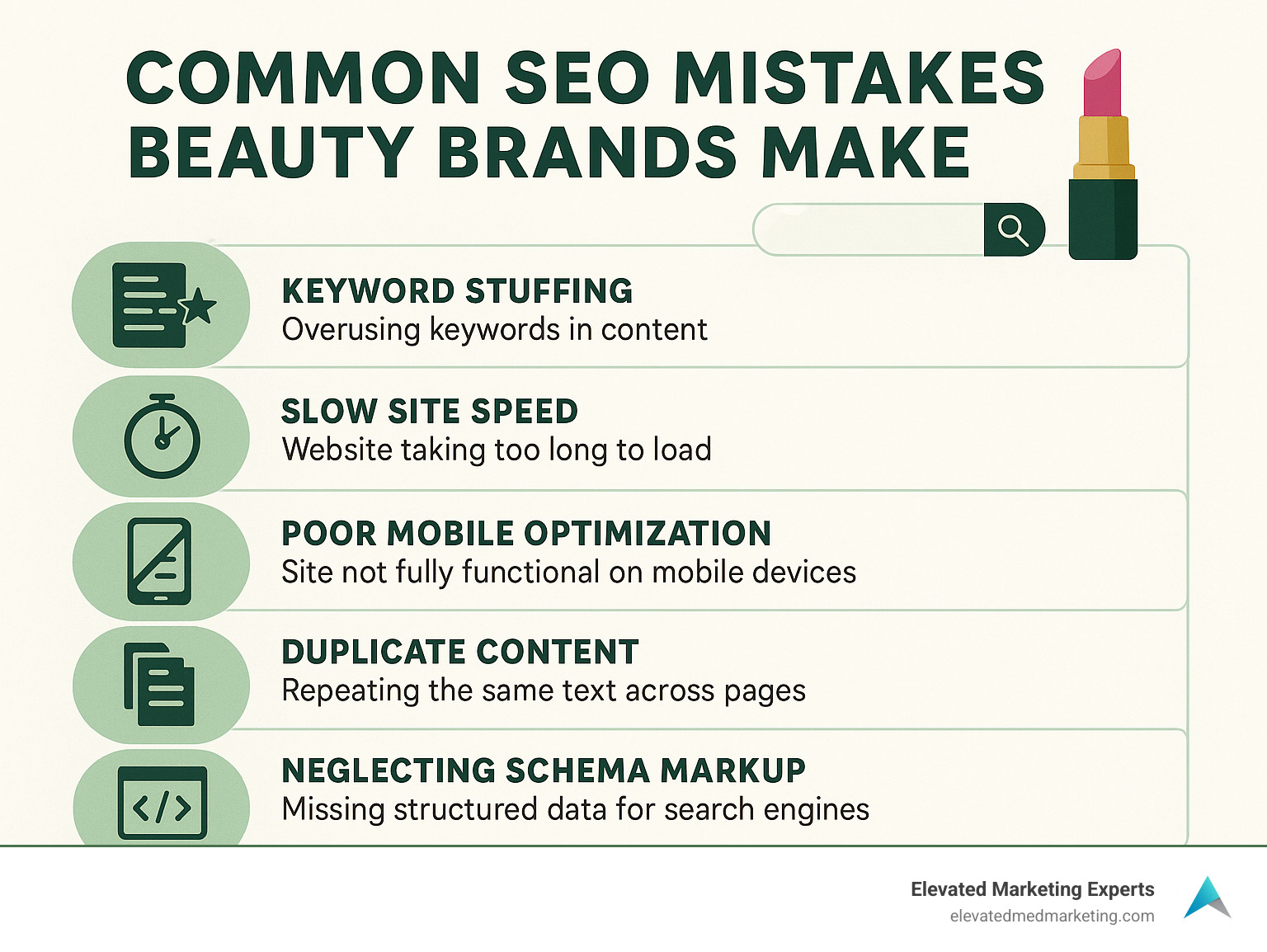
After working with dozens of beauty brands, we’ve seen some common cosmetics SEO mistakes that can derail even the most gorgeous websites:
Neglecting mobile optimization is particularly problematic when 75% of beauty shoppers browse on their phones. Those beautiful desktop-designed product galleries need to work just as well on smaller screens.
Slow-loading image galleries frustrate potential customers, especially when showcasing before/after results or shade ranges. We’ve seen bounce rates drop by 38% after properly compressing images without sacrificing quality.
Duplicate content happens frequently when brands use manufacturer descriptions across multiple products or don’t customize descriptions for different retailers. Search engines value unique, helpful content that adds value beyond the basics.
“Not having a fully functional website in today’s world is akin to not existing,” as one digital marketing expert bluntly put it. Your online presence is often the first impression potential customers have of your brand—make it count.
Conclusion & Call to Action
In the competitive $800 billion beauty industry, cosmetics SEO isn’t just another marketing tactic—it’s essential for sustainable growth. The strategies we’ve outlined in this guide work together like a well-formulated skincare routine: each element improves the others for maximum results.
The journey requires patience (sorry, no “instant results” here!), consistency, and adaptability. “SEO is about more than climbing rankings; it’s about making meaningful connections with your audience and converting them into customers.”
At Liftd Marketing Experts, we specialize in helping aesthetic and wellness practices grow their online presence through custom cosmetics SEO strategies. Our industry experience means we understand the unique challenges beauty brands face—from showcasing before/after galleries to explaining complex ingredients in accessible ways.
Ready to transform your beauty brand’s online visibility? Start with a comprehensive SEO audit to identify opportunities, then develop detailed buyer personas that truly capture your ideal customers’ search behaviors. With strategic keyword research and thoughtful content creation, your beautiful products can connect with the people who need them most.
Contact us today for a free consultation to discuss how our specialized cosmetics SEO services can help your beauty brand glow in the digital landscape. After all, exceptional products deserve exceptional visibility.
Visit our website to learn more about how we can help improve your organic SEO.


