

Cosmetic Surgery Digital Strategy: 7 Proven Powerful Secrets 2025
The Modern Patient Journey: Understanding Cosmetic Surgery Digital Strategy
A Cosmetic Surgery Digital Strategy is a comprehensive online marketing approach that combines website optimization, SEO, paid advertising, social media, content marketing, and reputation management to attract and convert prospective patients seeking aesthetic procedures.
Key Elements of an Effective Cosmetic Surgery Digital Strategy:
- Mobile-optimized website with before/after galleries and clear CTAs
- Local SEO targeting geographic-specific keywords
- Paid advertising on Google and social platforms with precise demographic targeting
- Content marketing that educates patients about procedures
- Social media presence on platforms where your target demographic engages
- Online reputation management to build trust through reviews
- Email marketing for patient nurturing and retention
In today’s digital-first world, Cosmetic Surgery Digital Strategy isn’t just a nice-to-have—it’s essential for practice growth. The global cosmetic surgery market reached $55.65 billion in 2022 and is projected to grow to $67.91 billion by 2030, making it more competitive than ever. Over 70% of cosmetic surgery patients now begin their journey online, researching procedures, comparing providers, and reading reviews before booking a consultation.
The days of relying solely on physician referrals or word-of-mouth are long gone. Modern aesthetic practices that thrive understand that digital presence directly impacts patient acquisition. One case study showed a practice using a comprehensive digital strategy increased new leads by 67% and boosted conversions by an impressive 329%.
The 2024 Digital Landscape for Cosmetic Surgeons
The cosmetic surgery industry is experiencing a digital change unlike anything we’ve seen before. TikTok has emerged as a powerful platform for aesthetic content, with the hashtag #PlasticSurgery generating billions of views. Meanwhile, Instagram continues to deliver the highest engagement for cosmetic surgery content, especially among younger audiences seeking procedures like rhinoplasty and breast augmentation.
Local intent searches have become dominant, with 63% of patients preferring providers closer to their home. This trend has made local SEO more critical than ever for cosmetic surgery practices. Additionally, mobile-first browsing is now the standard, with more than half of all web traffic coming from mobile devices.
The industry itself is growing at an impressive 9.6% compound annual growth rate, but this growth comes with increased competition. Today’s patients rely heavily on reviews, with 90% using online reviews to help them decide on a provider. In fact, 43% would even go out-of-network if a surgeon has excellent reviews.
According to scientific research published in the Aesthetic Surgery Journal, social media has a profound influence on cosmetic procedure trends. The study found that nearly two-thirds of people believe social media before-and-after pictures influence the types of cosmetic procedures performed, and roughly half of patients report being influenced by social media to consider undergoing cosmetic procedures.
Why Digital Marketing Is Non-Negotiable
With the global cosmetic surgery market size reaching $55.65 billion in 2022, competition for patient attention has never been fiercer. Even the most skilled surgeons with impeccable credentials can struggle to fill their appointment books without the right Cosmetic Surgery Digital Strategy.
Consider this real-world example: A leading cosmetic surgery center implemented a comprehensive digital strategy that brought in 67 new leads and increased conversions by an astonishing 329%. Similarly, another plastic surgery group saw a 30% increase in website traffic and a 20% increase in patient bookings after optimizing their Google Ads campaigns.
Key Trends in Patient Acquisition
Several emerging trends are reshaping how cosmetic surgery practices acquire patients in 2024:
Voice search optimization is becoming essential as more patients use Siri, Alexa, and Google Assistant to find local providers. This requires adapting your SEO strategy to include conversational keywords and question-based phrases.
Virtual consultations have moved from a pandemic necessity to a permanent feature. Practices that offer seamless virtual consultation experiences are expanding their geographic reach and pre-qualifying patients more effectively.
Video Q&A sessions on platforms like Instagram Live and Facebook Live are helping surgeons connect with potential patients in real-time, answering questions and building rapport.
AI chatbots are revolutionizing patient engagement by providing instant responses to common questions, helping schedule appointments, and qualifying leads 24/7.
Cosmetic Surgery Digital Strategy Playbook

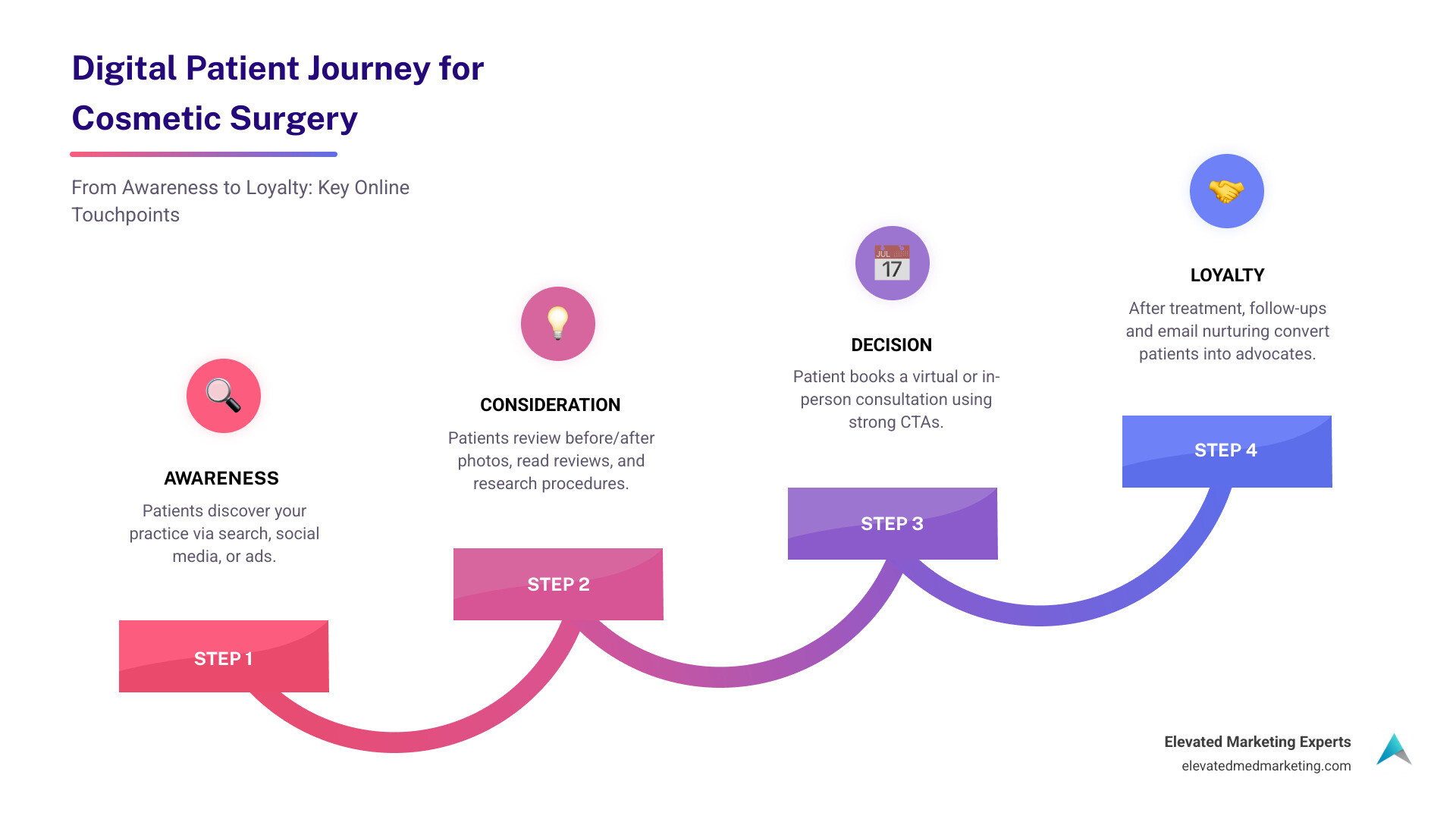
When discussing Cosmetic Surgery Digital Strategy with practice owners, it’s important to emphasize that it’s not just about getting more clicks—it’s about creating a seamless journey that guides the right patients to your door. The most successful practices understand this isn’t a piecemeal approach but rather a full-funnel strategy that nurtures potential patients from first findy through to becoming loyal advocates.
Think of your strategy as an orchestra where every instrument plays in harmony. Your website, social platforms, email campaigns, and review management all work together to create a consistent patient experience. The key is aligning these marketing efforts with your actual capacity—there’s nothing worse than generating more leads than your surgeons can reasonably consult with!
Local SEO and the Cosmetic Surgery Digital Strategy
Cosmetic procedures are deeply personal, and most patients want a surgeon they can easily visit. With 63% of patients preferring providers close to home, your local visibility can make or break your practice growth.
Your Google Business Profile is essentially your digital storefront, and it deserves special attention. Beyond just accurate NAP (name, address, phone) information, make it come alive with high-quality images of your facility, regular posts about your services, and a direct link to schedule consultations.
Creating location-specific pages on your website works wonders for connecting with local patients. Rather than generic content, weave in local landmarks, showcase testimonials from patients in that community, and provide specific directions from major areas.
| Local SEO Tactic | Organic Approach | Paid Approach |
|---|---|---|
| Google Business Profile | Optimize profile, post weekly updates | N/A |
| Local Keywords | Target in website content | Bid on in Google Ads |
| Reviews | Request organically from patients | Use review management software |
| Local Citations | Manual submissions to directories | Citation building services |
| Local Content | Blog about local events, trends | Boost posts on social media |
Paid Ads in a Cosmetic Surgery Digital Strategy
While organic strategies build valuable long-term assets, paid advertising delivers that immediate visibility many practices need. Think of it as the express lane to getting in front of motivated patients.
Google Search Ads allow you to capture those high-intent searches like “best rhinoplasty surgeon near me.” The magic happens when you connect these searches to procedure-specific landing pages rather than your homepage.
Google Performance Max campaigns display your ads across Google’s entire ecosystem—from Search to YouTube to Gmail. They’re particularly effective when you’re promoting multiple procedures to different demographic groups.
Facebook and Instagram Lead Ads have been game-changers for many practices. These ads allow potential patients to submit their information without ever leaving the platform—reducing friction dramatically.
Content & Website Optimization
Your website isn’t just an online brochure—it’s often the deciding factor in whether a patient chooses you over competitors. A staggering 97% of patients say their website experience influences their decision.
Before-and-after galleries are the crown jewels of any cosmetic surgery website. Patients want to see your work on people who look like them. Ensure your galleries use consistent lighting and angles, include diverse patient types, and provide context about the procedures shown.
Mobile optimization isn’t optional anymore—it’s essential. With over half of web traffic coming from smartphones, your site needs to shine on small screens. Fast loading times (under 3 seconds), easy-to-tap buttons, and readable fonts make all the difference.
Patient Retention, Reputation & Trust Signals

Let’s talk about something that can make or break your practice—your online reputation. Trust isn’t just important—it’s everything. Did you know that 90% of potential patients check your reviews before even considering booking a consultation? Even more surprising, 43% of patients would choose an out-of-network provider simply because their reviews shine brighter than the rest.
Building that five-star reputation doesn’t happen by accident. It requires a thoughtful, proactive approach to gathering feedback from your happiest patients. Many successful practices use online reputation management (ORM) software that does the heavy lifting—automatically sending review requests to satisfied patients after their follow-ups and alerting your team when someone leaves feedback that needs attention.
Your website should proudly display trust signals that matter to potential patients. These include RealSelf “Verified” badges, board certification emblems, and memberships in prestigious professional associations. These visual cues instantly communicate credibility and expertise to visitors who might be on the fence.
Building a Five-Star Reputation
The secret to collecting glowing reviews isn’t actually a secret—it’s all about timing and making the process effortless. The practices seeing the best results with their Cosmetic Surgery Digital Strategy follow a simple formula:
First, they ask for reviews at the perfect moment—typically during a follow-up appointment when patients are seeing their results and feeling their most confident and grateful. Second, they make reviewing ridiculously easy by texting or emailing direct links to their preferred platforms right when patients are most likely to act. Third, they respond thoughtfully to every single review, showing both current and potential patients that they truly care.
Even five-star practices occasionally receive negative feedback. When this happens, having a rapid response playbook is crucial. Respond within 24 hours, show genuine empathy, and provide contact information to take the conversation offline. Never argue, get defensive, or confirm the person was a patient (hello, HIPAA!).
According to research on patient reviews, 65% of patients consider it important for providers to respond to online reviews. Even more telling, 85% would likely dismiss negative reviews if they saw thoughtful responses from the practice.
Legal, Ethical & Compliance Guardrails
Navigating the regulatory landscape in aesthetic medicine marketing can feel like walking through a minefield. But staying compliant doesn’t mean sacrificing effective marketing; it just means being smart about it.
HIPAA reminders should be built into every aspect of your marketing workflow. Those gorgeous before-and-after photos that drive so many consultations? Always get written consent specifically for marketing purposes, separate from surgical consent forms.
When crafting ad copy, avoid making guarantees about results that could come back to haunt you. Instead of “You’ll look 10 years younger,” try “Many patients report looking more refreshed and youthful.” Skip superlatives like “best” or “most experienced” unless you have concrete data to back up these claims.
For social media campaigns and paid advertising, implement age-restricted targeting to ensure your marketing reaches appropriate audiences. Most platforms make this easy to set up, and it’s an important ethical consideration, especially for certain procedures.
Measuring ROI, Budgeting & Future Innovations
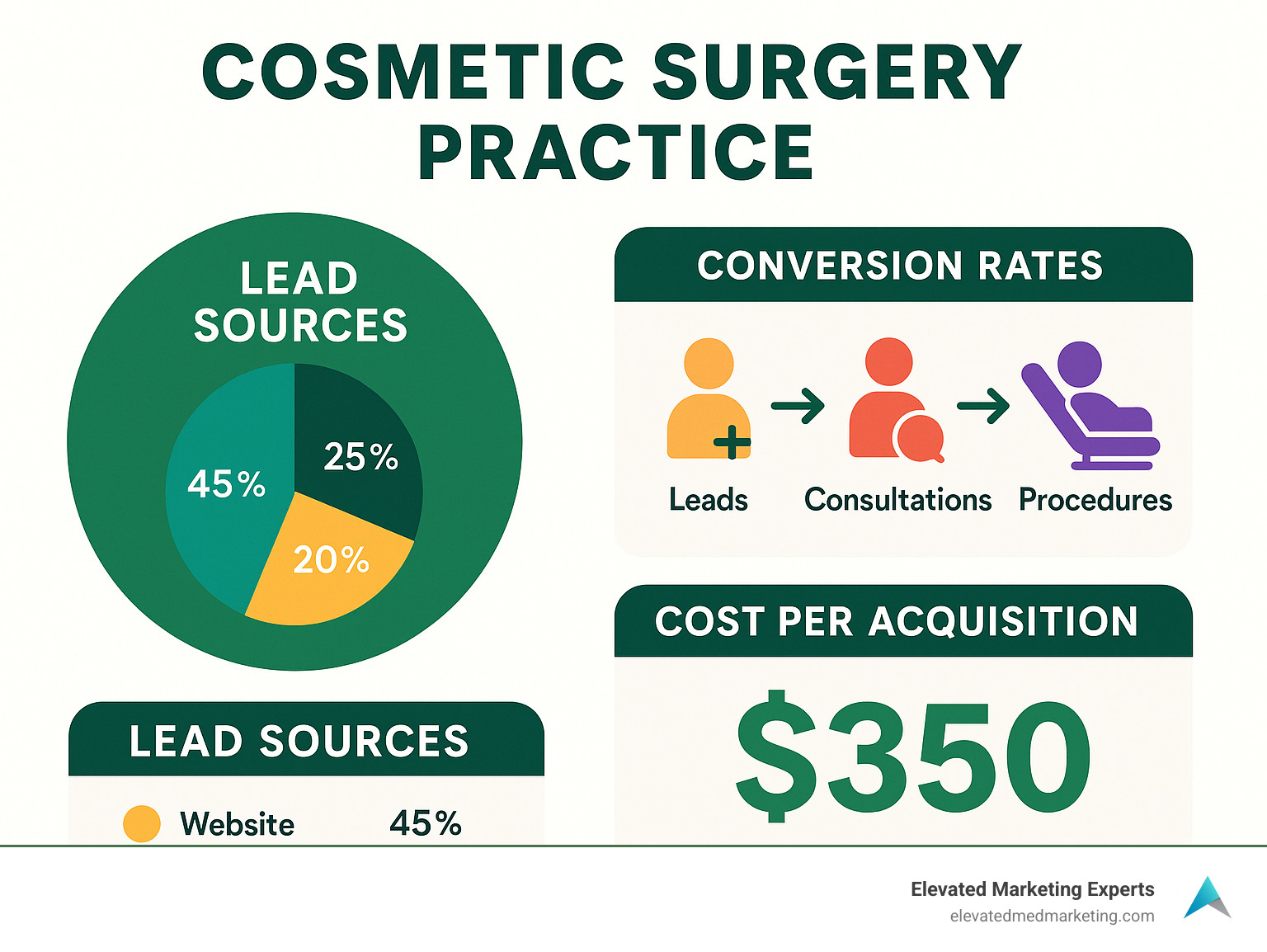
The smartest cosmetic surgery practices don’t see marketing as an expense—they view it as an investment that should deliver measurable returns. When implementing a Cosmetic Surgery Digital Strategy, track what actually matters through customized KPI dashboards that reveal the true story behind marketing efforts.
Your dashboard should track website traffic and conversion rates, but the real gold lies in understanding lead quality, not just quantity. Many practices waste thousands on campaigns that generated plenty of leads—but none that converted to actual procedures. That’s why focusing on metrics like cost per consultation and consultation-to-procedure conversion rates is crucial.
Closed-loop reporting connects every marketing dollar spent directly to revenue generated, eliminating the guesswork about which channels deliver real value. One practice finded their Instagram efforts were driving three times more high-value procedures than their Google Ads, despite generating fewer initial leads.
With Google Analytics 4 now the standard, setting up meaningful event tracking to follow the patient journey across all devices and channels is essential. This isn’t just tech talk—it’s about understanding how real people make decisions about something as personal as cosmetic surgery.
While costs vary widely by market and procedure, successful practices aim to keep their marketing acquisition costs below 10-15% of procedure revenue. For a $10,000 facelift, that means investing up to $1,500 to acquire that patient—which feels much more reasonable when you consider their potential lifetime value and referrals.
Attribution Models That Matter
Most practices struggle to understand which marketing efforts actually influence patient decisions, which is why attribution modeling matters so much.
First-touch attribution is helpful for understanding which channels create initial awareness, but it doesn’t tell the whole story. We often see Google organic search dominating first-touch, especially for procedure-specific terms.
Last-touch attribution highlights closing channels but misses the journey. Email and direct website visits often get inflated importance in this model.
The reality? Your patients typically interact with 7-10 marketing touchpoints before booking that consultation. Multi-touch attribution distributes credit across all touchpoints, giving you the most honest picture of what’s working.
Emerging Tech Shaping the Next Cosmetic Surgery Digital Strategy
The future of Cosmetic Surgery Digital Strategy is already arriving, and practices that accept these innovations are seeing remarkable results.
AI content tools are revolutionizing how practices create personalized content at scale. Instead of generic blogs, practices can use AI to analyze thousands of actual patient questions to create targeted content that actually answers what prospective patients want to know.
Voice search optimization is becoming increasingly important as patients ask Alexa and Siri about procedures and recovery times. Adapting content to match how people actually speak—focusing on natural questions rather than keyword-stuffed phrases—is essential.
The most exciting development is the integration of immersive 3D imaging into the digital patient journey. These tools allow patients to visualize potential results before ever setting foot in your office.
Frequently Asked Questions about Cosmetic Surgery Digital Strategy
How much should a cosmetic surgery practice budget for digital marketing?
Most thriving cosmetic surgery practices invest between 7-12% of their annual revenue into marketing efforts. The digital portion typically accounts for about 70-80% of that total marketing budget.
To put that in perspective, if your practice brings in $1 million yearly, you’re looking at roughly $70,000-$96,000 for your digital marketing activities.
Your exact budget should be customized to your unique situation. Are you a new practice needing to make a splash? You might need to invest on the higher end to gain visibility. Already established with a waiting list of referrals? You might get away with a more modest budget.
Always consider the lifetime value of each patient. Someone who comes back for multiple procedures or sends their friends your way can generate significant revenue over time, making your initial investment to acquire them quite reasonable in comparison.
Which social media platform delivers the best ROI for different age groups?
After years of working with cosmetic surgeons, clear patterns have emerged about which platforms work best for specific age groups.
For 18-34 year old patients:
Instagram consistently delivers the highest engagement and return. The visual nature makes it perfect for showcasing your work. TikTok is the rising star, especially for non-invasive procedures that appeal to younger patients. YouTube remains valuable for those doing deeper research into procedures.
When targeting 35-54 year olds:
Facebook typically gives you the most bang for your buck. This demographic spends significant time there and responds well to both organic and paid content. Instagram is increasingly effective, especially with women in this age range. LinkedIn can work wonders if you’re targeting professionals interested in procedures with minimal downtime.
For your 55+ audience:
Facebook remains the go-to platform, as this age group has adopted it more than any other social channel. YouTube performs well for educational content about anti-aging procedures. Pinterest can be remarkably effective for reaching women in this demographic who are researching aesthetic options.
How do I ensure my ads comply with medical advertising regulations?
Navigating the regulatory landscape of medical advertising requires careful attention to detail:
Avoid making guarantees about results. Instead of promising “You’ll look 10 years younger,” opt for “Many patients report looking more refreshed.”
Before/after images require special attention. Always get written consent specifically for marketing purposes – separate from surgical consent forms.
Include appropriate disclaimers about risks and variability of results. A simple “Results vary by individual” can suffice in many cases.
Be transparent about your credentials. Only claim board certifications you actually hold, and be clear about your specific training.
Avoid comparative claims unless you have solid evidence to back them up.
Each platform has its own rules too. Facebook, Google, and other advertising platforms have specific requirements for medical advertising that change frequently.
Age targeting is essential – ensure ads for procedures reach appropriate age groups.
Conclusion
Growing a successful cosmetic surgery practice in today’s digital world requires more than just surgical skill. It demands a thoughtful, integrated approach to your online presence.
The most successful practices have mastered what we call the “digital ecosystem” – where every element of their Cosmetic Surgery Digital Strategy works together harmoniously. They don’t just have a nice website or run occasional ads. They’ve built a comprehensive system that captures potential patients at every stage of their journey.
When someone is considering a procedure, they might start with a Google search, watch some videos, check your reviews, visit your website, follow you on social media, and finally book a consultation. Each touchpoint matters, and they all need to tell a consistent, compelling story about your practice.
What makes this approach work is constant refinement. The practices seeing the best results are those that regularly analyze their performance data and make adjustments. They know which channels bring in their ideal patients and which messaging resonates most effectively.
But perhaps most importantly, they never lose sight of the human element. Behind every click, form submission, and phone call is a real person making a significant decision about their appearance and health. The most effective digital strategies balance technical optimization with genuine, patient-centered messaging that builds trust.
At Liftd Digital Marketing, we’ve helped countless cosmetic surgery practices steer this complex landscape. We understand the unique challenges you face – from stringent advertising regulations to the delicate nature of showcasing before-and-after results. Our team brings specialized experience in the aesthetic medicine space, allowing us to create strategies that actually work for your specific practice goals.
Whether you’re struggling to stand out in a competitive market, looking to attract more of your ideal patients, or simply trying to make sense of your marketing ROI, we’re here to help. Our comprehensive approach ensures that your website, SEO, paid advertising, content, social media, and reputation management all work together cohesively.
Ready to transform your practice’s digital presence? Let’s talk about how we can help you attract more qualified patients and grow your practice. Learn more about our cosmetic surgery digital strategy services or reach out for a friendly, no-pressure conversation about your practice goals.


