

Challenges for plastic surgery practice on online marketing: 5 Critical Mistakes to Avoid in 2025
Navigating the Digital Dilemma: Online Marketing Challenges for Plastic Surgeons
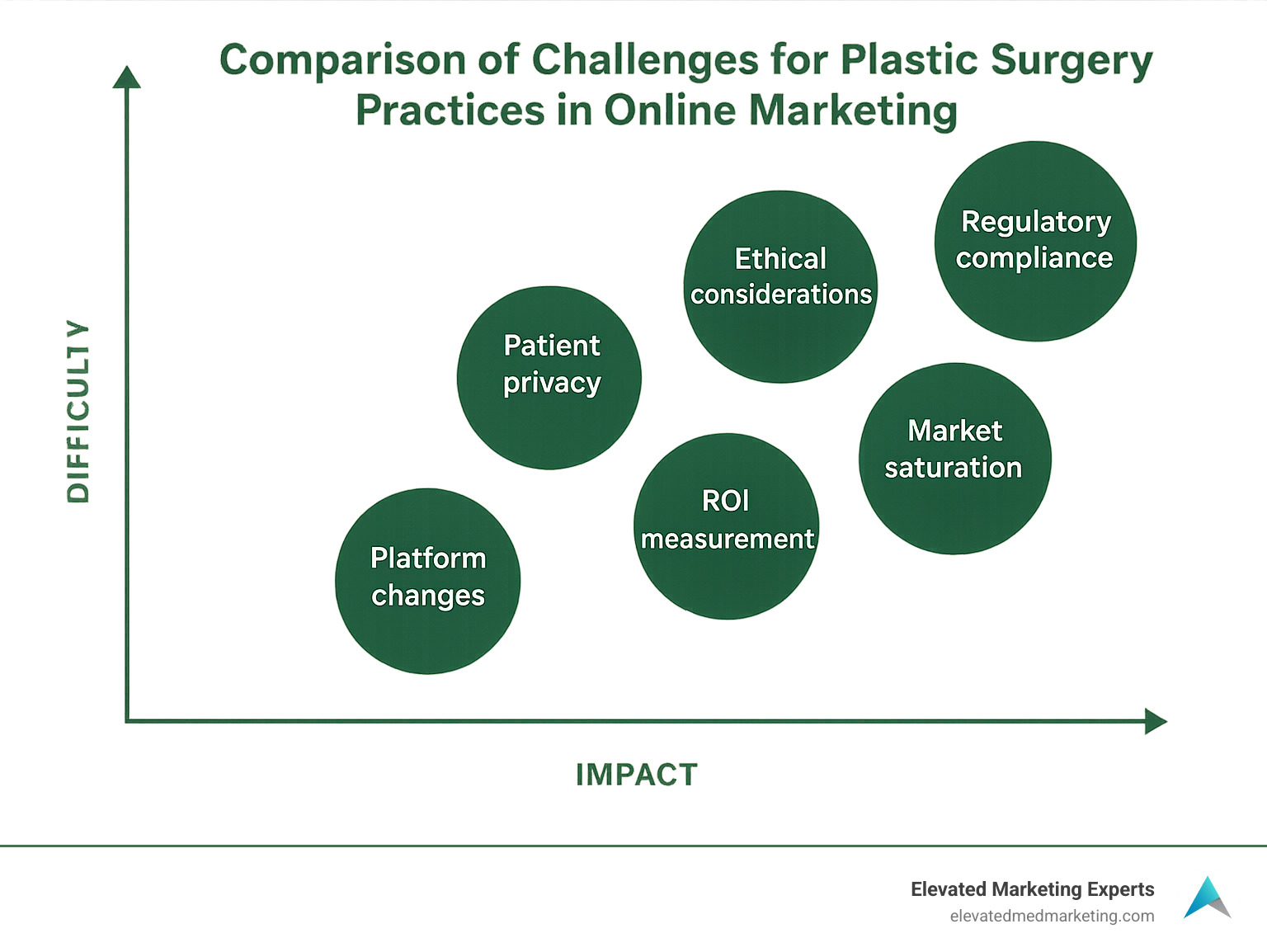
The main challenges for plastic surgery practice on online marketing include:
- Regulatory compliance with FTC, FDA, state medical boards, and HIPAA requirements
- Maintaining ethical standards while using persuasive marketing tactics
- Managing patient privacy especially with before/after photos and testimonials
- Combating unrealistic expectations fueled by social media filters and influencers
- Standing out in an increasingly saturated digital marketplace
- Measuring ROI while respecting patient confidentiality
- Adapting to rapid platform changes and evolving advertising restrictions
The challenges for plastic surgery practice on online marketing have intensified dramatically as the cosmetic industry shifts from traditional advertising to digital channels. With over 7.4 million surgical and nonsurgical procedures performed annually in the United States alone, the competition for patient attention has never been fiercer. This digital battleground presents unique obstacles that go far beyond typical marketing concerns.
According to recent studies, 57% of patients now research plastic surgery information online, with 77% turning to search engines as their first stop. This digital shift has created a complex landscape where ethical considerations, regulatory compliance, and effective marketing must somehow coexist.
“When you talk to everyone, you are really talking to no one,” notes one marketing expert, highlighting the struggle many practices face in defining their target audience amidst the noise.
The rise of social media has further complicated matters, with platforms like Instagram driving a documented 31% increase in surgery requests. Yet these same platforms enforce increasingly strict policies on medical advertising, creating a frustrating paradox for legitimate practitioners.
While many practices understand the importance of digital presence, they often underestimate the specialized knowledge required to steer these waters successfully. From HIPAA-compliant content strategies to managing the delicate balance between patient education and promotion, the challenges require both technical expertise and ethical vigilance.
I’m Joe Amaral, a digital marketing expert who has helped numerous plastic surgery practices overcome the challenges for plastic surgery practice on online marketing through my work with multiple marketing startups and by implementing cutting-edge analytics and ethical marketing strategies.
Understanding the Regulatory & Ethical Minefield
Picture this: you’re trying to promote your plastic surgery practice online, but it feels like walking through a minefield blindfolded. You’re not alone! The regulatory landscape for plastic surgery marketing is incredibly complex, with multiple governing bodies watching your every digital move.
In the US, you’ve got the Federal Trade Commission (FTC) making sure you’re not making promises you can’t keep about your procedures or results. Then there’s the Food and Drug Administration (FDA) monitoring how you talk about medical devices and procedures. And don’t forget your state medical board, which often has even stricter rules than the federal agencies!
On top of all that, there’s HIPAA – the ever-present guardian of patient privacy. This becomes particularly tricky when your most compelling marketing assets are those dramatic before-and-after photos and glowing patient testimonials.
It’s worth noting what Dr. Daniel Gould, a board-certified plastic surgeon and researcher, finded: “Only 4% of #PlasticSurgery posts on Instagram come from board-certified plastic surgeons.” This eye-opening statistic shows how non-specialists and influencers with no medical training have flooded the digital space, often ignoring professional standards completely.
Why Ethics Matter More Online
The internet is like a megaphone for your marketing – which means ethical missteps get amplified too. When you post something misleading online, thousands of potential patients might see it before any regulatory body can step in. Plus, visual platforms like Instagram and TikTok make it all too easy to create unrealistic expectations through filters, editing, and cherry-picked results.
The four pillars of medical ethics take on new meaning in the digital world:
Autonomy: Are your marketing messages respecting patients’ right to make truly informed decisions, or are you pushing emotional buttons related to insecurity and fear?
Beneficence: Does your content clearly put patient welfare first, or does it prioritize filling your appointment book?
Non-maleficence: Are you preventing harm by being upfront about risks and recovery realities?
Justice: Is your marketing targeting vulnerable groups or promoting impossible beauty standards?
Research published in the Journal of Plastic and Reconstructive Surgery found something concerning: aggressive marketing can actually undermine informed consent by minimizing risks and setting patients up for disappointment. When your marketing only shows perfect outcomes without mentioning potential complications, patients come to consultations with skewed expectations.
The Rise of Cross-Border Patients & Mixed Regulations
The internet doesn’t recognize national boundaries – and that creates another layer of complexity for plastic surgeons. Medical tourism is booming, with patients researching and contacting surgeons worldwide.
This global reach means you might need to steer multiple regulatory frameworks simultaneously. For example, if you’re a plastic surgeon in Miami, you might notice that 20% of your website visitors are from Latin American countries, each with different advertising rules. Similarly, a surgeon in Seoul might be attracting English-speaking patients from the US, Australia, and Europe – regions with very different approaches to regulation.
South Korea offers a fascinating case study. It has become a global hotspot for cosmetic procedures, with its plastic surgery industry masterfully using social media to draw international patients. Korean clinics frequently use dramatic before-and-after images that would actually violate advertising guidelines in places like the UK, where the Advertising Standards Authority (ASA) prohibits such comparative visuals.
As one regulatory expert points out, “International cooperation in regulating digital marketing for cosmetic procedures remains in its infancy, creating a regulatory gray zone that some providers exploit.”
The challenges for plastic surgery practice on online marketing are multiplied when operating in this global context, requiring a nuanced understanding of various cultural and regulatory environments.
Top Challenges for Plastic Surgery Practice on Online Marketing

The digital landscape presents a unique maze of challenges for plastic surgery practice on online marketing that go well beyond simply following regulations. Let’s explore the real-world obstacles that make promoting aesthetic services online so tricky.
Challenge #1 – Balancing Persuasion with Patient Autonomy
Finding the sweet spot between effective marketing and respecting patient choice is perhaps the most fundamental challenge for plastic surgery practice on online marketing. Unlike selling shoes or software, you’re marketing medical procedures with real risks and life-changing outcomes.
Think about “relational autonomy” – the idea that patient decisions don’t happen in a vacuum but are shaped by social influences, including your marketing. When your content plays on insecurities, it can undermine genuine patient choice. As one ethicist eloquently put it:
“The line between informing a patient about available solutions and creating a ‘problem’ that didn’t exist is often blurry in cosmetic marketing.”
Those copywriting tactics that work beautifully for other industries? They can become ethically questionable when applied to plastic surgery. Creating fake scarcity with “limited spots this month” messaging, using fear-based appeals about aging, or suggesting everyone “needs” a specific procedure might drive conversions, but they can also compromise the informed consent process by putting undue pressure on vulnerable individuals.
Challenge #2 – Social Media Hype, Filters & Unrealistic Expectations
Social media has been a game-changer for plastic surgery marketing, but not always in positive ways. Research in JAMA Facial Plastic Surgery identified “Snapchat dysmorphia” – where patients actually bring in their filtered selfies as surgical goals, wanting to look like their digitally-improved selves.
The numbers tell a compelling story. Photo sharing on social platforms has driven a 31% jump in surgery requests. Hashtags like #plasticsurgery rack up billions of views on TikTok. And study after study confirms the direct link between social media use and body dissatisfaction.
“Social media has been demonstrated to serve as a critical tool for plastic surgeons, facilitating patient engagement and outreach,” explains researcher Dr. Troy Marxen. “However, the same platforms that connect us with patients can also create unrealistic expectations and pressure.”
The constant parade of seemingly “perfect” results can leave potential patients with misconceptions about what’s realistically achievable for their unique anatomy and situation.
Challenge #3 – Complying with Multilayered Advertising Regulations
Navigating the regulatory maze represents another significant challenge for plastic surgery practice on online marketing. What’s perfectly acceptable in one country might get you in hot water in another:
| Region | Key Regulatory Bodies | Notable Restrictions |
|---|---|---|
| United States | FTC, FDA, State Medical Boards | Requires disclosure of material connections in endorsements; restricts “before and after” claims for devices without FDA approval |
| European Union | National Medical Authorities, GDPR | Varies by country; Germany bans “before and after” images on social platforms entirely |
| United Kingdom | ASA, GMC | Prohibits targeting of under-18s; restricts time-limited offers; bans misleading “before and after” photos |
| Australia | AHPRA | Strict guidelines on testimonials; prohibits creating unrealistic expectations |
This patchwork of rules creates particular headaches for practices serving patients across borders or with international reach online. A marketing approach that keeps you compliant in California might violate regulations in Canada or the UK.
Challenge #4 – Protecting Patient Privacy in Visual Content
In an industry where visual proof drives conversions, patient privacy presents a delicate balancing act. Those powerful before-and-after photos that showcase your surgical artistry also carry substantial privacy risks.
HIPAA in the US and GDPR in Europe set strict standards for patient consent when using identifiable images. But even with signed releases, ethical questions linger. How long does consent remain valid? Do patients truly understand the potential reach and permanence of digital content?
As one plastic surgeon shared from personal experience: “I’ve had patients who initially consented to having their photos shared, but later requested removal when they started a new job or relationship. The internet’s permanence creates ongoing privacy management challenges.”
This challenge extends beyond still photos to videos, live-streamed procedures, and patient testimonials – each requiring thoughtful privacy protections and consent processes.
Challenge #5 – Tracking ROI Without Breaching Trust
Measuring marketing success presents unique problems in plastic surgery. While digital marketing allows for sophisticated tracking, many standard analytics practices raise red flags in healthcare settings.
Call tracking might accidentally record sensitive patient information. Pixels and cookies can follow users across medical websites, revealing health interests. CRM systems might inadvertently store protected health information alongside marketing data.
“Conversion attribution is getting more challenging for digital marketers,” according to industry experts, largely due to increased privacy protections in browsers and operating systems. For plastic surgery practices, these challenges are compounded by healthcare privacy regulations.
The tension between comprehensive tracking and patient privacy creates a difficult tightrope walk. You need data to optimize your marketing spend, but your analytics approach can’t compromise patient confidentiality or violate regulations.
At Liftd Marketing Experts, we understand these unique challenges for plastic surgery practice on online marketing because we specialize exclusively in helping aesthetic practices steer these complex waters. Our experience working with plastic surgeons and medical spas means we’ve developed ethical, compliant approaches that still deliver measurable results.
Data-Driven Solutions & Best Practices

Facing the challenges for plastic surgery practice on online marketing might seem overwhelming, but there’s good news—you don’t have to steer these waters alone. At Liftd Marketing Experts, we’ve developed practical, ethical approaches that actually work in the real world.
The secret sauce? Building your marketing on a foundation of E-E-A-T (Experience, Expertise, Authoritativeness, and Trustworthiness). This isn’t just about satisfying Google’s algorithms—though it certainly helps with SEO. It’s about creating content that genuinely educates patients before trying to sell them anything.
We’ve seen that practices embracing transparency consistently outperform those taking shortcuts. When you prominently display your board certification credentials, explain risks in plain English that anyone can understand, and show realistic (not manipulated) before-and-after photos, you build the kind of trust that turns into lasting patient relationships.
This isn’t just feel-good advice—it’s backed by data showing that ethical marketing leads to higher patient lifetime value and more referrals. Turns out doing the right thing is also good business!
Crafting Content That Educates Before It Sells
Let’s face it—nobody enjoys feeling like they’re being sold to, especially when considering something as personal as cosmetic surgery. That’s why education-first content works so well.
When you answer the questions patients are already asking in their search bars, you position yourself as a trusted guide rather than a pushy salesperson. Our most successful clients create content that addresses common misconceptions, explains procedures in accessible language, and shares authentic patient journeys—recovery challenges included.
“I was skeptical about blogging at first,” one of our plastic surgeon clients told us, “but now patients come to consultations already informed about what to expect. It makes those conversations so much more productive.”
The numbers back this up—with 57% of patients researching procedures online before making decisions, being their trusted information source gives you a tremendous advantage. This approach satisfies the challenges for plastic surgery practice on online marketing while building genuine connections.
Influencer & UGC Playbooks that Pass the Ethics Test
Working with influencers can be powerful—but also perilous—in aesthetic medicine. The key is establishing clear boundaries from day one.
We help our clients develop comprehensive contracts that spell out exactly what influencers can (and cannot) say about procedures. This includes requiring proper disclosure hashtags, ensuring influencers have actually experienced the procedures they’re promoting, and mandating balanced messaging that acknowledges recovery realities.
In our experience, micro-influencers with smaller but highly engaged audiences often deliver better results than celebrities with massive followings. These partnerships feel more authentic to audiences and typically generate higher engagement rates.
One practice we work with created a brilliant “recovery diary” series with a local influencer, documenting not just the glamorous “after” but the swelling, bruising, and emotional journey. The campaign generated three times the engagement of their previous polished influencer partnerships.
Privacy-Safe Visuals & Testimonials
Visual content is the lifeblood of plastic surgery marketing, but it must be handled thoughtfully. We help practices develop strategies that showcase results while respecting patient dignity and privacy.
Comprehensive consent forms are non-negotiable, but we go further by helping practices implement “consent renewal programs” where they periodically check if patients still feel comfortable with their images being used. This extra step demonstrates respect and builds tremendous goodwill.
When full identification isn’t appropriate, we get creative with de-identification techniques like strategic cropping and pixelation. We also help practices develop alternative visualization methods including 3D renderings and animations that effectively illustrate concepts without using actual patient photos.
One innovative approach we’ve implemented is offering patients a menu of testimonial options—from full identification to first-name-only to completely anonymous sharing. This empowers patients to control their own stories while still providing valuable social proof for your practice.
By thoughtfully addressing these challenges for plastic surgery practice on online marketing, you can build a digital presence that attracts the right patients while maintaining the highest ethical standards. Learn more about our SEO services designed specifically for aesthetic practices.
Measuring Success Without Crossing Ethical Lines

Let’s talk about measuring success in your marketing efforts – without stepping over those important ethical boundaries. As a plastic surgeon, you need data to improve your practice’s visibility, but you also have a higher responsibility to maintain patient trust and confidentiality.
Finding the right balance between effective analytics and ethical considerations isn’t just good practice – it’s essential for long-term success. The good news? You don’t have to sacrifice one for the other.
The most successful practices we work with at Liftd Marketing Experts focus on meaningful metrics that respect patient privacy. Rather than obsessing over raw lead numbers, they track indicators that tell a more complete story, like consultation conversion rates – the percentage of inquiries that turn into actual consultations. This metric gives you insight without compromising patient information.
Content engagement metrics offer another valuable window into what resonates with potential patients. When someone spends five minutes reading your rhinoplasty recovery page instead of bouncing after 10 seconds, that’s telling you something important about what matters to them.
I’ve seen practices transform their approach by focusing on patient lifetime value rather than just counting new leads. This shift in perspective naturally aligns marketing with better patient care – exactly what you want! As one surgeon told me, “When I started thinking about the entire patient relationship instead of just getting them in the door, both my marketing and my practice improved.”
Building a Compliance-First Analytics Stack
The technical side of measuring marketing performance requires special attention in the plastic surgery field. The challenges for plastic surgery practice on online marketing include navigating a complex web of privacy regulations while still gathering useful data.
Think of your analytics setup like your surgical instruments – you need the right tools, properly sterilized, used with precision. Start with server-side tagging, which moves data collection from the patient’s browser to your servers. This approach significantly reduces privacy concerns while still providing valuable insights.
A robust consent management platform isn’t just a legal checkbox – it demonstrates respect for your visitors’ privacy choices. When implemented thoughtfully, these consent banners can actually build trust rather than just interrupt the user experience.
“We limit who can see what data in our practice,” shared one of our successful clients. “Our marketing team doesn’t need access to anything that could identify patients, so we use role-based access controls to keep information compartmentalized.” This common-sense approach prevents accidental privacy breaches.
Regular privacy audits of your analytics setup might sound tedious, but they’re like preventative medicine for your marketing program – addressing small issues before they become major problems. One quick audit helped a client find tracking code that was capturing more information than necessary, allowing them to correct it before any compliance issues arose.
Turning Metrics into Continuous Quality Improvement
The real magic happens when you use your ethically-collected data to improve both your marketing and patient care. This creates a virtuous cycle where better information leads to better patient experiences, which in turn generates more positive outcomes to share (appropriately) in your marketing.
Patient feedback loops provide goldmines of insight. When patients consistently mention being surprised by certain aspects of recovery, that’s your cue to improve your pre-procedure educational content. One practice finded through surveys that patients were confused about financing options, leading them to create clearer materials that increased consultation bookings by 22%.
I’m particularly fond of tracking Net Promoter Score – that simple question about likelihood to recommend your practice. It’s a powerful metric because it reflects the entire patient experience, from first ad impression through recovery. When your NPS rises, you’re doing something right.
The connection between marketing and clinical outcomes becomes clear when you analyze which educational resources best prepare patients for consultations. As one surgeon noted, “Patients who engaged with our recovery timeline content came in with realistic expectations and reported higher satisfaction afterward.”
Research published in the Aesthetic Surgery Journal confirms what we’ve seen – practices focusing on these balanced, patient-centered metrics tend to build stronger relationships and generate more referrals than those solely chasing lead numbers.
At Liftd Marketing Experts, we help practices implement these thoughtful measurement approaches, ensuring you get the insights you need while maintaining the highest ethical standards. The challenges for plastic surgery practice on online marketing are unique, but with the right analytics approach, you can steer them successfully while building a practice that thrives on trust and quality care.
Frequently Asked Questions about Plastic Surgery Online Marketing
Is it legal to show surgical procedures live on Instagram?
The world of live surgical content is filled with gray areas. While the legality varies depending on where your practice is located, there are some universal considerations that every plastic surgeon should keep in mind before hitting that “go live” button.
First and foremost, patient consent is non-negotiable. Your patient must explicitly agree to being featured in a livestream, understanding exactly how their procedure will be shared and who might see it. This isn’t just a quick signature—it’s a conversation about their comfort and privacy.
Privacy protection must be your priority. Even with consent, you need to ensure no identifying information is accidentally revealed during your broadcast. In the excitement of sharing your technique, it’s easy to overlook details that could compromise patient confidentiality.
Many medical boards have specific guidelines about surgical documentation, and livestreaming often falls into this category. Before planning your content calendar, check what your local board says about sharing procedures in real-time.
Don’t forget that Instagram and other platforms have their own rules too. These platforms regularly update their policies about medical content, and violations can result in account restrictions or removal.
Beyond the legal checkboxes, ask yourself: “Why am I sharing this?” The American Society of Plastic Surgeons emphasizes that surgical content should prioritize dignity and education over spectacle. If you’re streaming solely for entertainment or shock value, you might want to reconsider your approach.
How do I know if my before-and-after gallery violates HIPAA?
Before-and-after galleries are powerful marketing tools, but they can quickly become HIPAA violations without proper precautions. Here’s how to keep your gallery both impressive and compliant:
The foundation of compliance is proper written authorization. Your patients need to sign a HIPAA-compliant form that specifically permits the use of their images for marketing purposes. A general consent form isn’t enough—the authorization should clearly state how and where their photos will be used.
Identifiable features go beyond faces. Unique tattoos, distinctive birthmarks, or even unusual body characteristics can constitute protected health information (PHI) under HIPAA. Even if you’ve cropped out the face, these elements could still make a patient identifiable.
Digital image metadata is often overlooked but critically important. Those photos you’re uploading might contain embedded information like when and where they were taken, or even the device owner’s name. This hidden data needs to be stripped before publishing.
Always respect your patients’ right to change their minds. Under HIPAA, patients can revoke their authorization at any time, and you’re obligated to remove their images when requested. Having a quick takedown process in place is essential.
For complete peace of mind, consult with a healthcare attorney to review your gallery practices. Many of our clients at Liftd Marketing Experts find that implementing standardized photography protocols and regular compliance checks provides an extra layer of protection against unintentional violations.
What KPIs prove my campaigns work without overselling results?
Measuring marketing success in plastic surgery requires a more nuanced approach than simply counting procedures performed. The most ethical and effective metrics focus on the quality of patient interactions rather than just quantity.
Qualified consultation requests tell you more about your marketing effectiveness than raw lead numbers. These are potential patients who understand what you offer and are genuinely interested in exploring options—not just price-shoppers or poor fits for your services.
Track educational content engagement to see how potential patients interact with your information before booking. Are they spending time learning about procedures, recovery, and risks? This indicates they’re making informed decisions, which leads to better satisfaction down the road.
Consultation preparedness is a fantastic metric that connects marketing to clinical outcomes. Ask your providers to rate how well-informed patients seem during initial consultations. Well-prepared patients who arrive with realistic expectations are the direct result of honest, educational marketing.
Don’t underestimate the value of patient satisfaction metrics. Collecting feedback after consultations and procedures helps you understand if your marketing messages aligned with the actual experience. When these align, patient satisfaction soars.
Attribution survey data provides insights directly from patients about what influenced their decision. Simply asking “How did you find us?” and “What information helped you decide to book?” can reveal which marketing channels are truly driving quality consultations.
These challenges for plastic surgery practice on online marketing can seem overwhelming, but focusing on the right metrics makes all the difference. By measuring what truly matters—informed decisions and patient satisfaction—rather than just conversion rates, you’ll build a practice known for integrity as well as results.
At Liftd Marketing Experts, we help practices implement these ethical measurement frameworks that drive sustainable growth without creating pressure to oversell procedures or target vulnerable populations. The result? A practice that thrives on quality relationships rather than volume alone.
Conclusion
The digital landscape has transformed how plastic surgeons connect with patients, but it’s also created a maze of challenges that require both technical skill and ethical awareness to steer successfully.
Throughout this article, we’ve explored the many challenges for plastic surgery practice on online marketing – from regulatory compliance to patient privacy concerns, from managing social media expectations to measuring success ethically. These aren’t just theoretical problems; they’re practical problems that practices face every day.
At Liftd Marketing Experts, we’ve seen how these challenges can either derail a practice’s growth or, when handled properly, become opportunities to demonstrate integrity and build deeper patient trust. Our experience has shown that the most successful practices don’t view ethics and marketing effectiveness as competing priorities – they recognize that in aesthetic medicine, they’re actually complementary.
The practices that truly thrive in this complex environment share some common approaches:
They prioritize patient education in their content, focusing on informing before selling. They practice transparent communication about both benefits and risks, knowing that well-informed patients make better long-term clients. They implement privacy-conscious visual strategies that showcase results while respecting confidentiality. They adopt ethical measurement approaches that provide actionable insights without crossing privacy lines. And they maintain rigorous regulatory compliance across all their marketing channels.
This balanced approach doesn’t just protect your practice – it differentiates it. In a field where trust is everything, ethical marketing isn’t just the right thing to do; it’s also smart business. Patients are increasingly savvy about recognizing authentic, responsible messaging, and they’re drawn to practices that demonstrate these values.
The evolution of plastic surgery marketing continues to accelerate, with new platforms, technologies, and patient expectations emerging constantly. Practices that partner with specialists who understand both the technical capabilities and ethical implications of these tools position themselves for sustainable growth.
Effective marketing isn’t about attracting just any patient – it’s about connecting with the right patients for your practice while upholding the values that made you choose aesthetic medicine in the first place.
For more information about how we help plastic surgery practices develop ethical, effective marketing strategies that drive real growth, visit our digital marketing consulting services.


