

If you’re on the hunt for 40 wellness practice content creation ideas, here’s a quick hit list to satisfy that search intent right away:
– Share daily wellness tips, focusing on mental, physical, and emotional health.
– Create and share workout or meditation videos.
– Offer healthy, easy-to-prepare recipes.
– Post interviews with health experts and influencers.
– Use engaging infographics to explain complex health topics simply.
In today’s digital world, standing out with your wellness practice online can feel like a Herculean task. Particularly for local business owners in the wellness industry, like plastic surgeons or med spa operators, who are striving to make a lasting impact in a crowded space. The challenge here isn’t just about creating content; it’s about crafting content that resonates deeply with your audience, speaks directly to their needs, and inspires them to take action.
Authenticity and transparency are fundamental in bridging the gap between you and your ideal clients. As Danielle Reardon of The Well-Intended points out, leveraging your genuine passion for wellness not only helps create compelling content but also fosters a strong, trust-driven relationship with your audience. This insight offers a powerful foundation for your content creation strategy – where being true to your brand’s voice and values could really set you apart.
Creating valuable, relevant, and engaging content that aligns with the interests and needs of your audience is crucial. Not only does this approach help in establishing your brand as a go-to source for wellness information, but it also enhances your online visibility, driving both engagement and conversion.
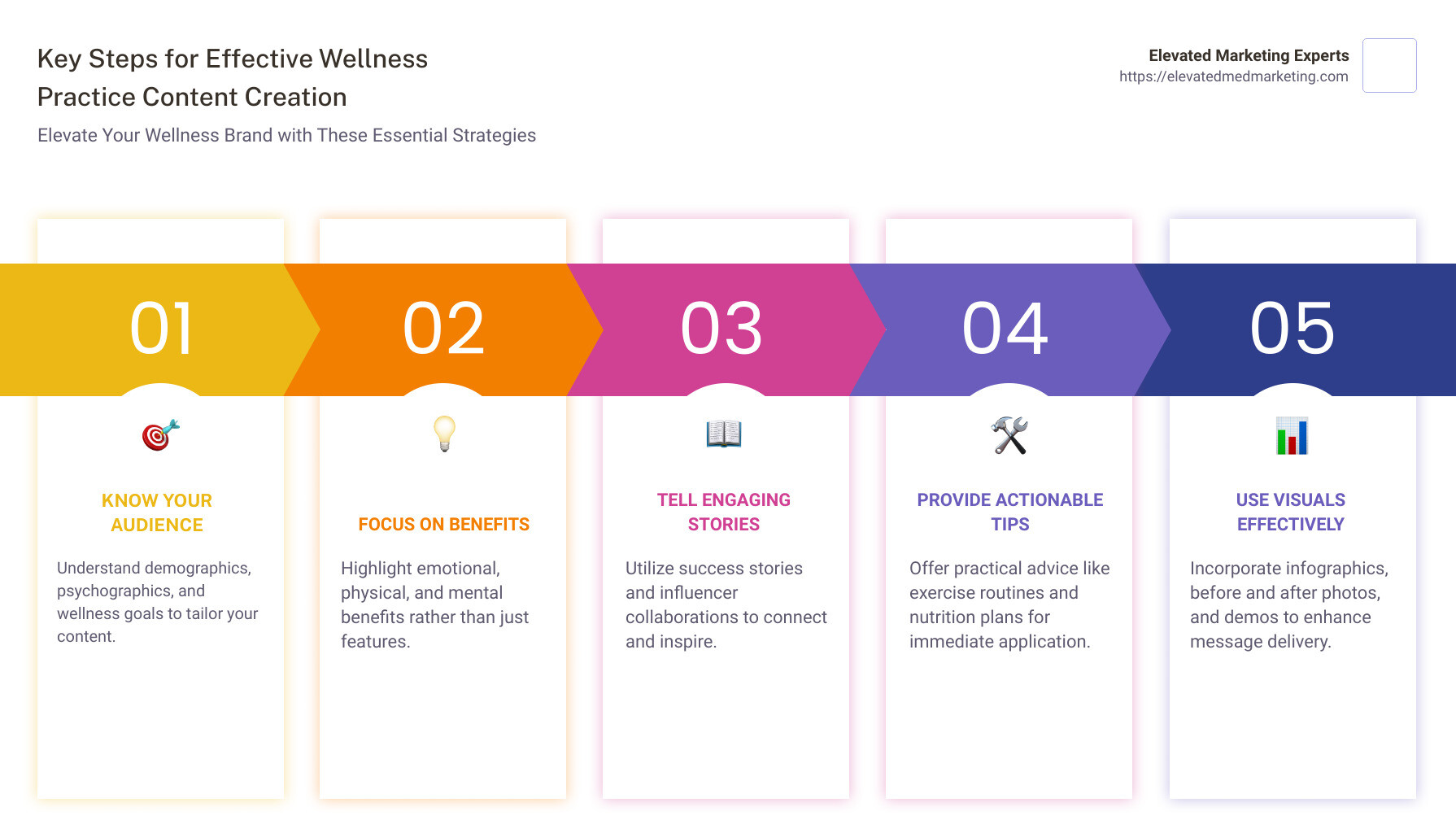
Embrace this journey with the keen understanding that every piece of content you create is a reflection of your brand’s mission to promote a healthier, happier lifestyle. Let’s dive deeper into making your wellness content not just seen, but felt and remembered.
Know Your Audience
Knowing your audience is like having a roadmap for your content creation journey. It tells you where to go, what to avoid, and how to reach your destination effectively. When it comes to 40 wellness practice content creation, diving deep into who you’re talking to is crucial. Let’s break it down:
Demographics: Start with the basics. Age, gender, location, and occupation can tell you a lot about what your audience might need from your wellness content. For instance, content for young professionals living in urban areas might focus on quick, stress-relieving exercises that can be done at home.
Psychographics: This goes beyond basic demographics and taps into the attitudes, values, and interests of your audience. Are they environmentally conscious? Do they prioritize mental health? Understanding these aspects can help tailor your content to resonate on a deeper level.
Wellness Goals: What are your audience’s health and wellness goals? Some might be looking to improve their physical fitness, while others might seek mental peace or better nutrition. Your content should help them move closer to these goals, providing motivation and information that aligns with their aspirations.
Audience Needs: Finally, listen to what your audience is saying. Surveys, social media comments, and feedback forms can be goldmines of information. Maybe they’re looking for simple recipes, or perhaps they need guidance on starting a meditation practice. By addressing these needs directly, your content becomes invaluable.
The goal is to create content that feels like it was made just for them. For example, if your research shows that a significant portion of your audience is interested in sustainable living, incorporating eco-friendly wellness practices could greatly increase engagement. Or, if you find that stress management is a common goal, focusing on content that offers practical, everyday tips could be particularly effective.
Consider this quote from a real user on Reddit: “Chunks of information, neuroscientifically speaking, bond together through use and meaning.” This highlights the importance of creating content that not only meets your audience’s needs but also engages them on a meaningful level. By doing so, you’re not just creating content; you’re creating value.
Keep these insights in mind. They will not only guide your content creation process but also ensure that your efforts lead to genuine connections and positive outcomes for your audience.
Continuing with our journey into effective wellness practice content creation, let’s explore how focusing on benefits rather than features can transform your content’s impact.
Focus on Benefits, Not Features
When crafting content around the 40 wellness practice content creation, it’s crucial to highlight what your audience gains from these practices, rather than just listing what they are. People seek wellness practices for the benefits they offer—be it emotional stability, physical health, or mental clarity. Let’s break down how to effectively communicate these benefits to your audience.
Emotional Benefits
Start by painting a vivid picture of the emotional uplift that comes with regular wellness practices. Use stories or testimonials to showcase real-life transformations. For instance, a participant in the 30-Day Mental Wellness Practice shared, “This challenge helped me find peace during chaos.” Such stories resonate deeply and illustrate the emotional rewards of commitment to wellness.
Physical Benefits
Physical benefits are often the most tangible and therefore the easiest to communicate. However, instead of just stating facts, connect these benefits to everyday life improvements. For example, “Incorporating 15 minutes of yoga into your morning routine can increase your energy levels, making it easier to play with your kids or perform better at work.” This approach makes the physical benefits more relatable.
Mental Benefits
The mental benefits of wellness practices can be transformative yet intangible. To convey this effectively, focus on the outcomes. Discuss how practices like meditation or mindfulness can lead to better stress management, enhanced focus, and improved problem-solving abilities. Highlighting a statistic like, “Participants report a 40% decrease in stress levels after joining our mindfulness sessions,” can be powerful.
Long-term Impact
The long-term impact of consistent wellness practices is perhaps the most compelling benefit. Here, it’s beneficial to use a mix of data and personal stories to show how these practices contribute to sustained well-being. For example, “After a year of balanced nutrition and regular exercise, John reduced his risk of heart disease by 50% and feels more connected to his family.”
In conclusion, focusing on the benefits rather than the features of wellness practices invites your audience to envision a better version of themselves. It’s not just about what the practices are, but what they can lead to. By emphasizing emotional uplift, physical health, mental clarity, and long-term well-being, your content becomes a beacon of hope and motivation, guiding your audience towards a healthier, happier life.
Remember that the effectiveness of your wellness practice content creation hinges not just on what you’re offering, but on how well you communicate the transformative power of these practices. Let’s explore how to Tell Engaging Stories to further enhance the impact of your content.
Tell Engaging Stories
Success Stories
People love stories, especially those that resonate with their own experiences or aspirations. Sharing success stories from your clients who have seen significant improvements in their wellness journey can be incredibly motivating for your audience. It’s not just about presenting the end result; it’s about illustrating the journey, the challenges overcome, and the tangible benefits experienced. These narratives not only humanize your brand but also provide social proof that your wellness practices work.
Personal Journeys
Your own personal journey or the journey of your team members can be just as compelling. Did you overcome a health hurdle? Did a specific wellness practice change your life? Sharing these stories adds a personal touch and builds a deeper connection with your audience. It shows that you’re not just selling a service or product; you’re sharing a piece of your life because you genuinely believe in the benefits of wellness.
Testimonials
Incorporate testimonials from satisfied clients regularly. These don’t have to be long narratives; even short, impactful quotes can be effective. Testimonials serve as mini-stories that potential clients can see themselves in, making your wellness practice more relatable and trustworthy.
Influencer Collaborations
Partnering with influencers in the health and wellness space can bring your content to a wider audience. Influencers like @venturetravelist, who partnered with Demand More for Migraine, can share their genuine experiences with your wellness practices, lending their credibility to your brand. These collaborations should be authentic and align with your brand values to ensure that the influencer’s story resonates with both your existing audience and theirs.
The key to telling engaging stories is authenticity. Whether it’s a success story, a personal journey, a testimonial, or an influencer collaboration, the narrative should always be genuine and reflect real experiences. Engaging stories not only captivate your audience but also inspire them to take action towards a healthier, more fulfilled life.
As we’ve seen, stories have the power to connect, motivate, and inspire. By incorporating these elements into your 40 wellness practice content creation, you’re not just sharing information; you’re inviting your audience into a community of transformation and growth. Let’s continue to explore how you can further enhance your content with actionable tips and advice.
Provide Actionable Tips and Advice
When it comes to enhancing your wellness practice content, providing your audience with actionable tips and advice is key. This approach not only informs but also empowers your readers to take positive steps towards improving their health and well-being. Let’s dive into how you can incorporate this into your 40 wellness practice content creation.
Exercise Routines
Start with simple, easy-to-follow exercise routines that require minimal equipment. Not everyone has access to a gym or expensive gear. Highlight exercises that can be done at home or outdoors, such as bodyweight workouts, yoga, or jogging. For instance, a post could detail a “30-minute Home Workout for Beginners,” including clear instructions and benefits of each exercise. This caters to both novices and those with a busy schedule.
Nutrition Plans
Nutrition is a cornerstone of wellness. Offer your audience meal plans that are not only healthy but also practical and affordable. Use real-world examples, like how to prepare a nutritious breakfast in under 10 minutes or a week’s worth of meal prep for busy individuals. Incorporate advice from nutritionists or dietitians when possible to add credibility. Highlighting the importance of hydration and balanced diets can also provide immense value to your readers.
Mental Wellness Activities
Mental wellness is as crucial as physical health. Share activities that promote mental well-being, such as mindfulness exercises, meditation techniques, or journaling prompts. For example, guide your audience through a “5-Minute Morning Meditation for a Calm Start to Your Day” or offer tips on maintaining a gratitude journal. These practices can help manage stress, improve focus, and enhance overall happiness.
Self-care Practices
Encourage your audience to adopt self-care routines that fit their lifestyles and preferences. This could range from taking a relaxing bath, reading a book, to spending time in nature. Offer creative self-care ideas that people might not consider, such as digital detoxing or crafting. Moreover, emphasize the importance of sleep and ways to improve sleep hygiene, as rest is fundamental to wellness.
In each piece of content, whether it’s about exercise, nutrition, mental wellness, or self-care, ensure that you:
- Provide clear, step-by-step instructions that the reader can easily follow.
- Highlight the benefits of each activity, helping the reader understand why it’s worth their time.
- Include visuals like infographics or short video demonstrations to make the content more engaging and easier to understand.
- Encourage personalization, reminding readers to adapt these tips to suit their unique needs and preferences.
By focusing on actionable tips and advice in your 40 wellness practice content creation, you not only inform your audience but also inspire them to take actionable steps towards a healthier lifestyle. As they begin to see positive changes, your content becomes a trusted source of information and motivation, fostering a loyal and engaged community around wellness practices.
Moving forward, let’s explore how using visuals effectively can further enhance the impact of your wellness content.
Use Visuals Effectively
Visual content is not just an addition to your wellness practice content creation; it’s a powerful tool to communicate complex ideas simply, engage your audience, and make your messages memorable. Here’s how to use visuals effectively in your 40 wellness practice content creation strategy.
Infographics
Infographics are perfect for breaking down complicated topics, like nutritional information or workout routines, into easy-to-understand visuals. For instance, an infographic on the benefits of hydration can quickly show how water intake affects different parts of the body. This format is highly shareable on social media, increasing your content’s reach.
Before and After Photos
Nothing speaks louder than results. Before and after photos offer tangible proof of the effectiveness of your wellness practices. They’re particularly motivating for your audience, showing them what’s possible with dedication and the right guidance. Ensure these photos are genuine and represent a realistic journey to avoid setting unattainable standards.
Exercise Demos
Videos or animated GIFs demonstrating exercises ensure your audience can perform movements safely and effectively. A clear demonstration can prevent injuries and make your content more valuable to beginners and advanced practitioners alike. Seeing the exercise in action is often much more helpful than reading about it.
Wellness Charts
Charts are excellent for tracking progress and setting goals, whether it’s for weight loss, mood improvement, or increasing physical activity. Providing downloadable wellness charts gives your audience a practical tool to engage with your content actively and see their own progress over time.
Remember: The key to using visuals effectively is ensuring they are high-quality, relevant, and accessible to your audience. Visuals should complement your written content, making complex information easier to digest and your wellness practices more appealing and understandable.
By integrating these visual elements into your content, you not only make your wellness practices more engaging but also empower your audience to visualize their wellness journey and take actionable steps toward their health and wellness goals.
Moving on, let’s delve into the importance of authenticity and transparency in wellness practice content creation.
Be Authentic and Transparent
In wellness practice content creation, authenticity and transparency are not just buzzwords; they are foundational principles that can set your brand apart from the rest. Let’s explore why these elements are crucial and how you can incorporate them into your content strategy.
Brand Values
Your brand values are the compass that guides your actions and communications. They should reflect in every piece of content you create. For example, if your wellness practice prioritizes sustainability, share stories about how you implement eco-friendly practices. This alignment between what you say and do builds trust with your audience.
Authentic Experiences
People crave real stories. They want to see the true journey of wellness, including the ups and downs. Sharing authentic experiences, like the journey of someone going through the 30-Day Mental Wellness Practice, can resonate deeply with your audience. It shows that you understand their struggles and triumphs, making your brand more relatable.
Transparency
Transparency is about being open about your processes, successes, and failures. It involves admitting when a product or service didn’t work out as planned and sharing what you’re doing to fix it. This level of honesty can be daunting, but it’s invaluable in building long-term relationships with your audience. “No one wants to be preached to these days, they want to have a conversation.” This quote from the research underscores the importance of genuine interactions over one-sided messages.
Ethical Practices
In the wellness industry, ethical practices are paramount. This includes everything from how you source your products to how you treat your employees and customers. Make sure to communicate your ethical standards clearly in your content. For instance, if you’re promoting a wellness challenge, ensure it’s accessible and promotes healthy behaviors, rather than potentially harmful extremes.
Incorporating Authenticity and Transparency:
- Share Behind-the-Scenes Content: Give your audience a peek into how you operate, the people behind your brand, and how you make decisions.
- User-Generated Content: Encourage your community to share their stories and experiences with your brand. This not only adds authenticity but also builds community.
- Admit Mistakes: If something goes wrong, own up to it publicly and share how you’re making it right. This can turn a negative situation into a positive one by demonstrating accountability.
- Highlight Real Stories: Use testimonials and case studies to show real-life examples of how your wellness practices have impacted others.

By prioritizing authenticity and transparency in your content creation, you not only foster trust and loyalty but also create a more engaged and supportive community around your wellness practice. In a world filled with filters and facades, being genuine is what truly resonates with people.
Let’s address some common questions about wellness practice content creation to help you refine your strategy and maximize your impact.
Frequently Asked Questions about Wellness Practice Content Creation
Creating content for a health and wellness practice can sometimes feel overwhelming. With so much information out there, it’s crucial to find ways to stand out and connect genuinely with your audience. Let’s dive into some frequently asked questions that can help guide your content creation process.
How do you create health and wellness content?
Creating health and wellness content starts with understanding your audience deeply. Know their demographics, what wellness goals they have, and what specific needs or problems they’re looking to solve. Use this understanding to create content that speaks directly to them. For example, if your audience is interested in mental wellness, you might create content around 30-Day Mental Wellness Practices or share personal stories and testimonials about overcoming stress and anxiety.
The key is to focus on benefits rather than just features. Instead of just talking about your services, explain how they can improve someone’s life. Use a mix of engaging stories, actionable tips, and effective visuals to make your content appealing and helpful.
How do I start a health and wellness blog?
Starting a health and wellness blog involves a few key steps:
Choose Your Niche: Narrow down your focus to a specific area of wellness that you’re passionate about and that meets your audience’s needs.
Know Your Audience: Conduct research to understand your target audience’s interests, pain points, and what kind of content they value.
Set Up Your Blog: Choose a blogging platform, pick a domain name, and design your blog. Ensure it’s user-friendly and visually appealing.
Create Quality Content: Start creating and posting content that’s informative, engaging, and authentic. Incorporate a variety of content types, including blog posts, videos, and infographics.
Promote Your Blog: Use social media, SEO strategies, and email marketing to get your content in front of more people.
Consistency is key. Keep posting regularly and engaging with your audience to grow your blog over time.
What are some examples of wellness practice content creation?
Here are some specific examples of wellness practice content creation that can inspire your own strategy:
Blog Posts: Write detailed articles on topics like the benefits of mindfulness, how to start a fitness routine, or nutrition tips for busy people.
Videos: Create exercise demos, healthy cooking shows, or personal journey vlogs to share on YouTube or social media platforms.
Infographics: Design visually appealing infographics that outline wellness tips, such as steps to better sleep or the benefits of hydration.
Social Media Posts: Share quick tips, motivational quotes, and behind-the-scenes glimpses of your wellness practice on platforms like Instagram and Twitter.
Ebooks and Guides: Compile comprehensive guides or ebooks on specific wellness topics, like a “30-Day Guide to Improving Mental Health” or “Beginner’s Guide to Yoga.”
Incorporating a mix of these content types across different channels can help you reach a wider audience and keep them engaged with your wellness practice. Authenticity and providing real value are at the heart of successful wellness content creation. By following these guidelines and drawing inspiration from the examples provided, you’re well on your way to creating impactful content that resonates with your audience and supports their wellness journey.
Conclusion
In wrapping up our journey through the essentials of 40 wellness practice content creation, it’s clear that the path to engaging and impactful content lies in understanding our audience deeply, highlighting the benefits of our practices, sharing authentic stories, providing actionable advice, and using visuals effectively. Our exploration has underscored the importance of authenticity and transparency, not just as buzzwords, but as foundational principles that guide our content strategy.
By integrating these principles, we’ve seen how they not only enhance the visibility of wellness practices but also foster a genuine connection with our audience. From the inspiring examples of the 30-Day Mental Wellness Practice to the strategic partnerships highlighted in creator marketing, each demonstrates the power of content that speaks directly to the needs, aspirations, and values of our audience.
Let’s remember that our content is not just about promoting a service or product; it’s about contributing to a larger conversation on wellness, offering support, inspiration, and actionable solutions to those we aim to serve. In doing so, we not only elevate our brand but also contribute positively to the well-being of our communities.
For those ready to take their wellness practice content creation to the next level, we invite you to explore our services at Elevated Marketing Experts. Together, we can craft a content strategy that resonates, engages, and inspires action.
In the changing landscape of wellness content creation, staying informed, adaptable, and authentic will be key to our continued success. Let’s keep the conversation going, share our successes and learnings, and build a wellness community that thrives on genuine connection and support.
Thank you for joining us on this exploration of 40 wellness practice content creation. Here’s to creating content that not only informs but transforms.
The journey to effective wellness practice content creation is ongoing. Keep learning, experimenting, and refining your approach. Your audience, and your practice, will thank you for it.


